DIY SEO Marketing for Small Business: Rank #1 Without an Agency


DIY SEO Marketing for Small Business: Rank #1 Without an Agency
For many small business owners, the term SEO feels like a dark art practiced by expensive agencies behind closed doors. You receive cold emails daily promising the first page of Google for a monthly retainer that costs more than your office rent. The common narrative is that search engine optimization is too technical, too volatile, and too time-consuming for a regular person to manage.
This is a myth.
The reality is that Google does not care about the size of your marketing budget or the name of the agency you hire. Google cares about one thing: providing the best possible answer to the user’s question. If you can provide that answer better than anyone else, you can rank number one. This guide is designed for the local plumber, the boutique shop owner, the solo consultant, and the early-stage startup founder. It is for anyone who has more time and passion than they have spare capital.
Why DIY SEO is Your Secret Weapon
When you hire an agency, they are looking at your business through a spreadsheet. They see keywords and search volume. But as the owner, you see the customer. You know the exact phrase a worried homeowner uses when their basement floods at 3:00 AM. You know the specific hesitation a bride has when looking for a photographer. This “on-the-ground” empathy allows you to create content that resonates far more deeply than any generic agency-produced blog post.
What Is SEO? A Simple Explanation for Beginners
Before diving into the “how,” we must understand the “what.” SEO stands for Search Engine Optimization. In the simplest terms, it is the process of making your website more attractive to search engines so they show your content to people searching for related topics.
How Google Works: The Three-Step Process
Think of Google as a digital librarian managing the world’s largest library. To do its job, it follows three main steps:
-
Crawling: Google sends out automated bots, known as spiders or crawlers, to “read” every page on the internet. They follow links from one page to another to discover new content. If your page isn’t linked from anywhere, the bots may never find it.
-
Indexing: Once a page is crawled, Google analyzes the content to understand what it is about. It then stores this information in a massive database called an Index. If your page isn’t in the index, it cannot appear in search results.
-
Ranking: When someone types a query into the search bar, Google looks through its index and pulls out the most relevant, high-quality results. It uses hundreds of “ranking factors” to determine who gets the top spot.
The 3 Pillars of DIY SEO
To master this yourself, you only need to focus on three core areas:
-
On-Page SEO: This involves the content and keywords on your individual pages. It’s how you tell Google, “This page is about X.”
-
Off-Page SEO: This is primarily about your website’s reputation. When other reputable sites link to you, it tells Google, “This website is an authority.”
-
Technical SEO: This is the foundation. It ensures your site loads fast, works on mobile, and is easy for Google’s bots to read.
The Reality Check: Can You Really Rank #1 Without an Agency?
The short answer is yes. The long answer is: yes, provided you are willing to be more strategic and consistent than your competitors.
Why Small Businesses Can Beat the Giants
You will likely not rank for the word “shoes” if you are competing against multi-billion-dollar corporations like Nike or Amazon. However, SEO is no longer about “winning the internet”; it’s about “winning your niche.”
A small, local business has a distinct advantage in Local SEO. Google’s algorithm is designed to prioritize local results for local searches. If someone in your town searches for “best bakery near me,” Google wants to show them your shop, not a national chain’s corporate landing page.
Why Most DIY Efforts Fail
If it’s possible to do it yourself, why do so many businesses fail? It usually comes down to three things:
-
Targeting “Impossible” Keywords: They try to rank for terms that are too broad and dominated by massive sites.
-
The “One and Done” Mentality: They optimize their homepage once and never touch it again. SEO is a garden; it needs regular weeding and watering.
-
Ignoring Search Intent: They write what they want to say, rather than answering what the customer is actually asking.
Keyword Research: The Foundation of Your Strategy
Keyword research is the most important part of DIY SEO. If you get this wrong, you will spend months writing content that no one ever sees.
Understanding the Keyword Spectrum
-
Short-Tail Keywords: These are broad, one or two-word terms like “lawyer” or “marketing.” They have massive search volume but are nearly impossible to rank for. Even if you did rank, the traffic is “low quality” because you don’t know exactly what the user wants.
-
Long-Tail Keywords: These are specific phrases like “estate planning lawyer for small business owners in Ohio.” The search volume is lower, but the conversion rate is much higher because the user has a specific need.
-
Local Keywords: These include your city or neighborhood, such as “HVAC repair in Downtown Atlanta.” These are the “bread and butter” for local service businesses.
How to Find “Easy” Keywords for Free
You don’t need to pay $200 a month for professional SEO software. Use these built-in tools:
-
Google Autocomplete: Start typing your service into the Google search bar. The suggestions that drop down are based on actual frequent searches. These are ready-made topics for your website.
-
“People Also Ask” (PAA) Boxes: When you search for a topic, look for the box that lists related questions. Each of these questions can be a sub-heading in a blog post or an entire article on its own.
-
The “Competitor Gap” Method: Look at the websites of businesses similar to yours in different cities. What are they writing about? If a plumber in Chicago is ranking well for “how to thaw frozen pipes,” you can bet that customers in your cold-weather city are looking for the same thing.
Evaluating Keyword Difficulty
How do you know if you can rank? Look at the top 10 results. If the top results are all massive national brands or Wikipedia, pick a different keyword. If the results include small blogs, local businesses, or outdated articles, that is your green light to compete.
Search Intent: The Secret Most Beginners Miss
In the past, SEO was about “tricking” the algorithm. Today, it is about satisfying the user. Search intent is the why behind a search.
The Four Categories of Intent
-
Informational: The user wants to learn (e.g., “how to fix a leaky faucet”). They aren’t ready to buy yet; they want help.
-
Navigational: The user is looking for a specific website (e.g., “Home Depot login”).
-
Commercial Investigation: The user is comparing options (e.g., “best cordless drills 2024”).
-
Transactional: The user is ready to pull out their credit card (e.g., “buy DeWalt drill online”).
Why Intent Matters
If you try to rank a sales page for an informational keyword, you will fail. If someone searches “how to prune roses,” they want a guide, not a “Buy Roses Now” button. To rank for a keyword, your content must match the format of what is already ranking. If the top 10 results are “how-to” videos, you should probably make a video. If they are “top 10 lists,” you should write a list.
On-Page SEO: Optimizing Your Content Properly
Once you have your keyword and you understand the intent, you need to “place” that keyword so Google can find it. Think of this as labeling the folders in your digital filing cabinet.
Where to Place Your Primary Keyword
-
The Title Tag (H1): This is the most important place. Your keyword should be as close to the beginning of the title as possible.
-
The First 100 Words: Mention your keyword early to confirm to Google and the reader that they are in the right place.
-
Subheadings (H2s and H3s): Use your keyword (or variations of it) in at least a few of your subheadings.
-
The URL Slug: Keep it clean.
yourdomain.com/diy-seo-marketingis perfect. Avoidyourdomain.com/blog-post-342. -
Image Alt Text: Google cannot “see” images. The alt text is a written description of the image that helps the bot understand what it is. Include your keyword here once or twice where it makes sense.
Content Structure for Readability
Google tracks how long people stay on your page. If they “bounce” (leave immediately), your rankings will drop. To prevent this:
-
Use Short Paragraphs: No more than 3-4 lines. Large blocks of text are intimidating on mobile.
-
Use Bullet Points: They make information easy to scan.
-
Write for an 8th-Grade Level: Avoid complex jargon. If a customer can’t understand you, they won’t buy from you.
Content That Actually Ranks
There is a saying in the industry: “Content is king.” But in the DIY world, helpful content is king.
The E-E-A-T Framework
Google uses a set of guidelines called E-E-A-T to judge content:
-
Experience: Do you have first-hand experience with the topic?
-
Expertise: Are you a professional in this field?
-
Authoritativeness: Is your site a go-to source for this info?
-
Trustworthiness: Is your site secure and honest?
How to Create “Skyscraper” Content
To rank #1, you don’t have to be a genius; you just have to be better than the person currently in the top spot.
-
Find the highest-ranking article for your keyword.
-
Identify what is missing. Is it outdated? Does it lack images? Is it too short?
-
Create a version that is more complete, has better photos, and includes updated information. This is called the “Skyscraper Technique”—you find the tallest building in town and build a taller floor on top of it.
Local SEO: The Small Business Superpower
If you serve a specific city, Local SEO is where you will get 80% of your results.
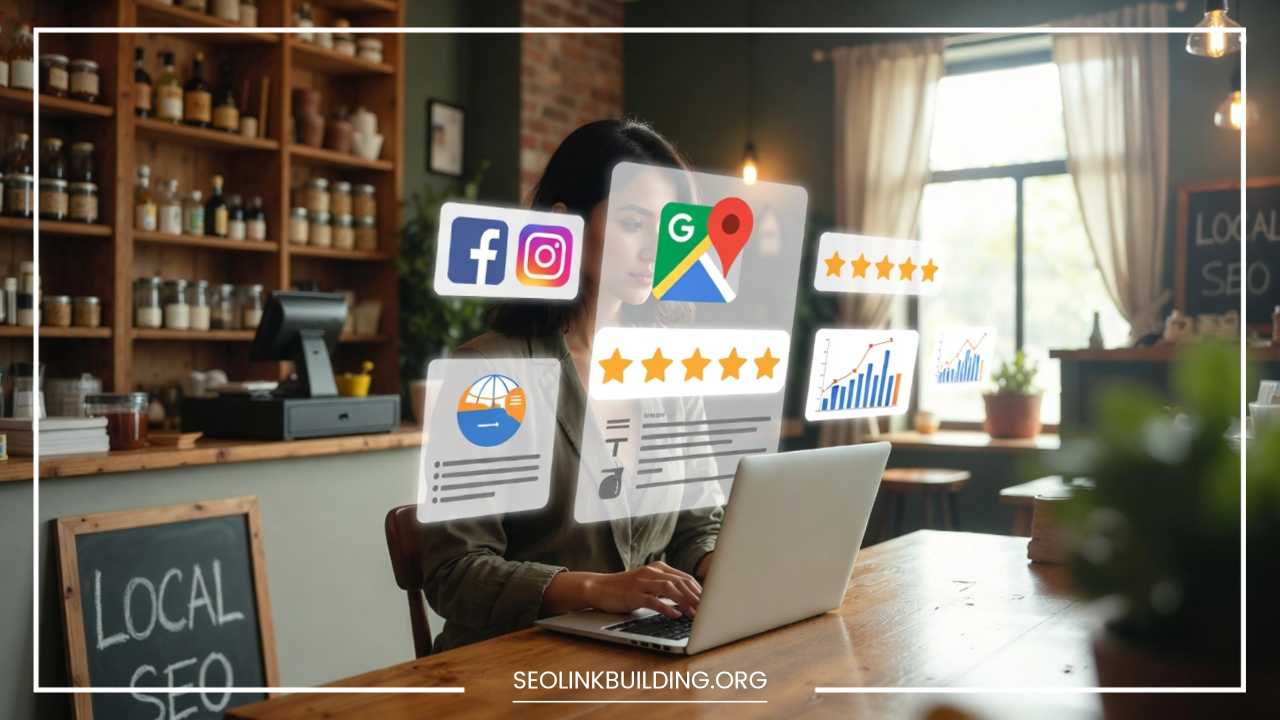
Google Business Profile (GBP)
This is the listing that appears in the “Map Pack.” It is free and essential.
-
Verify Your Business: Google will send you a postcard with a code to prove you are located where you say you are.
-
Choose the Right Category: Being a “Landscaper” vs. a “Lawn Care Service” can change your traffic significantly. Pick the one that most accurately describes your main revenue source.
-
Upload Photos Weekly: Businesses with more photos get more clicks. Show your team, your office, and your happy customers.
The Reviews Engine
Reviews are a major ranking factor. A business with 50 five-star reviews will almost always outrank a business with 2 reviews.
-
Ask for Reviews: Don’t be shy. Send a follow-up email or text after a job is done with a direct link to your GBP review page.
-
Respond to All Reviews: Even the bad ones. A professional response to a negative review can actually build more trust with potential customers than a perfect record.
Local Citations
A “citation” is any mention of your Name, Address, and Phone number (NAP) on the web. This includes Yelp, Yellow Pages, and local Chamber of Commerce sites. Critical Rule: Your NAP must be 100% consistent. If your address is “123 Main Street” on Google but “123 Main St.” on Yelp, it can confuse the algorithm.
Backlinks: Building Authority Without a PR Firm
A backlink is a link from another website to yours. Think of it as a “vote” for your site’s credibility.
How to Get Quality Links as a Small Business
-
Partner with Other Locals: If you are a wedding planner, ask the local florist and venue to link to your site as a “preferred partner.” You can do the same for them.
-
Sponsor Local Events: Sponsoring a Little League team or a local 5k often gets you a link from their “Sponsors” page. These
.orgor local community links are highly valuable. -
The “Broken Link” Strategy: Find a local resource page that has a link to a business that is no longer in operation. Email the site owner and let them know the link is broken, and suggest your site as a replacement.
-
Avoid the “Spam” Trap: Never buy links from “link farms” or sketchy websites. Google will eventually find out and penalize your site, sometimes permanently.
Technical SEO: Only What You Actually Need
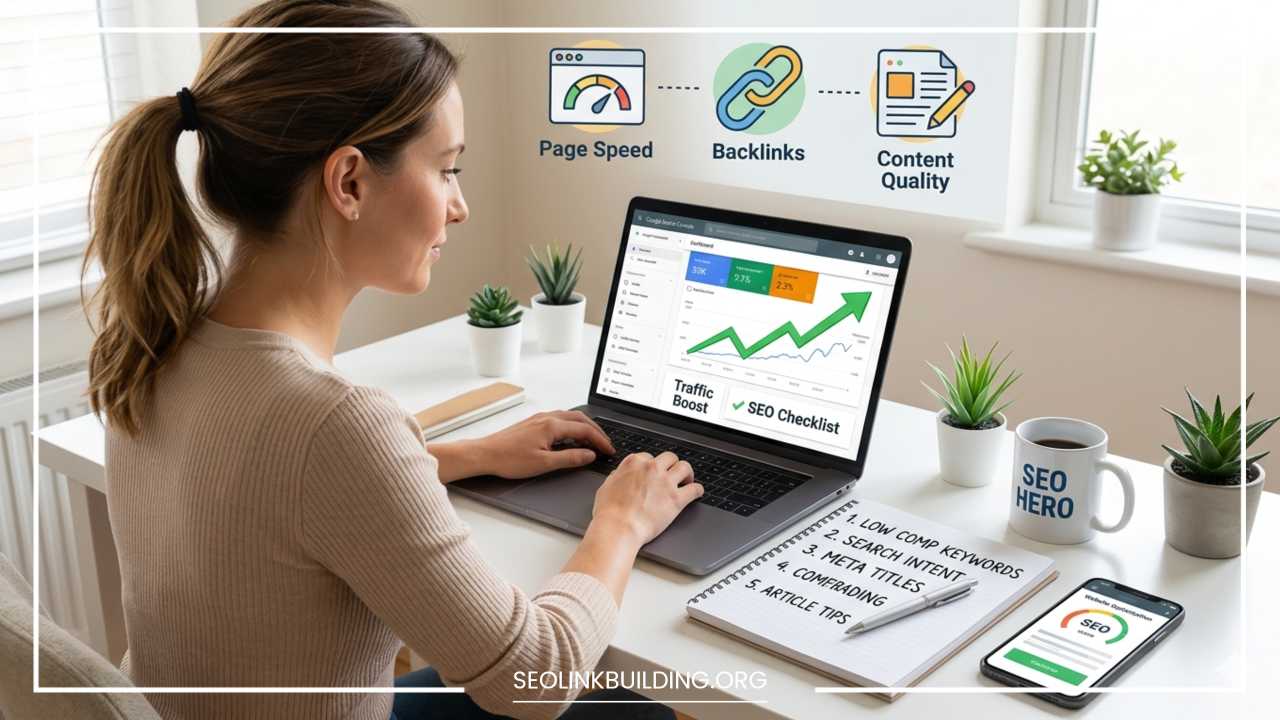
You don’t need to be a computer scientist to handle technical SEO. Focus on these four areas:
1. Website Speed
If your site takes more than 3 seconds to load, half of your visitors will leave before they see your content. Use Google PageSpeed Insights to test your site. The most common culprit for slow sites is unoptimized images. Use a tool like TinyPNG to shrink your image file sizes before uploading them.
2. Mobile Friendliness
More people search on phones than on computers. Open your website on your phone. Can you read the text without zooming? Are the buttons far enough apart to click with a thumb? If not, you need to switch to a “responsive” website theme.
3. HTTPS and Security
The “S” in HTTPS stands for secure. If your site says “Not Secure” in the browser bar, Google will hide it from searchers. Most hosting companies provide a free “SSL Certificate” that fixes this.
4. Clean Site Architecture
Make sure every page on your site is reachable within three clicks from the homepage. If a page is buried too deep, Google’s bots may never find it.
Free & Affordable SEO Tools
You don’t need a massive budget. Here is the “Free Tier” toolkit:
-
Google Search Console (GSC): This is the most important tool. It shows you exactly which keywords are bringing people to your site and if Google is having trouble reading your pages.
-
Google Analytics (GA4): This shows you what people do after they arrive. Do they stay for five minutes or five seconds?
-
AnswerThePublic: A great tool for finding the “Who, What, Where, When, Why” questions people ask about your industry.
-
Ubersuggest: A solid, low-cost keyword research tool that offers a limited free version.
A Simple DIY SEO Workflow: Your Step-by-Step System
Consistency is better than intensity. Follow this monthly rhythm:
-
Week 1: The Content Push. Identify one new long-tail keyword. Write a 1,500+ word article that answers a customer’s question about that keyword.
-
Week 2: The On-Page Polish. Review your existing top 5 pages. Update any outdated information and ensure the meta titles are still relevant.
-
Week 3: The Outreach. Reach out to two local businesses or blogs and offer a guest post or a partnership link.
-
Week 4: The Data Check. Look at Google Search Console. Which pages are growing? Which are falling? Use this data to plan next month’s content.
Common SEO Mistakes to Avoid
-
Keyword Stuffing: Repeating your keyword 50 times in one paragraph. This is “old school” SEO and will get you penalized. Write for humans first.
-
Duplicate Content: Copying and pasting text from other websites. Google wants unique value. If you copy a manufacturer’s description for a product, you will likely never rank for it.
-
Ignoring the “Low-Hanging Fruit”: Many businesses ignore the “Contact Us” or “About” pages. These are often the first pages people visit before buying. Optimize them!
-
Impatience: SEO is not an overnight success story. It is a slow build. If you stop because you don’t see results in three weeks, you are quitting right before the “hockey stick” growth begins.
How Long Does SEO Take? Setting Realistic Expectations
Because SEO is an organic process, it takes time for Google to trust you.
-
Months 1-3: You are “proving” yourself to Google. You will see your pages get indexed and slowly climb from page 10 to page 4 or 5.
-
Months 4-6: You will start to see “traction.” Your traffic will begin to rise, and you might see your first few leads from search.
-
Months 6-12: This is the “Authority Phase.” If you have been consistent, your site will have enough credibility to start ranking for more competitive terms on page 1.
Final Thoughts: Your Path to #1
The most significant advantage of DIY SEO isn’t just the money you save—it’s the asset you build. When you pay for ads, the traffic stops the second you stop paying. When you invest in SEO, you are building a “digital salesperson” that works for you 24 hours a day, 7 days a week, for years to come.
You don’t need an agency. You need a deep understanding of your customer, a willingness to provide value, and the discipline to keep showing up. Start today by picking one keyword and writing one great page. That is how every #1 ranking begins.