Marketing Mix Strategy: The 4Ps, 7Ps, and Digital Transformation

Mastering the Marketing Mix Strategy: The 4Ps and Beyond
The marketing mix is a foundational concept in modern marketing, representing a set of controllable, tactical marketing tools that a business uses to produce the response it wants from its target market. It’s the strategic blueprint for putting a product or service in front of the right customer at the right time. The concept was first introduced by Professor E. Jerome McCarthy in his 1960 book, “Basic Marketing: A Managerial Approach,” where he categorized these tools into the now-famous “4Ps”: Product, Price, Place, and Promotion.
The marketing mix is crucial for businesses of all sizes, from startups to multinational corporations. It provides a structured framework for making strategic decisions about a company’s offerings, ensuring all marketing efforts are cohesive and effective. By carefully managing each element of the mix, a business can create a compelling value proposition that resonates with its target audience and differentiates it from the competition. This strategic alignment is the cornerstone of business success, driving sales, building brand loyalty, and securing a sustainable market position. The marketing mix isn’t just a list of things to do; it’s a dynamic strategy that requires constant evaluation and adjustment to align with evolving market conditions and consumer needs. It’s the engine that powers a company’s go-to-market strategy and ultimately determines its profitability and growth.
The 4Ps Explained in Detail
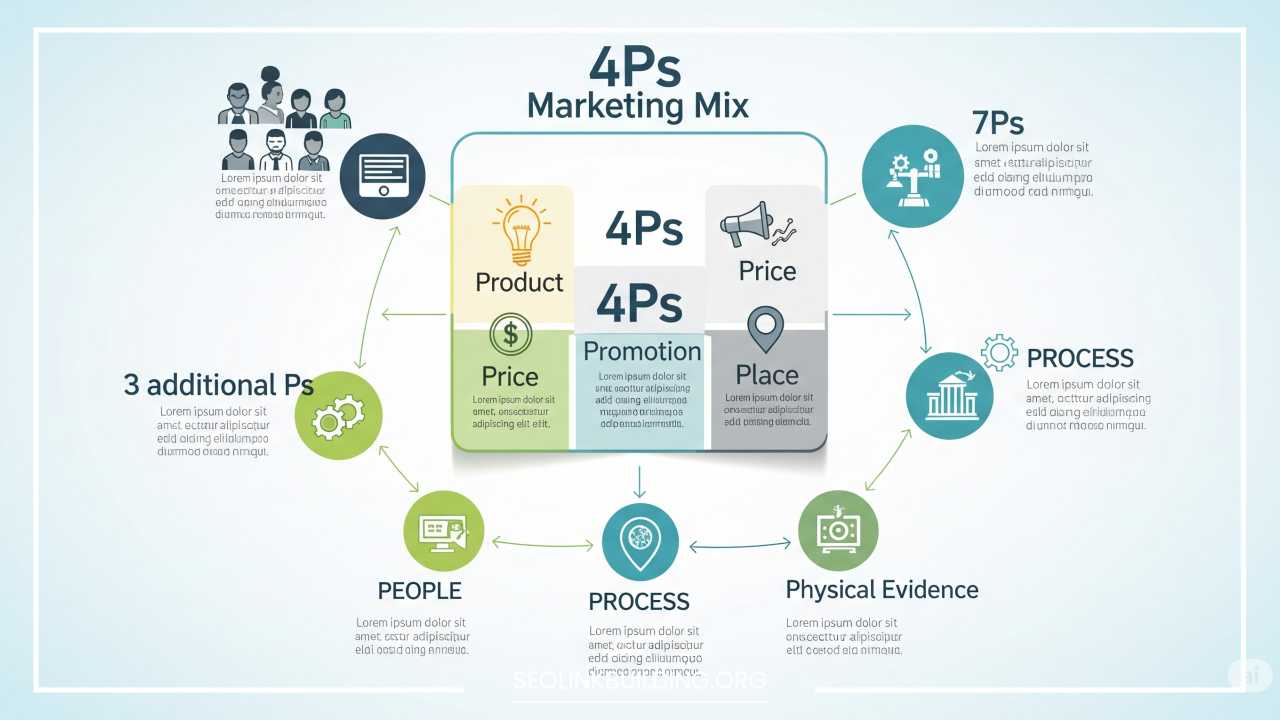
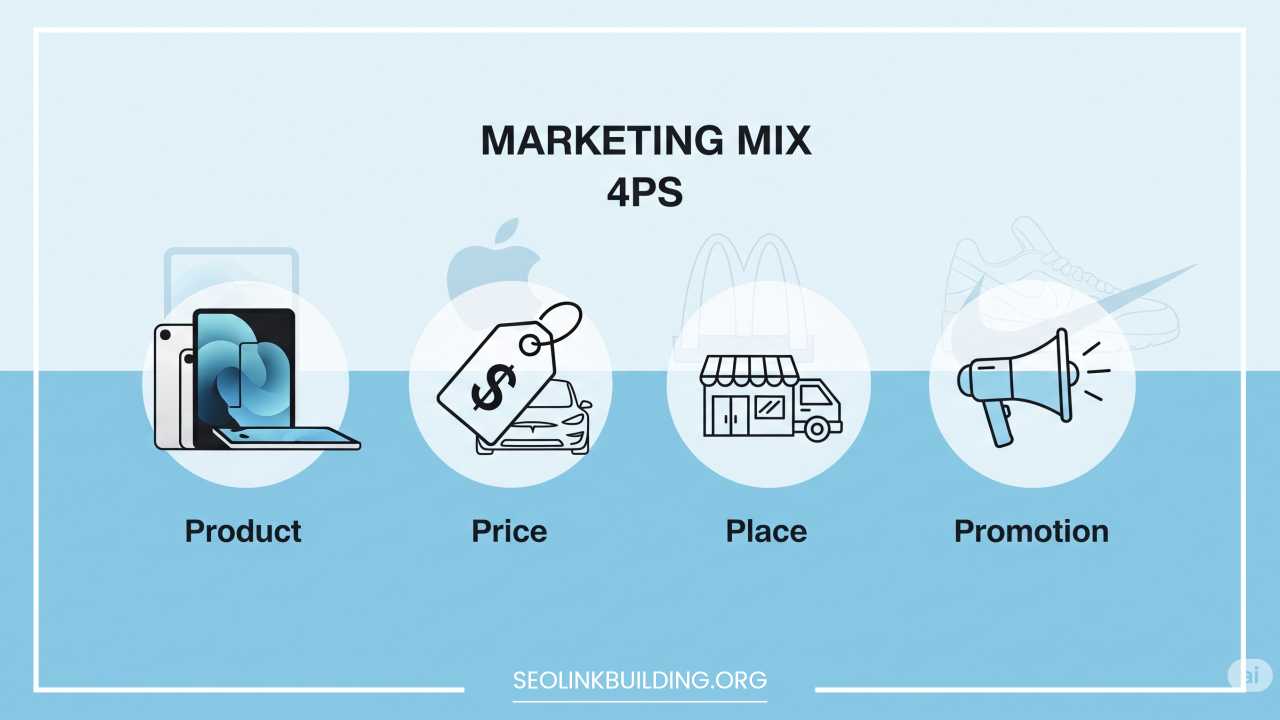
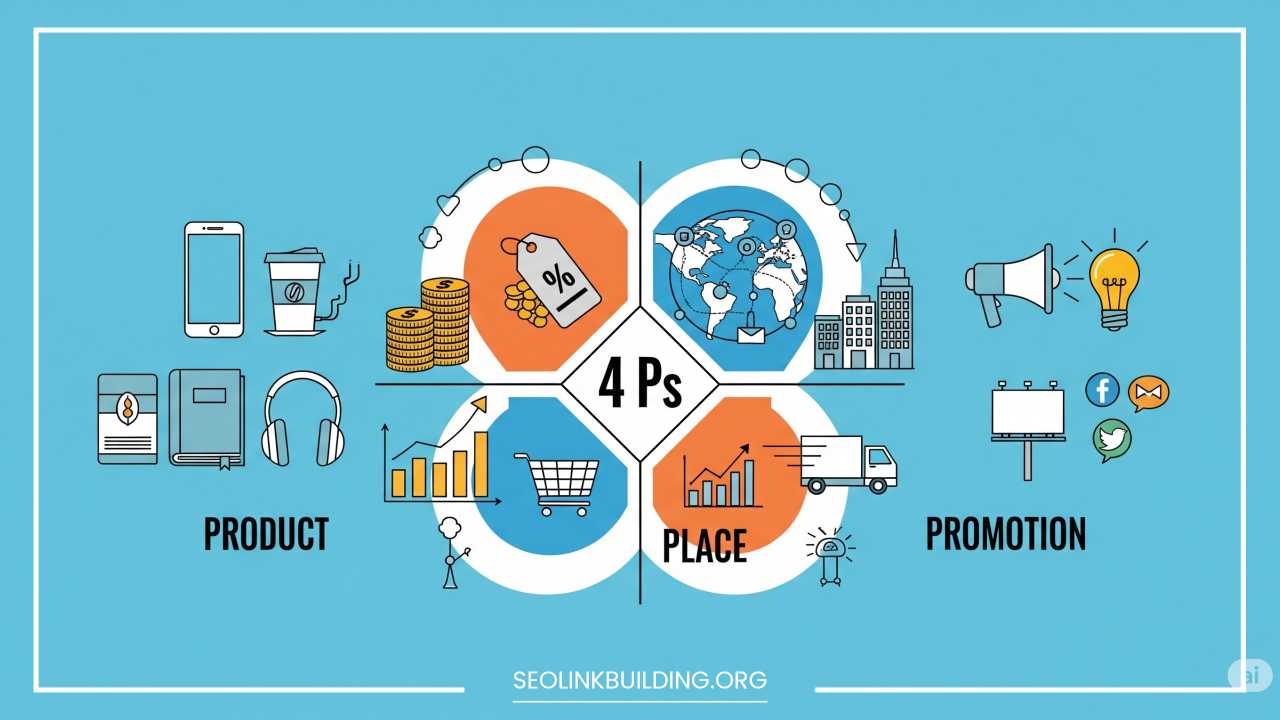
The original marketing mix is composed of four key components: Product, Price, Place, and Promotion. These four elements are deeply interconnected and must be managed in harmony to create a successful marketing strategy.
a. Product
The product is the tangible good, service, or idea that a business offers to its market. It’s the core of the marketing mix, as all other elements—price, place, and promotion—are built around it. A product’s success depends on its ability to satisfy a customer’s need or want. This element includes not only the physical item but also its design, quality, features, branding, and packaging. The product lifecycle, which includes stages like introduction, growth, maturity, and decline, is a critical consideration. Marketers must adapt their strategies for each stage, perhaps focusing on awareness during the introduction phase and differentiation during maturity. Branding is a powerful aspect of the product, as it creates an identity and emotional connection with consumers. A strong brand can command a higher price and foster loyalty, turning a simple product into a valuable asset. Packaging serves a dual purpose: it protects the product and acts as a silent salesperson, attracting attention on a shelf and communicating key information to the consumer.
b. Price
Price is the amount of money a customer pays for a product or service. It’s the only element of the marketing mix that generates revenue; all others represent costs. Setting the right price is a delicate balance, as it directly impacts profit margins and a product’s perceived value. A business can employ various pricing strategies, such as penetration pricing, which involves setting a low initial price to quickly gain market share, or price skimming, which sets a high price at launch for an innovative product to capture early adopters before lowering it later. Value-based pricing is another strategy, where the price is set based on the customer’s perceived value of the product rather than its cost. Psychological pricing, like ending a price in $9.99 instead of $10.00, aims to make the price seem lower than it is. Factors influencing pricing decisions include the cost of production, the level of consumer demand, and the prices of competitors. A misstep in pricing can either leave money on the table or deter potential customers.
c. Place
Place, or distribution, refers to the channels and activities involved in getting the product from the producer to the consumer. The goal is to make the product available at the right time and in the right location. A key decision is whether to use a direct distribution channel, where the company sells directly to consumers (e.g., through its own website), or an indirect channel, which involves intermediaries like wholesalers and retailers. This decision is crucial for market reach and control. Companies must also consider their online vs. offline presence. While traditional retail stores are still important, a strong e-commerce presence is now essential for most businesses. The “place” element also encompasses logistics and supply chain management, including warehousing, transportation, and inventory control. A well-optimized distribution strategy can significantly reduce costs and improve customer satisfaction by ensuring products are always in stock and delivered efficiently. For example, a company might use a combination of physical stores and a robust online platform to maximize its reach.
d. Promotion
Promotion involves all the activities a business undertakes to communicate its product’s value and persuade customers to buy it. This is where a company tells its story and creates a compelling reason for consumers to choose its offering. The promotional mix includes various tools such as advertising (paid media like TV, radio, and online ads), sales promotion (short-term incentives like discounts and coupons), public relations (PR) (building a positive brand image through non-paid media), personal selling (one-on-one communication with potential customers), and digital marketing (SEO, social media, email marketing, and content marketing). Integrated Marketing Communications (IMC) is a strategic approach that ensures all these promotional activities work together seamlessly to deliver a clear, consistent, and compelling message about the company and its products. The promotion strategy must be carefully aligned with the product’s positioning to reinforce the brand’s identity and attract the desired target market. For instance, a luxury brand will use different promotional channels and messages than a budget-friendly brand.
Extended Marketing Mix – The 7Ps
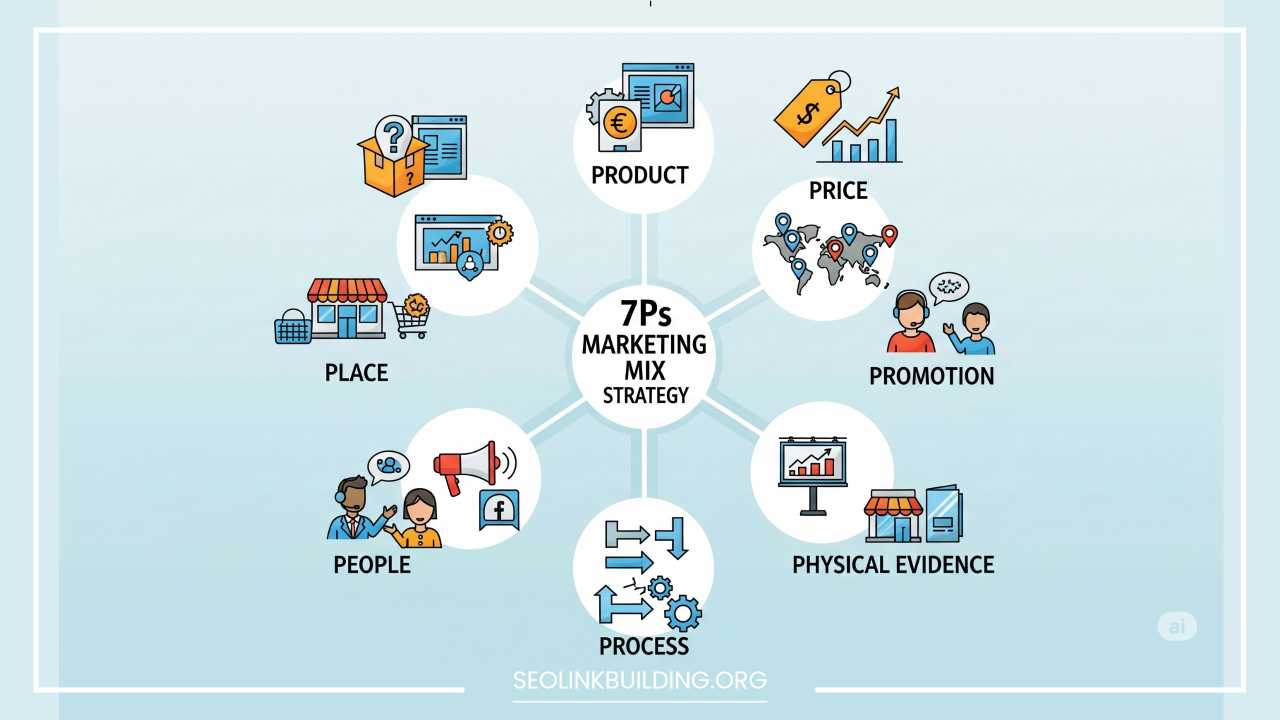
While the 4Ps remain central to marketing strategy, the framework has been expanded to the 7Ps to better address the nuances of the service industry and modern marketing. The three additional elements—People, Process, and Physical Evidence—are especially critical for businesses that deliver intangible value.
e. People
In a service-oriented business, the people are often the face of the brand and play a critical role in the customer’s experience. This element includes employees, management, and even other customers. The quality of a service is inseparable from the quality of the people providing it. For example, a friendly and knowledgeable hotel staff can make a guest’s stay memorable, while a rude employee can ruin it. Therefore, employee training and motivation are essential. Companies must invest in their staff to ensure they embody the brand’s values and deliver a consistently high level of service. This also extends to the customer-facing teams, who are responsible for building relationships and resolving issues. A well-trained and empowered workforce can become a powerful brand advocate, turning every customer interaction into a positive experience.
f. Process
Process refers to the systems and procedures used to deliver a product or service. This includes the entire operational flow, from order placement to final delivery. A streamlined and efficient process is crucial for customer satisfaction. For example, a restaurant’s service process, from taking an order to delivering the food and processing payment, directly impacts the dining experience. A clunky, slow, or confusing process can frustrate customers and lead to negative reviews, even if the core product (the food) is excellent. Conversely, a well-designed process, such as a simple and fast online checkout system, can create a seamless customer journey. Businesses must continuously evaluate and improve their processes to enhance efficiency, reduce wait times, and ensure a high-quality, reliable customer experience.
g. Physical Evidence
In the absence of a tangible product, physical evidence provides tangible cues that help customers assess the quality of a service. This includes the physical environment where the service is delivered, the company’s branding, and any tangible items associated with the service. For a hotel, this might be the lobby’s decor, the cleanliness of the rooms, the staff uniforms, and the quality of the brochures. For an airline, it’s the cleanliness of the plane, the comfort of the seats, and the branding on the tickets. Even in a digital context, physical evidence can be found in the quality and user-friendliness of a website or app. These tangible elements help to reduce uncertainty and build confidence in the customer’s mind, making the intangible service feel more real and reliable. Physical evidence serves to reinforce the brand’s promise and positioning.
How to Develop a Marketing Mix Strategy
Developing a robust marketing mix strategy is a systematic process that requires careful analysis and alignment. It begins with a deep understanding of the target market. Who are the customers? What are their needs, wants, and behaviors? The marketing mix must be tailored to these specific needs. For example, a product for teenagers will have a different price point, distribution channel, and promotional message than a product for senior citizens.
Market research is the foundation of this process. It helps to gather data on consumer preferences, market trends, and competitor activities. A thorough competitor analysis is essential to identify gaps in the market and opportunities for differentiation. The goal is to create a unique value proposition that sets the company apart. The concept of positioning is central to this. A company must decide what unique space it wants to occupy in the minds of its target customers. The marketing mix is then built to support this positioning. For example, if a brand wants to be perceived as a low-cost leader, its pricing, distribution, and promotion will all reflect that strategy.
The marketing mix also needs to be adapted for different market segments. The strategy for a B2B (business-to-business) market will differ significantly from a B2C (business-to-consumer) market. In B2B, personal selling and long-term relationships are often more important, while B2C marketing often relies on mass advertising and digital channels. Similarly, a niche market requires a highly focused and specialized marketing mix, tailored to the unique needs of a small, specific group of consumers.
Real-World Examples of Marketing Mix in Action
Examining how successful companies use the marketing mix can provide valuable insights into its power.
Coca-Cola is a master of the marketing mix. Its product is a globally recognized beverage, but its success lies in its global reach and powerful promotion strategy. The company’s advertising campaigns are iconic, focusing on themes of happiness, sharing, and community. Their place strategy is a logistical marvel, with a vast network of bottlers and distributors that ensures their products are available almost everywhere in the world, from vending machines to supermarkets. Their price is often affordable and competitive, making it accessible to a wide audience.
Apple is a prime example of a company that leverages a premium price strategy supported by a superior product. Apple’s products are known for their sleek design, high quality, and user-friendly interface. This excellence allows them to command a higher price point, which reinforces the brand’s premium image. Their place strategy is a mix of their own retail stores (providing a unique customer experience and physical evidence) and online sales, complemented by authorized resellers. Their promotion is minimalist and elegant, focusing on the product’s features and the lifestyle it represents.
McDonald’s excels at adapting its marketing mix to different regions. While its core product (burgers, fries) is consistent, its place strategy involves customizing menus to local tastes (e.g., McAloo Tikki in India). The company’s vast network of franchisees ensures its restaurants are conveniently located worldwide. The price is generally affordable and consistent with its value proposition as a fast-food provider. Its promotion is often a mix of global campaigns and local promotions to drive foot traffic and cater to regional preferences.
Digital Transformation and the Marketing Mix
The rise of the digital age has profoundly impacted the marketing mix, transforming how businesses approach each of the 4Ps.
The digital revolution has reshaped place and promotion. E-commerce platforms, from Amazon to Shopify, have created new distribution channels, allowing businesses to sell directly to a global audience without needing a physical retail presence. This has democratized market access and created a direct link between producers and consumers. Simultaneously, digital marketing has expanded the promotional mix exponentially. Social media, search engine marketing, content marketing, and email campaigns now allow for precise targeting and real-time engagement. Businesses can run highly personalized ads to specific demographics, making their promotional efforts far more efficient and measurable than traditional advertising.
The impact of digital is also felt in price and product. The abundance of online information means consumers can easily compare prices, forcing companies to be more competitive and transparent. Businesses can now use data analytics to implement dynamic pricing strategies, adjusting prices in real-time based on demand, competitor prices, and customer behavior. Regarding the product, digital platforms enable a new level of personalization and customization. Services can be tailored to individual users (e.g., personalized playlists on Spotify), and digital products can be updated and improved continuously, blurring the lines of the traditional product lifecycle. Automation in marketing, such as using chatbots for customer service, has also become a critical part of the process, improving efficiency and customer satisfaction.
Challenges in Implementing the Marketing Mix
Implementing a successful marketing mix is not without its challenges. The modern business environment is characterized by market volatility, where economic shifts, technological advancements, and geopolitical events can rapidly change consumer behavior and market dynamics. A marketing mix that works today may become obsolete tomorrow, requiring constant monitoring and adaptation.
Changing consumer behavior is another significant hurdle. Consumers are more informed and empowered than ever before. They expect personalization, transparency, and social responsibility from the brands they support. Their preferences can shift quickly, driven by social trends and digital influence. Businesses must be agile and responsive to these changes, adjusting their products, prices, and promotional messages to stay relevant.
Finally, a major internal challenge is integration across departments. A marketing mix strategy requires a cohesive effort from every part of the organization. The product development team must work with marketing to create the right features, the finance department must align on pricing, and logistics must ensure a smooth distribution process. A lack of communication or conflicting goals between these departments can lead to a disjointed and ineffective marketing mix. Successful implementation requires strong leadership and a company-wide commitment to a shared vision.
Final Thoughts & Future of the Marketing Mix
The marketing mix, whether in its classic 4Ps or expanded 7Ps form, remains an indispensable framework for strategic planning. It provides a structured way for businesses to manage the variables that influence their market position and success. While the core principles have endured, the marketing mix is not static; it is a flexible, evolving tool that must adapt to new realities.
Looking to the future, the marketing mix will continue to be shaped by emerging trends. The rise of artificial intelligence (AI) will revolutionize how businesses understand consumer data, personalize offerings, and automate processes. Sustainability and social responsibility will become increasingly important factors in product development and brand messaging, influencing consumer choices and brand loyalty. The focus on experience-based marketing will also grow, with companies prioritizing the entire customer journey and emotional connection over single transactions. The marketing mix will need to be rethought to reflect these new priorities, focusing not just on the product itself but on the complete, personalized, and value-driven experience a brand offers.
Ultimately, the marketing mix is a powerful compass for navigating the complexities of the market. By treating it as a dynamic and interconnected system, businesses can build a compelling strategy that not only meets current demands but also prepares them for the challenges and opportunities of tomorrow.