How to Increase Website Traffic Organically

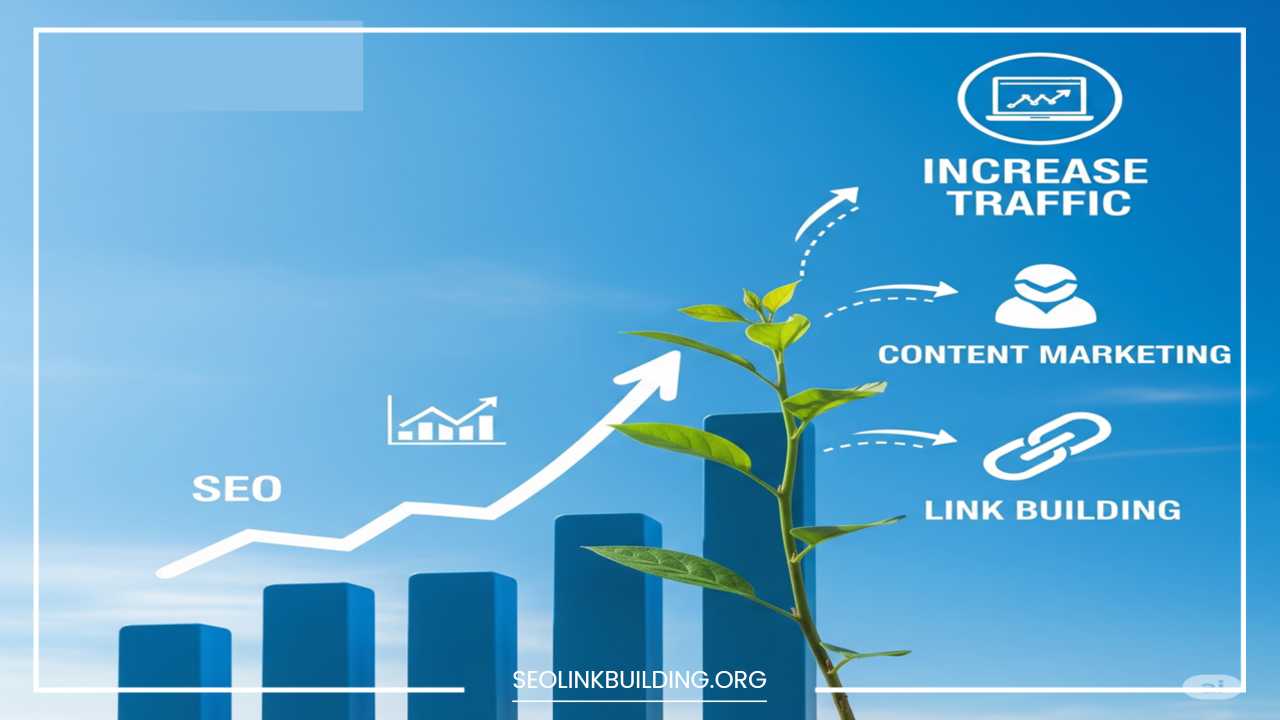
How to Increase Website Traffic Organically | Proven SEO Strategies
In the bustling digital landscape of today, a website is often the cornerstone of a business or personal brand. But merely having a website isn’t enough; it needs visitors, and ideally, those visitors should be arriving organically. Organic traffic, the kind that comes from search engines without paid advertisements, is the lifeblood of sustainable online growth. It signifies genuine interest, higher engagement, and ultimately, a more loyal audience.
The pursuit of increased website traffic is a universal goal for businesses and content creators alike. While paid advertising offers immediate visibility, organic traffic stands as the gold standard for long-term, sustainable growth. Unlike paid traffic, which ceases the moment your budget runs out, organic traffic provides a continuous stream of visitors who are actively searching for information, products, or services related to your niche. This inherent difference makes organic traffic not just desirable, but essential for building authority, credibility, and a lasting online presence.
This comprehensive guide will delve into the multifaceted world of organic traffic generation. We’ll explore the foundational principles, practical strategies, and essential tools that empower you to attract a steady flow of highly engaged visitors to your website. From the intricacies of keyword research to the nuances of technical SEO, and from crafting compelling content to building authoritative backlinks, you’ll gain a holistic understanding of how to climb the search engine rankings and secure your position as a valuable resource in your industry.
Keyword Research & Optimization
At the heart of any successful organic traffic strategy lies meticulous keyword research. It’s the compass that guides your content creation efforts, ensuring you’re addressing the queries and needs of your target audience. Without a solid understanding of what your potential visitors are typing into search engines, your content risks being invisible.
The primary objective of keyword research is to uncover “high-intent, low-competition” keywords. High-intent keywords indicate that the searcher is closer to taking a desired action, whether it’s making a purchase, signing up for a newsletter, or seeking specific information. Low-competition keywords, on the other hand, are those that have fewer websites actively targeting them, making it easier for your content to rank.
To effectively unearth these golden nuggets, a combination of strategic thinking and specialized tools is required. Google Keyword Planner, while primarily designed for advertisers, offers valuable insights into search volume and competition for various keywords. For more in-depth analysis and competitive intelligence, premium tools like Ahrefs and Ubersuggest are indispensable. Ahrefs, for instance, allows you to analyze your competitors’ keyword strategies, identify content gaps, and discover profitable long-tail keywords. Ubersuggest provides similar functionalities with a more user-friendly interface, making it a great starting point for beginners.
When conducting research, look beyond single keywords and delve into long-tail variations (phrases of three or more words). These often have lower search volumes but higher conversion rates due to their specificity. For example, instead of just targeting “shoes,”1 consider “best running shoes for flat feet” or “waterproof hiking boots for women.”
Once you’ve identified your primary and secondary keywords, the next crucial step is to integrate them naturally into your content. Your primary keyword should be present in your title tag, meta description, H1 header, and strategically throughout the body of your content. Secondary keywords can be used in subheadings and within the text to provide broader context and capture related searches. However, always prioritize readability and user experience over keyword stuffing. Search engines are intelligent enough to understand context and relevance, and over-optimization can lead to penalties. The goal is to create content that genuinely answers user queries while subtly incorporating your target keywords.
High-Quality Content Creation
Content is king, and in the realm of organic traffic, high-quality content is the crown jewel. It’s the magnet that attracts and retains visitors, signals expertise to search engines, and ultimately drives conversions. Creating valuable, in-depth, and original content is not just a best practice; it’s a fundamental requirement for success.
What constitutes “high-quality”? It’s content that genuinely solves a problem, answers a question comprehensively, provides unique insights, or entertains. Avoid shallow, generic, or plagiarized content at all costs. Instead, strive for originality and depth. If you’re writing about a topic, aim to be the most comprehensive and insightful resource available.
A critical framework to embrace in content creation is E-E-A-T: Experience, Expertise, Authoritativeness, and Trust. Google heavily emphasizes these principles in its ranking algorithms, particularly for YMYL (Your Money or Your Life) topics (e.g., health, finance).
- Experience: Demonstrate that you have first-hand experience with the topic. This could be through personal anecdotes, case studies, or practical examples.
- Expertise: Showcase your knowledge and skills in the subject matter. This might involve citing credible sources, presenting data, or providing detailed explanations.
- Authoritativeness: Establish yourself or your website as a recognized authority in your niche. This can be built through consistent high-quality content, industry recognition, and backlinks from reputable sources.
- Trust: Ensure your website and content are trustworthy. This involves having accurate information, transparent policies, secure website protocols (HTTPS), and positive user reviews.
The format of your content also plays a crucial role in engagement and reach. While blog posts remain a cornerstone, diversifying your content formats can significantly broaden your appeal. Consider developing in-depth guides or ultimate resources that serve as comprehensive references. Infographics are excellent for presenting complex data visually and are highly shareable. Videos are increasingly popular, offering a dynamic way to convey information and build a personal connection with your audience. Podcasts and webinars are also fantastic ways to engage with your audience.
Furthermore, your content strategy shouldn’t be a one-and-done affair. Regularly updating and repurposing old content is a highly effective tactic. Outdated information can deter visitors and negatively impact your search rankings. Review your existing content for accuracy, add new insights, update statistics, and enhance its overall value. Repurposing involves transforming existing content into new formats – turning a blog post into an infographic, a video transcript into a written guide, or a series of articles into an e-book. This maximizes the mileage you get from your efforts and keeps your content fresh and relevant.
On-Page SEO Best Practices
Once your high-quality content is ready, optimizing it for search engines at the page level is paramount. On-page SEO involves strategically placing your target keywords and structuring your content in a way that search engines can easily understand and rank.
The title tag is arguably the most crucial on-page element. It’s what appears in the search engine results pages (SERPs) and in browser tabs. It should be compelling, concise, and include your primary keyword, ideally near the beginning. The meta description, while not a direct ranking factor, acts as an advertisement for your page. It should be compelling, accurately summarize your content, and entice users to click through. Include your primary keyword here as well to bold it in the SERPs.
Header tags (H1-H3) provide structure to your content, making it easier for both users and search engines to scan and comprehend. Your H1 tag should contain your primary keyword and serve as the main title of your page. Subsequent H2 and H3 tags should break down your content into logical sections, often incorporating secondary keywords or related concepts.
Image alt text is crucial for accessibility and SEO. It provides a textual description of an image for visually impaired users and helps search engines understand the image’s content. Always use descriptive alt text that includes relevant keywords where appropriate. Internal linking is another powerful on-page SEO tactic. By linking to other relevant pages within your own website, you distribute link equity, improve crawlability, and guide users to more related content, keeping them on your site longer.
Your URL structure should be clean, concise, and keyword-rich. Avoid long, convoluted URLs with unnecessary parameters. A good URL is readable and provides a clear indication of the page’s content (e.g., yourwebsite.com/category/how-to-increase-website-traffic). Schema markup (structured data) is a powerful way to help search engines understand the context of your content and display rich snippets in the SERPs, which can significantly boost click-through rates. For example, if you have a recipe, schema markup can display star ratings, cooking time, and ingredients directly in the search results.
Finally, mobile optimization and user experience (UX) are no longer optional; they are fundamental ranking factors. With the majority of internet users accessing websites on mobile devices, a responsive design that adapts seamlessly to different screen sizes is essential.2 A positive user experience, characterized by fast loading times, easy navigation, and clear calls to action, signals to search engines that your website is valuable and should be ranked higher.
Link Building Strategies
While on-page SEO optimizes your own content, backlinks – links from other reputable websites to yours – are the strongest signal of authority and trustworthiness to search engines. Think of backlinks as votes of confidence; the more high-quality votes your website receives, the higher its perceived authority and the better its chances of ranking.
However, not all backlinks are created equal. The focus should always be on white-hat strategies, which are ethical and sustainable methods that align with search engine guidelines. Avoid black-hat SEO techniques, such as buying links or participating in link farms, as these can lead to severe penalties from Google.
One of the most effective white-hat strategies is guest posting. This involves writing valuable content for another website in your niche and including a link back to your own site. It allows you to tap into a new audience, establish yourself as an expert, and earn a valuable backlink. Research relevant websites, pitch unique content ideas, and ensure your guest posts are of the same high quality as your on-site content.
Broken link building is another clever tactic. Identify broken links on authoritative websites in your niche using tools like Ahrefs. Then, create high-quality content that could replace the missing content and politely reach out to the website owner, suggesting your content as a suitable replacement.
HARO (Help A Reporter Out) is a service that connects journalists with expert sources. By responding to relevant queries, you can get cited in news articles and publications, earning valuable backlinks from high-authority domains.
Beyond these proactive strategies, the ultimate goal is to create share-worthy content that naturally attracts backlinks. When your content is exceptionally valuable, informative, entertaining, or unique, other websites will naturally want to link to it as a resource. This could include in-depth research, comprehensive guides, original data, or captivating visual content. Promote your content effectively, and if it resonates with your audience and other webmasters, natural backlinks will follow. Remember, the focus is on earning, not acquiring, backlinks.
Content Distribution & Promotion
Even the most meticulously crafted and SEO-optimized content won’t generate traffic if nobody knows it exists. Effective content distribution and promotion are crucial for amplifying your reach and attracting initial visitors, which in turn can signal to search engines that your content is valuable.
Your social media channels are your first line of defense. Actively sharing your content on platforms like Facebook, Twitter, LinkedIn, Instagram, and Pinterest, depending on your target audience and content format, can drive immediate traffic. Don’t just share a link; craft engaging captions, use relevant hashtags, and encourage discussion.
Beyond your own profiles, explore relevant online communities and forums. Reddit has numerous subreddits dedicated to various niches, and Quora is a fantastic platform for answering questions and subtly linking to your relevant content. However, always be mindful of community guidelines and avoid blatant self-promotion, which can be perceived as spammy. Focus on providing genuine value first.
Email marketing remains one of the most powerful and direct ways to reach your audience. Building an email list allows you to notify subscribers whenever new content is published, driving consistent traffic back to your site. Create compelling newsletters that highlight your latest content and offer exclusive insights.
Consider influencer outreach and partnerships. Collaborating with influencers or other businesses in your niche can expose your content to a much wider audience. This could involve co-creating content, cross-promotion, or guest appearances.
The importance of timing and consistency cannot be overstated. Experiment with different posting times on social media to identify when your audience is most active. Establish a consistent content publishing schedule to keep your audience engaged and demonstrate to search engines that your website is regularly updated and active. Consistency builds anticipation and loyalty, encouraging repeat visits and natural sharing.
Technical SEO Essentials
While content and links are vital, the underlying technical health of your website plays a significant role in how search engines crawl, index, and rank your pages. Technical SEO ensures that your website is accessible and understandable to search engine bots.
Site speed and Core Web Vitals are paramount. Google prioritizes websites that offer a fast and seamless user experience. Core Web Vitals (Largest Contentful Paint, First Input Delay, and Cumulative Layout Shift) are specific metrics that measure a page’s loading performance, interactivity, and visual stability. Utilize tools like Google PageSpeed Insights to identify and rectify performance bottlenecks. Optimizing images, leveraging browser caching, and using a Content Delivery Network (CDN) can significantly improve your site speed.
Mobile-friendliness is no longer a luxury but a necessity. Given that Google uses mobile-first indexing, your website must be fully responsive and provide an excellent experience on all devices. Test your website’s mobile-friendliness using Google’s Mobile-Friendly Test tool.
Properly optimized sitemaps and robots.txt files are crucial for guiding search engine crawlers. An XML sitemap lists all the important pages on your website, helping search engines discover and index them efficiently. The robots.txt file instructs search engine bots which parts of your site they should or shouldn’t crawl. Ensure these files are correctly configured to facilitate optimal crawling.
Regularly monitor for crawl errors and indexability issues using Google Search Console. Crawl errors indicate problems that prevent Google from accessing your pages, while indexability issues mean your pages aren’t being added to Google’s index. Addressing these promptly ensures that your content is visible to search engines. A technically sound website provides a solid foundation for all your other SEO efforts to thrive.
Measuring & Improving Performance
Organic traffic generation is an ongoing process, not a one-time task. To truly succeed, you must continuously monitor your performance, analyze data, and adapt your strategies.
The first step is to set up Google Analytics and Google Search Console. These free tools provide invaluable insights into your website’s performance. Google Analytics tracks user behavior, including traffic sources, bounce rate, time on page, and conversions. It helps you understand who your audience is and how they interact with your content. Google Search Console, on the other hand, provides data directly from Google’s perspective, including keyword rankings, crawl errors, index coverage, and backlink information. It’s essential for understanding how Google sees your site.
Regularly tracking keyword rankings and traffic sources is critical. Are your target keywords moving up in the SERPs? Which search queries are bringing the most traffic? Which pages are performing best? By identifying your top-performing content and keywords, you can double down on what’s working and replicate your success. Conversely, identifying underperforming content allows you to optimize or repurpose it.
A/B testing for on-page elements can provide valuable insights into what resonates with your audience. Experiment with different title tags, meta descriptions, call-to-action buttons, or even content layouts to see which variations lead to higher click-through rates, lower bounce rates, or increased conversions. Tools like Google Optimize (soon to be replaced by Google Analytics 4’s A/B testing features) or third-party solutions can facilitate these tests.
Ultimately, your strategy must be adjusted based on data. Don’t just implement SEO tactics blindly. Use the insights from Google Analytics and Search Console to inform your decisions. If a particular content format is performing exceptionally well, create more of it. If a certain type of backlink is proving effective, focus on acquiring more of those. Data-driven decision-making is the hallmark of a successful organic growth strategy.
Final Thoughts & Final Tips
Increasing website traffic organically is a journey that demands patience, persistence, and a commitment to providing genuine value. We’ve covered a comprehensive range of strategies, from the foundational importance of keyword research and the creation of high-quality, E-E-A-T-driven content to the technical intricacies of on-page and off-page SEO, effective content distribution, and the crucial practice of performance measurement.
The key takeaway is to focus on long-term growth rather than chasing fleeting trends or quick fixes. Organic SEO is not a sprint; it’s a marathon. Building authority, trust, and a loyal audience takes time, consistent effort, and a genuine desire to serve your users.
Here are some final actionable advice and next steps to empower your organic traffic journey:
- Prioritize User Experience (UX): Always put your users first. A fast, mobile-friendly, and easy-to-navigate website with valuable content will naturally be rewarded by search engines.
- Embrace Continuous Learning: The SEO landscape is constantly evolving. Stay updated with the latest algorithm changes, industry best practices, and new tools. Follow reputable SEO blogs and participate in online communities.
- Be Patient and Persistent: You won’t see dramatic results overnight. Organic growth is cumulative. Stick with your strategies, refine them based on data, and celebrate small victories along the way.
- Diversify Your Strategy: Don’t put all your eggs in one basket. Combine content creation, technical SEO, link building, and promotion for a holistic approach.
- Focus on Value, Not Just Keywords: While keywords are important, your primary goal should be to create content that truly helps and engages your audience. Search engines are designed to surface the best possible results for users.
By diligently applying these principles and consistently refining your approach, you will not only increase your website’s organic traffic but also build a sustainable and thriving online presence that delivers lasting value to your audience and your business. The path to organic success is within reach, and with dedication, your website can become a powerful magnet for the right visitors.