Push and Pull Marketing Strategy


The Dynamics of Desire: Understanding Push and Pull Marketing Strategies
In the intricate world of commerce, the success of any product or service hinges significantly on its ability to reach and resonate with its target audience. Marketing strategies are the blueprints that guide these efforts, dictating how businesses engage with potential customers. Among the myriad approaches, Push and Pull marketing stand out as two fundamental yet distinct methodologies. While both aim to drive sales and foster brand growth, they operate on fundamentally different principles: one brings the product directly to the customer, and the other entices the customer to seek out the product.
This article will delve deep into the definitions, characteristics, tactics, advantages, and disadvantages of both push and pull marketing, provide a comparative analysis, explore real-world case studies, and discuss the importance of integrating these strategies in today’s dynamic digital landscape.
What is Push Marketing?
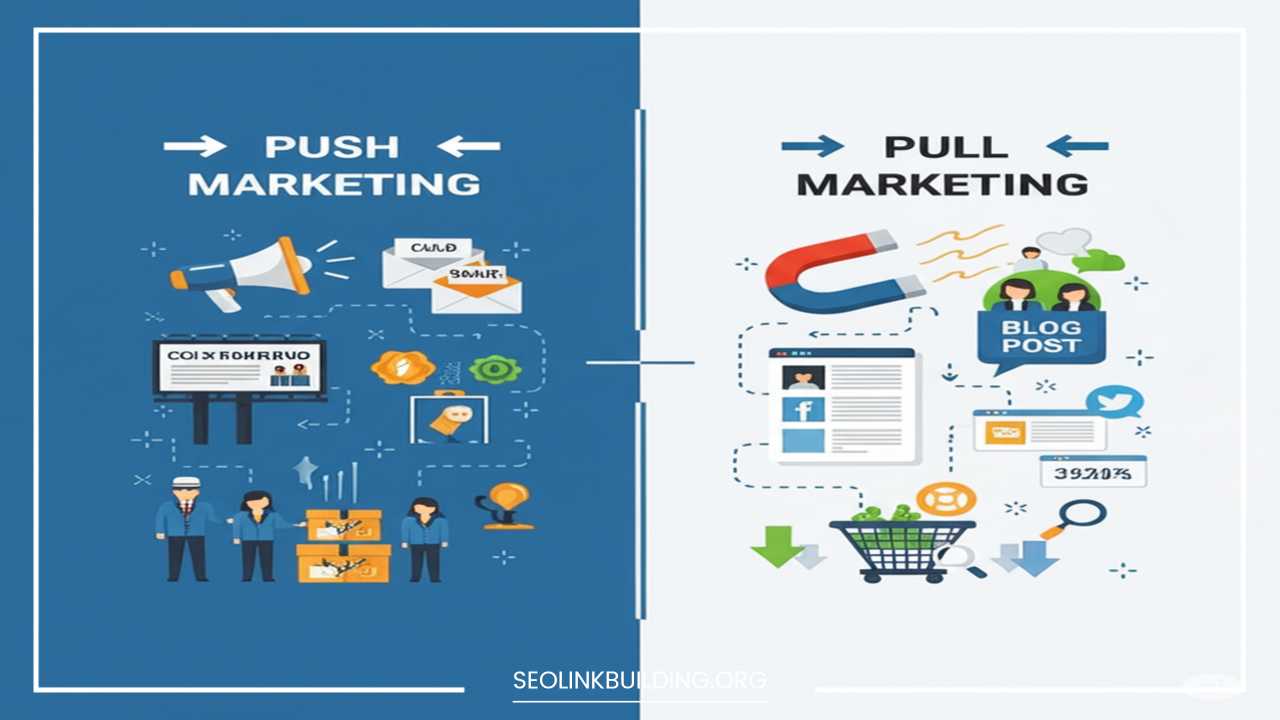
Push marketing is a proactive, outbound marketing strategy where a business “pushes” its products or services directly to consumers. The core idea is to bring the product to the customer through various distribution channels, often before the customer has expressed a direct need or desire for it. This approach is characterized by its directness and a focus on immediate visibility and sales.
Core Characteristics:
- Proactive Promotion: Marketers actively initiate contact with potential customers.
- Direct Sales Focus: Emphasis on closing sales quickly through direct interaction.
- Channel-Centric: Relies heavily on distribution channels and intermediaries to push products to the end-user.
- Mass Reach: Often targets a broad audience, sometimes with less segmentation initially.
Common Push Tactics:
- Trade Shows: Businesses exhibit their products to distributors, retailers, and potential buyers, aiming for bulk orders and partnerships.
- Direct Selling: Sales representatives directly approach customers (e.g., door-to-door sales, telemarketing, in-store demonstrations) to explain products and close deals.
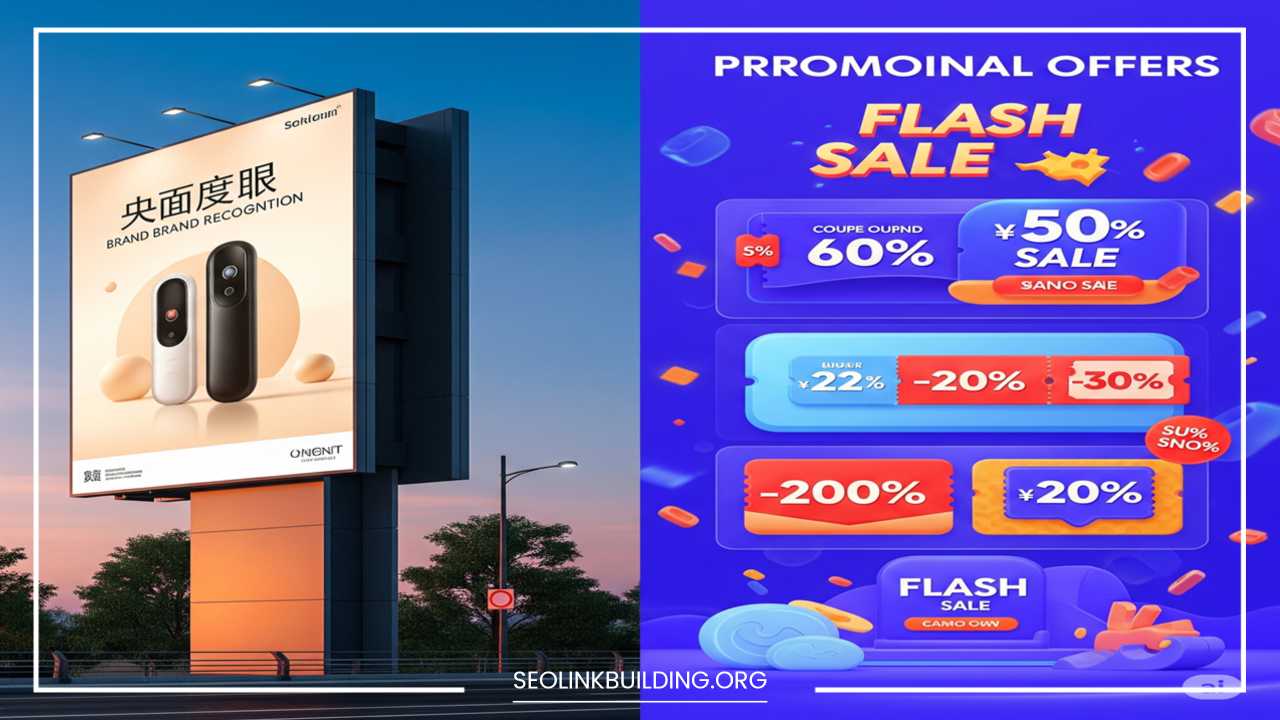
- Point-of-Sale (POS) Displays: Strategically placed product displays, promotional materials, and special offers within retail stores to capture impulse buys and promote specific items.
- Retailer Incentives: Offering discounts, special terms, co-op advertising, or rebates to retailers to encourage them to stock and promote the product more aggressively. This includes spiffs or promotional allowances given to sales associates.
- Aggressive Advertising: Often involves extensive advertising campaigns through traditional media like TV, radio, and print, aimed at broad awareness.
Advantages:
- Immediate Visibility: Products gain exposure quickly, especially when entering new markets or launching new products.
- Quick Results: Can generate sales rapidly, especially for impulse purchases or when combined with attractive offers.
- Control over Distribution: Allows companies to directly influence how and where their products are sold.
- Good for New Products: Effective for introducing products that consumers may not be actively searching for yet.
Disadvantages:
- Can be Intrusive: Consumers may perceive push tactics (e.g., telemarketing, unsolicited emails) as annoying or disruptive.
- Often Expensive and Short-Term: Requires significant upfront investment in sales teams, advertising, and incentives, and results may not be sustainable without continued effort.
- Risk of Brand Dilution: Overly aggressive pushing without genuine demand can sometimes damage brand perception.
- Less Customer Loyalty: Focuses more on transactional sales rather than building long-term customer relationships.
What is Pull Marketing?
Pull marketing is an inbound, demand-driven strategy where a business “pulls” customers towards its products or services by creating consumer interest and desire. Instead of directly pushing the product, the goal is to build a strong brand presence and product appeal that compels customers to actively seek out the offering. This approach focuses on building long-term relationships and brand loyalty.
Core Characteristics:
- Creating Demand: The primary objective is to generate intrinsic customer interest and desire for the product.
- Inbound Approach: Customers initiate contact and seek out the brand.
- Customer-Centric: Focuses on understanding customer needs and providing value that attracts them.
- Brand Building: Emphasizes developing a strong brand identity and reputation.
Common Pull Tactics:
- SEO and Content Marketing: Creating valuable, relevant, and optimized content (blogs, articles, videos, infographics) that addresses customer pain points and attracts organic search traffic.
- Social Media Engagement: Building an active and engaged community on social media platforms, sharing compelling content, running interactive campaigns, and fostering conversations around the brand.
- Influencer Marketing: Collaborating with influential personalities in a niche to endorse products, leveraging their credibility and reach to attract their followers.
- Word-of-Mouth Marketing: Encouraging satisfied customers to share their positive experiences, often through referral programs, excellent customer service, and creating shareable content.
- Public Relations (PR): Generating positive media coverage and buzz through press releases, media events, and strategic communications.
- Brand Advertising: Creating aspirational or emotional advertising that builds brand image and evokes a desire for the product, rather than focusing on direct sales.
Advantages:
- Builds Brand Loyalty: Fosters genuine connection and trust with customers, leading to repeat purchases and advocacy.
- Cost-Effective Over Time: While initial investment in content or branding can be significant, the long-term cost per acquisition can be lower as demand is organically generated.
- Higher Quality Leads: Customers who seek out the product are often more qualified and genuinely interested.
- Sustainable Growth: Creates a self-perpetuating cycle of demand and positive word-of-mouth.
Disadvantages:
- Slower to Produce Results: Building brand awareness and demand takes time and consistent effort.
- Requires Strong Branding: Success heavily relies on a compelling brand story, high-quality products, and effective communication.
- Less Direct Control: Relies on customer initiative and market perception, which can be harder to directly control than push efforts.
- Difficult to Measure ROI Immediately: The long-term nature of pull marketing can make immediate ROI tracking more challenging.
Push vs. Pull: A Comparative Analysis
The fundamental distinction between push and pull marketing lies in their direction of influence and their primary objective. While push strategies aim to distribute a product, pull strategies aim to generate demand for it.
| Feature | Push Marketing | Pull Marketing |
| Approach | Proactive, outbound, “product-out” | Reactive, inbound, “customer-in” |
| Primary Goal | Immediate sales, distribution, market entry | Brand awareness, loyalty, sustainable demand |
| Direction | From producer to consumer (via channels) | From consumer to producer (seeking out product) |
| Timing | Quick, short-term | Slower, long-term |
| Cost | Often high initial investment, can be recurring | Can be high initially, more cost-effective long-term |
| Control | High control over message and distribution | Less direct control, relies on consumer interest |
| Customer Role | Passive recipient | Active seeker |
| Key Metrics | Sales volume, distribution reach, conversion rates | Brand engagement, organic traffic, leads, loyalty |
When to Use Which Strategy:
-
Push Strategy is Ideal When:
- Launching a new product with low brand recognition.
- Entering a new market.
- Dealing with impulse purchases or low-consideration products.
- Having a strong distribution network.
- Needing to move inventory quickly.
- For B2B sales where direct outreach is common.
-
Pull Strategy is Ideal When:
- Building a strong, recognizable brand.
- Selling high-value or high-consideration products where consumers do research.
- Fostering long-term customer relationships and loyalty.
- Operating in a competitive market where differentiation is key.
- Leveraging digital channels effectively.
Examples of Brands Using Each Approach Effectively:
- Push Example: Procter & Gamble (P&G): P&G, with its vast portfolio of consumer goods (e.g., detergents, personal care products), heavily relies on push strategies. They invest heavily in trade promotions, retailer incentives, and prominent in-store placements to ensure their products are always available and visible on supermarket shelves, driving impulse purchases and routine replenishment. Their massive advertising budgets also contribute to pushing products into consumer awareness.
- Pull Example: Tesla: Tesla exemplifies a pull strategy. Instead of traditional advertising or aggressive sales tactics, they’ve built immense demand through innovation, a powerful brand narrative (sustainability, cutting-edge technology), and direct-to-consumer sales models. Their product launches generate massive public interest and media coverage, and customers often endure long waitlists, driven by desire for the brand and its offerings.
Case Studies
Examining real-world examples helps solidify the understanding of push and pull marketing in action.
- Push Example: Coca-Cola’s Retail PromotionsCoca-Cola, a global beverage giant, masterfully employs push marketing through its extensive retail promotions. Beyond ubiquitous advertising, Coca-Cola works intensely with retailers worldwide. This includes:
- Prominent Shelf Space: Negotiating prime eye-level placement and large displays in supermarkets.
- Bundling and Discounts: Offering “buy one, get one free” or meal deal promotions directly at the point of sale.
- Cooler Placement: Providing branded coolers to stores, ensuring their products are readily available and chilled right where customers make purchasing decisions.
- Trade Incentives: Offering financial incentives, volume discounts, and marketing support to distributors and retailers to encourage them to stock and promote Coca-Cola products over competitors. This direct engagement with channels ensures the product is literally pushed into the consumer’s immediate environment.
- Pull Example: Apple’s Product Launches and Brand LoyaltyApple is arguably the quintessential example of a pull marketing success story. They rarely engage in traditional aggressive advertising or sales promotions. Instead, their strategy revolves around building immense desire and loyalty:
- Anticipation and Hype: Apple’s product launch events are globally anticipated spectacles, generating massive media coverage and consumer buzz months in advance.
- Ecosystem and Design: The seamless integration of hardware and software, coupled with minimalist, elegant design, creates a premium experience that customers aspire to.
- Word-of-Mouth: Satisfied customers become ardent brand advocates, influencing friends and family.
- Community and Status: Owning Apple products often confers a sense of status and belonging to an highly aspirational community. This collective “pull” is so strong that customers often queue for hours for new product releases, demonstrating a demand driven purely by brand aspiration and product desire rather than aggressive sales tactics.
- Mixed Strategy: Nike’s Use of Influencer Marketing (Pull) and Retail Presence (Push)Nike provides an excellent illustration of an integrated push and pull strategy.
- Pull through Influencer Marketing & Brand Storytelling: Nike excels at pull marketing through its association with elite athletes, celebrity endorsements, and powerful “Just Do It” campaigns that inspire and connect emotionally with consumers. Their content marketing, focusing on athletic achievement and personal empowerment, builds a strong aspirational brand that consumers want to be associated with. Social media engagement, partnerships with fitness influencers, and sponsoring major sporting events all contribute to generating demand.
- Push through Retail Presence: Concurrently, Nike maintains a robust push strategy through its extensive global retail network. This includes:
- Nike Stores: Direct-to-consumer flagship stores that offer immersive brand experiences and direct sales.
- Wholesale Partnerships: Strategic relationships with major sporting goods retailers (e.g., Foot Locker, Dick’s Sporting Goods) that ensure their products are widely available and prominently displayed.
- Point-of-Sale Marketing: Aggressive in-store merchandising, promotional signage, and exclusive product drops that push consumers towards immediate purchase. By blending inspirational pull tactics with pervasive retail push, Nike ensures both enduring brand loyalty and ubiquitous product availability, maximizing market penetration.
Combining Push and Pull: Integrated Marketing Strategy
In today’s complex marketplace, a purely push or purely pull strategy is rarely sufficient for sustainable success. The most effective marketing efforts often involve an integrated approach, leveraging the strengths of both to create a synergistic effect.
Importance of Synergy:
When push and pull strategies work in concert, they create a powerful marketing ecosystem. Push efforts can introduce a product and build initial awareness, while pull efforts can then nurture that awareness into deep desire and loyalty. This synergy helps in:
- Maximizing Reach: Pushing products ensures wide availability, while pulling creates strong demand from an engaged audience.
- Building Brand Equity: Push can get products into hands, but pull builds the emotional connection that sustains long-term brand value.
- Optimizing ROI: Efficiently allocates resources by using push for immediate impact and pull for long-term, organic growth.
Omnichannel Marketing Examples: Omnichannel strategies perfectly embody the integration of push and pull. For instance:
- Online to Offline (O2O): A consumer sees an engaging social media campaign (pull) for a new smartphone, then receives a personalized email about a discount available for in-store pickup (push), driving them to a physical store where they can interact with the product.
- Retargeting Ads: A customer browses a product online (an initial pull signal), then sees targeted banner ads for that same product on other websites (a digital push), reminding them and encouraging purchase.
- In-store Loyalty Programs: A customer is encouraged to sign up for a loyalty program at the point of sale (push), which then allows the brand to send personalized offers and content (pull) to maintain engagement.
Tips on Balancing Both Approaches:
- Use Push for New Product Launches: When introducing something entirely new, aggressive push tactics (trade shows, initial advertising, direct sales) are crucial for market entry and initial awareness.
- Use Pull for Long-Term Branding and Demand Generation: Once initial awareness is established, shift focus towards content marketing, SEO, social media, and PR to build sustained interest and brand loyalty.
- Leverage Data for Personalization: Use customer data to make push efforts less intrusive (e.g., targeted emails) and pull efforts more relevant (e.g., personalized content recommendations).
- Align Messaging: Ensure that the brand messaging across all push and pull channels is consistent and reinforces the overall brand identity.
- Measure and Adapt: Continuously monitor the performance of both strategies and adjust the mix based on market feedback, consumer behavior, and business objectives.
Push and Pull in the Digital Age
The digital revolution has profoundly transformed both push and pull marketing strategies, blurring their traditional boundaries and introducing unprecedented levels of sophistication.
Digital Transformation of Both Strategies:
- Push in Digital:
- Paid Advertising: Google Ads, social media ads (Facebook, Instagram, LinkedIn), display advertising all represent digital forms of push, delivering messages directly to targeted audiences.
- Email Marketing: While permission-based, targeted email campaigns can be a powerful digital push, delivering promotional messages and offers directly to the inbox.
- Marketing Automation: Automated workflows trigger messages and offers based on customer actions, acting as a sophisticated, personalized push.
- SMS Marketing: Direct text messages with promotions or updates.
- Pull in Digital:
- SEO (Search Engine Optimization): Ensures content ranks high in search results, pulling users who are actively searching for information.
- Content Marketing: Blogs, videos, podcasts, e-books designed to attract and educate potential customers.
- Social Media (Organic): Building a community and engaging with users through valuable content, prompting them to follow and interact with the brand.
- Online PR: Securing mentions and features on popular websites, blogs, and news outlets.
- Online Reviews and Testimonials: User-generated content that pulls new customers through social proof.
Role of Data Analytics, AI, and Personalization:
The digital age has enabled unprecedented levels of data collection and analysis, which in turn fuels more effective push and pull strategies:
- Data Analytics: Provides insights into customer behavior, preferences, and journey, allowing for highly targeted push campaigns and more relevant pull content.
- Artificial Intelligence (AI): Powers predictive analytics (identifying likely buyers), chatbots (providing immediate answers to pull in customers), and content personalization (delivering tailor-made content).
- Personalization: Retargeting ads (a digital push) are highly personalized based on past Browse behavior. Content recommendations on streaming platforms (a digital pull) are personalized based on viewing history. This customization makes both approaches less generic and more effective.
How Digital Marketing Blurs the Line:
The digital realm often blurs the distinction between push and pull:
- Retargeting Ads: A customer pulls information by visiting a website, but then is pushed targeted ads on other platforms. Is it a push or a pull? It’s a response to an initial pull.
- Marketing Automation: A user downloads an e-book (pull), which then triggers an automated email sequence (push) delivering more valuable content and ultimately leading to a sale.
- Influencer Marketing: While it generates demand (pull), the influencer’s promotion to their followers can also be seen as a form of push to a highly receptive audience.
- Social Media Paid Promotion: A sponsored post on Instagram uses the platform’s pull (user interest in the content) but is presented to the user as a paid push.
This blurring highlights the need for an integrated digital strategy that leverages the best of both worlds.
Future Trends and Strategic Recommendations
The marketing landscape is ever-evolving, and understanding future trends is crucial for maintaining effective push and pull strategies.
Evolving Consumer Behavior:
- Ad Fatigue: Consumers are increasingly exposed to and tired of aggressive push advertising, making them more receptive to authentic, value-driven pull content.
- Demand for Authenticity: Consumers prefer brands that are transparent, socially responsible, and offer genuine value, reinforcing the importance of building trust through pull strategies.
- Empowered Consumers: With abundant information at their fingertips, consumers are proactive in their research, making pull strategies centered on valuable content more critical.
- Privacy Concerns: Growing data privacy regulations and consumer awareness mean push strategies need to be more permission-based and less intrusive.
Rise of Influencer and Community-Driven Pull Marketing:
- Micro and Nano-Influencers: Brands are increasingly turning to smaller, highly niche influencers who have deeper, more engaged connections with their audience, generating powerful pull effects.
- Community Building: Creating branded online communities (e.g., forums, Facebook groups) where customers can interact with each other and the brand, fostering loyalty and organic advocacy.
- User-Generated Content (UGC): Encouraging customers to create and share content about the brand, which serves as authentic social proof and a powerful pull factor.
The Need for Adaptive and Agile Marketing Strategies:
- Fluidity: Marketers must be agile, ready to shift the balance between push and pull based on market conditions, product lifecycle, and consumer response.
- Data-Driven Decisions: Continuous analysis of performance metrics from both push and pull campaigns is essential to optimize spending and strategy.
- Personalization at Scale: Leveraging AI and machine learning to deliver highly personalized experiences, whether it’s a targeted ad (push) or a recommended article (pull).
- Experiential Marketing: Creating immersive brand experiences that blend the directness of a push (inviting participation) with the allure of a pull (creating a memorable desire).
Final Thoughts
In the dynamic world of marketing, understanding the distinct yet complementary nature of push and pull strategies is paramount for any business aiming for sustained success. Push marketing, with its proactive, direct approach, excels at achieving immediate visibility and driving quick sales, particularly for new products or when rapid market penetration is required. Conversely, pull marketing, by focusing on building demand and fostering customer desire, cultivates brand loyalty, generates organic growth, and proves to be cost-effective in the long run.
The most effective marketing strategies rarely rely on a single approach. Instead, they skillfully integrate both push and pull elements, creating a synergistic effect that maximizes reach, strengthens brand equity, and optimizes return on investment. The digital age has further blurred the lines between these strategies, introducing sophisticated tools like data analytics, AI, and personalization that enable more targeted push efforts and more engaging pull experiences.
As consumer behavior continues to evolve, embracing an adaptive, data-driven, and integrated marketing strategy that fluidly balances push and pull will be the definitive hallmark of successful brands in the future. Choosing the right mix for your business isn’t a one-time decision; it’s an ongoing, strategic imperative that shapes your brand’s journey and connects you with your audience in meaningful ways.