How to Start Online Business From Home With Amazon

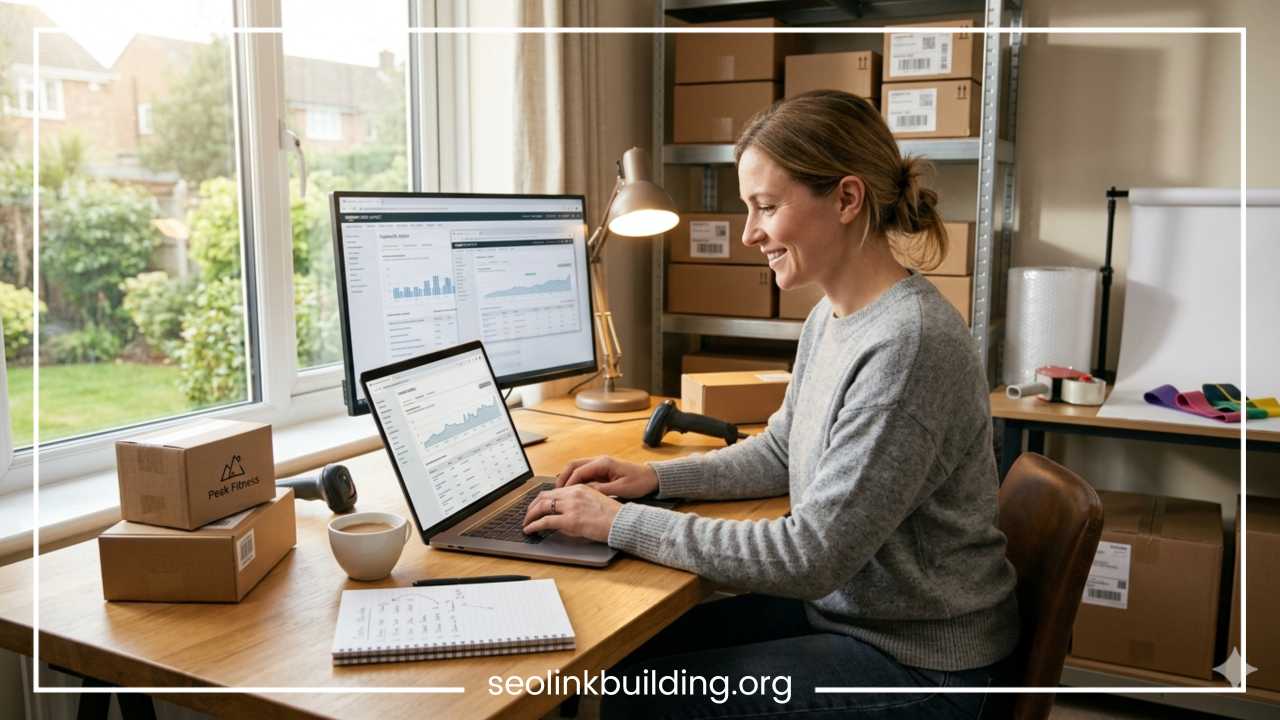
How to Start Online Business From Home With Amazon: Step-by-Step
The New Era of Digital Entrepreneurship
The landscape of modern commerce has undergone a radical transformation. Gone are the days when starting a business required a physical storefront, massive overhead, and a local customer base. Today, the most successful ventures often begin in a home office or at a kitchen table. At the center of this revolution is Amazon, a platform that has evolved from a simple online bookstore into the world’s most powerful retail engine.
For aspiring entrepreneurs, Amazon offers an unprecedented opportunity. It provides the infrastructure, the audience, and the trust that would otherwise take decades to build from scratch. Whether you are looking to escape the nine-to-five grind, create a secondary income stream, or build a global brand, learning how to start an online business from home with Amazon is one of the most viable paths to financial independence.
This guide is designed for the modern seeker—the individual who is ready to put in the work but needs a clear, step-by-step roadmap. Over the following sections, we will explore the mechanics of the Amazon marketplace, from the initial spark of a product idea to the sophisticated scaling of a multi-national brand. By the time you reach the end of this article, you will have a comprehensive understanding of what it takes to launch, manage, and grow a successful Amazon business without ever leaving your home.
Why Choose Amazon for an Online Business?
When deciding where to launch an e-commerce venture, the options can be overwhelming. You could build your own website on Shopify, list items on auction sites like eBay, or utilize social media marketplaces. However, Amazon remains the gold standard for several distinct reasons.
Built-in Traffic and Global Reach
The hardest part of any new business is finding customers. When you build your own website, you have to pay for every single visitor through expensive advertising or months of SEO work. Amazon, however, is a search engine for products. Millions of people go directly to Amazon with their credit cards in hand, ready to buy. By listing on Amazon, you are positioning your product in front of a global audience that is already looking for what you have to offer.
The Trust Factor
Consumer trust is a significant barrier to entry for new online stores. Shoppers are often hesitant to enter their payment details into an unfamiliar website. Amazon has already solved this. Because of their world-class customer service and reliable return policies, customers feel safe buying from any seller on the platform. As a third-party seller, you inherit this “halo effect” of trust.
Logistics and Infrastructure
One of the most daunting aspects of physical product businesses is storage and shipping. Amazon’s fulfillment network is perhaps the most advanced in the world. Through programs like Fulfillment by Amazon (FBA), you can store your inventory in their warehouses, and they will handle the picking, packing, shipping, and even the customer service and returns. This allows you to run a massive operation from a small home office.
Amazon Business Models
To succeed, you must first understand the different ways to operate on the platform:
-
Fulfillment by Amazon (FBA): You send products to Amazon; they handle the rest. This is the most popular model for home-based businesses.
-
Fulfillment by Merchant (FBM): You list the product on Amazon but ship it yourself when an order comes in.
-
Private Label: You find a manufacturer, put your own brand and logo on a product, and sell it as your own. This is the best model for long-term brand building.
-
Wholesale: You buy branded products (like Sony or LEGO) in bulk from authorized distributors and resell them on Amazon.
-
Dropshipping: You list a product and then buy it from a third party who ships it directly to the customer. While possible, Amazon has very strict rules regarding this, and it is generally considered high-risk for beginners.
Step 1: Choose Your Business Model
Selecting the right business model is the foundation of your entire venture. Each path requires a different level of investment, time, and expertise.
The Private Label Model
This is widely considered the most “evergreen” way to build a business. With private label, you aren’t just selling a product; you are building an asset. You identify a generic product that is selling well, find a manufacturer to produce it with your unique branding or improvements, and then own that listing on Amazon. Because you own the brand, you don’t have to compete for the “Buy Box” with dozens of other sellers.
The Wholesale Model
Wholesale is a safer bet for those who want to avoid the complexities of manufacturing and branding. You partner with established brands and sell their existing products. The challenge here is the low profit margins and the high competition, as you will often be sharing a listing with other sellers.
Which is Best for Beginners?
For those starting from home with a moderate budget, Private Label via FBA is often the most rewarding. It allows for the highest profit margins and provides the most control over the customer experience. However, if your budget is very limited, you might start with Retail Arbitrage (buying discounted items from local stores and reselling them) to build up the capital needed for a private label launch.
Step 2: Product Research (The Most Critical Step)
The success of your Amazon business is 80% determined before you ever list a product. If you choose a product that no one wants, or one that is too competitive, no amount of marketing can save you. Product research is the process of using data to find “gaps” in the market.
Criteria for a Winning Product
When looking for your first product, aim for the “Goldilocks Zone”:
-
High Demand: Use tools to verify that the top sellers in the category are making at least 300 to 500 sales per month.
-
Low to Medium Competition: Avoid categories dominated by big brands or products with thousands of reviews. Look for niches where the top sellers have fewer than 200-300 reviews.
-
Good Profit Margins: Aim for a “Rule of Three.” One-third of the sale price goes to product costs, one-third to Amazon fees, and one-third is your profit.
-
Simplicity: For your first product, avoid electronics, fragile glass, or items with many moving parts. Stick to something small, light, and durable to keep shipping costs low and minimize returns.
Tools for Research
While you can do manual research by looking at Amazon’s “Best Sellers” lists, professional tools make the process much more accurate. These tools allow you to see estimated monthly sales, keyword volume, and historical pricing trends. Data-driven decisions will always outperform “gut feelings” in e-commerce.
Mistakes to Avoid
Do not fall into the trap of “me-too” products. If you see a hundred sellers selling the exact same black yoga mat, do not try to be the hundred-and-first. Instead, look at customer complaints in those listings. If people say the mats are too thin, find a supplier who can make a thicker one. Differentiation is the key to survival.
Step 3: Validate Your Product Idea
Once you have a shortlist of potential products, you must validate them. This involves a deeper dive into the numbers to ensure the business is viable.
Analyzing Competitors
Look closely at the top five competitors in your niche. What are they doing well? Where are they failing? Read their one-star and two-star reviews. These reviews are a goldmine for product development. If customers complain that a kitchen gadget is hard to clean, you can market yours as “dishwasher safe” or “easy-disassembly.”
Pricing Strategy and Profit Estimation
Calculate every single fee. Amazon has referral fees (usually 15%) and FBA fees based on the size and weight of the item. You must also account for the cost of shipping the items from the manufacturer to the Amazon warehouse. Use an FBA calculator to ensure that after all expenses, you still have a healthy margin. If your profit per unit is less than five dollars, it will be very difficult to run profitable advertising later on.
Step 4: Create an Amazon Seller Account
With a validated product idea, it is time to make it official. Setting up an Amazon Seller Central account is a straightforward process, but you must be meticulous with your documentation.
Account Types
-
Individual Account: There is no monthly fee, but you pay a small fee for every item sold. This is okay for testing, but not for a real business.
-
Professional Account: This costs a flat monthly fee (usually around $39.99). It is essential for anyone serious about their business, as it gives you access to advertising, detailed reports, and the ability to win the “Buy Box.”
Required Documents
Amazon is very strict about identity verification to prevent fraud. You will likely need:
-
Government-issued ID (Passport or Driver’s License).
-
Bank account statement or credit card statement.
-
A credit card that can be charged internationally.
-
Phone number and tax information.
Ensure that the name and address on your ID match your bank statements exactly. Even a small discrepancy can lead to a delay in account approval.
Step 5: Source Your Product
Sourcing is where your idea becomes a physical reality. For most home-based Amazon businesses, this involves finding a manufacturer overseas, often through platforms like Alibaba.
Finding and Contacting Suppliers
On Alibaba, look for suppliers with “Gold Supplier” status and “Trade Assurance.” This provides a level of protection for your payment. When contacting them, be professional. You are not a “beginner”; you are a “Product Manager” for a new brand. Ask for their Minimum Order Quantity (MOQ), their lead time, and their pricing for various volumes.
Negotiation and Samples
Never place a large order without seeing a sample first. Pay the shipping cost to have a sample sent to your home. Test it rigorously. Is the quality what you expected? Does the packaging feel premium? Once satisfied, negotiate the price. Remember, the goal isn’t just the lowest price; it’s the best value. Building a long-term relationship with a supplier is more valuable than saving ten cents on your first order.
Step 6: Branding and Packaging
Branding is what turns a commodity into a business. In the Amazon ecosystem, branding helps you stand out in the search results and builds customer loyalty.
Creating a Identity
Choose a brand name that is easy to remember and relevant to your niche. Avoid names that are too specific so that you have room to expand later (e.g., “Peak Fitness” is better than “Peak Yoga Mats”). You can use affordable design services to create a clean, professional logo.
Packaging Design
The “unboxing experience” is the first physical interaction a customer has with your brand. Even a simple, well-designed box with a thank-you insert can significantly reduce negative reviews and increase the perceived value of the product. Ensure your packaging includes the required Amazon barcodes (FNSKU) and any legal requirements like country of origin.
Step 7: Listing Your Product on Amazon
Your product listing is your digital storefront. It must be optimized for both the Amazon algorithm (A9) and the human shopper.
The Anatomy of a High-Converting Listing
-
Title: This is the most important element for SEO. Include your main keywords, but keep it readable. For example: “Premium Silicone Spatula Set – Heat Resistant 500F – Non-Stick Kitchen Utensils with Ergonomic Handle.”
-
Bullet Points: Focus on benefits, not just features. Instead of saying “made of silicone,” say “Silicone construction ensures it won’t scratch your expensive non-stick pans.”
-
Description: Use this space to tell your brand story and provide technical details.
-
Images: This is what sells the product. You need a main image with a pure white background, followed by “lifestyle” images showing the product in use and “infographic” images highlighting key features.
Keywords and SEO
Use your product research tools to find the terms people are actually typing into the search bar. Distribute these keywords naturally throughout your title and backend search terms. Do not “keyword stuff,” as this makes your listing look unprofessional and can hurt your ranking.
Step 8: Shipping and Fulfillment
Once your inventory is ready, you need to get it into the Amazon ecosystem.
The Power of FBA
Most home-based sellers use FBA. When you create a “Shipping Plan” in Seller Central, Amazon will tell you which of their warehouses to send your products to. You can have your supplier ship the items directly to Amazon, or you can have them shipped to your home first for a final quality check before forwarding them.
Shipping Logistics
If you are importing from overseas, you will likely need a Freight Forwarder. They handle the complexities of customs, duties, and local transport. For smaller, lighter shipments, air freight is faster but more expensive. For larger, heavier orders, sea freight is much more economical but can take several weeks.
Step 9: Launch Your Product
Launching a product is about generating “velocity.” Amazon’s algorithm favors products that sell quickly.
Generating Initial Momentum
When your listing first goes live, it has no sales history and no reviews. To jumpstart the process, you might offer a “launch price” at a significant discount. You can also use Amazon Coupons to make your listing stand out in the search results with a bright green badge.
Amazon PPC (Pay-Per-Click)
The fastest way to get to page one is to pay for it. Amazon’s internal advertising platform allows you to bid on keywords. When someone searches for “garlic press,” your product can appear at the very top as a “Sponsored Product.” In the beginning, you may spend more on ads than you make in profit, but this is an investment in your product’s long-term organic ranking.
Step 10: Get Reviews and Build Trust
Reviews are the social proof that convinces the next customer to buy. On Amazon, reviews are the lifeblood of your business.
Getting Reviews Legally
Amazon has very strict rules against “incentivized” reviews. You cannot offer free products or money in exchange for a review. Instead, use the “Request a Review” button in Seller Central, which sends an automated, Amazon-approved email to the buyer. Focus on providing an exceptional product and great customer service, and the reviews will follow naturally.
Handling Negative Feedback
No matter how good your product is, you will eventually get a negative review. Do not take it personally. Use it as data to improve your product. If a customer is unhappy, reach out through the Amazon messaging system and offer to make it right. Sometimes, a helpful response can convince a customer to update their feedback.
Step 11: Scale Your Business
Once you have a product that is selling consistently and profitably, it is time to grow.
Scaling Strategies
-
Inventory Management: The biggest “growth killer” on Amazon is running out of stock. As you sell more, you must get better at forecasting and ordering inventory in larger quantities to reduce costs.
-
Horizontal Expansion: If your brand is “Peak Fitness” and your first product was a yoga mat, your next product could be yoga blocks, resistance bands, or a carrying bag. It is much easier to sell a second product to an existing customer base.
-
Global Expansion: Once you’ve conquered one marketplace (like Amazon US), you can easily expand to others like Amazon UK, Germany, or Japan.
-
Off-Amazon Marketing: Build a social media presence or an email list to drive your own traffic to your Amazon listings. This reduces your dependence on the Amazon search algorithm.
Costs Breakdown: How Much Money Do You Need?
A common question for home-based entrepreneurs is the initial investment. While you can start small, you should treat this as a real business, not a hobby.
Estimated Startup Costs
-
Inventory: $500 – $2,000 (depending on the product and MOQ).
-
Samples: $100 – $200.
-
Branding and Design: $50 – $300.
-
Amazon Professional Fee: $39.99/month.
-
Initial Advertising (PPC): $200 – $500 for the first month.
-
Software Tools: $50 – $100/month.
In total, most successful sellers recommend having at least $2,000 to $5,000 to launch a private label product properly. If you have less, you might start with smaller business models like arbitrage to build your “war chest.”
Common Mistakes Beginners Make
Learning from the failures of others is much cheaper than learning from your own.
-
Choosing a Product Based on Passion: Just because you love hand-knitted cat sweaters doesn’t mean there is a profitable market for them on Amazon. Follow the data, not your heart.
-
Ignoring the Fees: Amazon is not a charity. Their fees are significant. If you don’t calculate your margins correctly, you could end up losing money on every sale.
-
Poor Quality Control: One bad batch of products can lead to a string of one-star reviews that can permanently kill a listing. Always inspect your inventory.
-
Expectations of Overnight Wealth: Amazon is a “get rich slow” scheme. It takes months of consistent effort to see a significant return on investment.
Pros and Cons of Starting an Amazon Business
Pros
-
Low Barrier to Entry: Anyone with a laptop and a few thousand dollars can start.
-
Scalability: You can go from one sale a day to a thousand sales a day without needing more physical space.
-
Passive Potential: Once a product is ranked and using FBA, the daily maintenance is minimal.
Cons
-
High Competition: You are competing with sellers from all over the world.
-
Platform Dependency: Amazon owns the platform. They can change the rules or suspend your account at any time. You must play by their rules.
-
Capital Intensive: As you grow, you will need more and more money tied up in inventory.
Final Thoughts
Starting an online business from home with Amazon is an achievable dream, but it requires a shift in mindset. You are no longer just a consumer; you are a creator and a strategist. Success on the platform comes to those who are disciplined in their research, meticulous in their branding, and patient in their growth.
The steps outlined in this guide provide the framework, but the execution is up to you. The Amazon marketplace is constantly evolving, yet the core principles of commerce—providing value, building trust, and understanding your numbers—remain the same. There has never been a better time to take control of your financial future. Start with one product, learn the process, and build your digital empire one step at a time.
Frequently Asked Questions About Starting an Amazon Business
How can I start an Amazon business with little money or no investment?
Starting an online business from home with Amazon is possible even on a tight budget. If you have very little capital, consider the Retail Arbitrage model. This involves finding discounted items at local retail stores and reselling them on Amazon for a profit. Another low-cost entry point is Amazon Merch on Demand, where you upload designs for t-shirts and other apparel, and Amazon handles the printing and shipping only when a sale is made, requiring zero upfront inventory costs.
What is the best way to find high demand low competition products for Amazon?
Finding the right niche requires a data-driven approach. Instead of guessing, use specialized SEO tools to look for products with a high monthly search volume but a low number of reviews among top competitors. Look for “hidden gems” where the existing products have poor quality images or lackluster descriptions, as these are easier to outrank. Focusing on long-tail keywords in your product research can also help you find specific sub-niches that larger sellers are overlooking.
Is selling on Amazon still profitable for beginners in the current market?
Yes, it remains highly profitable, but the strategy has shifted from quantity to quality. To succeed as a beginner, you must focus on private labeling and brand building rather than just reselling generic items. By creating a unique brand and improving upon existing product flaws discovered in customer reviews, you can maintain higher profit margins and protect your business from price wars.
How do I handle Amazon FBA shipping and logistics from a home office?
One of the greatest benefits of the FBA program is that you do not need a warehouse. You can manage everything from your computer. Once you source your products from a supplier, you can have them shipped directly to an Amazon Fulfillment Center. If you prefer to inspect the goods first, you can have them sent to your home, apply the necessary FNSKU labels, and then use Amazon’s partnered carriers to pick up the boxes and deliver them to the warehouse.
What are the most common Amazon seller account suspension reasons and how to avoid them?
Account health is critical for long-term success. The most common reasons for suspension include having multiple seller accounts without permission, selling counterfeit goods, and “review manipulation” (asking for fake positive reviews). To keep your account safe, always provide accurate product descriptions, ensure your documentation is authentic, and strictly follow Amazon’s terms of service regarding customer communication.
Can I run a global Amazon business from my home in any country?
Absolutely. Amazon allows sellers from dozens of countries to list products on their various international marketplaces. You can live in one country, source products from another, and sell them to customers in a third. By using Fulfillment by Amazon, you eliminate the need to be physically present to ship orders, making it a truly location-independent business model.