How to Make My Own Business Website

How to Make My Own Business Website: Step-by-Step Guide
The digital landscape has transformed from a luxury into a fundamental necessity for any business aiming to thrive. In the modern marketplace, your website is often the first point of contact between your brand and a potential customer. It serves as your digital storefront, your primary marketing brochure, and your most hardworking salesperson, operating twenty-four hours a day, seven days a week. Establishing a professional online presence is no longer just about keeping up with the competition; it is about establishing credibility, expanding your reach beyond local boundaries, and taking full control of your brand’s narrative.
Building a website might have once required deep technical knowledge or a massive budget for a dedicated developer, but those days are long gone. Today, the tools available to entrepreneurs and small business owners are more accessible and powerful than ever. This guide is designed to take you through the entire journey of creating your own business website from scratch. We will explore everything from the initial planning stages and choosing your domain name to the nuances of design, content creation, and search engine optimization. By the end of this comprehensive guide, you will have a clear roadmap to launching a professional, functional, and effective website that helps your business grow.
Define Your Website Goals
Before you click a single button or write a line of code, you must determine exactly what you want your website to achieve. A website without a clear objective is like a ship without a rudder; it may look impressive, but it will not take your business where it needs to go. Start by identifying the primary function of your site. Are you looking to sell products directly to consumers through an eCommerce platform? If so, your focus will be on product galleries, secure payment gateways, and inventory management.
Alternatively, your goal might be lead generation. For service-based businesses like consulting firms, contractors, or legal practices, the website’s job is to convince visitors of your expertise and encourage them to fill out a contact form or pick up the phone. You might also simply need a digital portfolio to showcase your past work, which requires a heavy emphasis on high-quality visuals and testimonials.
Beyond the primary function, you must identify your target audience. Who are they? What problems are they trying to solve? Understanding your audience’s demographics and behaviors will dictate the tone of your writing, the complexity of your design, and the features you choose to include. Setting these clear goals early in the process ensures that every decision you make—from the color palette to the navigation menu—serves a specific purpose and contributes to your business’s bottom line.
Choose the Right Type of Website
Once your goals are set, you can decide on the specific type of website that best suits your business model. Not all websites are created equal, and the architecture you choose will impact your site’s performance and scalability. A standard business website is typically a multi-page site that provides information about a company, its values, and its services. This is the “brochureware” approach, elevated for the modern era to include interactive elements and lead capture tools.
If you are selling physical or digital goods, an eCommerce website is non-negotiable. These sites are dynamic and complex, requiring databases to manage products, customer accounts, and shipping calculations. On the other hand, if you are a freelancer, photographer, or artist, a portfolio website is your best bet. These are often more visual and streamlined, focusing on high-resolution images and project case studies.
You should also consider the difference between static and dynamic websites. A static website displays the same content to every visitor and is generally easier to build but harder to update frequently. A dynamic website, often powered by a Content Management System (CMS), generates pages on the fly and allows for easy updates, blogging, and user interaction. For most modern businesses, a dynamic website is the preferred choice because it allows the site to grow and change alongside the business without requiring constant technical intervention.
Pick a Domain Name
Your domain name is your address on the internet. It is how customers find you and how they remember you. Choosing the right domain is a critical branding decision that requires careful thought. Ideally, your domain should be your business name. However, if your business name is already taken or is exceptionally long, you may need to get creative.
A good domain name should be short, memorable, and easy to spell. Avoid using numbers, hyphens, or intentionally misspelled words, as these often lead to confusion and can make your business appear less professional. Think about how the domain sounds when spoken aloud; if you have to explain the spelling every time you tell someone your website address, it is likely too complicated.
The domain extension, or Top-Level Domain (TLD), also matters. While there are now hundreds of extensions available, such as .net, .org, .biz, and industry-specific ones like .photography or .agency, the .com extension remains the gold standard. It is the most recognized and trusted extension globally. If you are targeting a specific country, a country-code TLD like .in or .uk can be beneficial for local SEO. Once you have a shortlist of names, you can purchase them through a domain registrar. It is often a good idea to buy your primary domain for several years upfront to ensure you do not accidentally lose it due to an expired credit card.
Select a Web Hosting Service
If the domain name is your address, web hosting is the physical space where your website lives. A hosting provider rents you space on a server that stays connected to the internet twenty-four hours a day, ensuring that your site is accessible to anyone at any time. The quality of your hosting provider directly impacts your website’s speed, security, and reliability.
For beginners and small businesses, shared hosting is often the most cost-effective entry point. In this setup, your website shares server resources with other sites. While affordable, it can be slower if other sites on the server experience high traffic. As your business grows, you might consider a Virtual Private Server (VPS), which offers more dedicated resources, or Cloud Hosting, which provides incredible scalability and uptime by spreading your site across multiple connected servers.
When evaluating hosting providers, look for several key factors. First is uptime; you want a provider that guarantees at least 99.9% availability. Second is speed; slow loading times frustrate users and hurt your search engine rankings. Third is customer support; as a business owner, you need to know that if something goes wrong, you can reach a human who can help you fix it immediately. Finally, check for security features like free SSL certificates (which provide the “https” in your URL) and automated backups.
Choose a Website Building Platform
The platform you use to build your site will define your daily experience as a site owner. There are three main paths you can take: drag-and-drop website builders, Content Management Systems (CMS), or custom development.
Website builders are incredibly popular for beginners. These platforms offer an all-in-one solution where hosting, security, and design tools are bundled together. They use visual editors that allow you to move elements around the screen exactly how you want them. The “what you see is what you get” nature of these builders makes them very approachable, though they can sometimes be less flexible for highly specific technical needs.
A CMS, such as WordPress, offers more power and flexibility. While it has a slightly steeper learning curve, a CMS allows you to own your data entirely and offers thousands of plugins to add almost any functionality imaginable—from advanced SEO tools to membership portals. For businesses that plan to scale significantly or want deep control over their site’s architecture, a CMS is often the superior choice.
Custom development involves hiring a coder to build a site from scratch. This is the most expensive and time-consuming option, typically reserved for large enterprises with very specific, proprietary functionality requirements. For the vast majority of small to medium-sized businesses, a website builder or a CMS will provide all the tools necessary to create a world-class site.
Plan Your Website Structure
Before you start designing, you need a blueprint. This is known as a sitemap. A well-planned structure ensures that users can find what they are looking for quickly and that search engines can easily crawl and index your content. At a minimum, every business website should include a few core pages.
The Home page is your digital lobby; it needs to clearly state what you do and who you do it for within seconds of a visitor landing there. The About page builds trust by sharing your company’s story, values, and the people behind the brand. Your Services or Products pages are where the “selling” happens, providing detailed information about what you offer. A Contact page is essential, providing multiple ways for customers to reach you, including a phone number, email address, physical location, and a contact form.
Navigation is the most critical part of your structure. Your menu should be simple and intuitive. Avoid “mystery meat” navigation where users have to guess what a link means. Use clear labels like “Our Services” instead of “What We Do Best.” A good rule of thumb is that a user should be able to find any piece of information on your site within three clicks. If your site structure is too deep or confusing, visitors will simply leave and go to a competitor’s site.
Design Your Website
Design is about much more than just looking pretty; it is about communication and user experience (UX). When you begin the design phase, you will likely start by choosing a theme or template. Themes provide the skeleton of your site—the layout, header styles, and footer configurations. Choose a theme that is clean, modern, and, most importantly, mobile-responsive. With more than half of all web traffic coming from mobile devices, your site must look and function perfectly on smartphones and tablets.
Branding elements should be applied consistently throughout the design. This includes your logo, a professional color palette (usually two or three primary colors), and legible fonts. Consistency in these elements builds brand recognition and makes your business appear established and trustworthy. Avoid the temptation to use too many different fonts or colors, as this creates visual clutter and distracts from your message.
Embrace white space. Many business owners feel the need to fill every inch of the screen with information, but white space (the empty areas between elements) actually helps guide the user’s eye and makes the content easier to digest. A clean, simple design focused on readability will always perform better than a complex, flashy design that confuses the user. Remember, the design should support your content, not overpower it.
Create and Add Content
Content is the reason people visit your website. It is the vehicle for your message and the primary tool for converting visitors into customers. When writing for the web, brevity is your friend. People tend to scan websites rather than reading them word-for-word, so use short paragraphs, bullet points, and descriptive headings to make your content digestible.
Your homepage needs a powerful value proposition. This is a one or two-sentence statement that explains the primary benefit you offer. For your service and product pages, focus on benefits rather than just features. Instead of just listing the technical specifications of a product, explain how those specifications solve a problem for the customer.
Don’t forget the power of visual content. High-quality original photography of your team, your office, or your products adds a layer of authenticity that stock photos cannot match. Videos can also be highly effective for explaining complex services or showing products in action. Finally, every page should have a clear Call-to-Action (CTA). Whether it is “Buy Now,” “Schedule a Consultation,” or “Sign Up for Our Newsletter,” you must tell your visitors exactly what you want them to do next.
Add Essential Features
Beyond the basic pages and design, certain features are essential for a professional business website. First and foremost is a functional contact form. While listing an email address is helpful, a form allows you to collect specific information from leads, making your follow-up more efficient. If you have a physical location, integrating a map (like Google Maps) is crucial for helping customers find you.
Social media integration is another must-have. Adding icons that link to your profiles on platforms like LinkedIn, Instagram, or Facebook allows customers to engage with your brand on multiple levels. If you are building an eCommerce site, you will need to integrate a secure payment gateway and shopping cart system.
Security features are non-negotiable in today’s environment. Ensure your site has an SSL certificate installed; this encrypts the data sent between your site and your users, protecting sensitive information. Most modern browsers will flag sites without SSL as “Not Secure,” which can instantly kill your credibility. Additionally, consider adding a “Frequently Asked Questions” (FAQ) section to address common customer concerns and reduce the volume of basic inquiries your team has to handle.
Optimize for SEO
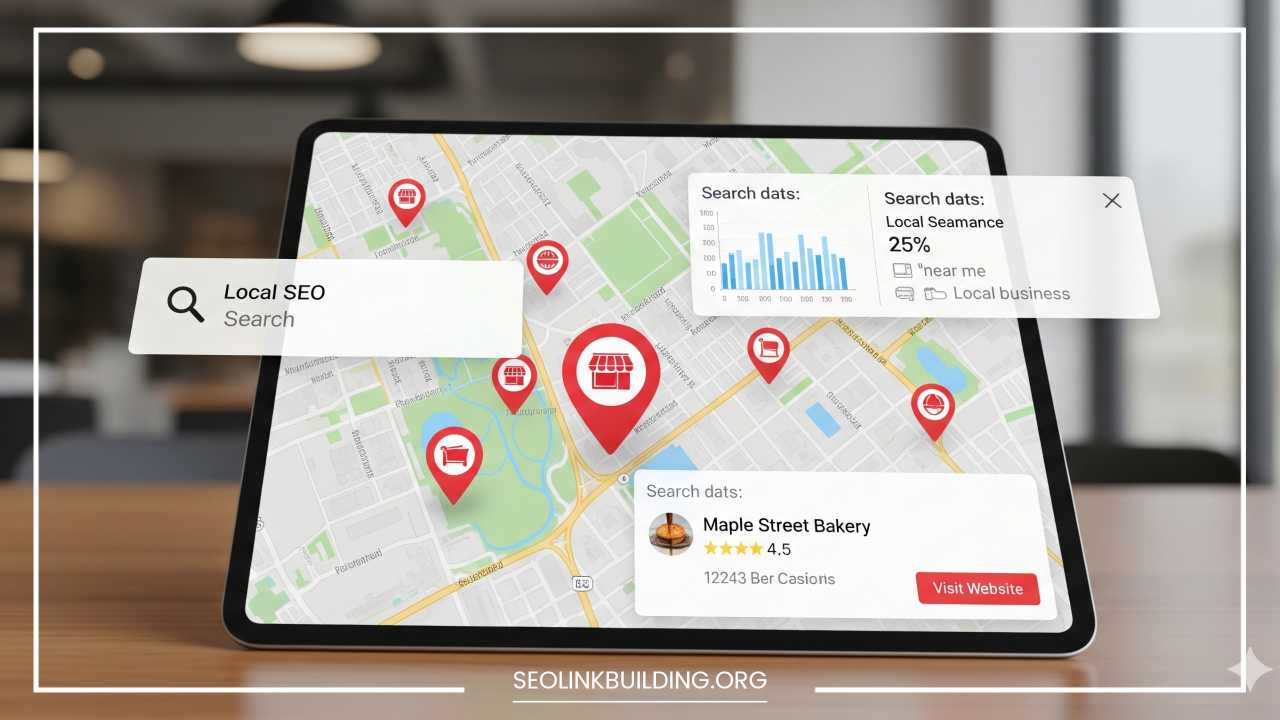
Search Engine Optimization (SEO) is the process of making your website more visible to people who are searching for keywords related to your business. It is a long-term strategy, but getting the basics right from the start is vital. Start with keyword research: what terms are your potential customers typing into search engines? Incorporate these keywords naturally into your page titles, headings, and body text.
On-page SEO also involves technical elements like meta titles and meta descriptions. These are the snippets of text that appear in search engine results. A compelling meta description can significantly improve your click-through rate. Additionally, use “alt text” for your images. Alt text describes the content of an image to search engines (which cannot “see” pictures) and improves accessibility for users with visual impairments.
Site speed and mobile optimization are also major ranking factors. A site that takes more than a few seconds to load will be penalized by search engines and abandoned by users. You can optimize speed by compressing large images, using a fast hosting provider, and minimizing unnecessary scripts. Regularly checking your site’s performance through free online tools can help you identify and fix bottlenecks before they impact your traffic.
Test Your Website
Before you announce your website to the world, you must conduct thorough testing. A broken link or a dysfunctional form can ruin a customer’s first impression. Start by clicking every single link on your site to ensure it leads to the correct page. Test your contact forms to make sure the submissions are actually reaching your inbox.
Testing should happen across different devices and browsers. Just because a site looks great on your desktop using Chrome doesn’t mean it functions correctly on an iPhone using Safari. Check for alignment issues, overlapping text, or buttons that are too small to tap on a mobile screen.
Finally, ask for outside feedback. Sometimes, as the person building the site, you become “blind” to its flaws. Ask a friend or a trusted colleague to navigate the site and try to complete a specific task, such as finding a specific service or filling out the contact form. Observe where they get stuck or confused. This user testing is invaluable for identifying friction points that you can smooth out before the official launch.
Launch Your Website
The launch of your website is an exciting milestone, but it should be approached with a final checklist to ensure everything is in order. Verify that your domain is correctly pointed to your hosting server and that your SSL certificate is active. Check your site’s “Favicon”—the small icon that appears in the browser tab—to ensure it matches your branding.
Once the technical details are confirmed, it is time to make the site live. This usually involves clicking a “Publish” button or removing a “Coming Soon” page. Once live, do one final walkthrough of the live site to ensure the transition didn’t cause any unexpected errors.
Now, shout it from the rooftops. Announce your new website on your social media channels, send an email to your existing customer list, and include the URL in your email signature and on your business cards. The launch is just the beginning of your website’s journey; the goal now is to drive traffic and start converting those visitors into loyal customers.
Maintain and Update Your Website
A website is not a static project that you finish and forget. It is a living digital asset that requires ongoing maintenance to stay secure and effective. Regular updates to your software, plugins, and themes are essential for protecting your site from security vulnerabilities and ensuring compatibility with new web standards.
Beyond technical maintenance, you must keep your content fresh. Outdated information, such as old pricing or former employees still listed on the “About” page, can quickly erode trust. If you have a blog, aim to post regularly. New content gives visitors a reason to return and signals to search engines that your site is active and relevant.
Monitoring performance is also a key part of maintenance. Use analytics tools to track how many people are visiting your site, where they are coming from, and which pages are the most popular. This data allows you to make informed decisions about how to improve the site over time. If you notice a high “bounce rate” on a specific page, you might need to redesign that page or clarify its content to keep visitors engaged.
Common Mistakes to Avoid
In the rush to get online, many business owners fall into the same traps. One of the most common is overcomplicating the design. Flashy animations and complex layouts often distract from the message and slow down the site. Stick to a clean, professional aesthetic that prioritizes the user’s needs.
Ignoring mobile users is another critical error. In an era where mobile browsing dominates, your site must be “mobile-first” in its design philosophy. Another mistake is poor navigation. If a user has to hunt for your contact information or your pricing, they will likely give up and look elsewhere. Ensure your most important information is always easily accessible.
Finally, many sites suffer from a lack of clear Call-to-Actions. Don’t assume your visitors know what to do next; tell them. Whether you want them to call, buy, or subscribe, make that next step obvious and easy to take. By avoiding these common pitfalls, you position your website—and your business—for much greater success.
Final Thoughts
Building a business website is a significant undertaking, but it is one of the most rewarding investments you can make for your brand’s future. By following this structured approach—defining your goals, choosing the right tools, designing for the user, and maintaining your presence—you create a powerful platform that works tirelessly to support your business objectives.
Remember that your website does not have to be perfect on day one. The beauty of the digital world is that it is infinitely editable. Start with a solid, professional foundation and allow your site to evolve as your business grows and as you gather feedback from your customers. The most important step is simply to begin. With the tools and knowledge available today, you have everything you need to create a website that not only looks great but also delivers real, measurable results for your business. Take that first step today, and start building your bridge to the global marketplace.
Frequently Asked Questions
How much does it cost to build a business website from scratch?
The cost of building a business website varies significantly based on the route you choose. If you use a DIY website builder, you might spend between $10 and $50 per month for a subscription that includes hosting and support. If you choose a CMS like WordPress, your initial costs might be lower (around $5 to $15 per month for hosting), but you may have one-time costs for premium themes or specific plugins. Custom-built websites developed by agencies can range from $2,000 to $10,000 or more, depending on the complexity and required features.
How long does it take to create a professional website for a small business?
For a simple informational website using a drag-and-drop builder, you can have a functional site live in as little as a few days. However, a comprehensive professional site typically takes two to four weeks to complete. This timeline includes time for planning the sitemap, writing high-quality content, selecting images, and performing thorough testing before launch. Custom-coded sites or complex eCommerce platforms may take several months to fully develop and refine.
Do I need coding skills to make my own business website?
No, you do not need to know how to code to build a professional website today. Modern website builders and Content Management Systems are designed with user-friendly interfaces that allow you to manage layouts, text, and images visually. While knowing basic HTML or CSS can help you make highly specific aesthetic tweaks, it is entirely possible to launch a high-performing, beautiful site using only built-in tools and templates.
What is the best website builder for beginners starting a business?
The “best” builder depends on your specific needs. If you want ease of use and an all-in-one package where you don’t have to worry about technical maintenance, drag-and-drop platforms are excellent choices. If you are looking for long-term scalability and deep SEO control, a CMS like WordPress is often considered the industry standard. Most platforms offer free trials, so it is a good idea to test a few interfaces to see which one feels most intuitive to you.
How do I get my business website to show up on Google search results?
Getting your site to appear on Google requires Search Engine Optimization (SEO). You must ensure your site is “indexable” by search engines, meaning it has no technical errors preventing Google from reading it. Beyond that, you should focus on keyword optimization, mobile responsiveness, and fast loading speeds. Registering your site with Google Search Console and creating a “Google Business Profile” are also essential steps for improving your visibility in local search results.
Should I hire a professional or build my business website myself?
This decision usually comes down to your budget and your time. Building it yourself is cost-effective and gives you complete creative control, which is often ideal for new entrepreneurs. However, hiring a professional can save you dozens of hours and ensures that technical aspects like advanced SEO and security are handled by an expert. Many businesses start with a DIY site and then hire a professional to redesign or “level up” the site once the business begins generating consistent revenue.