
Difference Between Advertising and Publicity

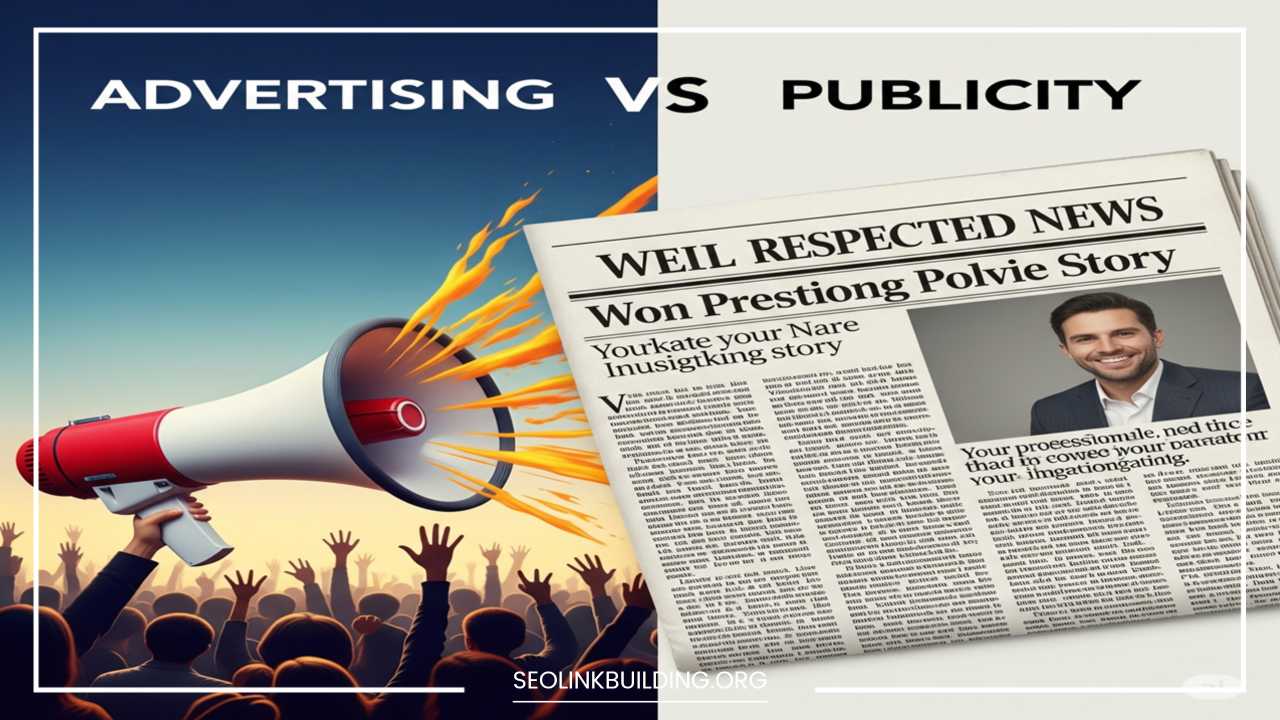
Beyond the Buzz: Deconstructing Advertising and Publicity – A Fundamental Divide
In the sprawling, cacophonous landscape of modern commerce, where brands clamor for attention and consumers are bombarded with messages, two terms are frequently uttered, often interchangeably, yet possess fundamentally distinct roles and impacts: advertising and publicity.
While both serve as potent tools within the broader marketing and communications arsenal, their mechanisms, objectives, perceived credibility, and underlying philosophies are as different as a meticulously choreographed stage play and a spontaneous, captivating street performance. Conflating them is to misunderstand the very dynamics of market influence and consumer perception.
This article will embark on a comprehensive dissection of these two powerful forces, exploring their individual characteristics, highlighting their crucial differentiators, and ultimately, illuminating their synergistic potential when strategically deployed within an integrated communications framework.
Defining the Pillars: Advertising – The Art of Controlled Persuasion
At its core, advertising is a paid form of non-personal communication from an identified sponsor, designed to inform, persuade, or remind a target audience about a product, service, organization, or idea. It is the quintessential “push” mechanism in marketing, where a brand directly pays to convey its message precisely as intended, to an audience it aims to reach.
The defining characteristic of advertising is control. From the specific words chosen for a tagline, the visuals accompanying a campaign, the emotional tone conveyed, to the exact placement and timing of a message, the advertiser dictates every element. This absolute control extends to the frequency with which the message is delivered, allowing for consistent branding and message repetition – a key driver of brand recall and recognition.
Key Characteristics of Advertising:
- Control: The advertiser has near-absolute control over the content, timing, placement, and frequency of the message. This means the brand can precisely tailor its narrative and ensure it aligns perfectly with its marketing objectives.
- Cost: Advertising inherently involves a direct financial outlay. This can range from fractions of a cent for a click on a digital ad to millions for a Super Bowl commercial. The cost is a direct investment in media space or airtime.
- Credibility (Perceived): While effective, advertising generally carries a lower perceived credibility in the eyes of the consumer compared to earned media. Consumers are acutely aware that the message is paid for and therefore inherently biased. The overt promotional nature often triggers a degree of skepticism, requiring advertisers to work harder to build trust.
- Reach: Advertising offers highly targeted reach. Modern digital platforms, in particular, allow advertisers to pinpoint specific demographics, psychographics, behaviors, and interests, minimizing wasted impressions and maximizing relevance. Traditional media, while broader, also offers segmentation (e.g., a business magazine for B2B ads).
- Longevity: The life cycle of an advertising campaign is typically finite, tied to a specific budget and schedule. Once the budget is exhausted or the campaign period ends, the advertising message largely ceases to appear.
- Purpose: The primary purpose of advertising is often direct persuasion, leading to sales, lead generation, website traffic, or specific calls to action. It also serves to build brand awareness, reinforce brand image, communicate product features, and drive competitive differentiation.
Types of Advertising: The spectrum of advertising is vast. It encompasses traditional forms like television commercials, radio spots, print ads (newspapers, magazines), outdoor advertising (billboards, bus shelters), and direct mail. The digital age has ushered in a plethora of new formats, including pay-per-click (PPC) ads on search engines, social media ads (Facebook, Instagram, LinkedIn), display advertising on websites, video ads (YouTube, streaming services), native advertising (content designed to blend with editorial content), and programmatic advertising.
Advantages of Advertising: Its primary advantages lie in its speed of deployment, the precise control it offers over the message, its ability to ensure consistent branding, and its often measurable return on investment (ROI) through analytics and conversion tracking.
Disadvantages of Advertising: The most significant drawbacks are the substantial financial investment required, the potential for “ad fatigue” among consumers who are oversaturated with messages, and the inherent challenge of overcoming consumer skepticism due to its paid nature.
Defining the Pillars: Publicity – The Power of Earned Endorsement
In stark contrast to advertising, publicity (often used interchangeably with Public Relations, though PR is a broader discipline that encompasses publicity) refers to unpaid media coverage, or “earned media,” generated by an organization, product, or individual. It involves securing editorial space in media outlets (newspapers, magazines, TV, radio, online news sites, blogs, social media) through newsworthy activities and compelling storytelling, rather than direct payment.
The defining characteristic of publicity is its lack of control, balanced by its inherent credibility. Brands don’t pay for the space; they earn it by providing information that is deemed valuable, interesting, or relevant by independent third parties – journalists, editors, influencers, or the public itself.
Key Characteristics of Publicity:
- Control: The brand has very limited or no control over the final message, its placement, or the editorial angle taken by the media. A journalist might focus on a specific aspect of a story, or even introduce a negative angle, entirely beyond the brand’s direct influence.
- Cost: Publicity is “free” in the sense that no direct payment is made for media space. However, it requires a significant investment of time, effort, and resources in building relationships with media, crafting compelling narratives, developing press materials, and executing newsworthy events. It’s an indirect cost, focused on resource allocation rather than media buys.
- Credibility (Perceived): This is where publicity truly shines. Because the message is delivered by an independent third party (a respected news outlet, a trusted journalist, a peer), it carries significantly higher credibility than an overt advertisement. Consumers tend to view earned media as objective, unbiased information, leading to greater trust and believability.
- Reach: Publicity’s reach can be unpredictable. A single compelling story can go viral, garnering widespread attention far beyond what an advertising budget might achieve. Conversely, a carefully crafted press release might go unnoticed. Its reach is organic and often relies on the media’s discretion and audience engagement.
- Longevity: While a specific news story might be fleeting, the cumulative effect of positive publicity over time contributes significantly to a brand’s long-term reputation and public image. Seminal articles or features can be referenced for years.
- Purpose: The primary purpose of publicity is to build reputation, foster goodwill, generate positive awareness, enhance credibility, manage crises, and establish thought leadership. It aims to shape public opinion and perception through authentic, non-promotional means.
Types of Publicity: Common tactics include issuing press releases, organizing press conferences, facilitating media interviews, creating media kits, staging events (product launches, charity galas), engaging in corporate social responsibility (CSR) initiatives that garner positive attention, and leveraging influencer relations where influencers genuinely endorse a brand due to their positive experience. Word-of-mouth (WOM) marketing, driven by consumer experiences and shared stories, is also a powerful form of publicity.
Advantages of Publicity: Its paramount advantage is the high level of credibility and trust it generates, which can be invaluable for brand building. It is also often more cost-effective in terms of direct spend, can achieve broader reach through viral sharing, and offers a halo effect of prestige by association with reputable media outlets.
Disadvantages of Publicity: The significant lack of control is its main drawback. Negative coverage, if mishandled, can be extremely damaging. Timing is often unpredictable, and it can be challenging to directly measure its impact on specific sales or conversions, making ROI calculation more complex than advertising.
The Crucial Differentiators: A Head-to-Head Comparison
While both advertising and publicity aim to influence perceptions and promote offerings, their operational models are fundamentally divergent. Understanding these differences is paramount for any effective marketing strategy.
-
Control vs. Lack of Control: The Fundamental Schism
- Advertising: Offers absolute control. The brand dictates the message, visual, audio, tone, placement, and timing. It’s a monologue, precisely scripted and delivered.
- Publicity: Involves a significant lack of control. The brand provides information, but the media outlet (or individual) decides if, how, and when to publish it, and what angle to take. It’s a dialogue, albeit one where the brand doesn’t hold the editorial pen. This lack of control is the price of enhanced credibility.
-
Cost vs. Investment (Paid vs. Earned Media)
- Advertising: Is a direct, paid expenditure for media space and creative production. The more exposure desired, the more money must be spent. It’s a transaction.
- Publicity: Is “earned media.” There’s no direct payment for the space itself. Instead, it involves an investment of time, effort, relationships, and strategic resource allocation to create newsworthy content and engage with media. It’s a relationship built on merit and value.
-
Credibility vs. Skepticism: The Trust Factor
- Advertising: Due to its paid nature, advertising is often viewed with a degree of skepticism by consumers. They understand it’s a promotional message, designed to sell, which can dilute its trustworthiness.
- Publicity: Holds significantly higher credibility. When a third party (a journalist, an independent reviewer, a peer) speaks positively about a brand, it’s perceived as an objective endorsement, carrying far more weight and fostering greater trust among the audience. This third-party validation is invaluable.
-
Message Shaping vs. Message Interpretation
- Advertising: The brand meticulously crafts its message, ensuring consistency and brand alignment across all platforms. The message is explicit and direct.
- Publicity: The message is filtered and interpreted by the media. While the brand can provide key messages, the ultimate narrative and emphasis are at the discretion of the editor or journalist. This can lead to variations in how the story is told.
-
Targeting vs. Broad Exposure
- Advertising: Can be highly targeted, allowing brands to focus resources on specific demographics, psychographics, or behaviors. This precision minimizes waste and maximizes relevance.
- Publicity: While a PR effort might target specific media outlets, the eventual reach of a news story can be broad and somewhat unpredictable. A story picked up by a major wire service, for instance, could gain massive, untargeted exposure, which can be a boon or a challenge depending on the objective.
-
Timing & Pacing
- Advertising: Campaigns are scheduled and paced according to the brand’s strategic plan. Launch dates, flighting schedules, and frequency are all predetermined.
- Publicity: Timing is largely dependent on the news cycle and the media’s interest. While a brand can pitch stories at opportune times, there’s no guarantee of immediate or desired publication. It’s more reactive to opportunities.
-
Measurement & ROI
- Advertising: Often offers quantifiable metrics for ROI calculation – click-through rates, conversion rates, cost per acquisition, impressions, reach, frequency. Its direct impact on sales can often be traced.
- Publicity: Measuring the direct ROI of publicity is more challenging. While metrics like media impressions, sentiment analysis, and message pull-through exist, linking them directly to sales or leads is complex. Its value often lies in intangible assets like reputation, trust, and brand equity.
-
Longevity & Legacy
- Advertising: Campaigns have a limited shelf life. Once the media buy ends, the ads disappear.
- Publicity: Can have a lasting impact. Positive news articles or features can be archived, referenced, and contribute to the brand’s historical narrative and ongoing reputation. It builds a legacy of trust and public interest.
-
Risk & Reward
- Advertising: Generally involves predictable outcomes and lower risk, given the control exercised. What you pay for is what you get, albeit with potential for diminishing returns.
- Publicity: Carries higher risk due to lack of control (e.g., negative press), but also offers the potential for immensely higher rewards in terms of credibility, reach, and organic virality.
The Strategic Synergy: When and How They Complement Each Other
In today’s sophisticated marketing landscape, the notion of choosing between advertising and publicity is increasingly obsolete. The most effective strategies embrace an Integrated Marketing Communications (IMC) approach, where these two powerful forces are orchestrated to work in concert, amplifying each other’s strengths and mitigating individual weaknesses.
Consider the following scenarios where advertising and publicity create a powerful synergy:
-
New Product Launch:
- Advertising: Can be used to create initial awareness and excitement, reaching a broad target audience with precise messaging about the product’s features and benefits. Teaser campaigns can build anticipation.
- Publicity: Concurrently, PR efforts can generate editorial reviews, expert endorsements, and news stories about the product’s innovation or societal impact. A positive review in a respected tech publication, following a glossy ad campaign, provides crucial third-party validation that dramatically enhances credibility and consumer trust. The ads create the buzz, the publicity authenticates it.
-
Crisis Management:
- Publicity: In a crisis, immediate, transparent communication through earned media (press conferences, statements to news outlets) is paramount to manage public perception and convey empathy. This helps establish facts and demonstrate accountability.
- Advertising: Can then be used to reinforce key messages, clarify factual inaccuracies, or announce corrective actions to a mass audience rapidly and directly. For instance, an airline facing a service disruption might use ads to communicate revised flight schedules, while PR handles empathetic outreach and explanations. The ads provide information, the publicity rebuilds trust.
-
Brand Building and Thought Leadership:
- Advertising: Ensures consistent brand messaging and reinforces desired brand attributes across various touchpoints, creating a strong, memorable identity.
- Publicity: Positions the brand’s leaders as industry experts through media interviews, speaking engagements, and authored articles. Being quoted in financial news outlets or featured in industry reports builds thought leadership, which advertising can then leverage by highlighting these accolades. The ads build the image, the publicity builds the reputation.
-
The “Amplification” Effect:
- A compelling advertising campaign can generate significant public interest, prompting media outlets to cover the campaign itself or the brand behind it. Similarly, a groundbreaking piece of publicity (e.g., a CSR initiative that goes viral) can provide authentic content that advertisers can then incorporate into their paid campaigns, lending them greater authenticity and resonance. Earned media often provides excellent “social proof” that can be repurposed in advertising.
-
Budget Allocation and Optimization:
- For smaller businesses with limited budgets, publicity can often be a more cost-effective initial strategy to gain traction and build credibility, especially for a new product or service. Once initial buzz is generated, a targeted advertising campaign can capitalize on that momentum. For larger corporations, a balanced approach ensures both wide reach and deep trust.
Evolution in the Digital Age: Blurred Lines and New Opportunities
The digital revolution has profoundly impacted both advertising and publicity, sometimes blurring their traditional boundaries.
- Influencer Marketing: Sits squarely in this blurred zone. While brands pay influencers (a form of advertising), the appeal lies in the influencer’s perceived authenticity and the audience’s trust (akin to publicity). Disclosure of sponsored content is crucial, but the underlying mechanism often leverages the credibility of the influencer.
- Native Advertising & Sponsored Content: These paid placements are designed to mimic the editorial style and content of the platform they appear on, aiming to be less disruptive and more engaging than traditional ads. They borrow the credibility of the publishing platform, though transparency about their paid nature is ethically important.
- Democratization of Publicity: Social media platforms have empowered individuals and smaller entities to generate their own “publicity” without traditional media gatekeepers. A compelling tweet, a viral video, or a widely shared blog post can achieve immense reach and influence, functioning as organic, earned media.
- The Rise of Content Marketing: This strategy focuses on creating and distributing valuable, relevant, and consistent content to attract and retain1 a clearly defined audience. It inherently bridges the gap between advertising (as content can be promoted via paid channels) and publicity (as valuable content can be earned media through organic sharing and backlinks).
- AI and Data Analytics: These technologies are revolutionizing both fields. AI can optimize ad targeting and creative, while also helping PR professionals identify media trends, sentiment, and influential journalists more effectively. Data analytics provides deeper insights into the performance of both paid and earned media efforts.
Final Thoughts
Advertising and publicity, while distinct in their mechanisms, objectives, and inherent characteristics, are not adversaries but rather complementary forces in the intricate dance of market communication. Advertising, with its controlled message and precise targeting, is the powerful direct address. Publicity, with its third-party endorsement and organic reach, is the credible conversation.
The savvy marketer of today recognizes that true market impact stems from a holistic approach, where the controlled persuasion of advertising lays the groundwork, and the earned validation of publicity builds enduring trust and reputation.
Understanding their fundamental differences is not merely an academic exercise; it is the strategic imperative for crafting integrated campaigns that resonate deeply with consumers, build robust brands, and ultimately drive sustainable success in a competitive world. It is not a choice between one or the other, but a strategic deployment of both, synergistically working towards a common goal of captivating minds and earning loyalty.