What Is SEO in Digital Marketing?


What Is SEO in Digital Marketing? | Guide to Search Engine Optimization
In the expansive universe of modern business, the internet is not just a tool; it’s the primary marketplace, boardroom, and customer service center. Digital marketing is the set of strategies and tactics businesses employ to promote their products, services, or brands online. It encompasses a vast array of channels—from social media to email, paid advertising, and content creation. At the heart of this ecosystem, driving organic visibility and sustainable growth, lies Search Engine Optimization (SEO).
What is Digital Marketing? (Brief Overview)
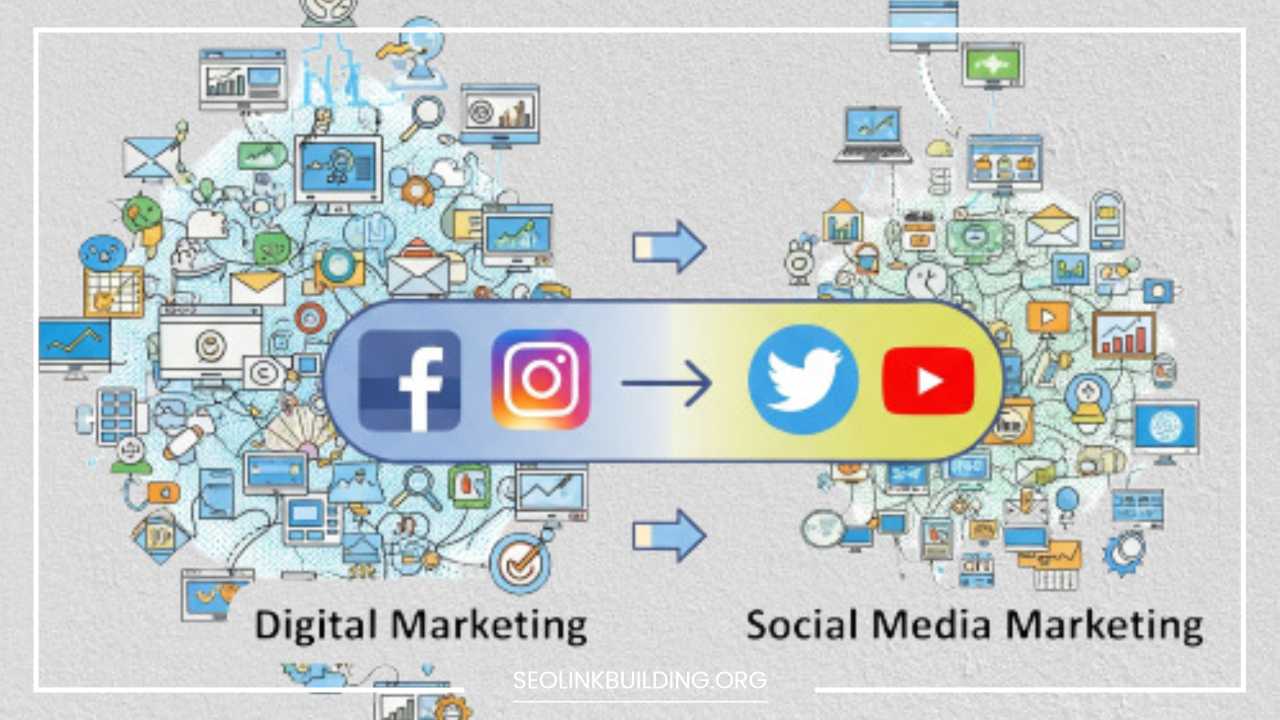
Digital marketing is the promotion of products or brands using electronic devices or the internet. It includes various methods such as Search Engine Marketing (SEM), which incorporates both SEO and Paid Per Click (PPC) advertising; Social Media Marketing (SMM); Content Marketing; Email Marketing; and Affiliate Marketing. Its core objective is to reach the right audience, at the right time, in the right place (digitally), to achieve specific business goals, whether that’s brand awareness, lead generation, or direct sales. It is fundamentally about creating a measurable and interactive connection between a business and its potential customers online.
What is SEO?
Search Engine Optimization (SEO) is the practice of increasing the quantity and quality of traffic to your website through organic search engine results. It is not about paying for placement; it is about earning it. In simple terms, SEO is the process of making your website more visible when people search for products or services related to your business on search engines like Google, Bing, and others. The higher your website ranks in the search results, the more likely you are to capture the user’s attention and draw them to your site. This practice is a blend of art and science, requiring technical proficiency, creative content strategies, and a deep understanding of user behavior and search engine algorithms.
Why SEO is a Foundational Component of Digital Marketing
SEO stands apart from many other digital marketing channels because it is an inbound marketing strategy. This means the customer is actively seeking a solution, and your SEO efforts ensure your business is present at that precise moment of intent. Unlike paid ads, which cease to deliver traffic the moment you stop paying, effective SEO builds an asset—your website’s ranking and authority—that continues to generate traffic over the long term. It provides the necessary foundation for other channels to succeed. For instance, high-quality, SEO-optimized content is the fuel for successful social media sharing and email marketing campaigns. Without a strong SEO base, a business is essentially invisible to the vast majority of search users who are actively looking for what it offers.
Brief History and Evolution of SEO
SEO emerged in the mid-1990s, coinciding with the rise of the first major search engines like Lycos, AltaVista, and Yahoo. In its infancy, SEO was primitive, largely relying on simple, often manipulative, tactics like keyword stuffing (repeating keywords excessively) and invisible text. The goal was simply to signal to the search engine crawlers that a page was relevant for a given term.
However, as search engines like Google gained dominance and developed more sophisticated algorithms—such as PageRank—the focus shifted. Google’s algorithms sought to measure authority and relevance more accurately, leading to the rise of link building as a core strategy. Over the past two decades, SEO has matured dramatically. Major updates like Panda (focused on content quality), Penguin (focused on link quality), and Hummingbird (focused on semantic search and user intent) forced the industry to move away from manipulative tactics (known as black-hat SEO) toward creating genuine value for the user (white-hat SEO). Today, modern SEO is a holistic practice centered on superior user experience, comprehensive content, and robust technical infrastructure.
How Search Engines Work
To successfully practice SEO, one must first understand the fundamental operations of a search engine. While their exact algorithms are closely guarded trade secrets, the general process they follow can be broken down into three main stages: crawling, indexing, and ranking.
Crawling, Indexing, and Ranking
- Crawling: This is the discovery phase. Search engines employ automated programs called crawlers or spiders (like Googlebot) that systematically explore the internet. They follow links from one known page to another, downloading the content of each page they encounter. This process ensures the search engine has an up-to-date map of the World Wide Web. Crawlers read the code (HTML, CSS, JavaScript) and content of the pages.
- Indexing: Once a page is crawled, the search engine processes the information and stores it in a massive database, known as the index. This process involves analyzing the content, categorizing it, and storing key information like keywords, page freshness, and media type. The index is not the web itself; it is the search engine’s library of all the pages it knows about. If a page isn’t in the index, it cannot appear in search results, regardless of its quality.
- Ranking: This is the retrieval and ordering phase. When a user enters a search query, the search engine quickly scans its index for all relevant pages. It then uses its complex, proprietary algorithms to sort these matching pages from the most useful to the least useful. The result is the Search Engine Results Page (SERP), which presents the most authoritative, relevant, and high-quality pages at the top.
Algorithms and How They Affect SEO
Search engine algorithms are sophisticated formulas composed of hundreds of individual ranking factors. Their sole purpose is to provide the best possible answer or resource for a user’s query. These algorithms are constantly being refined and updated. Google, for example, makes thousands of minor algorithm tweaks annually and often releases several major, broad-core updates that can significantly shift the search landscape.
The algorithms weigh various factors to determine a page’s rank, including:
- Relevance: How closely the content on the page matches the user’s search intent and keywords.
- Authority: Measured primarily by the number and quality of backlinks (links from other reputable websites).
- Quality: Assessed by factors like content depth, originality, and adherence to Google’s Quality Rater Guidelines, including the E-E-A-T concept (Experience, Expertise, Authoritativeness, and Trustworthiness).
- User Experience (UX): Factors like page speed, mobile-friendliness, and low bounce rate signal a positive user experience, which is heavily favored.
Understanding these algorithmic priorities is crucial, as they dictate the best practices for SEO. The fundamental shift in algorithms over time has been away from keyword manipulation and toward a focus on delivering genuine value to the user.
Major Search Engines (Google, Bing, etc.)
While the principles of SEO apply broadly across all search platforms, the reality is that the landscape is dominated by a few key players.
- Google: By far the most dominant search engine globally, Google holds a market share exceeding 90% in many regions. Consequently, most SEO efforts are primarily focused on satisfying Google’s algorithms and guidelines. Google’s sophisticated understanding of search intent and its integration of advanced AI models like RankBrain and BERT (and now Gemini) set the gold standard for search quality.
- Bing: Owned by Microsoft, Bing is the second-largest search engine, with significant market share in certain demographics and business contexts (often as the default search for Windows and Edge users). While the core SEO principles are similar, Bing places slightly different emphasis on certain factors, such as social signals and the freshness of content.
- Other Search Engines: This category includes platforms like DuckDuckGo (which prioritizes user privacy) and region-specific engines like Baidu (China) and Yandex (Russia). SEO for these platforms may require unique adaptations, such as considering language-specific factors and different technical requirements. However, a site that is well-optimized for Google is typically in a strong position to perform well on other search engines with minor adjustments.
Key Components of SEO
SEO is not a single action but a multi-faceted discipline comprising several interconnected practices. These can be categorized into four core areas: On-Page SEO, Off-Page SEO, Technical SEO, and Local SEO. A successful strategy requires proficiency in all four.
1. On-Page SEO
On-Page SEO refers to all the optimization efforts applied directly to the website pages themselves. These are the elements that you, the website owner, have full control over. The goal is to make the content and structure of each page perfectly clear to both search engine crawlers and human users, signaling exactly what the page is about.
Keyword Research and Usage
Keyword research is the bedrock of On-Page SEO. It involves identifying the actual words and phrases your target audience uses when searching for information related to your business. It moves beyond simple, single words to include long-tail keywords (longer, more specific phrases) and an understanding of search intent—what the user truly hopes to accomplish with their query (e.g., informational, navigational, transactional, or commercial investigation).
Once relevant keywords are identified, they must be used strategically within the content. This includes incorporating the primary keyword naturally into the main body copy and using related, secondary keywords to provide context and depth. The key is relevance and natural language, moving away from “keyword density” and toward semantic SEO, where the entire context of the content is considered.
Title Tags and Meta Descriptions
These are two of the most critical On-Page elements, as they are the first things a user sees on the SERP, acting as the page’s advertisement.
- Title Tag (
): This is the page title that appears in the browser tab and, most importantly, as the main, clickable blue link on the SERP. It is a primary ranking factor. It should be concise, compelling, include the primary keyword near the beginning, and typically be under 60 characters to avoid being truncated by Google.
- Meta Description: This is the short paragraph of text that appears below the title tag on the SERP. While not a direct ranking factor, a compelling meta description is crucial for Click-Through Rate (CTR). It summarizes the page’s content and provides a call-to-action, encouraging the user to click. It should be kept under
160 characters.
Header Tags (H1, H2, etc.)
Header tags (,
,
, etc.) provide structure to the content, much like an outline in an essay. The H1 tag should be used once, clearly stating the main topic of the page, often matching or closely resembling the page’s title. The subsequent H2 to H6 tags are used to structure subheadings, breaking the content into easily digestible sections. This hierarchy helps search engines understand the relationships between different topics on the page, and it significantly improves the readability and user experience for human visitors.
Internal Linking
Internal linking is the practice of linking one page of your website to another page on the same website. This serves three main purposes:
- Navigation: It helps users navigate the site and find relevant content easily.
- Crawlability: It helps search engine crawlers discover and index new pages.
- Authority Distribution: It helps distribute Page Authority and Link Equity across the site. Pages with many internal links pointing to them are often considered more important or authoritative by search engines. Links should use descriptive anchor text (the clickable text) that accurately reflects the destination page’s content.
Image Optimization
Images are essential for user engagement but can slow down a page if not properly optimized. Key image optimization tactics include:
- Compression: Reducing the file size without sacrificing noticeable quality to improve page load speed.
- Descriptive Filenames: Using relevant keywords in the image file name (e.g.,
blue-widget-model-1.jpginstead ofIMG_4567.jpg). - Alt Text (Alternative Text): Providing a concise, descriptive phrase in the alt text attribute. This text is used by screen readers for visually impaired users and by search engines to understand the image’s content. It is a crucial accessibility and ranking factor.
2. Off-Page SEO
Off-Page SEO refers to all the actions taken outside of your website to influence your search engine rankings. These actions signal to search engines the authority, relevance, and trustworthiness of your site. In essence, it’s about establishing your reputation across the internet.
Backlinks and Link-Building Strategies
The most crucial component of Off-Page SEO is backlinks, which are links from other websites pointing to your site. Backlinks are often considered “votes of confidence” in the SEO world. If a highly authoritative and relevant website links to your content, it signals to search engines that your page is valuable and trustworthy.
The goal is not quantity, but quality. A backlink from a high-Domain Authority (DA) website (e.g., a major news publication or university) is far more valuable than dozens of links from low-quality, spammy sites.
Effective link-building strategies include:
- Content Creation: Producing genuinely high-quality, unique, and engaging content that naturally attracts links (link bait).
- Guest Posting: Writing an article for another reputable website in your industry that includes a link back to your site.
- Broken Link Building: Finding broken links on other websites and suggesting your relevant content as a replacement.
- Brand Mentions: Monitoring unlinked mentions of your brand and requesting the site owner to turn the mention into a clickable link.
Domain Authority
Domain Authority (DA), a metric popularized by Moz, is a predictive score (on a 1 to 100 logarithmic scale) that estimates how well a website will rank on search engine result pages (SERPs). While not a Google ranking factor itself, it is a highly useful comparative metric that aggregates various SEO factors, with the overall backlink profile being the most significant contributor. A high DA generally correlates with a strong, trustworthy website.
Social Signals (Indirect Impact)
Social signals refer to shares, likes, comments, and overall visibility on social media platforms like Facebook, X (formerly Twitter), and LinkedIn. While Google has stated that social shares are not a direct ranking factor, they do have a significant indirect impact on SEO:
- Exposure: A high volume of social shares increases the visibility of your content, leading to more people seeing it, clicking it, and potentially linking to it from their own high-authority websites or blogs.
- Traffic: Social media drives traffic, and if that traffic engages positively with your content (low bounce rate, high time on page), it signals to Google that your page satisfies user intent, which is a ranking factor.
3. Technical SEO
Technical SEO ensures that a website can be effectively crawled and indexed by search engines. It addresses the technical foundation of the website, focusing on structural elements that influence search performance.
Site Speed and Performance
Page load speed is a critical ranking factor and a vital component of user experience. Modern internet users expect pages to load in under two seconds. Slow websites lead to higher bounce rates and frustrated users. Optimization involves:
- Minifying CSS, HTML, and JavaScript.
- Leveraging browser caching.
- Optimizing server response time.
- Using a Content Delivery Network (CDN).
- Optimizing images (as mentioned in On-Page SEO).
Google uses Core Web Vitals—metrics related to loading, interactivity, and visual stability—as key measurements of page experience.
Mobile-Friendliness
With the majority of web traffic now coming from smartphones, a responsive and mobile-friendly design is non-negotiable. Google operates on a mobile-first indexing system, meaning the mobile version of your website is primarily used for indexing and ranking. Sites must be easily viewable and usable on all screen sizes, with tappable elements appropriately spaced and text legible without zooming.
Secure Websites (HTTPS)
Website security, specifically having a secure connection, is a confirmed minor ranking signal. Secure websites use HTTPS (Hypertext Transfer Protocol Secure) rather than HTTP. HTTPS encrypts data transferred between the user’s browser and the site’s server, protecting privacy. Search engines favor HTTPS sites, and modern browsers often flag non-HTTPS sites as “Not Secure,” which severely damages user trust and conversion rates.
Sitemap and robots.txt
- Sitemap (XML Sitemap): This is a file that lists all the pages, videos, and files on your site that you want search engines to crawl and index. It acts as a roadmap for the search engine crawlers, ensuring they don’t miss any important content. Sitemaps are essential for larger sites or sites with complex internal linking structures.
- robots.txt: This text file, located in the root directory of your website, instructs search engine crawlers which pages or sections of the site they should not crawl. It’s used to manage crawl budget and prevent search engines from indexing unimportant or private pages (e.g., administrator login pages).
4. Local SEO
Local SEO is a highly specialized area of optimization focused on improving visibility for businesses that serve a specific geographic area (e.g., a dentist, a restaurant, or a plumber). When users search for “coffee shop near me” or “plumber in [city name],” Local SEO determines which businesses appear in the local pack and map results.
Google Business Profile
The Google Business Profile (GBP), formerly Google My Business (GMB), is the single most important tool for Local SEO. This free profile manages how a business appears across Google Search and Google Maps. Optimization involves:
- Completing all fields (address, phone number, hours, services/products).
- Verifying ownership.
- Posting regular updates and high-quality photos.
- Selecting accurate primary and secondary business categories.
Local Citations
Local citations are online mentions of your business’s NAP (Name, Address, Phone number). These appear on directories, business listings (like Yelp, Yellow Pages), and industry-specific websites. Consistency of NAP information across all these citations is critical, as discrepancies confuse search engines and reduce local authority.
Reviews and NAP Consistency
Online reviews (especially on the GBP) are a crucial ranking factor and conversion driver for local businesses. High-quality reviews, and the business’s responsiveness to them, build trust and relevance. NAP consistency (ensuring the business name, address, and phone number are identical everywhere) is a non-negotiable fundamental of Local SEO success.
Importance of SEO in Digital Marketing
The importance of SEO transcends simple visibility; it is the engine for sustainable, high-quality business growth in the digital age.
Organic Traffic vs. Paid Traffic
The traffic generated by SEO is known as organic traffic, meaning users arrived at the site naturally via search results without the business paying for that click. This stands in contrast to paid traffic (PPC/Google Ads), where you bid for placement.
- Organic Traffic: Provides long-term, compounding returns. It is often viewed as more credible by users. Once you rank, traffic is free (though the investment in content creation and SEO maintenance is not).
- Paid Traffic: Provides immediate results and granular control over messaging. It is highly effective for short-term goals or testing, but traffic stops the moment the budget runs out.
A strong digital marketing strategy utilizes both, but organic traffic typically accounts for the majority of website visits and is essential for brand longevity.
Long-Term ROI and Cost-Effectiveness
While SEO requires an upfront investment in time, expertise, and content, its Return on Investment (ROI) over the long term is unparalleled. Unlike paid advertising, where the Cost Per Acquisition (CPA) is incurred with every conversion, the cost of an organically acquired customer decreases over time as rankings solidify. High-ranking content can continue generating qualified leads and sales for months or years with minimal additional maintenance, making SEO one of the most cost-effective digital marketing strategies available.
SEO as Part of the Inbound Marketing Strategy
SEO is the cornerstone of the inbound marketing methodology, which focuses on drawing customers in by creating valuable content and experiences tailored to them. Instead of pushing an advertising message out (outbound), SEO helps businesses pull customers in at the precise moment they are actively seeking a solution. By optimizing content for different stages of the customer journey (awareness, consideration, decision), SEO ensures the business is present when the prospect needs it most.
Builds Credibility and Trust
Users inherently trust search engines to provide the most authoritative and reliable information. Studies consistently show that users overwhelmingly prefer to click on organic results rather than paid advertisements. The mere presence on the first page of Google, particularly in the top three spots, bestows a high degree of credibility and trust upon a brand. This implied endorsement from the search engine is invaluable for long-term brand building and competitive advantage. A high ranking suggests E-E-A-T (Experience, Expertise, Authoritativeness, Trustworthiness), a concept heavily emphasized by Google.
SEO vs. Other Digital Marketing Channels
While SEO is foundational, it operates within an ecosystem of other marketing channels. Understanding how it compares and complements them is vital for a unified digital strategy.
SEO vs. PPC (Google Ads)
| Feature | SEO (Organic Search) | PPC (Paid Search/Google Ads) |
| Speed of Results | Slow (3-6+ months) | Immediate |
| Cost Structure | Investment in time/content; clicks are free | Pay per click (CPC) |
| Trust/Credibility | High (users trust organic results) | Lower (clearly marked as an ad) |
| Longevity | Permanent asset; long-term growth | Temporary; stops when budget runs out |
| Control | Less control over ranking process | Full control over ad copy, keywords, and budget |
Complementary Use: Businesses often use PPC to quickly test keywords and messaging before committing to a long-term SEO content strategy. They also use PPC to cover high-value keywords where organic ranking is highly competitive or for fast promotional campaigns.
SEO vs. Social Media Marketing
Social Media Marketing (SMM) focuses on building a community, driving engagement, and increasing brand awareness on platforms like Instagram, TikTok, and LinkedIn. It is excellent for viral content and direct customer interaction.
The Difference: SEO is an intent-based marketing channel (users are actively searching for a need), whereas SMM is an interruption-based channel (content appears in users’ feeds while they are doing something else). SMM is poor at capturing users with high commercial intent at the moment of search.
Complementary Use: Social media is a powerful distribution channel for SEO-optimized content, giving it an initial boost and generating those crucial social signals that can lead to valuable backlinks. SEO provides the structured, long-form, evergreen content that social platforms can tease and link to.
How SEO Complements Content Marketing and Email Marketing
- Content Marketing: SEO is the vehicle for successful content marketing. Without SEO (keyword research, technical optimization), even the best content will never be found. SEO dictates what content to create, based on audience demand (search volume) and search intent.
- Email Marketing: SEO-driven content (guides, case studies, blog posts) is often used as the lead magnet to capture email addresses. Email campaigns then nurture these leads, often linking back to highly relevant, authoritative, and SEO-optimized pages on the website, further driving traffic and positive user engagement signals.
Common SEO Tools and Platforms
Effective SEO is nearly impossible without the aid of specialized tools that help marketers analyze performance, identify opportunities, and diagnose technical issues. These tools provide the necessary data and insights to guide strategic decisions.
Google Search Console, Google Analytics
These free tools provided by Google are essential for any SEO professional:
- Google Search Console (GSC): This is the direct communication channel between your website and Google. It provides critical data on how Google sees your site, including indexing status, crawling errors, mobile usability issues, security warnings, and, crucially, performance reports showing which queries users are searching for to find your site, your average ranking position, and click-through rate (CTR).
- Google Analytics (GA): This tool provides comprehensive data on user behavior after they arrive on your site. Marketers use it to track organic traffic volume, conversion rates, bounce rates, time on page, and user demographics. Analyzing this data helps determine whether the SEO traffic is high-quality and achieving business goals.
SEMrush, Ahrefs, Moz
These are comprehensive, industry-leading, paid SEO suites that provide an all-in-one platform for competitive analysis, keyword research, and site auditing:
- SEMrush and Ahrefs: Both are robust tools famous for their vast backlink databases and competitor analysis features. They allow marketers to see exactly which keywords competitors rank for, where their backlinks come from, and estimate their organic traffic value. They are indispensable for deep strategic planning and tactical execution.
- Moz: Known for its user-friendly interface and popular metrics like Domain Authority (DA) and Page Authority (PA), Moz offers tools for keyword exploration, link research, and rank tracking.
Yoast SEO, Screaming Frog, Ubersuggest
- Yoast SEO (WordPress Plugin): A fundamental tool for On-Page SEO, Yoast (and similar plugins like Rank Math) helps website owners optimize title tags, meta descriptions, and content readability directly within the WordPress dashboard, providing real-time feedback and SEO scoring.
- Screaming Frog SEO Spider: A desktop program used for Technical SEO auditing. It crawls a website just like a search engine, reporting on status codes, broken links, missing title tags, duplicate content, and other technical issues, providing a comprehensive “health check” of the site’s structure.
- Ubersuggest: A popular, user-friendly tool known for its keyword research and content ideas, often favored by small businesses and individual content creators due to its simplicity and valuable free features.
SEO Best Practices & Strategies
Successful SEO requires a disciplined approach, adherence to quality guidelines, and continuous adaptation.
Staying Updated with Algorithm Changes
Search engines are constantly evolving. Google implements major core algorithm updates several times a year and minor adjustments daily. A key strategy is to never chase algorithm updates but instead focus on providing the best possible user experience and content quality. When an update occurs, SEO professionals must analyze the patterns of winners and losers to understand the shifting focus (e.g., more emphasis on video, user experience, or E-E-A-T) and adjust their strategy accordingly. The principle remains: satisfy the user.
Quality Content Creation
Content is the vehicle for SEO. High-quality content is:
- Comprehensive: It covers the topic thoroughly, answering all potential related questions the user might have.
- Original: It offers a unique perspective or value that cannot be found elsewhere.
- Actionable/Useful: It solves a user’s problem or fulfills their search intent.
- Well-Researched: It is factually accurate and backed by data.
The days of thin, keyword-stuffed articles are over. Modern SEO demands authoritative, in-depth “pillar content” that establishes the site as a leading resource in its niche.
E-E-A-T (Experience, Expertise, Authoritativeness, Trustworthiness)
Google’s Quality Rater Guidelines heavily emphasize the concept of E-E-A-T, which has been updated to include the first ‘E’ for Experience. This is particularly vital for YMYL (Your Money or Your Life) topics (e.g., finance, health, safety) where poor information could impact a user’s well-being.
- Experience: Does the content creator have firsthand knowledge of the topic?
- Expertise: Is the creator knowledgeable and skilled in the subject?
- Authoritativeness: Is the site or creator a recognized authority on the subject (measured often by quality backlinks and mentions)?
- Trustworthiness: Is the site secure, transparent, and verifiable (e.g., clear contact info, accurate information, HTTPS)?Optimizing for E-E-A-T means clearly showcasing credentials, citing sources, and building a site’s reputation across the web.
Avoiding Black-Hat Techniques
Black-hat SEO refers to aggressive, manipulative tactics designed to trick search engines into ranking a page higher. These tactics violate Google’s Webmaster Guidelines and, if discovered, result in severe penalties, including complete removal from the index. Examples include:
- Keyword Stuffing: Overloading a page with keywords in an unnatural way.
- Cloaking: Showing one piece of content to search engine crawlers and a different piece to human users.
- Buying Links: Exchanging money for links intended to manipulate ranking.
- Hidden Text/Links: Placing text or links on a page that are invisible to the human eye.White-hat SEO—adhering to guidelines and focusing on the user—is the only sustainable long-term strategy.
Importance of User Experience (UX)
Google’s algorithms increasingly rely on User Experience (UX) signals to rank pages. A good user experience translates to:
- Low Bounce Rate: Users find what they’re looking for and stay on the page.
- High Time on Page: Users are engaged with the content.
- High CTR: The title and meta description accurately reflect the content and entice clicks.Optimizing UX involves ensuring fast loading times, intuitive navigation, readable fonts, and a visually appealing, clutter-free layout. This aligns perfectly with the Core Web Vitals and Page Experience update.
Challenges in SEO
While the rewards of SEO are substantial, the path is rarely straightforward. Marketers must navigate several inherent challenges.
Algorithm Volatility
The greatest challenge in SEO is the volatility of the search environment. Major algorithm updates can cause significant, sudden drops in organic traffic overnight, requiring immediate analysis and often major content or technical overhauls. This unpredictability necessitates constant monitoring and a willingness to pivot strategies quickly.
Competition
The success of SEO has led to universal adoption. Nearly every business is now competing for the top spots for high-value keywords. This intense competition makes it difficult, costly, and time-consuming for new or smaller sites to break into highly contested niches. Differentiation through unique value proposition and superior content is key to overcoming this.
Tracking ROI
SEO is a long-term strategy, and demonstrating a clear, direct Return on Investment (ROI) can be challenging, especially in the early months. Unlike PPC, where the spend is directly tied to the result, SEO results are attributed across various efforts (content, technical fixes, link building). Sophisticated tracking via Google Analytics and conversion funnels is necessary to accurately prove that organic traffic is converting into measurable business value.
Time and Resource-Intensive
Building a high-authority website that ranks well takes time and significant resources. It involves continuous content creation, expensive SEO tools, dedicated technical maintenance, and strategic link outreach. SEO is not a one-time fix; it’s an ongoing process that requires sustained commitment.
Future of SEO in Digital Marketing
The landscape of search is constantly evolving, driven by advancements in artificial intelligence and changing user habits. SEO professionals must look ahead to remain competitive.
Role of AI and Machine Learning (e.g., Google’s RankBrain, BERT, Gemini)
Google heavily relies on AI and machine learning to understand search queries and content.
- RankBrain helps process and interpret never-before-seen search queries.
- BERT (Bidirectional Encoder Representations from Transformers) allows Google to better understand the context of words in a sentence, drastically improving its ability to match complex, conversational queries to relevant content.
- Gemini (and similar future models) will further enhance semantic understanding and could potentially influence how search results are generated, moving toward highly synthesized, AI-generated answers rather than simple lists of links.
The future of SEO will involve optimizing not just for keywords but for concepts and for content that can be easily parsed and summarized by AI.
Voice Search Optimization
The proliferation of smart speakers (like Google Home and Amazon Echo) and mobile assistants has made voice search a significant factor. Voice queries are typically longer, more conversational, and more question-based (“Hey Google, what’s the best Italian restaurant near me?”). Optimizing for voice search means targeting long-tail, question-based keywords and structuring content for a concise, single, highly accurate answer—often by optimizing for the featured snippet (Position 0).
Mobile-First Indexing
This is not the future, but the current reality. Google predominantly uses the mobile version of a website’s content for indexing and ranking. Any site not fully optimized for mobile devices risks severe ranking penalties. Future optimization will focus even more deeply on mobile performance metrics like Core Web Vitals.
Search Intent and User-Centric SEO
The ultimate future direction of SEO is hyper-focus on user intent. Search engines are moving beyond keyword matching to understanding the user’s underlying goal. Content will need to be tailored precisely to the four main types of intent:
- Informational: Seeking knowledge (e.g., “What is SEO?”)
- Navigational: Seeking a specific site (e.g., “Google login”)
- Transactional: Seeking to buy something (e.g., “Buy cheap sneakers online”)
- Commercial Investigation: Seeking reviews/comparisons (e.g., “Ahrefs vs. SEMrush review”)SEO will become even more of a discipline focused on psychology and providing the definitive answer to a specific human need.
Final Thoughts
Recap of Why SEO Matters in Digital Marketing
Search Engine Optimization is not a niche tactic; it is the sustainable infrastructure upon which a successful digital business is built. It’s the difference between relying on rented land (paid ads) and owning your own highly valuable digital property. SEO drives qualified, intent-driven, high-converting organic traffic at an unparalleled long-term ROI. It is the primary vehicle for building online authority, credibility, and brand trust, positioning a business as a leader in its industry.
Final Thoughts on Investing in Long-Term SEO Strategies
In the fast-paced world of digital marketing, it is easy to be seduced by the immediacy of paid campaigns or viral social media posts. However, true digital stability comes from a long-term commitment to SEO. By continuously investing in high-quality content, robust technical health, and authentic authority building, a business creates a compounding asset. SEO is not a cost center; it is a powerful revenue engine that ensures your business remains visible, competitive, and profitable for years to come, regardless of the temporary shifts in the digital marketing landscape. Ignoring SEO is choosing to be invisible to the very customers who are actively searching for you.