What Are the 4 Ps of Marketing?

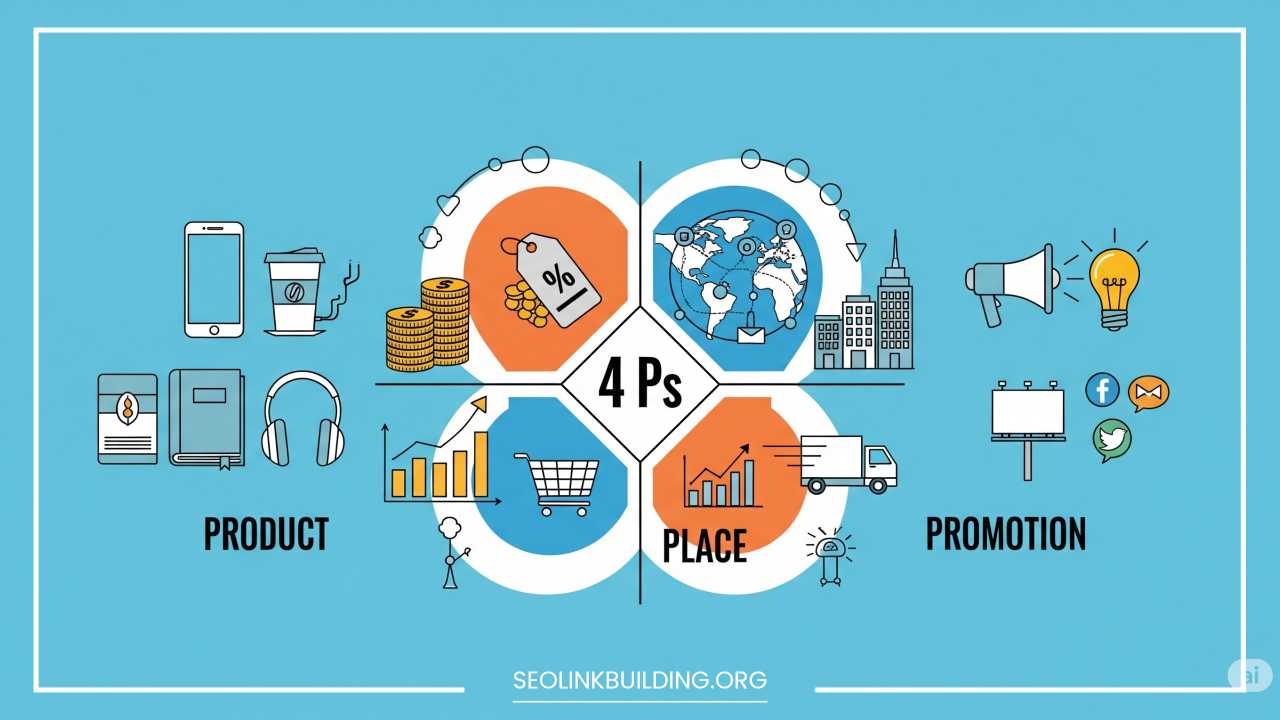
The 4 Ps of Marketing: A Comprehensive Guide
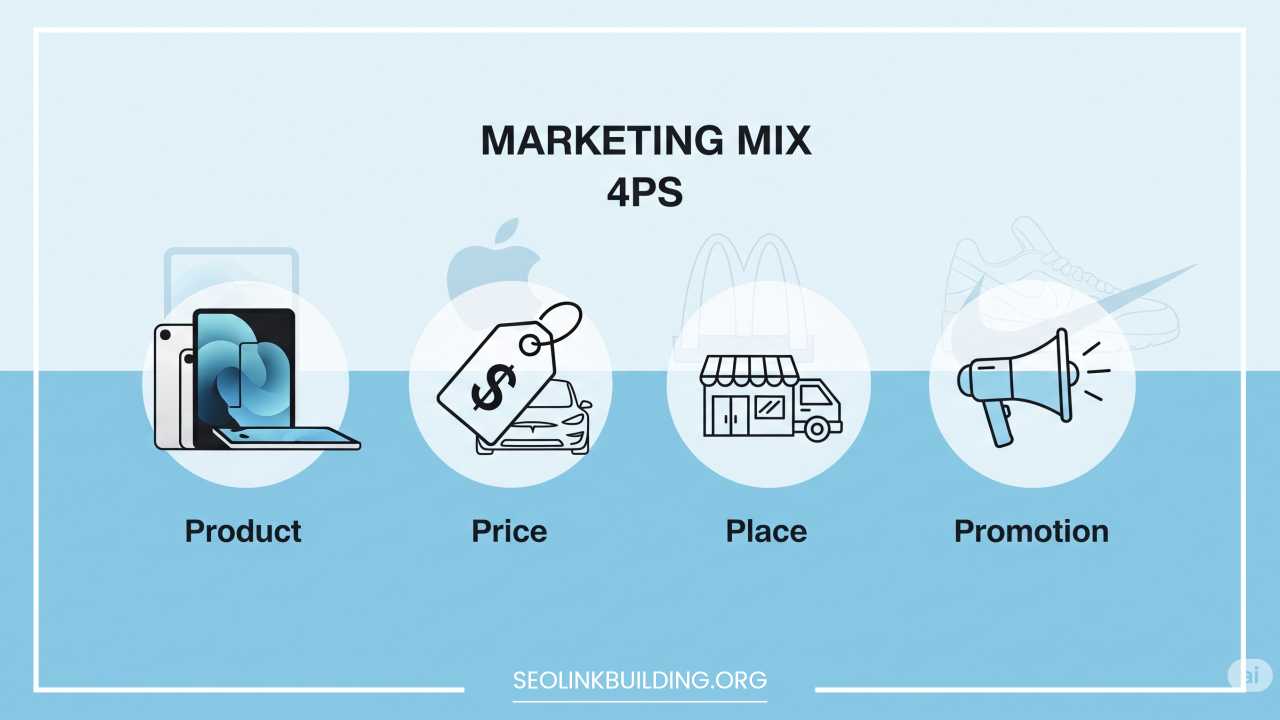
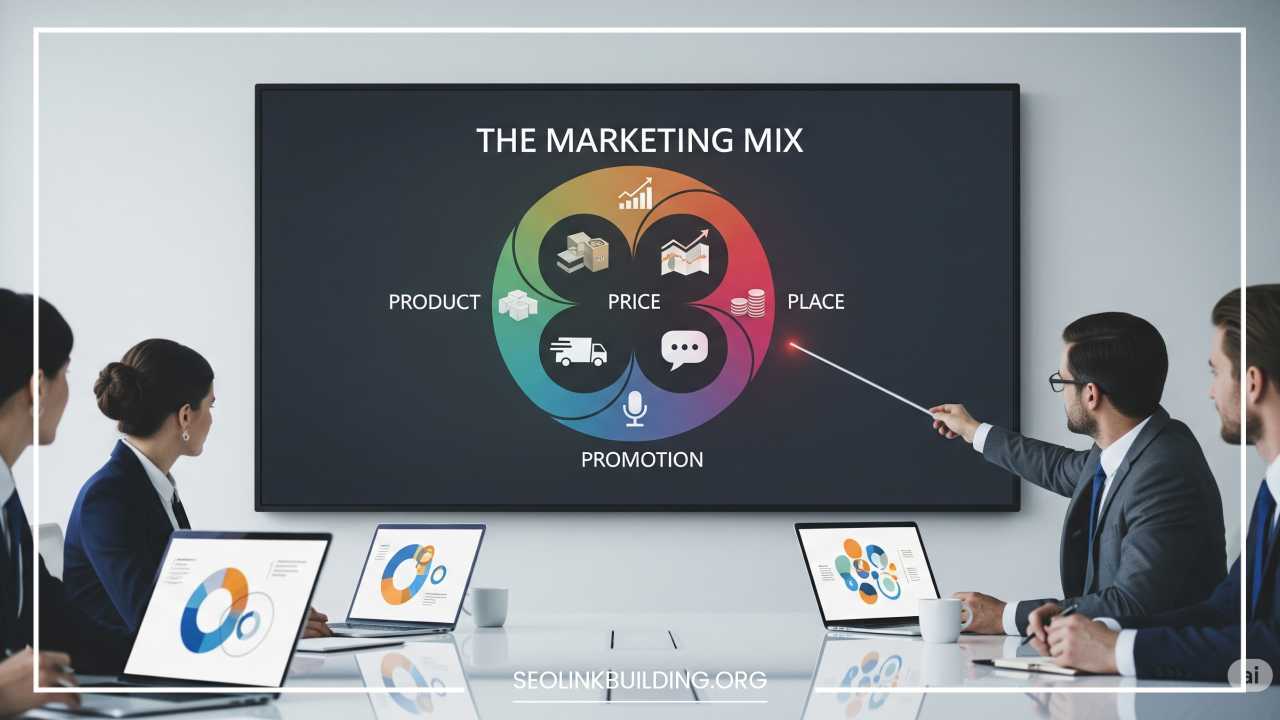
The marketing landscape is an ever-evolving terrain, a dynamic interplay of consumer desires, technological advancements, and competitive pressures. For businesses to not just survive but thrive within this intricate environment, a structured approach is paramount. Enter the “4 Ps of Marketing” – a foundational framework that has guided countless organizations in crafting and executing effective marketing strategies for decades. Conceived by E. Jerome McCarthy in the 1960s, this elegantly simple yet profoundly powerful model distills the essence of a marketing strategy into four core components: Product, Price, Place, and Promotion.
These four pillars, when meticulously planned and harmoniously integrated, form the bedrock upon which successful market offerings are built. This article will delve deep into each of these Ps, exploring their individual nuances, interconnectedness, and enduring relevance in today’s complex business world, while also acknowledging their evolution in the digital age and the emergence of more expansive frameworks.
The Origin of the 4 Ps
The genesis of the 4 Ps can be traced back to the burgeoning field of marketing in the mid-22th century. Prior to the 1960s, marketing thought was fragmented, often focusing on individual elements like advertising or sales, without a unifying conceptual framework. Marketing practitioners and academics alike sought a more holistic and systematic way to approach the complexities of bringing a product or service to market. It was against this backdrop that Professor E. Jerome McCarthy, an American marketing professor, introduced the concept of the “Marketing Mix” and its four key components – Product, Price, Place, and Promotion – in his 1960 textbook, Basic Marketing: A Managerial Approach.
McCarthy’s brilliant contribution was to simplify the myriad decisions involved in marketing into a manageable and actionable framework. He posited that by strategically manipulating these four elements, businesses could effectively influence consumer behavior and achieve their marketing objectives. His framework provided a much-needed structure, allowing marketers to think systematically about their offerings and how they interacted with the target market. The 4 Ps quickly gained widespread acceptance and became a cornerstone of marketing education and practice globally, revolutionizing the way businesses approached their customers and the marketplace.
Deep Dive Into Each P
A. Product
At the heart of any marketing strategy lies the Product. In marketing terms, a “product” is not merely a physical good; it encompasses anything that can be offered to a market to satisfy a want or need. This broad definition includes tangible goods (like a smartphone or a car), intangible services (like a haircut or legal advice), and even ideas (like a political campaign or a public health initiative). The product is the fundamental offering that provides value to the customer.
Understanding the Product Life Cycle (PLC) is crucial for effective product management. The PLC describes the stages a product goes through from its introduction to its eventual withdrawal from the market:
- Introduction: A new product is launched, often with high marketing costs and low sales as awareness is built.
- Growth: Sales rapidly increase as the product gains acceptance and market share.
- Maturity: Sales growth slows, and the product reaches its peak market penetration. Competition intensifies, and focus shifts to maintaining market share.
- Decline: Sales and profits fall as the product becomes obsolete or consumer preferences shift.
Beyond its core functionality, a product’s appeal is significantly influenced by its features, design, and perceived quality. Features are the specific attributes that define the product, while design relates to its aesthetics and usability. Quality, encompassing durability, reliability, and performance, is paramount in building customer trust and loyalty.
Branding is another critical aspect of product strategy. A strong brand identity – including a name, logo, and consistent messaging – helps differentiate a product from competitors and creates emotional connections with consumers. Think of Apple’s iconic bitten apple logo or the sleek, minimalist design of their iPhones. These elements contribute to a powerful brand image that communicates innovation, quality, and a premium experience, allowing Apple to command higher prices and foster immense customer loyalty. Similarly, Tesla’s brand embodies cutting-edge technology, sustainability, and a futuristic vision, attracting a dedicated customer base willing to invest in their electric vehicles.
Finally, packaging plays a vital role, especially for physical goods. It protects the product, provides information, and can even serve as a significant marketing tool, influencing consumer purchasing decisions at the point of sale. Ongoing market research and a commitment to innovation are essential for products to remain relevant and competitive throughout their life cycle, ensuring they continuously meet evolving consumer needs and expectations.
B. Price
Price is the monetary value that customers pay to acquire a product or service. It’s not just a number on a tag; price profoundly influences consumer perception of value, brand image, and purchasing behavior. A product priced too high might deter potential buyers, while one priced too low might suggest inferior quality or erode profit margins.
Marketers employ various pricing strategies based on their objectives, costs, and market conditions:
- Penetration Pricing: Setting a low initial price to quickly gain market share, often used for new products entering a competitive market.
- Price Skimming: Setting a high initial price for a new, innovative product to recover development costs and target early adopters, then gradually lowering it over time.
- Value-Based Pricing: Determining prices based on the perceived value to the customer rather than just costs.
- Cost-Plus Pricing: Adding a standard markup to the cost of producing the product.
- Competitive Pricing: Setting prices based on what competitors are charging for similar products.
Psychological pricing leverages consumer psychology to make prices seem more attractive. A common example is using prices ending in .99 (e.g., $9.99 instead of $10), which often makes a product seem significantly cheaper due to the left-digit effect. Another tactic is prestige pricing, where high prices are used to signal exclusivity and quality, as seen with luxury brands like Rolex or Louis Vuitton, whose pricing strategy reinforces their aspirational image.
Several factors influence pricing decisions, including the cost of production (fixed and variable), the level of competition in the market, and the demand for the product. Understanding the elasticity of demand – how sensitive demand is to price changes – is also crucial. For instance, essential goods often have inelastic demand, meaning price changes have little impact on quantity demanded, whereas luxury items tend to have elastic demand. The stark contrast between luxury brands, which strategically maintain high prices to preserve their exclusive image, and discount retailers like Walmart or Lidl, which focus on everyday low prices to attract a mass market, perfectly illustrates the diverse roles price plays in a marketing strategy.
C. Place
Place, also known as distribution, refers to how a product or service is made available to the target customer. It encompasses all the activities involved in getting the product from the producer to the final consumer. An effective place strategy ensures that the product is accessible at the right time, in the right quantity, and in the right location.
The choice of distribution channels is fundamental:
- Direct Distribution: The producer sells directly to the consumer (e.g., a farmer selling produce at a farmer’s market, a company selling its software directly through its website). This offers more control but requires significant investment in infrastructure.
- Indirect Distribution: The product goes through intermediaries like wholesalers, retailers, or agents before reaching the consumer (e.g., most consumer goods sold in supermarkets). This leverages existing networks but means less direct control over the customer experience.
The rise of e-commerce has revolutionized the concept of “place.” Businesses no longer need a physical storefront to reach customers globally. Online marketplaces, company websites, and social commerce platforms have created new avenues for distribution. This has also led to the adoption of omnichannel strategies, where businesses integrate various channels – physical stores, online stores, mobile apps – to provide a seamless and consistent customer experience, regardless of how they choose to interact with the brand. Amazon is a prime example of a company that has mastered place, leveraging a vast network of fulfillment centers and an efficient online platform to deliver products quickly and conveniently to millions of customers worldwide. In contrast, a local mom-and-pop store relies on its physical location and community ties to serve its customer base, demonstrating how “place” can be strategically optimized for different business models.
Logistics and inventory management are critical components of an effective place strategy. Logistics involves the planning, implementation, and control of the efficient forward and reverse flow and storage of goods, services, and related information from the point of origin to the point of consumption. Inventory management ensures that the right amount of product is available at the right time, minimizing stockouts while avoiding excessive holding costs. A robust supply chain – the entire network involved in producing and delivering a product – is essential for timely and cost-efficient distribution.
D. Promotion
Promotion encompasses all the activities a business undertakes to communicate the value of its product to its target audience and persuade them to purchase. It’s about building awareness, stimulating interest, creating desire, and ultimately, driving action.
The promotional mix typically includes:
- Advertising: Paid, non-personal communication through various media (TV, radio, print, online ads) to reach a mass audience. Coca-Cola’s iconic holiday campaigns and “Share a Coke” advertisements are classic examples of highly effective advertising that builds brand recognition and emotional connection.
- Sales Promotion: Short-term incentives to encourage immediate purchase (discounts, coupons, contests, loyalty programs).
- Public Relations (PR): Building and maintaining a positive public image through non-paid media coverage, press releases, sponsorships, and community involvement.
- Personal Selling: Direct, face-to-face communication between a salesperson and a potential customer, allowing for personalized interaction and addressing specific needs.
- Digital Marketing: A broad category encompassing online channels like search engine optimization (SEO), social media marketing, email marketing, content marketing, and influencer marketing. The rise of social media influencers has become a powerful promotional tool, allowing brands to reach highly targeted audiences through authentic endorsements.
The AIDA model provides a useful framework for understanding the stages a consumer goes through during the promotional process:
- Attention: Capturing the target audience’s notice.
- Interest: Generating curiosity and engagement.
- Desire: Creating a want or need for the product.
- Action: Prompting the consumer to make a purchase or take another desired action.
An effective promotional strategy involves carefully selecting the right mix of these tools, considering the target audience, budget, and marketing objectives. The goal is to create a consistent and compelling message across all channels, reinforcing the brand’s value proposition and encouraging consumers to choose their product over competitors.
How the 4 Ps Work Together
The true power of the 4 Ps lies not in their individual strength, but in their synergistic interaction. They are not isolated components but rather interconnected elements of a cohesive marketing strategy. For a product to succeed, all four Ps must be meticulously aligned and work in harmony.
Consider the example of the Apple iPhone. Its Product is innovative, sleekly designed, and offers a premium user experience. Its Price is set at a premium, reflecting its perceived quality and brand prestige. Its Place strategy involves both direct sales through Apple Stores, providing a controlled and branded experience, and indirect sales through authorized resellers, extending its reach. Finally, its Promotion is sophisticated, emphasizing lifestyle, innovation, and seamless integration, often through high-production value advertisements and influential keynotes. When these elements align perfectly, as they do with the iPhone, the result is a powerful market offering that resonates deeply with consumers and drives immense commercial success.
Conversely, if one of the Ps is weak or misaligned, the entire strategy can falter. Imagine a revolutionary product (strong Product) that is priced too high for its target market (misaligned Price). Or a well-priced product with excellent promotion (strong Price and Promotion) but poor distribution channels, making it difficult for customers to find and purchase (weak Place). Similarly, a great product and accessible distribution (strong Product and Place) will struggle if customers are unaware of it or unconvinced of its value (weak Promotion). The effectiveness of the overall marketing mix hinges on the seamless integration and mutual reinforcement of all four Ps.
The 4 Ps in the Digital Age
The advent of the digital age has profoundly transformed the application and dynamics of the 4 Ps, adding new layers of complexity and opportunity.
Regarding Product, digital transformation has blurred the lines between goods and services. Software as a Service (SaaS) models exemplify products delivered as ongoing services, with continuous updates and subscriptions becoming the norm. Customization and personalization, driven by data analytics, allow businesses to tailor products to individual preferences on an unprecedented scale.
Price has become more dynamic and granular. E-commerce platforms facilitate real-time, algorithmic pricing adjustments based on demand, competitor prices, and even individual customer Browse history. Dynamic pricing, flash sales, and personalized discounts are now common online strategies.
The impact on Place is perhaps the most obvious. E-commerce has created global marketplaces, making products accessible to anyone with an internet connection, regardless of geographical location. The rise of direct-to-consumer (DTC) brands bypasses traditional intermediaries, offering greater control over the customer journey. Omnichannel strategies, integrating online and offline touchpoints, are essential for a seamless customer experience.
Finally, Promotion has been revolutionized by digital marketing. Social media, search engines, content marketing, email campaigns, and influencer collaborations offer highly targeted and measurable ways to reach consumers. Data-driven decision-making allows marketers to analyze campaign performance in real-time and optimize strategies for maximum impact, moving beyond broad-brush advertising to hyper-personalized communication.
Expanding Beyond the 4 Ps: The Modern Marketing Mix
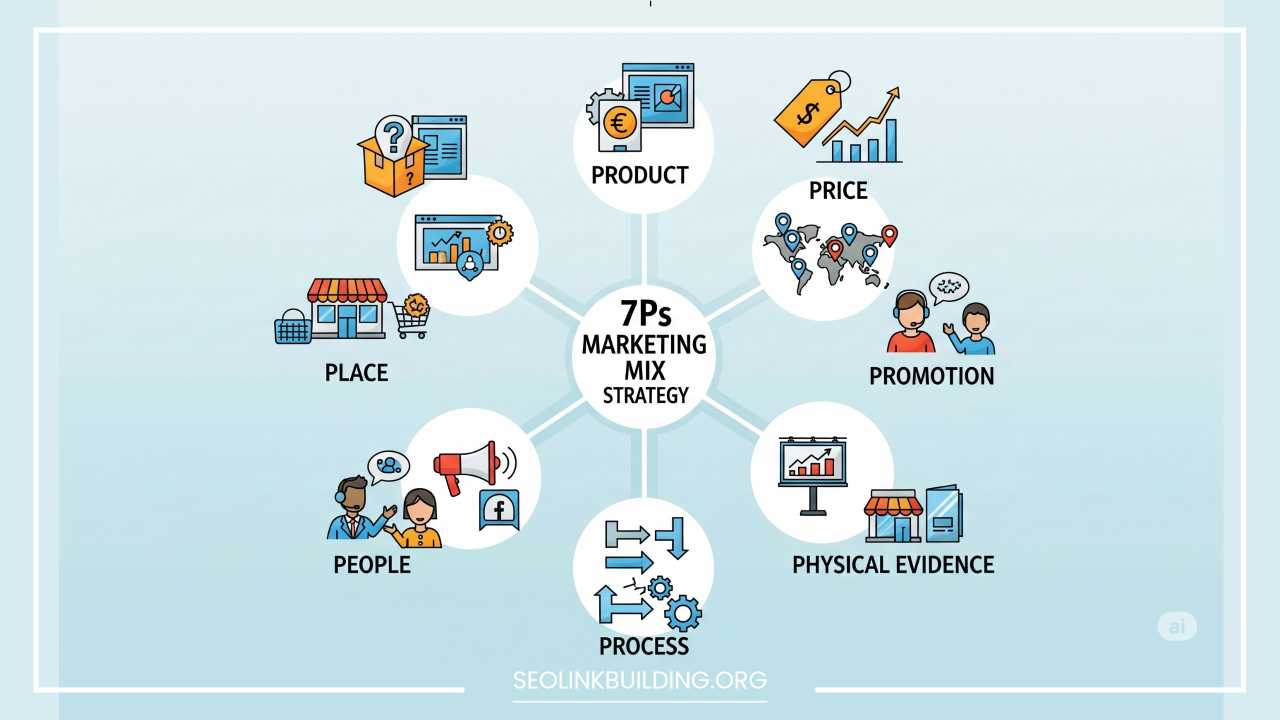
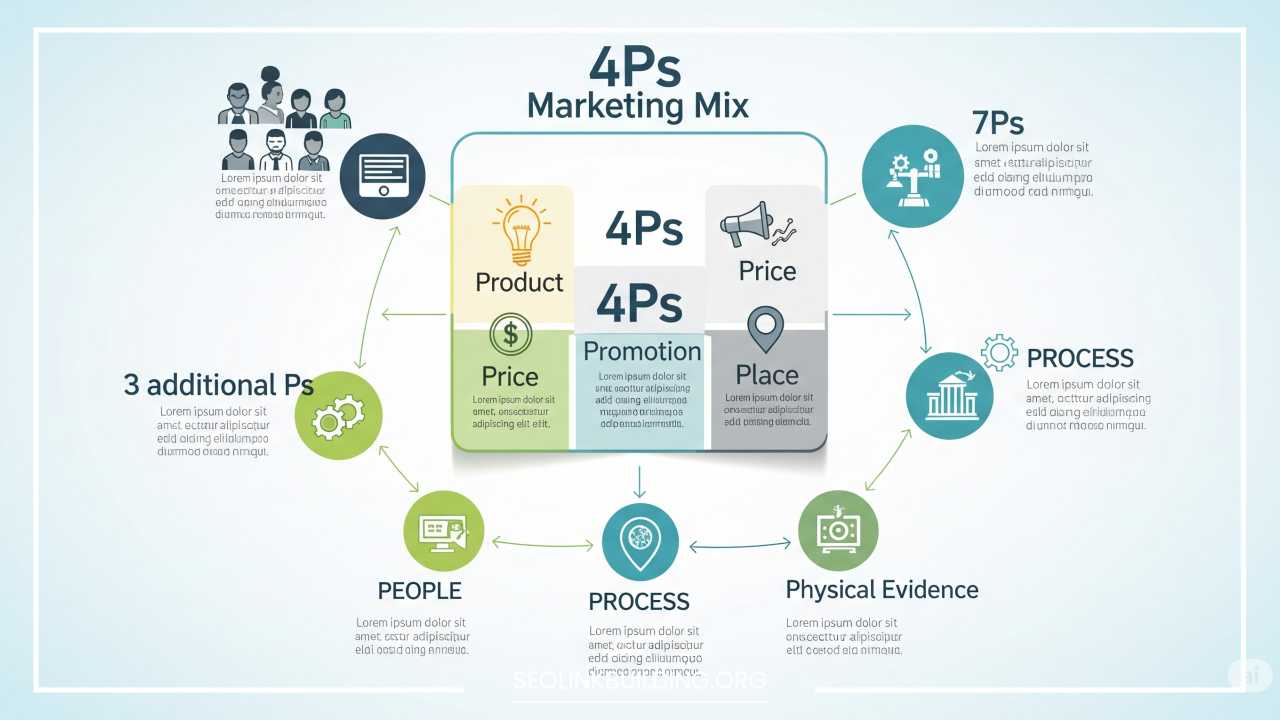
While the 4 Ps remain an indispensable foundation, the evolving service economy and increasing focus on customer experience led to the expansion of the original framework. In the 1980s, Bernard H. Booms and Mary J. Bitner proposed an extended marketing mix for services, adding three more Ps: People, Process, and Physical Evidence, creating the 7 Ps of Marketing.
- People: Refers to all human actors who play a part in service delivery and thus influence the buyer’s perceptions – namely, the firm’s personnel, the customer, and other customers in the service environment. In service industries, the quality of interaction with staff is often as important as the service itself.
- Process: Encompasses the actual procedures, mechanisms, and flow of activities by which the service is delivered. Efficient and customer-friendly processes are crucial for service quality.
- Physical Evidence: Refers to the environment in which the service is delivered and where the firm and customer interact, and any tangible components that facilitate performance or communication of the service. This includes the physical setting, equipment, brochures, and even the appearance of staff.
The original 4 Ps, primarily product-oriented, were sometimes deemed insufficient for the complexities of service marketing, where intangibility, inseparability, perishability, and variability are key characteristics. While the 4 Ps are still highly relevant and form the core of any marketing strategy, the extended 7 Ps provide a more comprehensive lens, particularly for service-based businesses, digital companies, and those prioritizing customer experience.
Criticisms and Limitations
Despite its enduring popularity, the 4 Ps framework has faced its share of criticisms and acknowledged limitations.
One of the primary arguments is that the 4 Ps are inherently product-oriented rather than customer-centric. Critics contend that the framework encourages marketers to think from the company’s perspective (“what product can we make, how can we price it, where can we sell it, how can we promote it?”) rather than starting with the customer’s needs and desires. This can lead to a focus on pushing products rather than solving customer problems.
Furthermore, its limitations become more apparent in specific contexts:
- Service Marketing: As discussed, the intangibility and experiential nature of services are not fully captured by the original four Ps, necessitating the addition of People, Process, and Physical Evidence.
- Digital Business: While adaptable, the nuances of digital ecosystems – such as co-creation of value, networked communities, and subscription models – stretch the traditional definitions of product, price, and place.
- Customer Experience (CX): In today’s highly competitive market, the overall customer experience across all touchpoints is paramount. The 4 Ps, while contributing to CX, don’t explicitly address the holistic journey or emotional connection a customer has with a brand.
In response to these criticisms, alternative models have emerged. The most notable is Robert Lauterborn’s 4 Cs model (1990s), which shifts the focus directly to the customer:
- Customer Needs and Wants (replacing Product): Emphasizes understanding and fulfilling what the customer truly desires.
- Cost to Satisfy (replacing Price): Considers the total cost incurred by the customer, including monetary, time, and effort costs.
- Convenience (replacing Place): Focuses on how easy it is for the customer to acquire the product or service.
- Communication (replacing Promotion): Stresses two-way dialogue and interaction with customers rather than just one-way persuasion.
While the 4 Cs offer a valuable customer-centric perspective, they often serve as a complementary framework rather than a complete replacement.
Final Thoughts
The 4 Ps of Marketing – Product, Price, Place, and Promotion – have undeniably stood the test of time as a foundational framework for understanding and structuring marketing strategy. Originating from E. Jerome McCarthy’s groundbreaking work in the 1960s, they provided the much-needed clarity and systematic approach to a field that was previously disparate. Each P represents a critical decision area that, when strategically managed, contributes to a coherent and effective market offering.
From defining what is offered (Product), to determining its value (Price), ensuring its availability (Place), and communicating its benefits (Promotion), these four elements are inextricably linked. Their combined strength, when aligned seamlessly, can propel a product or service to remarkable success, as exemplified by countless market leaders.
While the marketing landscape has evolved dramatically, particularly with the advent of the digital age and the increasing emphasis on services and customer experience, the core principles embedded within the 4 Ps remain profoundly relevant. They continue to serve as a vital starting point for marketers, providing a clear roadmap for developing and implementing strategies.
However, modern marketers must acknowledge that the 4 Ps are a foundation, not an exhaustive formula. They should be seen as a flexible blueprint, adaptable to new technologies, changing consumer behaviors, and expanded concepts like the 7 Ps (People, Process, Physical Evidence) or the 4 Cs (Customer, Cost, Convenience, Communication). The enduring power of the 4 Ps lies in their ability to provide a simple yet comprehensive lens through which to analyze and optimize marketing efforts, encouraging a holistic perspective. By understanding and skillfully manipulating these core elements, businesses can navigate the complexities of the marketplace and forge lasting connections with their customers, ensuring their continued relevance and success in an ever-dynamic world.