Pull Versus Push Strategy: Key Differences, Examples & Business Impact


Pull Versus Push Strategy: Navigating the Dynamics of Business Operations
In the intricate world of business, two fundamental strategies govern how products move from creation to consumption: the push strategy and the pull strategy. A push strategy involves proactively pushing products through distribution channels to consumers, often relying on forecasts and anticipating demand.
Conversely, a pull strategy focuses on generating consumer demand, which then “pulls” products through the supply chain. Understanding the nuances and applications of both is paramount for businesses aiming for efficiency and profitability across various functions, including marketing, supply chain management, and inventory control. This article delves into the core concepts, applications, advantages, disadvantages, and evolving nature of push and pull strategies, highlighting their importance in a dynamic marketplace.
Conceptual Overview
At their core, push and pull strategies represent contrasting approaches to managing product flow. A push strategy is inherently forecast-driven and proactive. Production and distribution are initiated based on anticipated demand, pushing products into the market even before specific customer orders are received. This approach was particularly dominant during the industrial revolution, where mass production necessitated pushing goods to a broader market.
In contrast, a pull strategy is demand-driven and reactive. Production and distribution are triggered by actual customer demand, effectively “pulling” products through the supply chain only when needed. This concept gained prominence with the rise of lean manufacturing principles, notably the Toyota Production System in the mid-20th century, which emphasized minimizing waste and maximizing responsiveness to customer needs.
Application in Different Business Functions
The application of push and pull strategies extends across various critical business functions, each adapting the principles to their specific operational needs.
Marketing
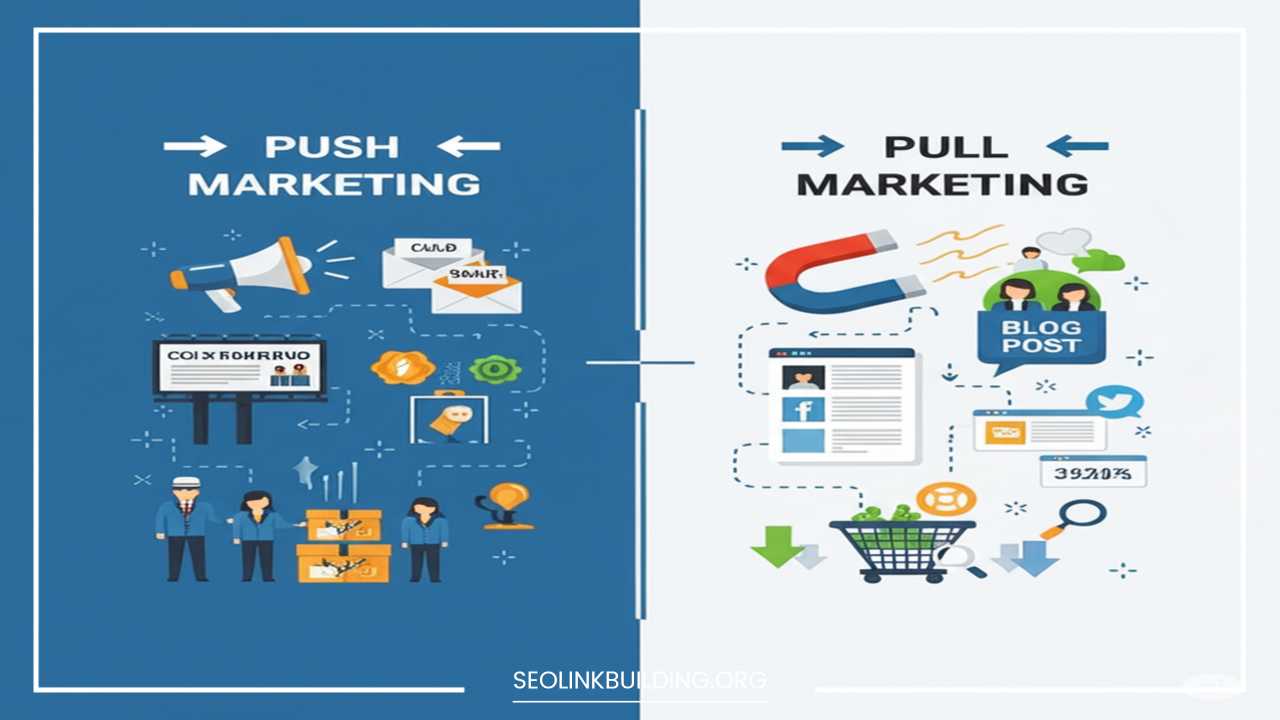
In marketing, the distinction is clear. A push strategy involves directing promotional efforts towards intermediaries in the distribution channel to encourage them to stock and sell the product. Examples include trade promotions, offering discounts to distributors, cooperative advertising with retailers, and direct selling through a sales force. Coca-Cola, for instance, heavily utilizes a push strategy by investing in strong relationships with bottlers and retailers to ensure widespread availability and prominent shelf placement of their products.
Conversely, a pull strategy in marketing aims to build brand loyalty and consumer demand, thereby “pulling” customers into stores or online platforms. This is achieved through extensive advertising campaigns (e.g., Super Bowl ads), public relations, and consumer promotions like coupons or contests. A classic example is pharmaceutical companies advertising directly to consumers for prescription drugs, creating demand that encourages patients to ask their doctors for specific medications.
Supply Chain
Within the supply chain, push and pull strategies dictate the flow of goods from raw materials to finished products. A push supply chain is typically make-to-stock, where products are manufactured based on sales forecasts and then pushed into inventory, awaiting customer orders. This approach is characterized by scheduled production runs and larger batch sizes to achieve economies of scale. Many fast-moving consumer goods (FMCG) companies, like Procter & Gamble, operate primarily on a push basis, ensuring products are readily available on supermarket shelves.
A pull supply chain, on the other hand, is demand-driven, often employing principles like Just-in-Time (JIT) manufacturing and make-to-order production. Here, production is initiated only when a customer order is received. Dell, a pioneer in the make-to-order computer industry, exemplifies a pull strategy in its supply chain, assembling computers only after a customer configures and orders them online, thereby minimizing inventory holding costs and obsolescence risk.
Inventory Management
The impact on inventory management is profound. A push inventory system involves stocking goods in anticipation of future demand, often leading to higher inventory levels to buffer against uncertainty and meet anticipated sales. This approach allows for economies of scale in production but carries the risk of overstocking or understocking if forecasts are inaccurate.
Conversely, a pull inventory system operates on a principle of replenishing stock only when it is consumed or when a specific demand signal is received. This approach, central to JIT systems, aims to minimize inventory waste, reduce holding costs, and enhance responsiveness to real-time demand. While it significantly lowers inventory levels, it requires highly efficient communication and reliable supply chains to prevent stockouts.
Advantages and Disadvantages
Both push and pull strategies come with their own set of advantages and disadvantages, making the choice dependent on various business factors.
Push Strategy Pros
- Predictable Production: Companies can plan production schedules well in advance, leading to more stable manufacturing operations.
- Economies of Scale: Larger production runs can achieve lower per-unit costs due to volume discounts on raw materials and optimized manufacturing processes.
- Wider Distribution: Products can be widely distributed and readily available in anticipation of demand.
Push Strategy Cons
- Risk of Overstock/Understock: Inaccurate forecasts can lead to excess inventory (tying up capital, increasing obsolescence risk) or insufficient stock (missing sales opportunities).
- Inflexibility: Changes in market demand or consumer preferences can be difficult to respond to quickly, leading to wasted inventory or production.
- Higher Holding Costs: Maintaining large inventories incurs significant costs related to warehousing, insurance, and potential obsolescence.
Pull Strategy Pros
- Reduces Inventory Waste: Products are only produced or stocked when there is actual demand, significantly minimizing excess inventory and associated costs.
- Responsive to Demand: Businesses can quickly adapt to shifts in customer preferences or market trends, offering greater flexibility.
- Improved Cash Flow: Lower inventory levels mean less capital tied up in stock, leading to better cash flow management.
Pull Strategy Cons
- Risk of Stockouts: A sudden surge in demand that cannot be met quickly can lead to lost sales and customer dissatisfaction.
- Dependency on Accurate Demand Signals: The success of a pull system relies heavily on real-time, accurate information regarding customer demand.
- Higher Production Costs (Potentially): Smaller, more frequent production runs might not achieve the same economies of scale as mass production, potentially leading to higher per-unit costs.
- Complexity in Coordination: Requires highly efficient communication and coordination across the entire supply chain to ensure timely delivery of components and finished goods.
Comparative Analysis
The fundamental differences between push and pull strategies can be summarized in the following table:
| Feature | Push Strategy | Pull Strategy |
| Driver | Forecast-driven, anticipation | Demand-driven, reaction |
| Focus | Production and distribution efficiency | Customer satisfaction and responsiveness |
| Inventory Level | Higher, stocked in anticipation | Lower, stocked on demand |
| Lead Time | Longer, planned | Shorter, responsive |
| Risk | Overstock, obsolescence | Stockouts, inability to meet sudden surges |
| Control | Centralized, top-down | Decentralized, bottom-up (demand signals) |
The suitability of a push or pull strategy often depends on specific factors:
- Product Type:
- Push: Ideal for products with predictable demand, long shelf lives, and where economies of scale are crucial (e.g., perishable goods like milk often use a modified push for distribution to ensure freshness, but the underlying production is often forecast-driven). Durable goods with consistent demand like basic electronics can also benefit from push to ensure wide availability.
- Pull: Best for customized products, high-value items, or products with unpredictable demand and short life cycles (e.g., fashion apparel, luxury cars, or perishable goods where freshness is paramount, leading to “just-in-time” delivery from suppliers).
- Market Predictability: Highly stable and predictable markets favor a push strategy, while volatile or rapidly changing markets necessitate a pull approach for agility.
- Company Size and Agility: Larger, established companies with extensive distribution networks might lean towards push, while smaller, more agile businesses or startups might find pull more effective for managing resources.
It’s important to note that many businesses adopt hybrid approaches, combining elements of both. This is often seen as a Push-Pull boundary, where the push strategy is applied to the upstream supply chain (e.g., raw material procurement and initial production stages), while the pull strategy is used for the downstream stages (e.g., final assembly and distribution based on customer orders). For example, a car manufacturer might push standard components through its supply chain but pull specific features or colors based on customer orders.
Industry-Specific Use Cases
The choice between push and pull strategies is significantly influenced by industry characteristics and operational models.
In retail, especially for fast-moving consumer goods (FMCG) like snacks, beverages, and personal care items, a dominant push strategy is observed. Manufacturers push products to distributors and retailers to ensure widespread availability and prompt replenishment. This is driven by high sales volumes, relatively stable demand, and the need for pervasive distribution. Retailers often employ sophisticated inventory management systems to manage the influx of pushed products and optimize shelf space.
In the technology sector, the application varies. For hardware companies producing standardized components or mass-market devices (e.g., common processors, basic smartphones), a push strategy can be employed to achieve economies of scale and stock distribution channels. However, for highly customizable software companies or high-end electronics where features are constantly evolving, a pull strategy is more prevalent. Software updates and new features are often released based on user feedback and demand, and bespoke enterprise software is typically developed on a make-to-order (pull) basis.
The automobile industry often utilizes a sophisticated hybrid model. While core components and common vehicle platforms are manufactured using a push approach (predicting demand for basic models), customization options (e.g., specific paint colors, interior trims, or premium features) are often pulled through the system once a customer order is placed. This Push-Pull boundary allows manufacturers to leverage economies of scale for standard parts while remaining responsive to individual customer preferences.
In e-commerce, the dynamics are also evolving. Giants like Amazon primarily operate on a highly sophisticated push model for their Fulfillment by Amazon (FBA) services, pushing vast quantities of products into strategically located warehouses based on predictive analytics of customer demand. This allows for rapid delivery times. However, for specialized or made-to-order items, or in dropshipping models, a pull strategy is inherently at play, where the product is only sourced or shipped once a customer order is confirmed. Traditional retail, on the other hand, historically relied heavily on pushing products to brick-and-mortar stores, which has now been significantly impacted by the more demand-responsive nature of e-commerce.
Crucially, these strategies are constantly shifting with digital transformation. Advanced analytics, real-time data, and IoT devices are blurring the lines, allowing businesses to implement more intelligent hybrid models and optimize their push-pull boundaries.
Future Trends and Evolving Strategies
The landscape of push and pull strategies is continuously being reshaped by technological advancements and shifting consumer expectations. The rise of AI and data analytics is revolutionizing demand forecasting, making push strategies more precise and less prone to errors. Machine learning algorithms can analyze vast datasets, identify intricate patterns, and predict demand with unprecedented accuracy, thereby optimizing production schedules and inventory levels for push-oriented systems.
The emergence of omni-channel distribution significantly impacts how businesses balance push and pull. Consumers expect seamless experiences across online and offline channels, demanding product availability and consistent pricing regardless of the touchpoint. This often necessitates a more integrated approach, where products might be pushed into regional distribution centers but pulled to specific retail locations or directly to consumers based on real-time orders, creating complex push-pull boundaries.
The increasing emphasis on personalization inherently leans towards a pull-driven approach. Consumers now expect products and services tailored to their individual preferences. This shift drives make-to-order production, customized marketing messages, and on-demand fulfillment, all hallmarks of a pull strategy.
Furthermore, sustainability considerations are increasingly influencing strategic choices. The desire to minimize waste, reduce carbon footprints, and operate more efficiently favors pull strategies, as they inherently reduce overproduction and excess inventory. Companies are seeking ways to align their operational strategies with their environmental commitments, making lean, demand-driven approaches more attractive.
Final Thoughts
Both push and pull strategies are vital frameworks for managing the flow of products and information within a business. A push strategy excels in predictability and economies of scale, making it suitable for stable markets and high-volume products. Conversely, a pull strategy champions responsiveness, waste reduction, and customer focus, proving invaluable in dynamic environments with unpredictable demand.
The key insight is that there is no singular “best” strategy; the optimal choice or combination fundamentally depends on a company’s specific product, market characteristics, operational capabilities, and overarching business goals.
The most successful organizations understand the strengths and weaknesses of each approach and strategically align their push-pull boundaries to maximize efficiency, minimize risk, and enhance customer satisfaction in a constantly evolving marketplace. The future will likely see even more sophisticated hybrid models, driven by advanced analytics and a deeper understanding of consumer behavior.