Digital Marketing vs. Social Media Marketing

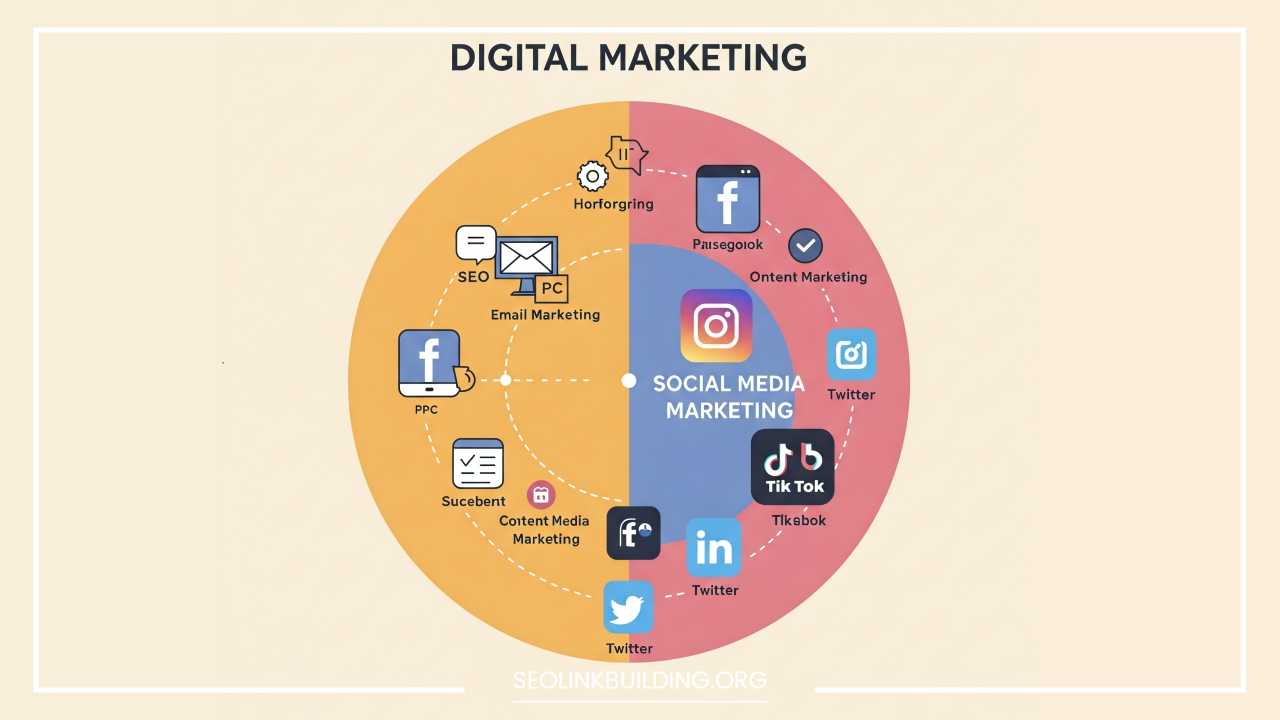
Digital Marketing vs. Social Media Marketing: Unpacking the Landscape of the Connected Age
In the ever-evolving realm of reaching consumers and building brands, the terms “digital marketing” and “social media marketing” are often used, sometimes interchangeably, leading to confusion. While intrinsically linked, they represent distinct yet complementary facets of a modern marketing strategy. Understanding the nuances between the two is crucial for businesses aiming to navigate the complexities of the online world effectively and achieve their objectives.
This article will delve into the depths of digital marketing and social media marketing, dissecting their definitions, exploring their vast components, tracing their evolution, highlighting their unique strategies and challenges, and ultimately clarifying their intertwined relationship in the contemporary marketing landscape.
The Dawn of a New Era: Defining Digital Marketing
Digital marketing is an umbrella term encompassing all marketing efforts that utilize electronic devices and the internet. It’s a broad and dynamic field that leverages various online channels to connect with existing and potential customers. Think of it as the entire orchestra of online tools and tactics available to marketers in the digital age.
The scope of digital marketing is vast and ever-expanding, including, but not limited to:
- Search Engine Optimization (SEO): Optimizing online content to rank higher in search engine results pages (SERPs) to attract organic traffic.
- Pay-Per-Click (PPC) Advertising: Running paid advertising campaigns on search engines and other platforms where advertisers pay a fee each time their ad is clicked.
- Content Marketing: Creating and distributing valuable, relevant, and consistent content to attract and retain a clearly defined audience and drive profitable customer action.
- Email Marketing: Sending targeted emails to a list of subscribers to nurture leads, build customer relationships, and promote products or services.
- Mobile Marketing: Reaching target audiences on their mobile devices through various channels like SMS, mobile apps, and mobile-optimized websites and ads.
- Affiliate Marketing: Partnering with individuals or other businesses to promote products or services in exchange for a commission on4 resulting sales.
- Video Marketing: Utilizing video content across various platforms to engage audiences, tell brand stories, and promote offerings.
- Native Advertising: Paid advertisements that blend seamlessly with the surrounding content format and platform.
- Marketing Automation: Using software to automate repetitive marketing tasks such as email sending, social media posting, and ad campaigns.
- Data Analytics: Collecting, analyzing, and interpreting data from digital marketing campaigns to understand performance, optimize strategies, and gain customer insights.
The roots of digital marketing can be traced back to the early days of the internet in the 1990s. The first clickable banner ad appeared in 1994, marking a pivotal moment in the shift from traditional to digital advertising. Early forms also included rudimentary email marketing and the emergence of basic websites. As internet penetration grew and technology advanced, so did the sophistication of digital marketing.
The late 1990s and early 2000s saw the rise of search engines like Yahoo and Google, giving birth to SEO and paid search. The subsequent years witnessed the explosion of various online channels and technologies, transforming digital marketing into the complex, data-driven field it is today.
The primary goals of digital marketing are diverse and depend on a business’s overall objectives. They often include increasing brand awareness, generating leads, driving website traffic, boosting online sales, improving customer engagement, and building brand loyalty.
One of the key advantages of digital marketing is its measurability. Marketers can track a wide array of metrics, from website visits and click-through rates to conversion rates and customer acquisition costs, allowing for precise analysis and optimization of campaigns.
However, digital marketing also presents its share of challenges. The constantly evolving digital landscape requires marketers to stay updated with the latest trends, technologies, and algorithm changes. Increasing competition online makes it challenging to cut through the noise and capture audience attention. Data privacy concerns and regulations necessitate careful handling of customer information. Accurately attributing ROI across multiple digital channels can also be complex.
The Power of Connection: Defining Social Media Marketing
Social Media Marketing (SMM), on the other hand, is a specialized subset of digital marketing that focuses specifically on leveraging social media platforms to achieve marketing goals. It’s about engaging with audiences, building communities, and promoting brands on platforms where people connect, share, and interact.
The core components of social media marketing include:
- Profile Creation and Optimization: Establishing a strong brand presence on relevant social media platforms with compelling profiles and engaging visuals.
- Content Creation and Curation: Developing and sharing a variety of content formats, such as text posts, images, videos, stories, and live streams, tailored to each platform and audience.
- Community Building and Engagement: Actively interacting with followers, responding to comments and messages, running polls and Q&A sessions, and fostering a sense of community around the brand.
- Paid Social Media Advertising: Running targeted advertising campaigns on social media platforms to reach specific demographics, interests, and behaviors.
- Influencer Marketing: Collaborating with influential individuals on social media to promote products or services to their followers.
- Social Listening and Monitoring: Tracking mentions of the brand, competitors, and relevant keywords on social media to understand public sentiment, identify trends, and engage in conversations.
- Social Media Analytics: Measuring the performance of social media activities using platform-specific analytics and third-party tools to track metrics like reach, engagement, follower growth, and website traffic.
The history of social media marketing is closely tied to the rise of social networking platforms. While early online communities existed before, the launch of platforms like Six Degrees in the late 1990s and Friendster and MySpace in the early 2000s laid the groundwork for online social interaction.
The true dawn of social media marketing as a significant force came with the emergence of Facebook in 2004 and Twitter in 2006. Businesses initially used these platforms for basic profiles and announcements.
However, as user adoption soared and platforms introduced features like business pages and advertising tools (Facebook Ads launched in 2007), marketers recognized the immense potential of connecting directly with consumers in a social environment.
The subsequent years saw the rise of platforms like Instagram (2010), Pinterest (2010), LinkedIn, and TikTok, each offering unique opportunities and demanding tailored marketing approaches.
The objectives of social media marketing often include increasing brand awareness, driving website traffic, generating leads and sales, improving customer service and support, building brand loyalty, and gathering customer insights. Social media provides a unique avenue for brands to humanize themselves, engage in two-way conversations, and build authentic connections with their audience.
Despite its power, social media marketing comes with its own set of challenges. The dynamic nature of social media algorithms means that organic reach can be unpredictable, requiring continuous adaptation of strategies.
The need for constant content creation and the pressure to stay on top of fleeting trends can be demanding. Dealing with negative feedback and managing online reputation requires careful and prompt attention. Measuring the direct ROI of social media efforts can also be challenging, as its impact often extends beyond direct conversions to brand building and customer loyalty.
The Intertwined Relationship: Where Digital and Social Meet
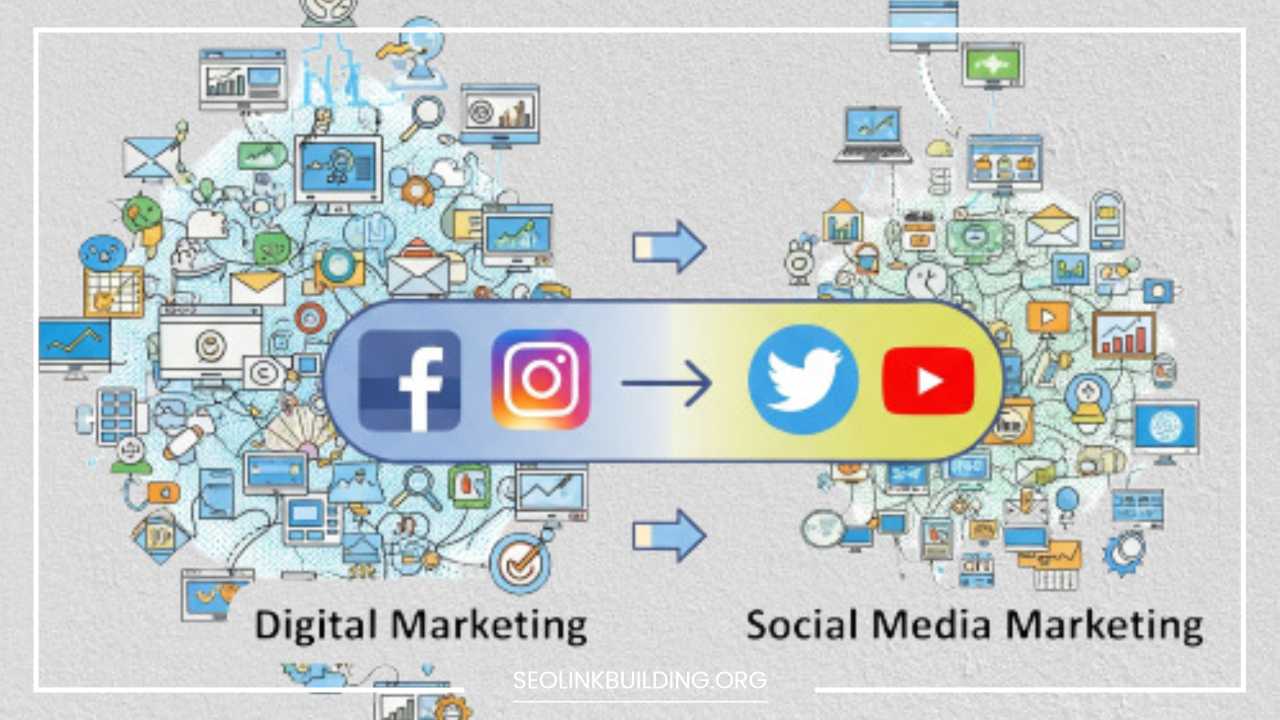
It’s clear that social media marketing is not separate from digital marketing but rather a vital component within it. Digital marketing provides the broader framework of online marketing activities, while social media marketing leverages specific platforms within that ecosystem.
Think of digital marketing as the entire digital advertising and communication landscape, and social media marketing as a significant continent within that world.
Social media platforms serve as powerful channels for distributing content created as part of a broader digital marketing strategy, such as blog posts, videos, and infographics. They drive traffic to websites and landing pages optimized for conversion through other digital marketing efforts like SEO and PPC.
Social media data provides valuable insights into audience demographics, interests, and behavior, which can inform and refine other digital marketing activities. Furthermore, social media can be integrated with email marketing, CRM systems, and other digital tools to create a cohesive and personalized customer journey.
Conversely, a strong overall digital marketing strategy enhances social media marketing efforts. A well-optimized website provides a solid destination for social media traffic. Content marketing provides valuable assets to share on social media. SEO helps ensure that social media profiles and content are discoverable through search. Email marketing can be used to promote social media presence and content to existing subscribers.
In essence, digital marketing provides the strategic foundation and a diverse toolkit of online channels, while social media marketing offers a unique and powerful avenue for building relationships, fostering engagement, and amplifying brand messages within that digital ecosystem. They are not in opposition but are mutually reinforcing, with their combined power far exceeding the sum of their individual parts.
Exploring the Landscape: Key Digital Marketing Channels Beyond Social Media
While social media marketing is a significant player, the digital marketing landscape is rich with other crucial channels, each with its unique strengths and strategies.
- Search Engine Optimization (SEO): This is the bedrock of online visibility. A comprehensive SEO strategy involves optimizing website content, structure, and technical aspects to rank higher in organic search results. This includes keyword research, on-page optimization (title tags, meta descriptions, headers), off-page optimization (backlink building), and technical SEO (site speed, mobile-friendliness, schema markup). The goal is to attract qualified organic traffic interested in your products or services.
- Pay-Per-Click (PPC) Advertising: PPC provides immediate visibility and targeted traffic. Platforms like Google Ads and Bing Ads allow businesses to bid on keywords and display ads to users actively searching for related terms. Social media platforms also offer robust PPC advertising options. Effective PPC requires careful keyword selection, compelling ad copy, targeted audience segmentation, and continuous monitoring and optimization of campaigns to maximize ROI.
- Email Marketing: Despite the rise of newer channels, email marketing remains a highly effective tool for lead nurturing, customer retention, and driving conversions. Building an email list, segmenting subscribers based on their interests and behavior, and sending personalized and valuable emails are key strategies. Email marketing automation platforms allow for triggered emails based on user actions, such as welcome series, abandoned cart reminders, and re-engagement campaigns.
- Content Marketing: “Content is King” is a widely accepted mantra in digital marketing. Creating valuable and informative content, such as blog posts, articles, e-books, whitepapers, webinars, and podcasts, helps attract and engage the target audience, establish thought leadership, and build trust. A strong content marketing strategy aligns content creation with the buyer’s journey, addressing their pain points and providing solutions at each stage.
- Other Channels: Digital marketing also encompasses other important areas like affiliate marketing, where partnerships drive sales; mobile marketing, focusing on reaching users on their mobile devices; native advertising, integrating promotional content seamlessly; and marketing automation, streamlining and optimizing various digital marketing tasks.
Navigating the Social Sphere: Marketing on Different Platforms
The social media landscape is diverse, with each platform offering a unique environment and user base, requiring tailored marketing approaches.
- Facebook: With its vast user base spanning various demographics, Facebook remains a powerful platform for building communities, running targeted ads, and sharing a wide range of content formats. Strategies often involve creating engaging page content, utilizing Facebook Groups for community building, running targeted ad campaigns based on detailed audience insights, and leveraging features like Facebook Live and Facebook Shops.
- Instagram: A highly visual platform, Instagram is ideal for brands that can tell their story through compelling images and videos. Key strategies include creating high-quality visual content, utilizing Instagram Stories and Reels for ephemeral and engaging content, partnering with influencers, and leveraging shopping features for direct product sales.
- Twitter (X): Known for its real-time nature and concise messaging, Twitter is effective for quick updates, engaging in conversations, providing customer service, and monitoring trending topics. Strategies involve crafting concise and engaging tweets, using relevant hashtags, participating in relevant conversations, and running targeted ad campaigns.
- LinkedIn: As a professional networking platform, LinkedIn is the go-to for B2B marketing, professional networking, and thought leadership. Strategies include creating compelling company pages, sharing industry insights and articles, engaging in relevant groups, utilizing LinkedIn Sales Navigator for lead generation, and running targeted ads to reach specific professional demographics.
- TikTok: Dominating the short-form video space, TikTok offers immense potential for viral reach and engaging younger demographics. Strategies involve creating creative and entertaining short videos, participating in trending challenges and sounds, collaborating with TikTok influencers, and utilizing TikTok Ads for targeted reach.
- Other Platforms: The social media landscape also includes platforms like Pinterest (visual discovery and e-commerce), YouTube (video content marketing), Snapchat (ephemeral messaging and AR filters), and various niche platforms catering to specific interests and communities.
The Hurdles Ahead: Challenges in Digital and Social Media Marketing
Both digital marketing and social media marketing come with their unique sets of challenges that marketers must navigate.
Challenges in Digital Marketing:
- Keeping Up with Constant Change: The digital landscape is in perpetual motion, with new technologies, platforms, and algorithm updates emerging constantly. Marketers must invest in continuous learning and adaptation to stay effective.
- Increasing Competition: The relatively low barrier to entry in digital marketing has led to a crowded online space, making it harder to stand out and capture audience attention.
- Data Overload and Analysis: The sheer volume of data available from various digital channels can be overwhelming. Analyzing this data effectively to extract actionable insights requires the right tools and expertise.
- Attributing ROI Accurately: With customers interacting with brands across multiple digital touchpoints, accurately attributing conversions and revenue to specific marketing efforts can be complex.
- Data Privacy and Security Concerns: Growing consumer awareness and stricter regulations around data privacy (like GDPR and CCPA) require businesses to handle customer data responsibly and transparently.
- Ad Fraud and Bots: Digital advertising is susceptible to fraudulent activities like click fraud and bot traffic, which can inflate costs and skew performance data.
Challenges in Social Media Marketing:
- Managing Algorithm Changes: Social media platforms frequently update their algorithms, which can significantly impact organic reach and content visibility, requiring marketers to constantly adjust their strategies.
- Creating Engaging and Viral Content Consistently: Breaking through the noise on social media requires creating content that is not only high-quality but also resonates with the audience and has the potential to go viral, which is a continuous challenge.
- Dealing with Negative Feedback and Crises: Social media is a public forum, and negative comments or a brand crisis can quickly spread and damage reputation if not handled effectively and promptly.
- Measuring Direct ROI: While social media contributes to brand building and customer loyalty, directly attributing sales and revenue to specific social media activities can be difficult, making it challenging to justify investment.
- Maintaining Authenticity and Building Trust: Consumers on social media value authenticity. Brands need to build genuine connections and avoid overly promotional or inauthentic content to gain trust.
- Platform-Specific Nuances and Management: Each social media platform has its own culture, best practices, and technical requirements, requiring marketers to tailor their strategies and manage multiple platforms effectively.
Measuring Success: Calculating and Interpreting ROI
Measuring Return on Investment (ROI) is crucial for evaluating the effectiveness of both digital and social media marketing efforts and allocating budgets wisely.
Calculating ROI in Digital Marketing:
The basic formula for calculating ROI is:
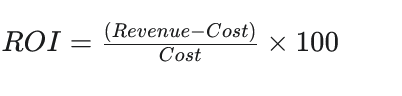
However, applying this formula to digital marketing requires defining “Revenue” and “Cost” accurately for each channel and campaign.
- For PPC: Revenue can be tracked through conversion tracking (sales, leads generated) and cost is the ad spend.
- For Email Marketing: Revenue can be tracked through sales directly resulting from email campaigns, and cost includes the email marketing platform fees and content creation costs.
- For E-commerce (overall digital marketing): Revenue is the total online sales, and cost is the sum of expenses across all digital marketing channels.
Interpreting ROI in digital marketing goes beyond a single number. It involves analyzing various metrics like Cost Per Acquisition (CPA), Cost Per Lead (CPL), Customer Lifetime Value (CLTV), conversion rates, and traffic sources to understand the efficiency and profitability of different channels and campaigns.
Calculating ROI in Social Media Marketing:
Measuring social media ROI can be more nuanced as its impact is not always direct revenue. It’s important to define clear goals and assign monetary values to desired actions.
- For E-commerce: Track sales directly attributed to social media traffic using UTM parameters and e-commerce tracking.
- For Lead Generation: Track the number of leads generated through social media and assign a value to each lead based on its potential conversion rate and average sale value.
- For Brand Awareness/Engagement: While harder to quantify in immediate revenue, metrics like reach, impressions, engagement rate, and brand mentions can be assigned a value based on comparable paid advertising costs or their contribution to overall brand equity and future sales.
The formula remains the same:

Costs include time spent, content creation expenses, social media management tools, and paid social advertising spend. Interpreting social media ROI involves looking at a combination of direct conversions and the value of brand building, customer loyalty, and social sentiment.
Success Stories: Case Studies in Action
Examining successful campaigns provides valuable insights into the effective application of digital and social media marketing strategies.
Digital Marketing Case Study Example: HubSpot
HubSpot, a leading CRM and marketing automation platform, is a prime example of successful inbound digital marketing, heavily reliant on content marketing and SEO. By consistently creating valuable blog posts, e-books, webinars, and other resources addressing the pain points of their target audience (marketers and sales professionals), HubSpot has attracted a massive organic following, established itself as a thought leader, and generated a significant number of qualified leads, demonstrating the long-term ROI of a robust content-driven digital marketing strategy.
Social Media Marketing Case Study Example: Wendy’s
Wendy’s fast-food chain has gained significant recognition for its witty and often sassy presence on Twitter. Their social media strategy focuses on real-time engagement, humorous interactions with followers and competitors, and leveraging trending topics. This approach has helped them build a strong brand personality, increase brand awareness and positive sentiment, and drive customer engagement, showcasing the power of authentic and engaging social media interactions even for established brands.
The Road Ahead: Future Trends
The future of both digital marketing and social media marketing is being shaped by rapidly advancing technologies and evolving consumer behavior.
Future Trends in Digital Marketing:
- Artificial Intelligence (AI) and Machine Learning (ML): AI and ML will continue to revolutionize digital marketing through hyper-personalization, predictive analytics, automated content creation and optimization, and enhanced customer service via chatbots and virtual assistants.
- Increased Focus on Data Privacy and Trust: With growing concerns about data collection and usage, marketers will need to prioritize transparency, ethical data handling, and building trust with consumers. First-party data will become increasingly valuable.
- Rise of Conversational Marketing: The shift towards more interactive and personalized communication will drive the growth of conversational marketing through chatbots, messaging apps, and personalized interactions throughout the customer journey.
- Omnichannel Marketing Evolution: Consumers expect seamless experiences across all touchpoints, both online and offline. The future will see a greater emphasis on integrating digital marketing efforts with offline experiences to create a unified brand journey.
- Visual and Immersive Content: Video marketing will continue to dominate, and there will be a growing adoption of augmented reality (AR) and virtual reality (VR) to create immersive and interactive marketing experiences.
- Voice Search Optimization: With the increasing popularity of smart speakers and voice assistants, optimizing content for voice search9 will become even more crucial for discoverability.
Future Trends in Social Media Marketing:
- Social Commerce Expansion: The integration of e-commerce functionalities directly within social media platforms will continue to grow, making it easier for consumers to discover and purchase products without leaving the social environment.
- Short-Form Video Dominance: The popularity of platforms like TikTok has solidified the importance of short-form video content. Brands will need to master creating engaging and concise video content for various platforms.
- Niche Communities and Platforms: While major platforms will remain significant, there will be a continued rise of niche social platforms catering to specific interests and demographics, offering opportunities for highly targeted marketing.
- Increased Emphasis on Authenticity and Transparency: Consumers will increasingly demand authenticity from brands on social media, favoring genuine interactions and transparent communication over overly polished or quảng cáo content.
- Creator Economy Integration: Collaborations with individual content creators and micro-influencers will become even more prominent as brands seek to connect with highly engaged and trusting communities.
- AR/VR Experiences in Social Media: Augmented and virtual reality will likely play a larger role in social media, offering immersive experiences for product showcases, virtual events, and interactive advertising.
Final Thoughts: A Symbiotic Relationship for Digital Success
In conclusion, digital marketing is the overarching strategy for promoting products and services in the online world, encompassing a wide array of channels and tactics. Social media marketing is a specialized yet integral part of this broader landscape, focusing on leveraging the power of social platforms to connect with audiences, build relationships, and achieve marketing objectives.
Understanding the distinction between digital marketing and social media marketing is not merely an academic exercise; it is fundamental for developing effective and integrated marketing strategies in the connected age. While digital marketing provides the comprehensive framework and diverse tools, social media marketing offers a unique avenue for authentic engagement, community building, and amplified reach.
In today’s dynamic digital environment, success hinges on recognizing the symbiotic relationship between these two domains. A holistic approach that strategically integrates social media marketing within a broader digital marketing framework, leveraging the strengths of each channel while addressing their respective challenges, is the key to reaching and engaging modern consumers effectively, building lasting brand loyalty, and achieving sustainable growth in the digital era. As technology continues to evolve and consumer behavior shifts, the interplay between digital marketing and social media marketing will only become more intricate, demanding continuous learning, adaptation, and innovation from marketers worldwide.