
The Silo Structure in SEO

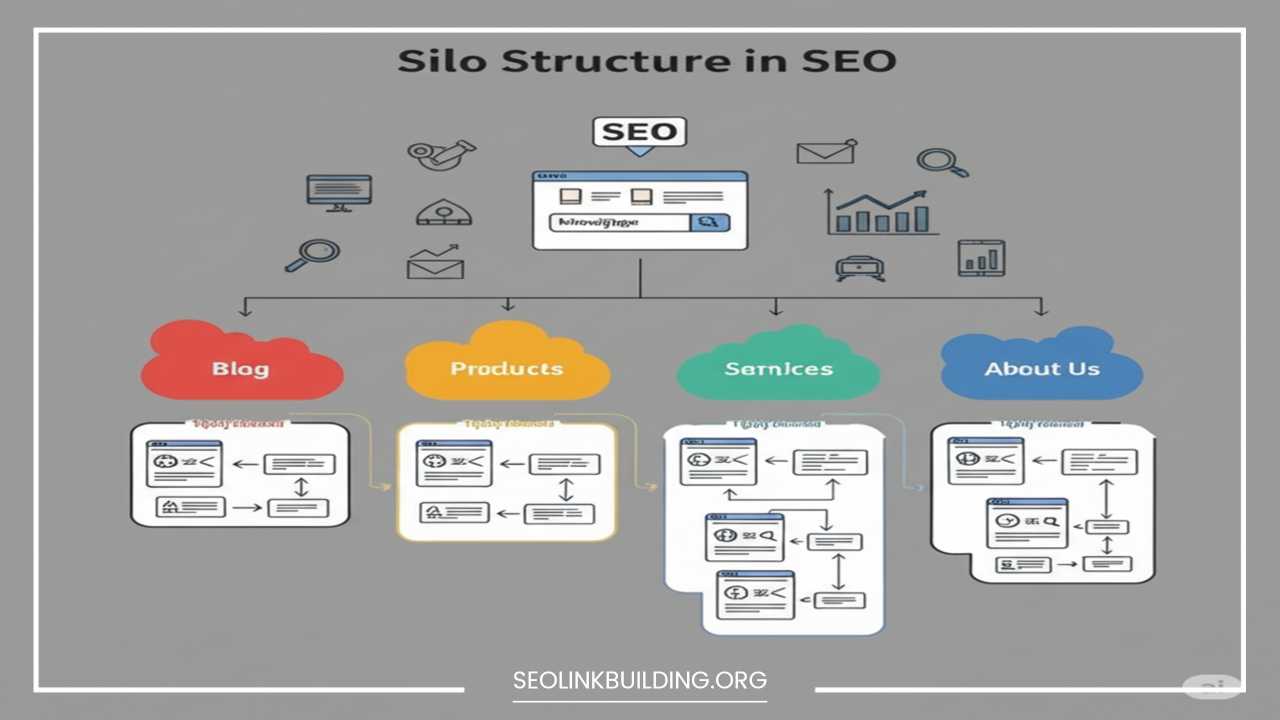
The Silo Structure in SEO: Building Authority, Enhancing User Experience, and Dominating Search
In the ever-evolving landscape of Search Engine Optimization (SEO), the quest for higher rankings and sustained organic visibility often leads practitioners down complex technical rabbit holes. Amidst the algorithms, keyword research, and link building, one fundamental concept stands as a cornerstone of effective site architecture: the silo structure. Far from a mere organizational hack, siloing represents a strategic approach to grouping, isolating, and interlinking related content, transforming a disparate collection of web pages into a cohesive, topically authoritative entity.
This comprehensive article will delve into the intricacies of SEO silo structures, exploring their foundational principles, various implementation methods, undeniable benefits, and how they contribute to building robust topical authority in the eyes of search engines. We will also address common misconceptions, potential pitfalls, and best practices for leveraging this powerful strategy to achieve significant SEO gains.
Understanding the Essence of an SEO Silo
At its heart, an SEO silo structure is about creating clear, thematic sections on your website. Imagine a well-organized library: instead of books scattered haphazardly, they are meticulously arranged into genres, subjects, and sub-categories. Each section contains books exclusively on that topic, and while you might find a reference to another section, the primary focus remains within its defined boundaries.
Similarly, in a website silo, content revolving around a specific primary topic is grouped together. This grouping is not just superficial; it’s reinforced through a deliberate internal linking strategy and, in some cases, the URL structure itself. The goal is to send strong, unambiguous signals to search engines about the primary subject matter of a particular section of your website, thereby building deep topical relevance and authority.
Why Silo? The Undeniable Benefits for SEO and Users
The adoption of a silo structure isn’t an arbitrary SEO trend; it’s a strategic imperative that yields a multitude of benefits for both search engines and human users:
-
Enhanced Topical Authority and Relevance: This is arguably the most significant advantage. By concentrating related content and internal links within a specific silo, you create a powerful thematic hub. Search engines, particularly Google, are increasingly focused on understanding the intent behind queries and the topical authority of websites. A well-constructed silo clearly communicates to algorithms that your site is a comprehensive and trustworthy resource on a given subject. This can lead to higher rankings for a wider array of related keywords and even long-tail variations.
-
Improved Crawlability and Indexing: Search engine spiders (crawlers) navigate your website by following links. A haphazard internal linking structure can make it difficult for crawlers to discover all your valuable content, especially deeper pages. Siloing creates a logical, hierarchical pathway, ensuring that crawlers can efficiently traverse your site, understand the relationships between pages, and index your content more effectively. This can significantly reduce the number of “orphan pages” (pages with no internal links pointing to them), which often struggle to rank.
-
Strategic Distribution of Link Equity (PageRank Flow): Link equity, often referred to as “link juice,” is the authority passed from one page to another via internal or external links. In a silo structure, link equity from authoritative external backlinks to a silo’s pillar page or other strong pages within that silo can be efficiently distributed to all supporting pages within the same thematic group. This concentrates authority where it matters most, boosting the ranking potential of the entire silo.
-
Superior User Experience (UX): While SEO benefits are paramount, a well-designed silo structure inherently improves the user experience. Visitors can easily navigate through logically grouped content, finding related information quickly and efficiently. This reduces bounce rates, increases time on site, and fosters a sense of trust and professionalism. When users find what they need effortlessly, they are more likely to return and engage further with your content.
-
Prevention of Keyword Cannibalization: Without a clear structure, it’s common for websites to inadvertently create multiple pages targeting the same or very similar keywords. This “keyword cannibalization” confuses search engines, making it difficult for them to determine which page is most authoritative for a given query, ultimately diluting your ranking potential across those pages. Siloing helps prevent this by ensuring each piece of content has a defined place within a specific thematic category.
-
Streamlined Content Planning and Production: For content creators and marketers, a silo structure provides a clear framework for content strategy. Once core silo themes are established, it becomes easier to identify content gaps, brainstorm new topic ideas within each silo, and ensure a comprehensive approach to covering a subject area. This systematic approach leads to higher quality, more focused content production.
The Two Pillars of Silo Implementation: Physical vs. Virtual
Silo structures can be implemented in two primary ways, often used in combination for optimal results:
1. Physical Siloing (Directory-Based)
Physical siloing involves organizing your website’s content into distinct directories or subfolders within your URL structure. This method creates a tangible, hierarchical separation that is immediately visible to both users and search engines.
Example:
www.yourdomain.com/seo/(Parent Silo Page)www.yourdomain.com/seo/keyword-research/(Sub-topic Page)www.yourdomain.com/seo/link-building/(Sub-topic Page)www.yourdomain.com/seo/technical-seo/(Sub-topic Page)
Advantages of Physical Siloing:
- Clear Signals to Search Engines: The URL structure itself explicitly communicates the thematic relationship between pages, making it very easy for crawlers to understand your site’s hierarchy and topical focus.
- Intuitive for Users: A well-structured URL can provide users with a sense of where they are on your site and the broader topic they are exploring.
- Strong PageRank Flow: Link equity naturally flows down the hierarchy from the parent silo page to its sub-pages.
Disadvantages of Physical Siloing:
- Less Flexible: Changes to the URL structure can be more complex and require careful 301 redirects to avoid breaking existing links and SEO value.
- Can Lead to Deep Nesting: If not planned carefully, an extensive physical silo can result in very long and unwieldy URLs, potentially impacting user experience.
2. Virtual Siloing (Internal Linking-Based)
Virtual siloing relies primarily on a strategic internal linking strategy to create thematic groups, even if the URL structure doesn’t explicitly reflect a hierarchical folder system. This is achieved by tightly interlinking related pages within a topic while deliberately limiting or avoiding links to pages outside that topic.
Example:
- A pillar page on “Content Marketing” links to supporting articles like “Blog Post Ideas,” “Content Promotion Strategies,” and “Measuring Content ROI.”
- Crucially, these supporting articles would only link back to the “Content Marketing” pillar page or other related articles within the content marketing theme, avoiding links to, say, a page about “Technical SEO.”
Advantages of Virtual Siloing:
- Highly Flexible: Changes to the site’s thematic organization are easier to implement as they primarily involve updating internal links rather than altering URLs.
- Clean URLs: URLs can remain shorter and flatter, which can be aesthetically pleasing and sometimes preferred for user experience.
- Suitable for Existing Sites: Virtual siloing can be a more practical approach for re-organizing content on an established website without a complete URL overhaul.
Disadvantages of Virtual Siloing:
- Requires Discipline: Maintaining strict internal linking rules can be challenging, especially on large or rapidly expanding websites.
- Less Explicit Signals: While effective, the thematic relationship isn’t as explicitly broadcast to search engines as with physical siloing.
Hybrid Approach:
Many successful SEO strategies employ a hybrid approach, combining the best of both physical and virtual siloing. This might involve using physical directories for broad, high-level categories and then utilizing virtual internal linking within those directories to create more granular thematic clusters.
Building an Effective SEO Silo Structure: A Step-by-Step Guide
Implementing a silo structure requires careful planning and execution. Here’s a step-by-step guide to get you started:
-
Define Your Core Topics (Silo Themes):
- Keyword Research is Key: Begin by conducting thorough keyword research to identify your most important broad topics and related sub-topics. Think about what your audience is searching for and what your website aims to be an authority on.
- Align with Business Goals: Your silo themes should directly support your business objectives and the products or services you offer.
- Analyze Competitors: See how successful competitors are organizing their content. This can provide valuable insights, but always strive for a unique and superior approach.
- Start Broad, Then Refine: Begin with 3-7 overarching “parent” topics. These will form your main silos.
-
Create Pillar Pages (Silo Hubs):
- For each core topic, create a comprehensive “pillar page” (also known as a cornerstone content piece or hub page).
- This page should be an in-depth, authoritative resource that provides a high-level overview of the entire topic.
- It should serve as the central navigation point for its respective silo, linking out to all the supporting sub-topic pages.
- Pillar pages are often longer-form content (2,000+ words) and are optimized for broad, high-volume keywords.
-
Develop Supporting Content (Child Pages):
- These are the individual articles, blog posts, product pages, or service pages that delve into specific aspects of the pillar topic.
- Each supporting page should focus on a specific sub-topic or long-tail keyword related to its parent silo.
- Crucially, these pages should link back to their pillar page and to other highly relevant supporting pages within the same silo.
-
Implement a Robust Internal Linking Strategy:
- Hierarchical Linking:
- Pillar to Supporting: The pillar page should link to all relevant supporting pages within its silo.
- Supporting to Pillar: All supporting pages should link back to their respective pillar page, reinforcing its authority.
- Supporting to Supporting (Within Silo): Where relevant and natural, supporting pages can link to other supporting pages within the same silo to provide further context and distribute link equity.
- Contextual Links: Use descriptive and keyword-rich anchor text for your internal links. The anchor text should accurately reflect the content of the linked page.1
- Breadcrumb Navigation: Implement breadcrumbs (
Home > Category > Subcategory > Page) to visually represent your site’s hierarchy and aid navigation for both users and search engines. - Avoid Cross-Silo Linking (Mostly): The golden rule of siloing is to minimize or eliminate internal links between different silos. The idea is to concentrate link equity and thematic relevance within each silo.
- Exception: In rare, highly relevant cases, a link might be necessary for user experience or to avoid content duplication. However, such links should be carefully considered and kept to an absolute minimum.
- Hierarchical Linking:
-
Optimize Your URL Structure (for Physical Silos):
- If opting for physical siloing, ensure your URLs clearly reflect the hierarchical structure.
- Example:
yourdomain.com/silo-name/sub-topic-name/ - Keep URLs concise and keyword-rich.
-
Maintain Consistency and Review:
- Regularly audit your internal links to ensure they adhere to your silo structure.
- As your website grows, resist the urge to add content haphazardly. Always consider which silo a new piece of content belongs to and how it fits into the existing structure.
- Monitor your site’s performance in Google Search Console and analytics tools to identify any areas for improvement in your silo structure.
Silos vs. Topical Clusters: Clarifying the Relationship
The terms “silos” and “topical clusters” are often used interchangeably, leading to some confusion. While closely related, they represent slightly different nuances in site architecture:
- Silo Structure: Primarily a site architecture concept that focuses on physically or virtually isolating and grouping content by theme, emphasizing the flow of link equity and signals to search engines. The core principle is often to limit cross-silo linking.
- Topical Cluster: A content strategy concept where you create a central “pillar page” that broadly covers a topic and then write numerous “cluster content” pieces that delve into specific sub-topics. These cluster pages heavily link back to the pillar page and often to each other within the cluster.
The key difference lies in the emphasis on strict isolation. While topical clusters encourage a hub-and-spoke model with strong internal linking within the cluster, traditional silo philosophy often advocates for minimal linking between distinct silos. However, in modern SEO, many practitioners find success by applying the principles of topical clusters within their broader siloed structure, creating mini-clusters inside each main silo.
Potential Pitfalls and Considerations
While highly beneficial, silo structures are not without their challenges:
- Rigidity for Small Sites: For very small websites with limited content, a strict silo structure might be overly complex and unnecessary.
- Over-Segmentation: Creating too many narrow silos can lead to a fragmented site and hinder the natural flow of information.
- Complexity of Maintenance: On very large websites, maintaining a perfectly rigid silo structure can be labor-intensive and require robust content management systems.
- Balancing UX with Strict Siloing: Sometimes, a strict “no cross-silo linking” rule might impede natural user navigation if a piece of content is genuinely relevant to another silo. Prioritize user experience, and if a cross-silo link genuinely adds value, consider it (perhaps with a “no-follow” tag if you’re very concerned about link equity dilution, though this is less common for internal links).
Advanced Siloing Strategies
For seasoned SEOs, here are some advanced considerations:
- Orphan Page Identification: Regularly check for orphan pages (pages not linked from anywhere) using SEO auditing tools. These pages miss out on valuable link equity and crawlability.
- Link Sculpting (Carefully): While Google’s stance on PageRank sculpting has evolved, strategically placing internal links remains crucial. Identify your most important pages (revenue pages, core services) and ensure they receive ample internal link equity from relevant silo pages.
- Schema Markup for Hierarchy: Implement schema markup (e.g., BreadcrumbList schema) to further communicate your site’s hierarchical structure to search engines.
- Content Freshness: Within each silo, regularly update and refresh older content to maintain topical relevance and authority.
Final Thoughts
The silo structure is more than just a website organization technique; it’s a strategic framework that underpins successful SEO in the modern age. By creating clear, topically focused sections on your website, you not only improve crawlability and the flow of link equity but also send undeniable signals to search engines about your site’s expertise and authority. Moreover, the enhanced user experience fosters engagement and reduces bounce rates, contributing to a more valuable website overall.
While implementation requires careful planning and ongoing maintenance, the benefits of a well-executed silo structure—from higher rankings and increased organic traffic to improved user satisfaction—make it an indispensable element of any serious SEO strategy. By embracing the principles of thematic organization and strategic internal linking, you can build a robust digital foundation that truly dominates the search landscape.