The Definitive Guide to SEO for Charities

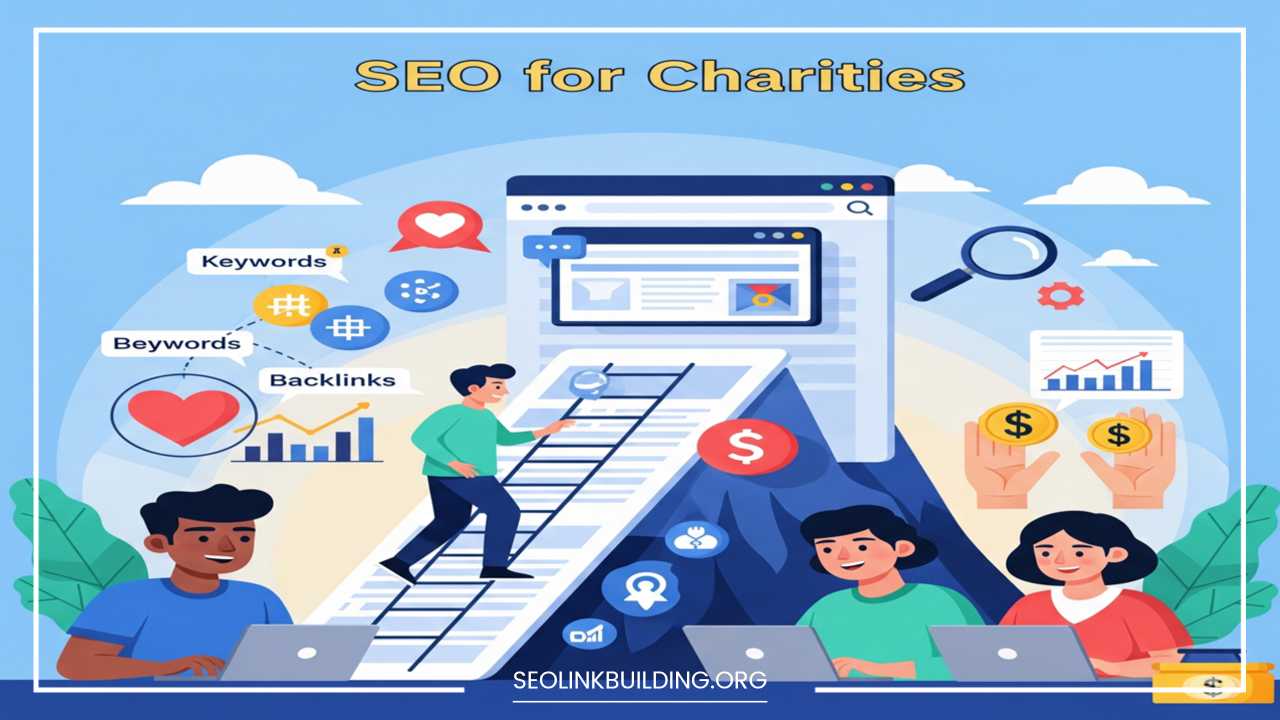
Elevating Empathy, Amplifying Impact: The Definitive Guide to SEO for Charities
In the crowded digital landscape, where attention is a precious commodity, charities face a unique challenge: how to cut through the noise and connect with the very people who can advance their mission. Unlike commercial entities driven by profit, non-profits are fueled by purpose, and their success hinges on reaching potential donors, volunteers, and beneficiaries. This is where Search Engine Optimization (SEO) emerges not as a luxury, but as an indispensable tool.
SEO for charities isn’t about gaming algorithms; it’s about making your vital work discoverable when people are actively seeking solutions, ways to give back, or information about causes they care about. It’s about ensuring that when someone types “donate to homeless shelter,” “volunteer opportunities in [your city],” or “support cancer research” into a search engine, your organization appears prominently, ready to inspire action.
This comprehensive guide will delve into the multifaceted world of SEO for non-profits, providing actionable strategies to amplify your message, attract crucial support, and ultimately, make a greater impact.
The Unique Imperative of SEO for Non-Profits
While the core principles of SEO remain consistent across industries, their application for charities carries a distinct significance:
- Cost-Effectiveness: For organizations often operating on limited budgets, organic search traffic is a gift. Unlike paid advertising, which ceases to deliver results once the budget runs out, well-executed SEO generates sustainable, long-term traffic at minimal ongoing cost. Every dollar saved on marketing can be directly channeled back into your programs.
- Building Trust and Credibility: High search engine rankings signal authority and trustworthiness. When your charity consistently appears at the top of relevant search results, it instills confidence in potential donors and volunteers, positioning your organization as a reliable and impactful force for good.
- Targeted Reach: SEO allows you to connect with individuals who are already interested in your cause or seeking the specific services you provide. This targeted reach ensures that your message resonates with a receptive audience, leading to higher engagement and conversion rates.
- Amplifying Awareness: Beyond direct donations or volunteer sign-ups, SEO plays a crucial role in simply getting your mission in front of more eyes. Increased visibility translates to greater public awareness of the issues you address, fostering a more informed and engaged community.
- Crisis Communication: In times of urgent need or crisis, effective SEO can be instrumental in disseminating critical information, mobilizing support, and directing people to resources swiftly.
Pillar 1: Understanding Your Audience and Their Search Intent
The foundation of any successful SEO strategy lies in deeply understanding your audience. For charities, this means going beyond demographics to grasp their motivations, concerns, and the language they use when searching online.
-
Who are you trying to reach?
- Potential Donors: Are they looking for one-time donations, recurring giving options, or information on legacy giving? What causes resonate most with them?
- Volunteers: Are they seeking specific skills-based opportunities, general helping roles, or local community involvement?
- Beneficiaries: What problems are they trying to solve? What information or support are they seeking?
- Partners/Corporate Sponsors: What are their corporate social responsibility (CSR) goals? What kind of collaborations are they interested in?
- Media/Journalists: What kind of stories are they looking to cover?
-
What are their search intents?
- Informational: “What are the effects of climate change?” “How to help homeless people?”
- Navigational: “Doctors Without Borders official website,” “[Your Charity Name] contact details.”
- Transactional: “Donate to [Cause],” “Sign up for volunteer work.”
- Local: “Food bank near me,” “Animal shelter [City Name].”
Conducting thorough audience research will inform every subsequent SEO decision, from keyword selection to content creation.
Pillar 2: Strategic Keyword Research: The Compass to Discovery
Keywords are the bridge between your charity and potential supporters. Effective keyword research identifies the words and phrases your target audience uses to find information related to your cause.
- Brainstorm Seed Keywords: Start with broad terms related to your mission (e.g., “child poverty,” “environmental conservation,” “disaster relief”).
- Utilize Keyword Research Tools:
- Google Keyword Planner (Free): While primarily for paid ads, it offers valuable insights into search volume and related keywords.
- Google Search Console (Free): Shows you the keywords people are already using to find your site, helping you optimize existing content.
- Google Trends (Free): Identifies trending topics and the popularity of search terms over time.
- AnswerThePublic (Freemium): Visualizes common questions and phrases related to a keyword.
- Ubersuggest (Freemium): Offers keyword ideas, content suggestions, and competitive analysis.
- Moz Keyword Explorer (Freemium/Paid): Provides keyword difficulty, search volume, and SERP analysis. (Note: Moz offers a 75% discount for 501(c)3 organizations).
- Semrush & Ahrefs (Paid, but offer trial periods): Industry-leading tools for in-depth keyword research, competitor analysis, and backlink analysis.
- Focus on Long-Tail Keywords: These are more specific, multi-word phrases (e.g., “how to volunteer at an animal shelter in [City Name],” “donate monthly to protect endangered species”). While they have lower search volume, they often have higher conversion rates because the user’s intent is clearer.
- Analyze Competitor Keywords: See what keywords other successful charities in your niche are ranking for. This can reveal untapped opportunities.
- Consider “Near Me” Searches: For charities with a local presence, “near me” or “[city] charity” keywords are vital for attracting local support.
- Informational vs. Transactional Keywords: Cater your content to different search intents. For “informational” searches, provide educational resources. For “transactional” searches, lead with clear calls to action (CTAs) for donations or sign-ups.
- Avoid Keyword Stuffing: Google penalizes excessive and unnatural keyword repetition. Focus on naturally integrating keywords into high-quality, valuable content.
Pillar 3: On-Page SEO: Optimizing Your Digital Shopfront
On-page SEO involves optimizing individual web pages to rank higher and earn more relevant traffic in search engines.
- Compelling1 Title Tags: Each page should have a unique, concise, and keyword-rich title tag (ideally 50-60 characters). This is often the first thing users see in search results.
- Example: Instead of “About Us,” try “About [Charity Name] | Our Mission & Impact | [City/Cause]“
- Engaging Meta Descriptions: Craft compelling meta descriptions (around 105 characters) that summarize the page content and include a strong call to action, enticing users to click.
- Example: “Support [Charity Name]’s mission to empower underprivileged youth. Discover how your donation can change lives. Donate now!“
- Strategic Header Tags (H1, H2, H3, etc.): Use headers to structure your content logically, making it easy for both users and search engines to understand the hierarchy of information. Include keywords naturally within your headers.
- High-Quality, User-Centric Content: This is the cornerstone of effective SEO. Google prioritizes content that is:
- Informative and Valuable: Addresses user queries comprehensively.
- Engaging and Empathetic: Tells compelling stories, showcases impact, and connects emotionally.
- Original and Authoritative: Demonstrates expertise, experience, authority, and trustworthiness (E-E-A-T). For charities, this means showcasing your real-world impact, staff expertise, and transparent operations.
- Fresh and Up-to-Date: Regularly update existing content and publish new material to signal activity and relevance to search engines.
- Optimized Images and Multimedia:
- Compress Images: Reduce file size without sacrificing quality to improve page load speed.
- Descriptive Alt Text: Provide clear, concise descriptions of images. This improves accessibility for visually impaired users and helps search engines understand image content.
- Image File Names: Use descriptive, keyword-rich file names (e.g.,
children-learning-africa.jpginstead ofIMG_001.jpg).
- Internal Linking: Strategically link related pages within your website. This helps search engines discover and index all your content, and guides users through your site, improving user experience. Ensure anchor text is descriptive and relevant.
- User-Friendly URLs: Create clean, descriptive, and keyword-rich URLs that accurately reflect the page content. Avoid long, numerical, or overly complex URLs.
- Example:
yourcharity.org/programs/education-for-girlsinstead ofyourcharity.org/page?id=123.
- Example:
Pillar 4: Technical SEO: The Unsung Hero of Discoverability
Technical SEO ensures that search engines can effectively crawl, index, and understand your website. Even with brilliant content, technical flaws can hinder your rankings.
- Mobile Responsiveness: A significant portion of web traffic comes from mobile devices. Your website MUST be responsive and provide a seamless experience across all screen sizes. Google prioritizes mobile-friendly sites.
- Page Speed: Slow-loading pages frustrate users and negatively impact rankings. Optimize images, minify code, leverage browser caching, and consider a fast hosting provider. Aim for a load time under 3 seconds.
- XML Sitemaps: Submit an XML sitemap to Google Search Console. This acts as a roadmap for search engines, helping them discover all the important pages on your site.
- Robots.txt File: This file tells search engine crawlers which pages they should and shouldn’t access. Ensure it’s correctly configured to allow important pages to be crawled.
- SSL Certificate (HTTPS): Ensure your website uses HTTPS. This provides a secure connection for users and is a minor ranking factor for Google.
- Crawlability and Indexability: Regularly check Google Search Console for any crawling errors or indexing issues that might prevent your pages from appearing in search results.
- Structured Data (Schema Markup): Implement schema markup to provide search engines with more context about your content. For charities, this could include schema for “organization,” “event,” or “article” to enhance how your information appears in search results (e.g., rich snippets).
Pillar 5: Off-Page SEO: Building Authority and Trust
Off-page SEO refers to activities done outside your website to improve its search engine ranking. The most crucial aspect is backlink building.
- Backlinks: Votes of Confidence: Backlinks are links from other reputable websites to yours. They act as “votes of confidence,” signaling to search engines that your content is valuable and authoritative.2 The more high-quality,3 relevant backlinks you have, the higher your site’s authority.
- Strategies for Earning Backlinks:
- Create Shareable, Linkable Content: Develop valuable resources, in-depth reports, compelling infographics, or powerful storytelling pieces that other organizations and media outlets will naturally want to link to.
- Guest Blogging: Offer to write guest posts for other reputable blogs and websites in your niche or related fields. This allows you to include a link back to your site within your author bio or content.
- Partnerships and Collaborations: When partnering with other non-profits, local businesses, or community groups, ensure reciprocal links are included on both websites.
- Media Outreach: Engage with journalists and media outlets who cover your cause. If they feature your charity, request a link back to your website.
- Unlinked Mentions: Use tools to identify instances where your charity is mentioned online without a link. Reach out and politely request that a link be added.
- Broken Link Building: Find broken links on reputable websites in your niche. Offer your relevant content as a replacement, creating a win-win scenario.
- Directory Listings: List your charity in relevant online directories (e.g., charity directories, local business directories). Ensure consistent Name, Address, and Phone Number (NAP) information across all listings.
- Sponsor Events/Initiatives: When your charity sponsors an event or initiative, ensure you receive a backlink from the event’s website.
- Edu Resource Links: Many university and educational institution websites have resource pages. If your content is relevant, reach out and suggest it as a valuable resource.
- Social Media Engagement: While social media links are generally “nofollow” (meaning they don’t directly pass SEO authority), an active social media presence can increase brand visibility, drive traffic to your website, and encourage natural mentions and shares, indirectly aiding SEO.
- Online Reviews: Encourage positive reviews on platforms like Google Business Profile. Positive reviews enhance your charity’s local SEO and build trust.
Pillar 6: Local SEO: Connecting with Your Community
For many charities, local support is paramount. Local SEO helps you connect with donors, volunteers, and beneficiaries in your immediate geographic area.
- Google Business Profile (formerly Google My Business): This is a critical tool for local SEO. Claim and optimize your profile with accurate information, photos, videos, services, and regular updates. Encourage supporters to leave reviews.
- Local Keywords: Incorporate local keywords into your website content, meta descriptions, and title tags (e.g., “homeless shelter [City Name],” “volunteer opportunities [Neighborhood]”).
- Local Citations: Ensure consistent NAP (Name, Address, Phone Number) information across all online directories, social media profiles, and local listings.
- Community Engagement: Participate in local events, collaborate with local businesses, and engage with community groups. This can lead to local mentions and backlinks.
- Location-Specific Content: Create blog posts or pages that highlight your work in specific communities or address local issues.
Pillar 7: Content Marketing: Storytelling with Purpose
Content is the heart of SEO, and for charities, it’s an opportunity to tell powerful stories, educate the public, and inspire action.
- Blog Posts: Regular blog posts on topics related to your cause, success stories, volunteer experiences, and educational content keep your website fresh and provide ample opportunities for keyword targeting.
- Impact Reports: Create downloadable, shareable impact reports that showcase your achievements and the difference donations make.
- Case Studies: Highlight individual or community transformations enabled by your work.
- Educational Resources: Develop guides, FAQs, infographics, and videos that answer common questions and provide valuable information about your cause.
- Volunteer Spotlights: Feature stories of your volunteers to inspire others.
- Behind-the-Scenes Content: Show the human side of your organization, fostering deeper connections.
- Multimedia Content: Incorporate videos, podcasts, and interactive elements to diversify your content and engage a wider audience.
- Evergreen Content: Create content that remains relevant over time, providing ongoing value and attracting continuous organic traffic.
Pillar 8: Measuring Success and Iterating
SEO is an ongoing process, not a one-time fix. Regularly monitoring your performance and making adjustments is crucial for continuous improvement.
-
Key Metrics to Track:
- Organic Traffic: The number of visitors coming to your site from search engines.
- Keyword Rankings: Your position in search results for target keywords.4
- Impressions: How many times your website appeared in search results.
- Click-Through Rate (CTR): The percentage of users who clicked on your listing after seeing it in search results.
- Bounce Rate: The percentage of visitors who leave your site after viewing only one page. A high bounce rate5 can indicate poor content6 or user experience.
- Conversion Rates: For charities, this means tracking donations, volunteer sign-ups, email list subscriptions, event registrations, or contact form submissions.
- Backlink Profile: Monitor the number and quality of backlinks to your site.
-
Tools for Measurement:
- Google Analytics 4 (Free): Provides comprehensive website traffic data, user behavior insights, and conversion tracking.
- Google Search Console (Free): Offers valuable data on search performance, keyword rankings, crawling errors, and mobile usability.
- Paid SEO Tools (Semrush, Ahrefs, Moz): Provide more advanced analytics, competitor analysis, and comprehensive reporting.
-
Regular Audits and Adjustments: Periodically conduct SEO audits to identify areas for improvement in technical SEO, content, and backlink strategies. The digital landscape and search algorithms are constantly evolving, so continuous adaptation is key.
Leveraging Google Ad Grants
A unique opportunity for eligible non-profits is the Google Ad Grant. This program provides qualifying charities with up to $10,000 per month in in-kind Google Ads credit. While this is paid advertising (PPC) and not organic SEO, it can significantly boost your visibility and fundraising efforts.
Crucially, a strong SEO foundation makes your website more attractive to Google for this grant, and the increased traffic from ads can also indirectly improve your organic presence by signaling relevance and engagement.
Final Thoughts: SEO as an Enabler of Good
In a world brimming with worthy causes, standing out and being found is more critical than ever for charities. SEO, far from being a purely commercial endeavor, is a powerful enabler of good. By strategically optimizing your online presence, you can ensure that your message reaches those who need to hear it most – whether they are individuals seeking help, compassionate citizens looking to contribute, or organizations seeking impactful partnerships.
The investment in SEO for your charity isn’t just about website traffic; it’s about amplifying your impact, securing vital resources, and ultimately, making a tangible difference in the lives you touch. Start small, stay consistent, and watch as your digital presence transforms into a powerful force for positive change.