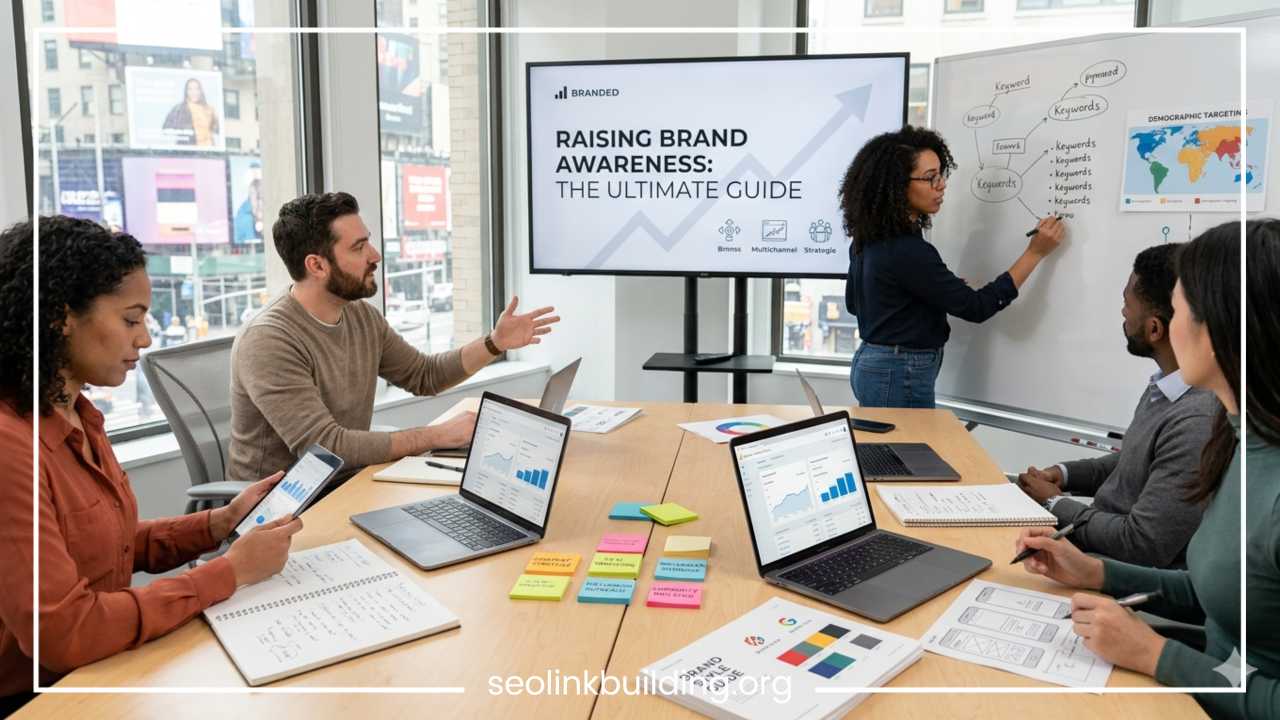
Step-by-Step Guide to Improve Brand Awareness and Grow Your Business
Building a brand is not merely about designing a catchy logo or launching a single viral advertisement. It is about the cumulative effect of every interaction a person has with your business. Brand awareness represents the level of familiarity your target audience has with your brand and how well they recognize it. In an era where consumers are bombarded with thousands of marketing messages daily, standing out is no longer optional—it is a requirement for survival.
This guide provides a comprehensive, step-by-step strategy to improve your brand awareness. By focusing on long-term growth rather than short-term gains, you can build a brand that resonates, builds trust, and ultimately drives sustainable conversions.
What is Brand Awareness?
At its core, brand awareness is the degree to which a consumer can identify or recollect a brand under different conditions. However, it is often misunderstood as a single metric. To truly master brand awareness, one must understand the nuances between its different levels:
Brand Recognition: This is the most basic level. It occurs when a consumer sees your logo, colors, or packaging and can identify that they have seen your brand before.
Brand Recall: This is a deeper level of awareness. It is the ability of a consumer to think of your brand spontaneously when a specific product category is mentioned. For example, if someone thinks of “running shoes” and immediately thinks of Nike, that is strong brand recall.
Top-of-Mind Awareness: This is the first brand that comes to a consumer’s mind when asked an unprompted question about a category.
Brand awareness serves as the foundation of the marketing funnel. Before a customer can consider your product, evaluate it against competitors, or make a purchase, they must first know you exist. Without this initial layer of familiarity, the rest of the funnel cannot function effectively.
Why Brand Awareness Matters
Many businesses make the mistake of focusing solely on direct-response marketing—tactics designed to get an immediate sale. While sales are vital, ignoring brand awareness leads to a plateau in growth.
Builds Trust and Credibility
In a crowded marketplace, consumers lean toward what is familiar. A recognizable brand carries a “trust premium.” When a buyer is faced with two similar products, they are statistically more likely to choose the one from the company they have heard of, even if they have never purchased from them before. Trust is the currency of the modern economy; awareness is how you earn it.
Reduces Customer Acquisition Cost (CAC)
As your brand becomes more well-known, your marketing becomes more efficient. Potential customers who are already aware of your brand require fewer “touchpoints” to convert. High brand awareness also improves the performance of your paid ads, as people are more likely to click on an ad from a brand they recognize. Over time, your organic traffic grows, reducing your reliance on expensive paid acquisition.
Increases Word-of-Mouth Marketing
People talk about brands they know. High awareness fuels organic growth because your brand becomes part of the daily conversation. When your brand is a household name—or even just a “niche-famous” name—your customers become your most effective advocates. Referral marketing is far more powerful than any billboard.
Impacts Purchase Decisions Subconsciously
Much of our shopping behavior is dictated by heuristics or mental shortcuts. Brand awareness creates a “mental shelf space.” When a need arises, the consumer often reaches for the brand that is most prominent in their memory, bypassing the intensive research phase entirely.
Step 1: Define Your Brand Identity Clearly
Before you can ask the world to recognize you, you must know who you are. A fragmented or confusing brand identity will lead to fragmented awareness.
Mission, Vision, and Values
Your mission is what you do every day; your vision is where you are going; and your values are the principles that guide your journey. These aren’t just HR buzzwords; they are the soul of your brand. Consumers, particularly younger generations, increasingly buy from brands that align with their personal values. If your values are “sustainability” and “transparency,” every marketing campaign must reflect that.
Is your brand a “wise mentor,” a “rebellious disruptor,” or a “reliable neighbor”? Defining your personality dictates how you write your captions, how your customer service team speaks, and how your website feels. Consistency in tone ensures that every interaction reinforces the same brand image. If you are a playful brand, your error pages should be witty. If you are a luxury brand, your language should be sophisticated and sparse.
Visual Identity
Humans are visual creatures. Your logo, color palette, and typography are the “face” of your business. Research suggests that color increases brand recognition by up to 80%. Choose a palette that reflects your personality—blue for trust, red for energy, or green for health—and stick to it across every single touchpoint.
Example: Strong vs. Weak Brand Identity
A strong brand identity is one like Apple: sleek, minimalist, and focused on innovation. Whether you are in their store, on their website, or looking at a billboard, you know it is Apple. A weak brand identity is a company that uses five different fonts, changes its logo colors every year, and switches between formal and “meme-style” language on social media. This inconsistency prevents the audience from forming a solid mental image of the brand.
Step 2: Identify Your Target Audience
One of the biggest mistakes in brand awareness campaigns is trying to be “everything to everyone.” If you speak to everyone, you speak to no one.
Create Detailed Buyer Personas
Go beyond basic demographics like age and location. Dive into psychographics: What are their fears? What are their daily challenges? What do they value in a service provider? A well-defined buyer persona allows you to tailor your brand awareness efforts to the specific people most likely to care.
Understand Where They Spend Time
Increasing awareness requires being where your audience already is. If your target audience is B2B professionals, your awareness efforts should focus on LinkedIn and industry journals. If you are targeting Gen Z, platforms like TikTok or specialized Discord servers may be more effective. If you are a local bakery, your “territory” might be a 5-mile radius on Instagram and local community boards.
Why Targeting Matters
Targeted awareness is more valuable than broad awareness. It is better to be known by 1,000 people who are in your target market than by 100,000 people who will never have a use for your product. Precision ensures your budget and energy are spent on high-potential leads.
Step 3: Build a Strong Content Strategy
Content is the vehicle through which your brand identity reaches your audience. To improve awareness, your content must provide value before it asks for a sale.
Blog Content (SEO-Driven)
By teaching your audience something, you position your brand as an authority. Blog posts that answer common industry questions or “how-to” guides help you capture search traffic. This isn’t about selling; it’s about solving. When a user finds the answer to their problem on your site, they associate your brand with helpfulness and expertise.
Social Media Content
Social media is where your brand’s personality shines. Use it for engagement-focused content like polls, behind-the-scenes looks, and industry commentary. The goal here is “shareability.” You want your existing audience to share your content with their network, expanding your reach organically.
Video Content
Video is the most engaging form of content available today. Short-form videos (like Reels or TikToks) are excellent for reaching new audiences through discovery algorithms. Long-form videos on platforms like YouTube allow for deeper storytelling and brand immersion. Video allows people to see the faces behind the brand, which humanizes the business and builds trust.
Storytelling Techniques
People do not fall in love with corporations; they fall in love with stories. Share your “origin story,” highlight the challenges your team has overcome, or showcase the journey of a customer. Narrative content is more memorable than cold facts and figures. A good story creates an emotional connection that “features and benefits” simply cannot match.
Social media is the modern-day “town square.” It is the most powerful tool for building organic brand awareness.
Choosing the Right Platforms
Don’t feel pressured to be on every platform. Select two or three where your audience is most active and master them. Each platform has its own “language”—Instagram is visual, Twitter/X is conversational, and LinkedIn is professional.
Organic Growth Strategies
Social media is meant to be social. Don’t just broadcast; engage. Reply to comments, join conversations in your industry, and share relevant content from others. This increases your visibility within the platform’s ecosystem. Using hashtags strategically can also place your content in front of people who are interested in your specific niche but don’t follow you yet.
Community Building
Move beyond followers and start building a community. Groups, forums, and interactive sessions like “Live Q&As” create a sense of belonging. When people feel they are part of a brand’s community, they become powerful ambassadors for that brand. They don’t just buy from you; they defend you and promote you.
Step 5: Use Influencer & Partnership Marketing
Sometimes the fastest way to build awareness is to borrow it from someone else.
Micro vs. Macro Influencers
You don’t need a celebrity with millions of followers. In fact, micro-influencers (those with 10,000 to 50,000 followers) often have higher engagement rates and a more loyal, niche audience. Their recommendation often carries the weight of a friend’s advice.
Co-Marketing with Complementary Brands
Partner with brands that are non-competitive but serve the same audience. For example, a fitness apparel brand might partner with a healthy meal-prep service. This introduces both brands to a pre-vetted, relevant audience. This could take the form of a joint webinar, a co-branded product, or a simple social media giveaway.
Trust Transfers
When a trusted influencer or partner mentions your brand, their credibility “transfers” to you. This significantly shortens the time it takes for a new lead to trust your business. It acts as a “warm introduction” to a cold audience.
Step 6: Invest in SEO & Search Visibility
Search Engine Optimization (SEO) is the art of being there when people are looking for answers. If your brand appears on the first page of Google for a relevant query, you gain instant “unearned” authority.
Keyword Optimization
Identify the terms your audience is searching for. While “buy [product]” keywords are great for sales, “how to [solve problem]” keywords are better for awareness. Content that ranks for these informational queries introduces your brand to people at the very beginning of their journey.
On-Page SEO Basics
Ensure your website is technically sound. This means fast loading speeds, mobile responsiveness, and clear meta titles/descriptions. If your site is hard to use, people will leave before they even register your brand name.
Backlinks and Authority Building
A backlink is a vote of confidence from another website. When reputable industry sites link to your content, it tells Google that you are an authority. This increases your rankings and, by extension, your brand’s visibility to the masses.
Step 7: Run Paid Advertising Campaigns
While organic growth is sustainable, paid advertising can provide a significant boost to your reach.
Google Ads for Intent
Google Ads allow you to appear at the top of search results for specific keywords. Even if users don’t click on your ad, seeing your brand name at the top of the page builds familiarity over time.
Social Media Ads for Reach
Facebook, Instagram, and LinkedIn ads allow for incredibly precise targeting. You can put your brand in front of people based on their job titles, interests, and even their recent life events. Use visual ads to make a strong first impression.
Retargeting Strategies
Retargeting allows you to stay in front of people who have already visited your site or engaged with your content. It usually takes multiple exposures before a person truly remembers a brand; retargeting ensures those exposures happen across different sites and platforms.
Step 8: Build Brand Consistency Across All Channels
Inconsistency is the enemy of awareness. If your brand feels different on every platform, you are essentially starting from zero every time a customer sees you.
Messaging and Visual Consistency
Whether a customer sees an ad on Facebook, visits your website, or receives an email, the experience should feel like it’s coming from the same “person.” Use the same visual assets, the same brand voice, and the same core messaging.
Customer Experience Consistency
Consistency extends beyond marketing. The way your sales team talks and the way your support team handles issues should reflect your brand values. If your brand is “easy and accessible,” but your customer service is a labyrinth of automated menus, you are breaking your brand promise.
Step 9: Encourage User-Generated Content (UGC)
UGC is any content—videos, images, reviews—created by people rather than brands.
Reviews and Testimonials
A five-star review is a piece of brand awareness. It tells potential customers that your brand is reliable. Encourage customers to leave reviews on Google, Yelp, or industry-specific sites.
Hashtag Campaigns
Create a unique hashtag and encourage your audience to use it when they post photos of your product. This turns your customers into a volunteer marketing force. It provides “social proof” that real people are using and enjoying your brand.
Incentives for Sharing
Offer a small discount or entry into a giveaway for customers who share their experience on social media. This lowers the barrier for engagement and helps your brand reach the personal networks of your existing customers.
Step 10: Measure and Optimize Brand Awareness
You cannot improve what you do not measure. While brand awareness is “soft,” there are several concrete ways to track it.
Key Metrics
Impressions and Reach: How many times was your content seen?
Brand Search Volume: Are more people typing your brand name into search engines?
Direct Traffic: Are people coming straight to your URL? This indicates they have remembered your name.
Social Listening: Use tools to see how often your brand is being mentioned in organic conversations across the web.
Continuous Improvement Loop
Use these metrics to see which strategies are working. If your video content is driving massive reach but your blog is stagnant, shift your focus. Brand awareness is a dynamic process that requires constant tuning based on audience behavior.
Common Mistakes to Avoid
Inconsistent Branding
Changing your look or voice too often prevents the audience from ever “knowing” you. Pick a direction and stick with it for the long haul.
Ignoring Audience Research
Don’t assume you know what your audience wants. Use data to drive your strategy. If you build awareness in the wrong place, you are wasting resources.
Focusing Only on Sales
Brand awareness campaigns should be about “giving,” not “taking.” If your only goal is an immediate transaction, you will never build the long-term trust required for a truly powerful brand.
Final Thoughts
Improving brand awareness is an ongoing journey of building relationships and establishing presence. It is not something that happens overnight, but the result of consistent, strategic effort across multiple channels.
By defining a clear identity, understanding your audience deeply, and delivering value through content, SEO, and social engagement, you can move your brand from obscurity to being a household name in your niche. Brand awareness is the most valuable intangible asset your business can own. Stay consistent, stay authentic, and stay visible. Success will follow the recognition you build today.