
Top 5 Ecommerce Business Models: Which One is Right for You?

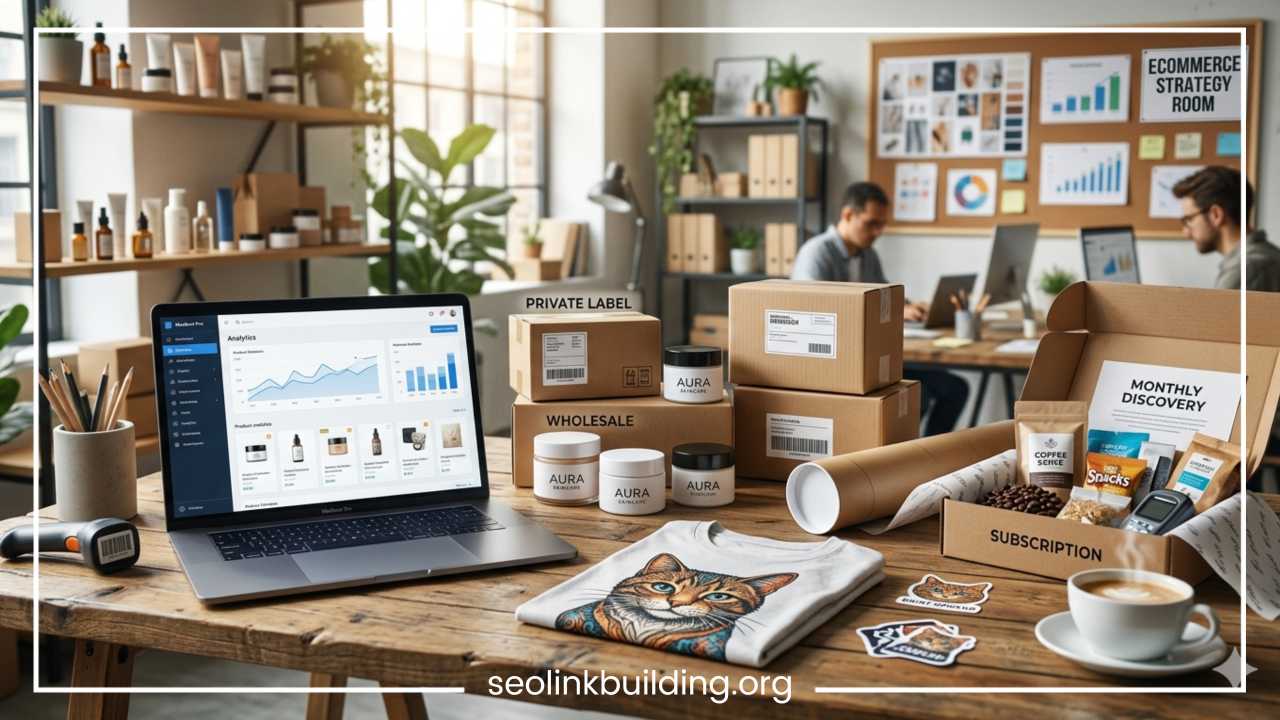
Top 5 Ecommerce Business Models
Starting an ecommerce business is easier than ever, but success often depends on choosing the right business model before launching your store. While many aspiring entrepreneurs fixate on finding the “perfect” product or designing an aesthetic website, the operational foundation—the business model—is what ultimately dictates the longevity, profitability, and scalability of an online venture.
The digital marketplace has experienced rapid, consistent growth, fundamentally transforming how consumers shop and how businesses operate. However, this accessibility brings a saturated market where simply having an online store is no longer enough to guarantee success. Your chosen path determines your daily responsibilities, from managing complex global supply chains to focusing entirely on digital marketing and content creation. Different models require vastly different levels of investment, inventory management, and technical expertise.
For instance, a dropshipping business might allow you to launch with minimal capital but force you to navigate thin margins and intense competition. Conversely, a private label brand requires a significant upfront investment but offers the potential for high profit margins and long-term brand equity. This article serves as a comprehensive guide to help you navigate these choices. By the end of this guide, you will understand the mechanics behind the most popular ecommerce business models, identify the pros and cons of each, and determine which strategy aligns with your personal goals, budget, and entrepreneurial skill set.
What Is an Ecommerce Business Model?
At its core, an ecommerce business model is the structural framework that defines how a company acquires products, manages inventory, markets to potential customers, and generates revenue. It essentially dictates how products travel from the point of origin to the customer’s doorstep and how you extract profit from that exchange.
There is no one-size-fits-all approach in the digital economy. The model you select serves as the backbone of your operations. When deciding on a structure, several critical factors must influence your decision:
-
Startup Capital: Do you have the funds to purchase bulk inventory, or must you start with a low-cost, asset-light approach?
-
Technical Skills: Are you prepared to manage complex logistics and warehousing, or do you prefer a model that allows you to focus solely on creative design and customer acquisition?
-
Marketing Ability: Some models rely heavily on paid advertising to overcome low margins, while others depend on organic community building.
-
Time Commitment: Do you have the bandwidth to manage customer service for hundreds of individual orders, or do you need a more automated fulfillment process?
-
Profit Margins: Are you looking for quick, lower-margin sales or long-term growth driven by high-value, branded products?
Understanding these variables ensures that you do not choose a model that collapses under the weight of your personal constraints or market expectations. Every model carries a unique balance of risk and reward.
Ecommerce Model: Dropshipping
What is Dropshipping?
Dropshipping is a retail fulfillment method where a store does not keep the products it sells in stock. Instead, when a store sells a product using the dropshipping model, it purchases the item from a third party—usually a wholesaler or manufacturer—and has it shipped directly to the customer. The merchant never sees or handles the product.
How It Works
The workflow for dropshipping is designed for simplicity. First, you research and select a niche. Second, you partner with a supplier who offers dropshipping services. Third, you list those items on your online storefront. When a sale occurs, you pay the supplier their wholesale price, and the customer pays you the retail price; the difference remains in your pocket as profit. This eliminates the need for expensive warehousing or manual shipping processes.
Advantages
-
Low Startup Costs: Since you do not need to purchase inventory in bulk, your barrier to entry is extremely low.
-
No Inventory Management: You eliminate the risks and costs associated with warehousing, stock rotation, and unsold inventory.
-
Easy to Start: Most platforms integrate seamlessly with supplier databases, allowing you to launch in days rather than months.
-
Wide Product Selection: You can test multiple product categories without financial risk, allowing for rapid market pivots if a specific product line fails to gain traction.
Disadvantages
-
Lower Profit Margins: Because you are buying single units, your cost per item is higher, leaving less room for profit after advertising costs.
-
Supplier Dependency: You are at the mercy of your supplier’s quality control and shipping speeds. If they fail to meet expectations, your brand takes the blame.
-
Shipping Issues: If you use multiple suppliers, orders with different products may arrive at different times, which can frustrate customers and complicate the returns process.
-
High Competition: Because it is easy to start, barriers to entry are low, meaning thousands of other sellers may be competing for the same customers with the same products.
Best For
Dropshipping is best for beginners who are testing the waters, side hustlers who cannot commit to full-time logistics, and entrepreneurs with limited capital who need to validate a business idea before committing to long-term inventory investments.
Example
A niche store focusing on home office ergonomic accessories might source items from various global suppliers, listing items like laptop stands, vertical mice, and cable organizers without ever stocking them in a warehouse.
Ecommerce Model: Private Labeling
What Is Private Label Ecommerce?
Private labeling involves selling products manufactured by a third party, but branding them as your own. You are not simply reselling someone else’s branded items; you are creating a unique brand identity and having a factory produce those items specifically to your requirements and specifications.
How It Works
The chain is straightforward but requires deeper coordination: A manufacturer produces goods according to your specifications, those goods are branded with your logo and packaging, and you then sell those products to customers under your own company name. You control the product quality and the branding.
Advantages
-
Brand Ownership: You are building a tangible asset that you can eventually sell, rather than just reselling commodity goods.
-
Better Margins: By bypassing the middleman and buying directly from the manufacturer, you secure much higher margins per unit.
-
Customer Loyalty: A unique brand with consistent packaging and quality creates a connection with customers that simple resellers cannot replicate.
-
Business Scalability: Once a product is established, you can iterate on design or expand your product line within the same niche.
Disadvantages
-
Higher Upfront Investment: You typically need to pay for manufacturing, custom molds, branding, and an initial bulk order.
-
Inventory Risks: If the product does not sell, you are left with high overhead costs for inventory that is sitting idle.
-
Product Development Costs: Researching, testing, and ensuring the quality of a custom product takes significant time and money before a single sale occurs.
Best For
This model is best for long-term brand builders who have the capital to invest in inventory and who want full control over their customer experience and profit margins.
Example
An entrepreneur in the skincare industry might hire a cosmetic laboratory to formulate a proprietary face cream, package it in custom-designed containers, and market it as their own luxury brand, eventually expanding into a full line of related products.
Ecommerce Model: Wholesale Ecommerce
What Is Wholesale Ecommerce?
Wholesale ecommerce involves buying large quantities of existing, established products directly from manufacturers or distributors at a discounted rate and reselling them through your own online storefront for a profit.
How It Works
The workflow is clear: You research demand for popular existing brands, negotiate wholesale accounts with manufacturers or authorized distributors, buy stock in bulk, store it, and sell it individually to retail customers. You act as the retailer for established goods.
Advantages
-
Lower Per-Unit Costs: Because you buy in volume, your cost per unit is significantly lower than in dropshipping.
-
Established Products: You are selling products that already have a reputation and demand, meaning you do not have to educate the customer on why they should want the item.
-
Predictable Inventory: You know exactly what stock you have on hand, which allows for better management of fulfillment and customer expectations.
Disadvantages
-
Inventory Investment: You must pay upfront for large quantities of stock, which ties up your cash flow.
-
Storage Costs: Unless you use a third-party logistics provider, you are responsible for warehousing, climate control, and space rental.
-
Slower-Moving Stock: If market demand shifts, you may be stuck with inventory that has already been paid for and is losing value.
Best For
Wholesale is ideal for businesses that have the startup capital to purchase inventory and for entrepreneurs who prefer a stable, proven operations-based business model over the volatility of trend-chasing.
Example
A store specializing in electronics accessories might purchase thousands of branded phone chargers and screen protectors from a distributor, keeping them in a small warehouse and shipping orders out as they come in.
Ecommerce Model: Print-on-Demand
What Is Print-on-Demand?
Print-on-demand is a process where you work with a supplier to customize white-label products with your own designs. Much like dropshipping, you only pay for the product after a customer has placed an order.
Products
Common items include t-shirts, hoodies, mugs, phone cases, posters, and tote bags. The focus is almost exclusively on graphic-driven physical goods.
Advantages
-
No Inventory: You never have to worry about stock management or unsold items.
-
Creative Freedom: You can experiment with hundreds of different designs without any financial penalty for poor-performing artwork.
-
Low Risk: It is one of the safest ways to start an ecommerce business because you are not investing in assets until the sale is guaranteed.
Disadvantages
-
Lower Margins: Because you are paying for the service of printing and shipping individual items on demand, the cost per unit is quite high.
-
Limited Product Control: You are restricted to the base products offered by your print partner.
-
Dependence on POD Partners: If your printing partner has a delay or poor print quality, your brand is the one that receives the negative review.
Best For
This model is perfect for creative professionals, graphic designers, social media influencers, and content creators who have an existing audience waiting to purchase their branded merchandise.
Example
A successful podcast host might create a line of branded apparel, using a print-on-demand service to fulfill orders for shirts and mugs that feature the show’s logo and catchphrases.
Ecommerce Model: Subscription Ecommerce
What Is Subscription Commerce?
Subscription commerce involves customers paying a recurring fee to receive products on a regular, automated basis. This model prioritizes customer retention and lifetime value over the “one-and-done” transaction model.
Types
-
Replenishment Subscriptions: This is for consumable items that customers need regularly. Examples include coffee beans, vitamins, razors, and pet food.
-
Curation Boxes: These focus on discovery. Examples include monthly beauty boxes, book clubs, or niche snack boxes where the contents change every time.
-
Access Memberships: Here, the fee provides access to exclusive products, member-only pricing, or a community.
Advantages
-
Recurring Revenue: Unlike other models, you have a predictable stream of income, which makes financial planning much easier.
-
Better Customer Retention: The subscription model naturally fosters habits, making it harder for customers to switch to competitors.
-
Predictable Cash Flow: Knowing exactly how many items you need to ship each month allows for efficient procurement and inventory management.
Disadvantages
-
Churn Management: You must constantly fight to keep subscribers from canceling.
-
Constant Value Delivery: To maintain a subscription, you must prove your value every single month. If the experience becomes stale, customers leave.
-
Customer Acquisition Costs: It can be expensive to convince a customer to commit to a recurring monthly payment versus a single purchase.
Best For
This model is best for established brands that have already built trust with their customer base and for businesses that occupy a niche where customers have a natural need for repeat purchases.
Comparison Table: Top Ecommerce Business Models
| Model | Startup Cost | Risk Level | Profit Potential | Inventory Needed | Best For |
| Dropshipping | Low | Low | Medium | No | Beginners |
| Private Label | High | Medium | High | Yes | Brand Builders |
| Wholesale | Medium-High | Medium | Medium-High | Yes | Experienced Sellers |
| Print-on-Demand | Low | Low | Medium | No | Creators |
| Subscription | Medium | Medium-High | High | Depends | Long-Term Businesses |
How to Choose the Right Ecommerce Business Model
Selecting the correct path requires an honest assessment of your resources, personality, and long-term ambition.
Choose Dropshipping If:
You have a very limited budget, you are in the early stages of testing different product niches, or you are entirely new to ecommerce and want to learn the mechanics of a store without the risk of holding stock.
Choose Private Label If:
You are committed to building a long-term business asset, you have enough capital to handle the initial manufacturing and branding costs, and you want to maximize your profit margins by avoiding the competition associated with generic reselling.
Choose Wholesale If:
You have enough storage space or the budget for a third-party warehouse, you are comfortable managing inventory logistics, and you prefer to sell recognized brands where the market demand is already proven.
Choose Print-on-Demand If:
You have strong graphic design skills, you possess a creative flair, or you have an existing community of followers who are eager to purchase branded items that represent your specific brand voice.
Choose Subscription If:
You have a product that people consume regularly, you are willing to invest heavily in customer service and retention strategies, and you want to build a business that offers long-term, predictable revenue cycles.
Deep Dive: The Strategic Importance of Model Selection
Choosing your business model is not a decision to be made lightly or in isolation. It defines your daily workflow and your company culture. For example, a wholesale business is primarily an operational challenge—can you keep the shelves stocked and the warehouse organized? A dropshipping business is primarily a marketing challenge—can you consistently find new customers to purchase items that are available everywhere? A private label business is a brand-building challenge—can you convince customers that your version of a product is superior to the thousands of others available?
The most successful entrepreneurs often start with one model and evolve into another. For instance, many successful private label brands begin by dropshipping products to validate market demand. Once they identify a winning product that sells consistently, they transition to private labeling to capture higher margins and establish brand authority. Similarly, a print-on-demand artist might eventually start ordering bulk inventory once they realize which designs are guaranteed to sell, effectively moving toward a wholesale model.
Understanding these transitions is critical to your growth. Do not view these models as permanent boxes. View them as tools in your kit. If you find yourself hitting a ceiling in your current model, it is often a sign that you have outgrown it and are ready for the next level of operational complexity.
Common Mistakes When Choosing an Ecommerce Model
Even with a clear strategy, many entrepreneurs encounter pitfalls that derail their progress. One of the most common errors is chasing temporary trends rather than focusing on solving a specific, enduring customer problem. Trends are volatile, and if your entire business model is built around a fad, you will be left with no sales when the trend dissipates.
Another major mistake is ignoring profit margins. Beginners often look at the retail price of a product without factoring in the costs of acquisition, shipping, returns, and marketing. If your margin is too thin, a single issue—like a customer return or a spike in ad costs—can wipe out your entire profit.
Furthermore, many founders choose a model that simply does not match their skill set. An introvert might struggle with the community-building required for a subscription model, while a non-technical person might find the supply chain management of a wholesale model overwhelming.
Finally, the most fatal mistake is failing to validate demand before investing. Never commit thousands of dollars to inventory or branding without first proving that there are real people willing to pay for your product in the current market. Use landing pages, social media polls, or small-scale advertising to test your concept. If the numbers don’t show interest, adjust your strategy before committing your capital.
Scaling Your Operations
Once you have chosen your model and achieved your first few sales, the conversation shifts to scaling. Every model scales differently.
For dropshipping and print-on-demand, scaling is about increasing the volume of traffic to your site and optimizing your conversion rates. Since you are not constrained by physical inventory, your growth is limited only by your ability to acquire customers profitably.
For wholesale and private labeling, scaling is about inventory management. You must predict demand accurately to avoid stockouts, which lose you sales, or overstocking, which ties up your cash and costs you storage fees. You will also need to focus on building relationships with suppliers to negotiate better prices as your order volume increases.
Subscription businesses scale through retention. You are looking to increase the lifetime value of every customer. The more you can reduce your churn rate—the percentage of customers who cancel their subscription each month—the more profitable your business becomes.
Regardless of the model, technology is your best ally. Use inventory management software for wholesale, automated marketing tools for subscriptions, and high-quality design platforms for print-on-demand. The more you automate the repetitive tasks, the more time you can spend on the high-level strategy that drives real growth.
Final Thoughts
There is no universally “best” ecommerce business model. The right choice is entirely dependent on your personal goals, available budget, risk tolerance, and industry experience.
For those just starting out, models like dropshipping or print-on-demand offer the lowest barrier to entry and the highest flexibility for learning. These allow you to test your store design, your marketing skills, and your product selection without the looming threat of deadstock. Conversely, if you are looking to scale a serious business, move toward private labeling or subscription-based models. These provide the margins and customer loyalty required to build an enduring brand.
Start small, validate your concepts, and remain agile. The beauty of the ecommerce landscape is that it is not static; you can begin with one model to gain market traction and pivot toward another as your capital and expertise grow. The most important step is not picking the perfect model from the outset, but rather picking a sustainable model that you can execute effectively today. Success in ecommerce is rarely about finding a magic bullet; it is about building a consistent, customer-centric operation that provides value every single day.
Take the time to assess your strengths. Are you a designer? A logistics expert? A master of paid media? Align your model with your inherent advantages, and you will find the journey toward building a profitable online business much more rewarding. Your ecommerce journey starts with this single decision. Choose wisely, execute with passion, and stay committed to the long-term vision of your brand.
Frequently Asked Questions
What is the most profitable ecommerce business model for beginners?
For most beginners, the most profitable model in terms of risk-to-reward ratio is often dropshipping or print-on-demand. While profit margins are lower per unit, these models allow you to start with minimal capital and test multiple product niches without the financial risk of holding bulk inventory. This lets you learn the basics of digital marketing and customer acquisition before committing to more capital-intensive models like private labeling.
How much money do I need to start an ecommerce business?
The initial investment varies significantly based on your chosen model. You can start a dropshipping or print-on-demand store for as little as $100 to $500, covering mainly domain registration, platform subscription fees, and initial testing ads. Conversely, starting a private label or wholesale business typically requires $2,000 to $10,000 or more to cover the costs of manufacturing, custom packaging, initial bulk inventory, and professional branding assets.
Can I switch my ecommerce business model after I start?
Yes, pivoting is a common strategy for successful entrepreneurs. Many brands begin by dropshipping products to validate market demand. Once they identify a “winning product” that sells consistently, they often transition to a private label model to increase their profit margins and establish a unique brand presence. The key is to start with a low-risk model to gather data, then scale into higher-margin models as your expertise and capital grow.
What are the main differences between dropshipping and wholesale?
The primary difference lies in inventory management and control. In dropshipping, you do not stock any products; the supplier handles storage and fulfillment, but you have less control over shipping speeds and quality. In wholesale, you purchase products in bulk upfront, which lowers your cost per unit and allows you to control the customer experience and shipping, but it requires you to manage your own storage or hire a third-party logistics provider.
Which ecommerce model is best for building a long-term brand?
Private labeling and subscription-based ecommerce are the best models for long-term brand building. Private labeling allows you to own the product design and quality, creating a unique value proposition that customers cannot find elsewhere. Subscription models create recurring, predictable revenue and foster deep customer loyalty by providing consistent value, which is essential for building a sustainable, sellable business asset.
How do I know if my chosen ecommerce niche is saturated?
Saturation is rarely a reason to avoid a niche; instead, it is a sign that there is proven demand. If a niche is crowded, you must differentiate your brand through better marketing, superior customer service, or a unique product angle. You can test for “saturated” markets by analyzing competitor ads and social media engagement. If competitors are spending money on ads, it means the market is profitable—your goal is simply to offer a better experience or a more compelling brand story.