How to Start a Ecommerce Business Without Money

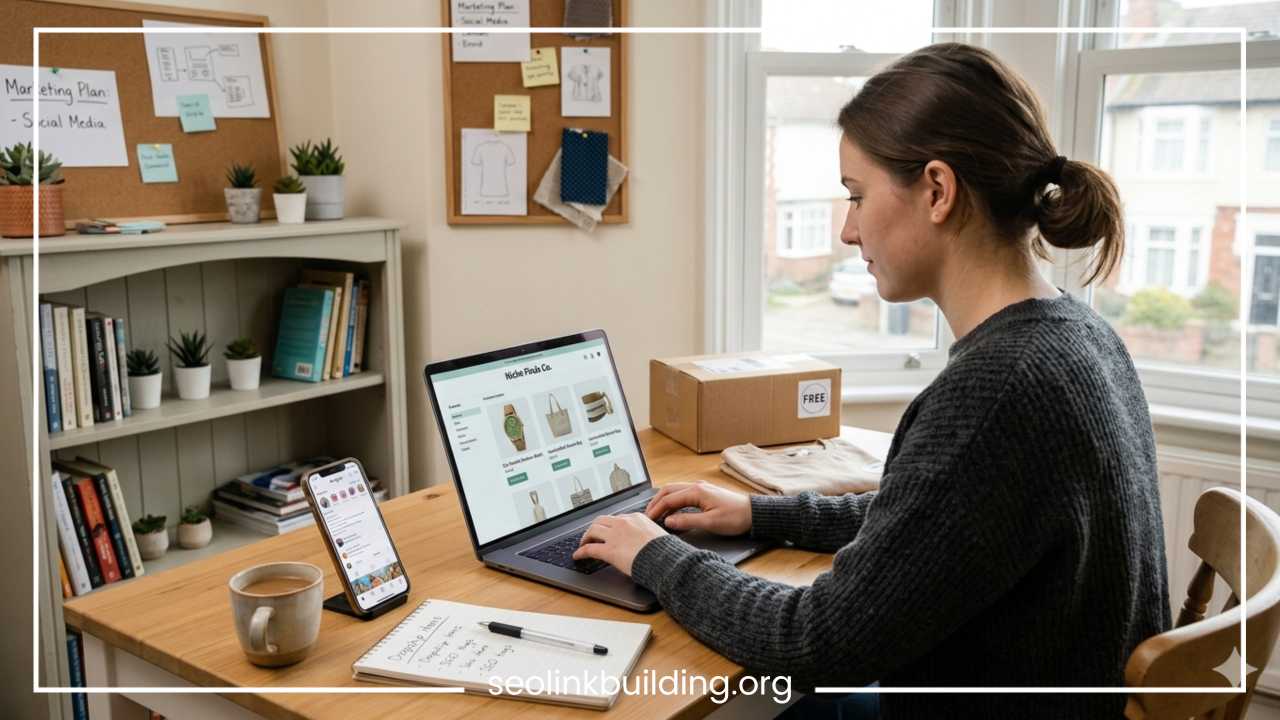
How to Start an E-commerce Business Without Money
The dream of launching a business from the comfort of your home is more accessible today than it has ever been in the history of commerce. For many, however, the primary barrier to entry remains a lack of startup capital. You may have the ambition, the creativity, and the drive, but your bank account shows a balance that makes a traditional retail venture seem impossible.
The good news is that the digital landscape has shifted the requirements for entry. Starting an e-commerce business without money is entirely possible, provided you are willing to make a significant trade-off. You must be prepared to substitute financial capital with sweat equity. In the world of online business, “no money” does not mean no investment; it means that instead of spending dollars, you are spending hours, energy, and ingenuity.
This guide is designed to walk you through the realistic, step-by-step process of building a digital storefront from the ground up without a massive upfront investment. We will move past the hype and focus on the practical systems, free tools, and organic marketing strategies required to turn a zero-dollar start into a profitable reality.
What No Money Really Means in E-commerce
Before diving into the “how,” it is vital to establish a reality check. When we talk about starting a business with zero capital, we are talking about a “low upfront cost” model. While you can technically launch without spending a dime today, eventually, certain small costs—like a domain name or a transaction fee—will arise once you start making sales.
The fundamental rule of business is that you need resources to generate growth. If you do not have cash, you must have time. You will need to become your own graphic designer, your own copywriter, your own customer service agent, and your own marketing manager.
The skills you will need to develop instead of spending capital include:
-
Digital Marketing: Learning how to capture attention on social media without paying for ads.
-
Market Research: Using free data to understand what people want to buy.
-
Technical Literacy: Learning how to navigate free website builders and e-commerce platforms.
-
Resilience: Understanding that organic growth takes longer than paid growth.
The primary limitation of free tools is often “scalability.” A free plan might limit how many products you can list or how much branding you can customize. However, these tools are perfect for the “proof of concept” phase. Your goal is to reach your first sale, then your tenth, and then reinvest those profits back into the business to unlock professional-tier tools.
Choosing the Right Business Model
To start without inventory or a warehouse, you must choose a business model designed for lean operations. Here are the top contenders for a zero-dollar start:
Dropshipping
In this model, you act as the middleman. You list a product on your store that is actually held in a supplier’s warehouse. When a customer buys from you, you purchase the item from the supplier, who then ships it directly to the customer. You never touch the product. The profit is the difference between your retail price and the supplier’s wholesale price.
Print-on-Demand (POD)
Similar to dropshipping, but focused on custom designs. You create artwork for t-shirts, mugs, or posters. When an order comes in, a third-party company prints your design on the item and ships it. This is ideal for creatives and artists who want to sell branded merchandise without buying 500 shirts upfront.
Affiliate Marketing
While not a “store” in the traditional sense, affiliate marketing allows you to earn commissions by recommending other people’s products. You don’t have to handle shipping or customer service. It is a pure marketing play, making it the lowest-risk entry point into e-commerce.
Digital Products
Selling eBooks, templates, stock photos, or online courses has the highest profit margin because there are no shipping or manufacturing costs. Once the asset is created, you can sell it an infinite number of times.
Reselling
This is the classic “hustle” model. You take items you already own (clothes, electronics, books) and sell them on marketplaces. This generates the initial “seed money” you can then use to fund a more formal e-commerce brand.
Finding a Profitable Niche Without Spending Money
The biggest mistake beginners make is trying to sell everything to everyone. To succeed with zero budget, you must find a “niche”—a specific segment of the market with a specific problem. You can find these pockets of opportunity using free tools.
Google Trends
Search for keywords related to your interests. Is the interest in “home gardening” rising or falling? Google Trends shows you the trajectory of public interest over time, helping you avoid dying industries.
Amazon Bestsellers
Navigate to the “Bestsellers” or “Movers & Shakers” section on Amazon. This shows you exactly what people are opening their wallets for right now. Look for products with high demand but poor branding—that is your gap.
TikTok and Instagram Trends
Social media is a real-time laboratory for consumer desire. Watch for “TikTok Made Me Buy It” hashtags. Pay attention to the comments section; if people are asking “Where can I find this?” or “I wish this came in blue,” they are literally handing you a business plan.
Sourcing Products for Free
Sourcing typically implies buying in bulk, but for a no-money startup, we look for “just-in-time” sourcing.
Using Dropshipping Suppliers
Platforms like AliExpress, CJ Dropshipping, or local suppliers allow you to browse thousands of products. You don’t pay for the product until your customer pays you. This eliminates the risk of “dead stock”—unsold inventory sitting in your closet.
Partnering with Local Creators
There may be a local artisan who makes incredible leather goods or jewelry but has no online presence. You can propose a partnership: you handle the website and marketing, they handle the craft. You only pay them once a sale is made.
Negotiating Payment-After-Sale
For some digital services or wholesalers, you can negotiate a “drop-ship” arrangement even if they don’t advertise it. It never hurts to send a professional email asking if they are open to a fulfillment partnership.
Building Your Store Without Money
You do not need a $5,000 custom-coded website to start. You need a “Minimum Viable Product” (MVP).
Free Platforms and Trials
Most major e-commerce platforms offer free trials. Some, like Square or Big Cartel, offer completely free tiers for a limited number of products. WooCommerce is free software, though it requires a small hosting fee.
Social Commerce
You can start selling without a website at all. Instagram and Facebook Shops allow you to list products directly on your profile. You can handle payments through free services like PayPal or Venmo (depending on your region’s regulations) or via direct bank transfer.
Marketplaces
Selling on Etsy, eBay, or Vinted allows you to leverage their existing traffic. While they take a small percentage of each sale, they don’t usually require an upfront monthly subscription, which fits the “no money” criteria perfectly.
Branding on a Zero Budget
Branding is what separates a professional store from a “scammy” looking site. It builds trust, which is the currency of the internet.
Creating a Brand Identity
You don’t need to hire a designer. Tools like Canva offer thousands of free templates for logos, social media posts, and banners. Stick to a simple color palette (two or three colors) and two consistent fonts. Clean and minimal is always better than cluttered and amateur.
Choosing a Brand Name
Your name should be easy to spell and reflect your niche. Use free business name generators for inspiration, then check social media platforms to ensure the handles are available.
Building Trust
Since you don’t have a big brand name yet, use transparency to build trust. Create an “About Us” page that tells your story. Be honest about shipping times. Provide clear contact information.
Marketing Without Spending Money
This is the engine of your business. Without paid ads, you must master “Organic Marketing.”
TikTok and Reels
Short-form video is currently the most effective way to get “free” reach. You don’t need a professional camera; your smartphone is enough. Document the process of building your business, show the benefits of your products, or provide educational content related to your niche.
SEO Basics
Search Engine Optimization is the art of showing up on Google when someone searches for your product. Use free keyword tools to find what people are typing. Include those phrases in your product titles, descriptions, and blog posts. It is a slow game, but the traffic is permanent and free.
Leveraging Communities
Reddit, Facebook Groups, and Discord servers are where your customers hang out. Do not go there and spam your link—you will be banned. Instead, provide value. Answer questions. Be a helpful member of the community. When someone asks for a recommendation that fits your product, mention your store naturally.
Influencer Outreach
You can’t afford a celebrity, but you can reach out to “micro-influencers” (those with 1,000 to 5,000 followers). Offer them a free sample of your product (if you can afford the shipping) or a commission on any sales they generate via a custom link. Many small influencers are happy to collaborate for the content and a small kickback.
Getting Your First Sale
The first sale is always the hardest. It requires proactive “hunting” rather than waiting for customers to find you.
Manual Outreach
Search for people on Twitter or Instagram who are talking about the problem your product solves. Send them a polite, non-spammy message offering a solution.
Incentives
Offer a “founding customer” discount. People love being part of something new, especially if they feel they are getting a deal for taking a chance on a new brand.
Social Proof
As soon as you get a sale, ask for a review. If a friend buys from you, ask them to take a photo of the product. Potential customers are much more likely to buy if they see that someone else has already done so successfully.
Managing Orders Without Inventory
Once the orders start coming in, you need a system to ensure they are fulfilled correctly.
The Fulfillment Workflow
If you are dropshipping, as soon as you receive an order notification, you go to your supplier’s site, enter the customer’s shipping details, and pay for the item. The supplier takes it from there.
Customer Communication
In a low-budget setup, communication is your best tool. Send a personal “thank you” email. Inform the customer when the item is shipped. If there is a delay, tell them before they have to ask you.
Handling Returns
Returns are a part of e-commerce. Check your supplier’s return policy before you start. If a product is broken, most suppliers will offer a refund or a reshipment. Make sure your store’s policy is clear so there are no surprises for the customer.
Scaling Without Capital
Scaling is the process of growing your revenue. Since you started with nothing, your strategy should be “100% Reinvestment.”
Reinvesting Profits
Do not spend your first $100 in profit on a personal treat. Use it to buy a professional domain name. Use the next $500 to buy a small amount of inventory so you can ship faster than your dropshipping supplier. Use the next $1,000 to run your first targeted ad campaign.
Automating Processes
As you grow, your time becomes more valuable. Look for free or low-cost apps that automate your social media posting or your email marketing. This frees you up to focus on high-level strategy rather than daily tasks.
Common Mistakes to Avoid
Many people fail in e-commerce not because they lacked money, but because they lacked a plan.
Expecting Instant Success
Organic marketing takes time. You might post thirty TikToks before one goes viral. You might wait three months for Google to index your site. Persistence is the only way to overcome a lack of budget.
Choosing a “Boring” Niche
If you are selling something generic that people can buy at a local grocery store, you will fail. You need a product that evokes an emotion or solves a specific, annoying problem.
Ignoring the Data
Even free tools provide analytics. If 1,000 people visited your site but zero bought, the problem isn’t your marketing—it’s your website or your price. Use the data to “pivot” until you find what works.
Realistic Expectations and Timeline
Building an e-commerce business for free is a marathon, not a sprint.
Month 1: Research and Setup
This month is dedicated to finding your niche, choosing your model, and setting up your basic storefront. You will likely make zero dollars.
Months 2-3: Content and Authority
This is where you start posting content daily. You are building an audience. You might get your first few “trickle” sales from friends or random social media hits.
Months 4-6: Optimization
You now have enough data to see what content works and which products people are clicking on. You refine your brand and start seeing more consistent sales.
Year 1 and Beyond
With consistent reinvestment, you can transition from a “no money” side hustle to a legitimate brand with its own inventory and a loyal customer base.
Deep Dive: Mastering the Dropshipping and Print-on-Demand Models
To truly understand how to operate with zero capital, we must examine the mechanics of dropshipping and Print-on-Demand (POD) in detail. These are the two most reliable “zero-entry” models because they solve the two biggest expenses in retail: manufacturing and storage.
In a traditional retail setup, you might spend thousands of dollars ordering stock from a factory. You then have to pay for a warehouse or take up space in your garage. If the product doesn’t sell, you are left with “dead capital.” In dropshipping, the risk is shifted entirely to the supplier. Your job is not to manage physical goods, but to manage digital information. You are essentially a data broker who connects a buyer’s desire with a manufacturer’s supply.
Print-on-Demand takes this a step further by allowing for high levels of personalization. If you identify a niche—for example, “Gift for retired librarians who love cats”—you don’t need to print 100 shirts with that specific phrase. You simply create the digital file. When a customer buys that shirt, the POD service (like Printful or Printify) handles the printing on a per-order basis. This allows you to test hundreds of different designs without ever spending a cent on inventory. If a design doesn’t sell, you simply delete it and try a new one. The cost of failure is zero, which is the most powerful advantage of an e-commerce entrepreneur on a budget.
Content Strategy: The Currency of Free Marketing
In the absence of a marketing budget, your content is your currency. To reach 2,600 words of value, we must discuss how to build a content engine that works while you sleep.
Organic marketing is often misunderstood as “posting whenever I feel like it.” Successful zero-budget entrepreneurs treat content like a scientific experiment. You should be active on at least two platforms: one for “discovery” (like TikTok or Pinterest) and one for “nurturing” (like Instagram or an email list).
Discovery platforms use algorithms to show your content to people who don’t follow you yet. This is critical for growth. On TikTok, for example, your goal should be to provide educational or entertaining content that naturally features your product. If you sell eco-friendly kitchenware, don’t just say “Buy my spoon.” Instead, make a video titled “3 ways to reduce plastic waste in your kitchen today.” At the end of the video, mention that your store offers the tools shown.
Nurturing platforms are where you build a relationship with your existing followers. This is where you show the “behind the scenes” of your business. People buy from people, not faceless corporations. By showing your face, your workspace, and your challenges, you build an emotional connection that makes customers want to support you. This “human element” is a free branding tool that billion-dollar companies struggle to replicate.
The Technical Side: Optimizing for Conversions
Once you have traffic coming to your site for free, you must ensure that traffic actually turns into money. This is called “Conversion Rate Optimization” (CRO). You don’t need paid software for this; you just need to apply basic psychology.
First, your website must be fast. Most users will leave a site if it takes more than three seconds to load. You can optimize speed for free by compressing your images using free online tools and keeping your website design simple. A clean, white background with high-quality photos is more effective than a flashy, slow-loading site.
Second, your “Call to Action” (CTA) must be clear. A visitor should know exactly what to do next within two seconds of landing on your page. Use high-contrast buttons that say “Add to Cart” or “Buy Now.” Avoid confusing language like “Submit” or “Check it out.”
Third, eliminate friction. Friction is anything that makes it harder for a customer to finish their purchase. This includes mandatory account creation, long forms, or hidden shipping costs. In a zero-budget setup, you should offer as many free payment options as possible (like digital wallets) to make the checkout process a “one-click” experience.
Leveraging User-Generated Content (UGC)
One of the most powerful free marketing tools is User-Generated Content. This is when your customers create content featuring your products. This acts as “social proof”—it proves to other potential buyers that your store is real and your products are good.
How do you get UGC without paying for it? You ask. When a customer receives their order, include a small digital or physical note asking them to tag your store in their photos for a chance to be featured on your page. People love the “fame” of being featured by a brand. Once you have a few photos or videos from customers, repost them (with permission). A video of a real person using your product is often ten times more effective than a professional ad because it feels authentic.
Final Thoughts
Starting an e-commerce business without money is a challenge that tests your creativity and your work ethic. It removes the safety net of “buying your way to success” and forces you to understand the fundamental mechanics of how people discover and buy things online.
The most important step you can take is the first one. Do not wait for the perfect moment or a windfall of cash. Pick a business model, find a niche that interests you, and start creating content today. The internet is a vast marketplace with room for everyone—including those who are starting with nothing but a dream and a laptop.
Success in e-commerce is not about who has the most money at the start; it is about who can provide the most value to their customers and who is willing to stay the course when things get difficult. Your lack of capital is not a permanent barrier—it is simply a starting line. Pick up the pace and start building. Consistency is the only thing standing between where you are now and a profitable online empire. By focusing on organic growth, high-value content, and a lean business model, you are not just building a store—you are building a sustainable, long-term asset.
Frequently Asked Questions
To further help you navigate the journey of launching an online storefront with zero capital, here are answers to some of the most common questions regarding low-cost e-commerce entry.
How can I find the best dropshipping suppliers for beginners with no signup fees?
Finding reputable suppliers without upfront costs is crucial for a zero-budget start. Platforms like AliExpress and CJ Dropshipping are popular because they do not charge monthly subscription fees to browse or connect products to your store. Additionally, you can search for local wholesalers on directories like SaleHoo or simply by using search engines to find regional manufacturers. Always look for suppliers with high ratings, fast shipping times (if possible), and a history of reliable communication to ensure your customers receive quality goods.
What are the best free e-commerce platforms for small businesses with zero budget?
If you are looking to avoid monthly fees while starting out, Square Online and Big Cartel offer free plans that allow you to list a limited number of products without a subscription. Another powerful option is WooCommerce, which is a free plugin for WordPress. While you will eventually need to pay for a domain and hosting, the software itself is open-source and free. For those who want to avoid a website altogether at the start, Facebook Marketplace, Instagram Shops, and eBay are excellent alternatives that allow you to reach buyers directly through social and marketplace traffic.
How do I market an e-commerce store for free without using paid advertising?
Organic marketing is your most powerful tool when you have no budget for ads. Focus on Short-Form Video Content on platforms like TikTok and Instagram Reels; these algorithms prioritize content discovery over follower counts, meaning a single viral video can drive thousands of visitors to your shop for free. Additionally, invest time in Search Engine Optimization (SEO) by using free tools like Google Keyword Planner to find terms your audience is searching for. Engaging in niche-specific Reddit communities and Facebook Groups by providing helpful advice—rather than spamming—can also build a loyal audience without spending a cent.
Can I start a print-on-demand business with no money at all?
Yes, print-on-demand (POD) is one of the most accessible models for those with zero capital. Services like Printful, Printify, and Redbubble allow you to upload your designs for free. You only pay for the cost of the product after a customer has placed an order on your site. This means you have zero inventory risk. To keep branding costs at zero, use free design tools like Canva or Photopea to create your artwork and mockups.
Is it possible to run an e-commerce store using only a smartphone?
It is entirely possible to manage and even launch a business from a mobile device. Most e-commerce platforms have robust mobile apps that allow you to add products, respond to customer inquiries, and track shipments. Free apps like CapCut or InShot are professional-grade tools for editing marketing videos directly on your phone. As long as you have an internet connection, you can handle every aspect of a “no-money” business model—from product research to customer service—without a laptop.
How much time does it take to see the first sale in e-commerce without investment?
When you aren’t paying for traffic through ads, your “payment” is time. For most beginners, it takes anywhere from 30 to 90 days to secure the first consistent sales. This timeline depends heavily on the quality of your niche research and the frequency of your content posting. By posting high-value content daily and optimizing your store for search engines, you can shorten this window. The key is consistency; organic growth is a compounding process where early efforts may seem slow, but results accelerate over time.