How to Grow My Business Online: Proven Strategies for Success
In the modern marketplace, the question is no longer whether a business should be online, but how effectively it can compete in the digital arena. The transition from traditional brick-and-mortar mindsets to digital-first strategies has leveled the playing field, allowing small startups to compete with global corporations. However, this accessibility brings intense competition. To grow your business online, you need more than just a website; you need a comprehensive, integrated ecosystem that attracts, engages, and converts a global audience.
Digital growth is not a single event but a cumulative process. It requires a synergy between technical infrastructure, creative storytelling, and data-driven psychology. This article serves as a definitive guide to navigating the complexities of digital growth. We will explore the foundational elements of a professional online presence, the mechanics of search engines, the power of content and social media, and the advanced data analytics required to scale.
Build a Strong Online Foundation
Before you invest a single dollar into advertising, your digital home must be structurally sound. A weak foundation will cause your marketing efforts to leak potential customers, leading to a poor return on investment.
Create a Professional Website
Your website is often the first point of contact between your brand and a prospect. In the digital world, first impressions are formed in milliseconds.
Site Speed: Modern users are impatient. A delay of even one second in page load time can lead to a significant drop in conversions. High latency leads to immediate bounces and negatively impacts your search engine rankings.
Mobile-Friendliness: With more than half of global web traffic coming from mobile devices, a responsive design is non-negotiable. Your site must look and function perfectly on smartphones and tablets, with “thumb-friendly” navigation and readable fonts.
User Experience (UX): Navigation should be intuitive. A visitor should never have to wonder where to click next. If a visitor cannot find what they are looking for within three clicks, the cognitive load becomes too high, and you risk losing them to a competitor.
Clear Branding
Consistency builds trust. Your online presence should have a cohesive visual identity, including a professional logo, a defined color palette, and consistent typography. Beyond aesthetics, your brand voice—the tone in which you write and speak—should resonate with your audience’s values. Are you authoritative and corporate, or quirky and relatable? Define this early and stick to it across every platform.
Define Your Target Audience and Niche
Trying to sell to everyone usually results in selling to no one. Successful online businesses define a specific Buyer Persona. Who is your ideal customer? What are their pain points, interests, and online behaviors? By narrowing your niche, you can tailor your messaging to speak directly to their needs. A specialized solution for a specific problem is always easier to sell than a generic product.
Set Clear Business Goals
Growth requires a yardstick. Use the SMART framework:
Specific: Increase newsletter signups.
Measurable: Grow the list by 20%.
Achievable: Based on current traffic, this is realistic.
Relevant: Email marketing drives sales.
Time-bound: Achieve this within the next 90 days.
Search Engine Optimization (SEO)
SEO is the process of optimizing your website to rank higher in search engine results pages. It is the most cost-effective way to drive high-quality, evergreen traffic to your business.
Keyword Research Basics
Keywords are the bridge between what people are searching for and the content you provide. Use tools to identify long-tail keywords—phrases that are more specific and less competitive. For example, instead of targeting “shoes,” a small business might target “handmade leather boots for hiking.” These phrases have lower search volume but much higher conversion intent.
On-Page SEO
This involves optimizing individual web pages:
Title Tags and Meta Descriptions: These are your billboards on the search results page. They must be compelling and include your primary keyword to encourage clicks.
Headings (H1, H2, H3): Use headings to structure your content. This helps search engines understand the hierarchy of information and makes the page easier for humans to scan.
Alt Text: Describe your images for search engines and visually impaired users.
Technical SEO
Behind the scenes, your website’s code must be clean. This includes:
XML Sitemaps: A map that helps search engines find your pages.
HTTPS Security: Google prioritizes secure sites.
Fixing Broken Links: A 404 error is a dead end for both users and search bots.
Content must be written for humans first and search engines second. Avoid keyword stuffing, which makes text unreadable and can lead to search engine penalties. Instead, focus on LSI keywords (Latent Semantic Indexing)—terms related to your main topic that help search engines understand the context of your page.
Importance of Backlinks
A backlink is a link from another website to yours. Search engines view these as votes of confidence. The more high-authority, relevant websites that link to you, the more domain authority you gain. Focus on quality over quantity; one link from a major industry publication is worth more than a thousand links from obscure, irrelevant blogs.
Content Marketing Strategy
Content marketing is the art of communicating with your customers without selling. It is non-interruption marketing that builds long-term loyalty.
Blogging and Educational Content
A blog allows you to answer the questions your customers are asking. By providing free, valuable information, you establish your business as an authority. If a customer learns how to solve a problem from your blog, they are significantly more likely to hire you when they need a professional solution.
Video Marketing
Video is the most engaging form of content.
Long-form (YouTube): Ideal for deep dives, tutorials, and product demonstrations. It also provides a secondary search engine presence.
Short-form (TikTok/Reels): Perfect for high-energy, snackable content that humanizes your brand and capitalizes on trending topics.
Value-Driven vs. Promotional Content
The 80/20 Rule is a gold standard: 80% of your content should be helpful, educational, or entertaining, while only 20% should be explicitly promotional. If your feed is nothing but sales pitches, your audience will develop “banner blindness” and tune you out.
Content Consistency and Planning
Growth is the result of compounding effort. A content calendar is essential for maintaining a steady rhythm. Whether you post once a week or once a day, staying consistent keeps your brand “top of mind” and trains algorithms to favor your content.
Repurposing Content
Efficiency is key to scaling. A single high-quality blog post can be:
Scripted into a YouTube video.
Broken into five LinkedIn “nuggets.”
Designed into an infographic for Pinterest.
Summarized in an email newsletter.
Recorded as a podcast episode.
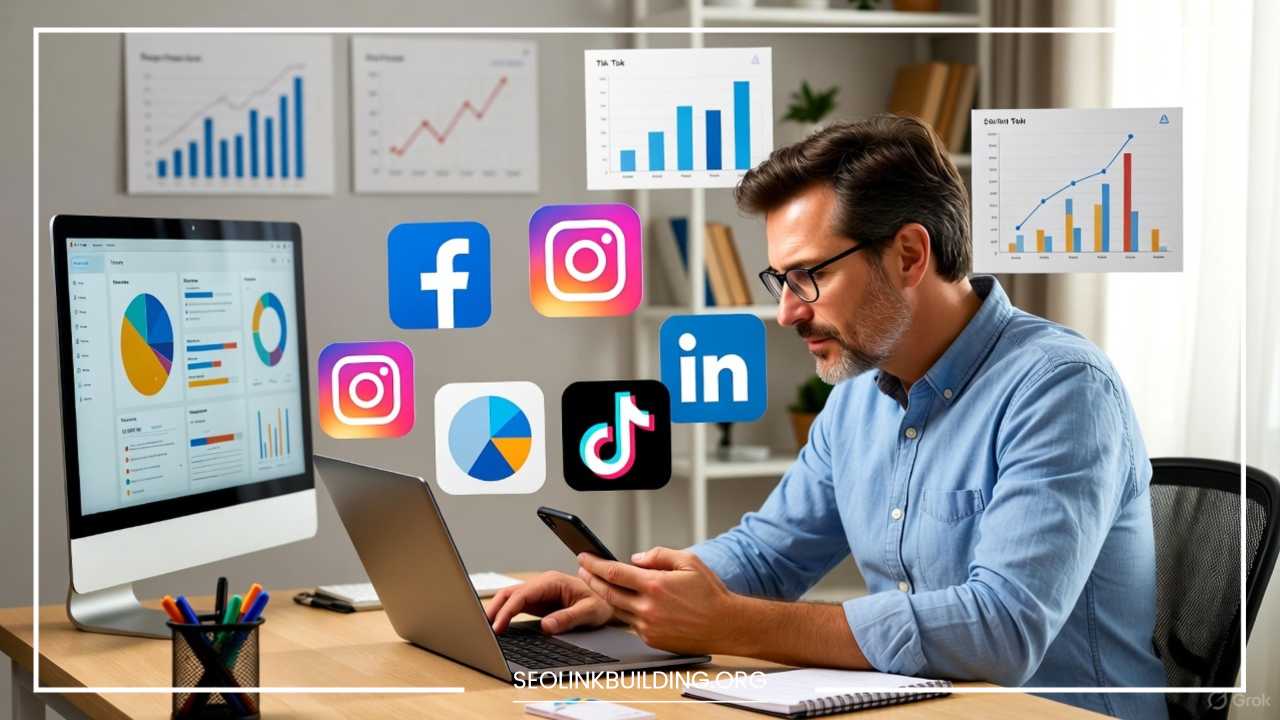
Social Media Marketing
Social media is where your brand becomes social. It is a two-way street for communication and community building, not just a megaphone for announcements.
Choosing the Right Platforms
You don’t need to be everywhere; you need to be where your customers are.
B2B: LinkedIn is the gold standard for professional networking.
Visual/Lifestyle: Instagram and Pinterest are essential for aesthetic-heavy industries.
Gen Z/Trend-focused: TikTok is the primary driver of viral growth.
Building an Engaged Audience
Followers are a vanity metric; engagement is a business metric. An active community of 500 people who comment, share, and ask questions is far more valuable than 50,000 passive followers who ignore your posts. Respond to every comment and encourage dialogue.
Posting Strategies and Consistency
Algorithms favor “meaningful social interaction.” Use carousels to increase “dwell time” (how long someone stays on your post) and utilize Stories to show the raw, behind-the-scenes reality of your business. This builds a layer of authenticity that polished ads cannot replicate.
Paid Social Media Ads
Organic reach is increasingly difficult to achieve. To scale quickly, you must master paid social ads. These allow for “laser-targeting”—showing your ads only to people of a certain age, in a specific location, who have expressed interest in your direct competitors.
Influencer Collaborations
Partnering with influencers who already have the trust of your target audience can provide a massive shortcut to credibility. Micro-influencers (10,000 to 50,000 followers) often have much higher engagement rates and a more “loyal” following than celebrities, providing a better ROI for small businesses.
Email Marketing
Despite the rise of social messaging apps, email remains the highest ROI marketing channel. You own your email list; you do not own your social media followers. If a platform changes its algorithm tomorrow, your email list remains your most secure asset.
Building an Email List
Never buy an email list—it results in high spam complaints and low engagement. Instead, use Lead Magnets. These are “ethical bribes” such as:
Welcome Series: A 3-to-5 email sequence that introduces your brand and delivers immediate value.
Drip Campaigns: Slowly nurturing a lead by providing consistent value over weeks or months.
Abandoned Cart: Reminding users of what they left behind can recover up to 10% to 30% of “lost” sales.
Personalization and Segmentation
Generic “blast” emails are the fastest way to get unsubscribes. Segment your list based on behavior. A customer who bought “Dog Food” should not receive an email about “Cat Toys.” Use the customer’s name and reference their past interactions to make the email feel like a 1-to-1 conversation.
Retention Strategies
Acquiring a new customer is significantly more expensive than retaining an old one. Use email to check in on customers post-purchase, offer “exclusive” loyalty rewards, and celebrate milestones (like a one-year anniversary of their first purchase).
Paid Advertising (PPC)
Pay-Per-Click (PPC) advertising allows you to buy traffic instantly. While SEO is a long-term investment, PPC is a faucet you can turn on to generate leads today.
Google Ads Basics
Google Ads targets intent. When someone searches for “emergency plumber,” they need a solution immediately. Appearing at the top of these search results is the most direct way to capture high-intent buyers.
Social Media Advertising
While Google targets what people are doing, Social Ads target who people are. They are excellent for “disruptive marketing”—introducing a product to someone who wasn’t actively looking for it but fits the demographic profile of a buyer.
Budget Planning and ROI Tracking
Start with a small test budget. Track your Customer Acquisition Cost (CAC)—the total spend divided by the number of new customers. If your CAC is lower than the profit generated by that customer, you have a green light to increase your spend.
A/B Testing Ads
Never assume you know which headline will work. Run “Split Tests” on:
Headings (e.g., “Save 20% Today” vs. “Get Professional Results”).
Images (e.g., product photo vs. a person using the product).
Call to Action (e.g., “Buy Now” vs. “Learn More”).
Retargeting Strategies
Most people do not buy on their first visit. Retargeting (or Remarketing) involves showing ads to people who have already visited your site. It keeps your brand top-of-mind and nudges them back to complete their purchase.
E-commerce and Online Sales Optimization
If you sell products or services online, your digital storefront must be a conversion machine.
Optimizing Product and Service Pages
Use high-resolution imagery and, if possible, 360-degree views or video. Your copy should focus on benefits over features. Don’t just list the technical specs; explain how those specs make the customer’s life better.
Conversion Rate Optimization (CRO)
CRO is the science of making your traffic work harder. Small changes—like changing the color of a “Buy Now” button from gray to orange—can have a measurable impact on sales. Use “Heatmaps” to see where people are clicking and where they are getting stuck.
Checkout Experience Improvement
Friction is the enemy of the sale.
Offer Guest Checkout (don’t force account creation).
Show a progress bar.
Provide multiple payment options (Credit Card, PayPal, Digital Wallets).
Trust Signals
Online shoppers are looking for reasons NOT to buy from you. Neutralize their fears with trust signals:
Verified Reviews: Authentic feedback from real customers.
Security Badges: SSL certificates and payment processor logos.
Clear Policies: Easy-to-find shipping, return, and privacy policies.
Leveraging Data and Analytics
In the digital world, “what gets measured gets managed.” Guesswork is the most expensive way to run a business.
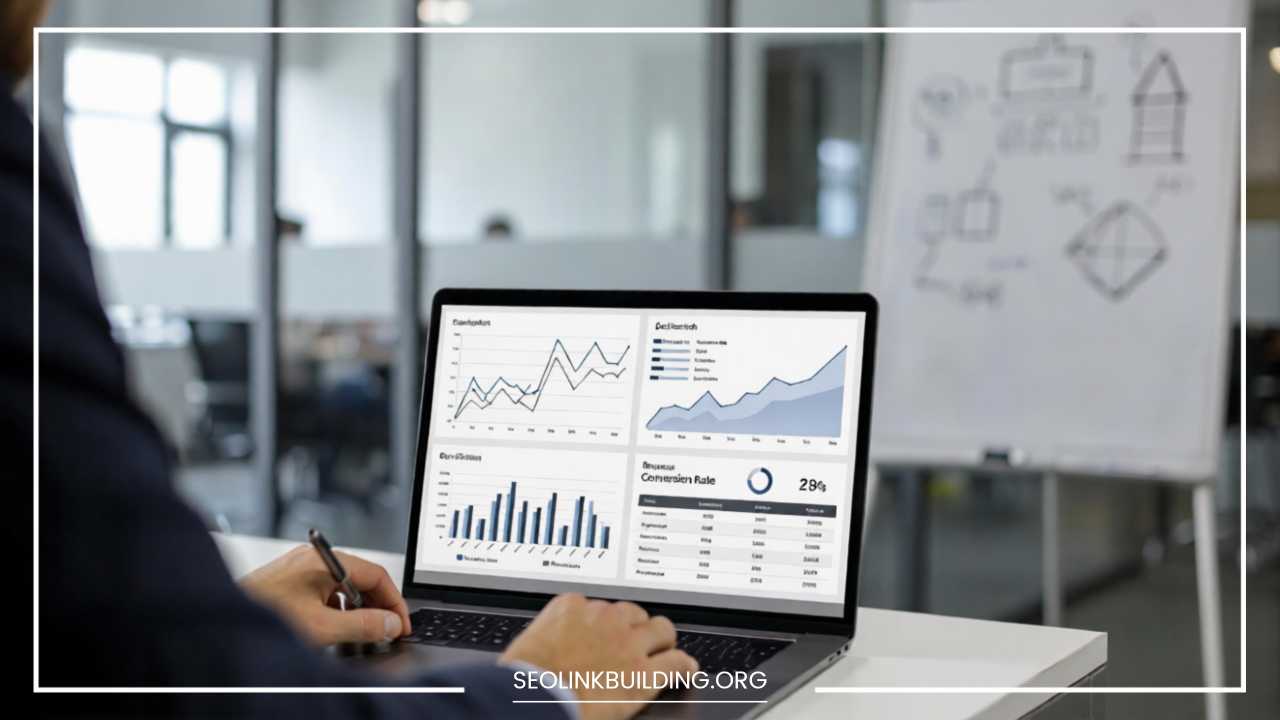
Tools like Google Analytics
Google Analytics (and its successors) provides a window into user behavior. You can track where users come from, which pages they spend the most time on, and at what point they leave your site.
Tracking KPIs
Beyond “vanity metrics” like likes or page views, focus on Key Performance Indicators (KPIs):
Conversion Rate: The percentage of visitors who take action.
Average Order Value (AOV): Increasing this via upselling is a fast track to growth.
Customer Lifetime Value (CLV): How much a customer is worth over the entire duration of your relationship.
Using Data to Improve Strategy
If the data shows that 70% of your traffic comes from mobile but your mobile conversion rate is low, you have identified a technical priority. Use data to stop doing what isn’t working and double down on what is.
Sustainable growth is built on a foundation of repeat customers.
Providing Excellent Customer Service
A single bad review can stay online forever. Conversely, a customer whose problem was solved quickly and empathetically often becomes a brand advocate. High-speed response times are a competitive advantage.
Live Chat and Chatbots
Immediate gratification is the standard. Live chat allows you to close sales by answering questions in real-time. Chatbots can handle the 24/7 “Frequently Asked Questions,” ensuring a lead is never ignored at 3:00 AM.
Loyalty Programs
Give people a reason to return. Whether it is a “points” system, a referral bonus, or a “members-only” early access program, loyalty initiatives increase the frequency of purchase.
Building Community and Trust
Move beyond a transactional relationship. Create a community—whether through a Facebook Group, a Slack channel, or an interactive blog—where your customers can interact with each other and your brand.
Scaling Your Online Business
Once you have a system that generates profit, the goal is to increase the volume without increasing the complexity in a linear fashion.
Automation Tools
Scale requires removing yourself as the bottleneck. Automate your social media posting, your lead nurturing, your inventory management, and your customer support workflows wherever possible.
Outsourcing Tasks
To grow, you must transition from “Doing” to “Leading.” Outsource tasks that are outside your core competency. If you are a great strategist but a poor designer, hire a professional. This allows you to spend your time on high-impact growth activities.
Expanding to New Channels
Once you have “maxed out” one channel, look for the next. If your Facebook ads are profitable, try scaling to YouTube or Pinterest. Diversification protects your business from platform-specific downturns.
Common Mistakes to Avoid
Ignoring SEO: Relying only on paid traffic is a dangerous game. If ad costs rise, your margins disappear. Organic traffic is your safety net.
Inconsistent Branding: If your website says “Luxury” but your social media looks “Budget,” customers will sense a disconnect and lose trust.
Not Tracking Performance: “I think this ad is working” is a recipe for failure. Always use tracking links and analytics.
Focusing Only on Sales: People use the internet to be informed or entertained. If you provide no value, they will unfollow you.
Poor Mobile Experience: A desktop-only mindset is a relic of the past. If it doesn’t work on a phone, it doesn’t work.
Future Trends in Online Business Growth
The digital landscape is a moving target. Staying ahead of these trends will give you a “first-mover” advantage.
AI and Automation
AI is revolutionizing how we create content, handle data, and interact with customers. Businesses that integrate AI to personalize the customer journey will significantly outpace those that don’t.
Voice Search
With the rise of smart speakers, search queries are becoming more conversational. Optimizing for “How do I fix a leaky tap?” rather than just “plumber” is becoming essential.
Personalization Trends
The “Amazon effect” has made customers expect a tailored experience. From personalized product recommendations to dynamic website content that changes based on who is visiting, personalization is the new standard.
Short-form Video Dominance
The battle for attention is won in the first three seconds. Mastering short, high-impact video content is currently the most effective way to gain massive organic reach with minimal spend.
Final Thoughts
Growing a business online is a marathon, not a sprint. It is a process of constant iteration, testing, and refinement. There is no “magic bullet” that guarantees success; instead, there is a series of proven strategies that, when executed with consistency and quality, lead to inevitable growth.
Build your foundation, optimize for search, provide immense value through content, and treat your data as your most valuable advisor. Most importantly, remain adaptable. The digital world changes quickly, and the businesses that thrive are the ones that are willing to learn, pivot, and grow alongside their customers.