SEO Learning Roadmap: Step-by-Step Guide for Beginners


SEO Learning Roadmap: Step-by-Step Guide for Beginners
Search Engine Optimization remains one of the most powerful and valuable digital marketing skills you can acquire. Whether you want to grow a personal blog, scale an e-commerce brand, generate leads for a local business, or build a lucrative career in digital marketing, understanding how search engines work changes everything. Unlike paid advertising, which stops generating traffic the moment your budget runs out, organic search optimization creates a compounding engine of free, highly targeted traffic that works for you twenty-four hours a day, seven days a week.
Despite its massive value, many beginners find the world of search optimization intimidating. They encounter conflicting advice, overly technical jargon, and sudden algorithm updates that make the landscape feel unstable. Common beginner mistakes include stuffing keywords into paragraphs, ignoring user intent, buying cheap backlinks from sketchy networks, and expecting overnight results. These missteps usually lead to frustration and abandoned projects.
This comprehensive guide is designed to remove the guesswork. By following this structured learning journey, you will transform from an absolute beginner into a confident practitioner who understands how to research keywords, optimize web pages, fix technical issues, build authoritative links, and measure growth using industry-standard analytics.
What is SEO?
Search Engine Optimization is the systematic process of improving your website and its content so that it appears prominently in search engine results pages when users look for relevant information, products, or services. To understand how optimization works, you must first understand how major search engines operate behind the scenes.
Search engines like Google rely on automated software programs called crawlers or spiders to discover content across the internet. These crawlers follow links from page to page, downloading information and exploring new updates. Once a page is discovered, the search engine processes and organizes the data in a massive database known as the index. Inclusion in this index is a prerequisite for ranking. When a user enters a query, the search engine scans its index, evaluates hundreds of ranking factors, and delivers the most relevant, high-quality results in fractions of a second.
It is important to distinguish between organic traffic and paid traffic. Paid traffic involves bidding on advertisements that appear at the top of search engine results pages, typically labeled with a sponsored tag. Organic traffic consists of unearned, natural visitors who click on standard editorial listings because the search engine algorithm deemed them the most genuinely helpful response to the query.
A common question among newcomers is why organic optimization takes time. Search engines must evaluate millions of competing pages, test user satisfaction, establish site authority, and verify that content is safe and accurate. This verification process cannot be rushed, which is why sustainable search performance typically takes several months of consistent effort to materialize.
Understand How Google Ranks Websites
Securing top visibility in search engine results requires a deep appreciation of what search engines value most. Modern algorithms prioritize user satisfaction above all else.
Search intent represents the underlying goal of a user when they type a query into a search box. Whether a user wants to buy a product, learn a concept, or find a specific website, your content must match that intent precisely to earn a top position.
Closely tied to intent is the concept of helpful content. Google rewards original, insightful material written by people for people, rather than pages engineered solely to manipulate search algorithms. Relevance ensures that your text directly addresses the user’s inquiry, while authority establishes your site as a trusted, credible source within your niche.
User experience plays a massive role in modern rankings. If visitors land on your site and immediately click back because the text is hard to read, the layout is confusing, or the page loads sluggishly, search engines notice these behavioral signals and adjust your rankings downward. Freshness also matters for time-sensitive topics, ensuring that users receive current data rather than outdated information.
Finally, Google evaluates content using the E-E-A-T framework, which stands for Experience, Expertise, Authoritativeness, and Trustworthiness. Demonstrating firsthand experience, displaying professional credentials, earning citations from reputable sources, and maintaining a secure, transparent website are critical elements for long-term algorithmic success.
Step 1 – Learn the Basics of Keyword Research
Keyword research serves as the foundation of every successful optimization strategy. Keywords are the specific words and phrases that users type or speak into search engines when looking for answers.
Keywords can be categorized by length and intent. Short-tail keywords consist of one or two broad words, such as shoes or marketing. They generate massive search volume, but fierce competition and vague user intent make them difficult to rank for. Long-tail keywords contain three or more words, such as best running shoes for flat feet. While individual long-tail phrases have lower search volume, they attract highly targeted visitors who are much more likely to convert.
Understanding search intent categories helps align your content with user goals:
-
Informational keywords target users seeking knowledge or answers to questions.
-
Commercial keywords target users researching products or services before making a purchase decision.
-
Transactional keywords target buyers ready to complete a transaction or purchase.
-
Navigational keywords target users looking for a specific brand, login page, or website.
The beginner keyword research process involves brainstorming seed topics related to your niche, expanding those ideas using dedicated research software, analyzing search volume and competition metrics, and selecting achievable targets.
Several powerful tools streamline this research process:
-
Google Keyword Planner helps uncover search volume data and ad competition metrics.
-
Google Search Console shows the exact queries your existing pages already rank for.
-
Google Trends reveals seasonal interest shifts and emerging search topics.
-
Ahrefs and Semrush provide deep competitive intelligence, backlink data, and keyword difficulty scores.
-
Ubersuggest offers a beginner-friendly interface for generating keyword ideas and tracking rankings.
When starting out, focus exclusively on low-competition long-tail keywords. These accessible targets allow you to secure early ranking wins, build momentum, and gain confidence before chasing ultra-competitive industry terms.
Step 2 – Learn On-Page SEO
On-page SEO involves optimizing individual web pages to rank higher and earn more relevant traffic from search engines. This practice includes adjusting both the visible content and the underlying HTML source code.
Title tags represent one of the most critical on-page ranking factors. This HTML element specifies the title of a web page and appears as the clickable headline in search results. Meta descriptions provide a concise summary of page content below the title tag in search results, influencing click-through rates. Clean URL structures that include target keywords help both users and search engine crawlers understand what a page is about instantly.
Proper heading hierarchy, utilizing H1 through H6 tags, organizes your content logically. Every page should feature one primary H1 tag matching the main topic, with subheadings broken down into H2 and H3 tags. Internal linking connects related pages on your website, distributing authority and guiding visitors deeper into your content architecture.
Image optimization is another vital element. Compressing image files improves page load speeds, while descriptive file names and alt text ensure that visually impaired users and search engine crawlers understand the context of the graphics. Strategic keyword placement within the introduction, subheadings, and natural body text reinforces relevance without feeling forced.
Content readability matters immensely. Short paragraphs, bulleted lists, and clear formatting keep bounce rates low. Featured snippets, which occupy the coveted position zero at the very top of search results, can be captured by providing concise, direct answers to common questions within structured sections of your article. Finally, schema markup basics involve adding invisible code snippets to your pages, helping search engines understand context such as product pricing, review ratings, and article authorship.
Step 3 – Learn Content SEO
Content SEO focuses on creating, structuring, and maintaining comprehensive material that satisfies user intent while remaining fully accessible to search engine algorithms.
Content matters because it is the primary vehicle through which you communicate value to your audience and authority to search engines. To create SEO-friendly articles, you must prioritize user experience above technical manipulation. Writing for users first means answering questions thoroughly, providing actionable advice, and maintaining an engaging tone.
Proper content structure enhances readability and retention. Effective content incorporates:
-
Clear headings that guide the reader through logical transitions.
-
Bulleted and numbered lists that break down complex steps into digestible points.
-
Tables that organize comparative data for quick reference.
-
Practical examples that clarify abstract concepts.
-
Relevant images and visual aids that break up walls of text.
Building topical authority requires covering a subject comprehensively across multiple interconnected articles rather than publishing a single isolated post. Content freshness ensures that your older articles are periodically reviewed, updated with new data, and expanded to maintain their competitive edge.
Above all, avoid keyword stuffing, which is the archaic practice of unnaturally cramming keywords into text. Modern algorithms penalize keyword stuffing heavily, as it ruins readability and violates search engine quality guidelines.
Step 4 – Learn Technical SEO Basics
Technical SEO involves optimizing your website’s infrastructure to help search engine crawlers find, crawl, interpret, and index your pages efficiently. While technical audits can become complex, beginners can focus on core elements that make an immediate impact.
Crawling and indexing form the bedrock of technical performance. If search engines cannot access your pages, nothing else matters. The robots.txt file communicates with crawlers, instructing them which pages they are allowed to visit and which to ignore. An XML sitemap acts as a roadmap of your website, listing all important URLs to ensure swift discovery by search engines.
Security and performance factors are equally vital. Implementing HTTPS encryption ensures secure communication between your server and the user’s browser, which functions as a confirmed ranking signal. Mobile friendliness is non-negotiable, as the majority of global web traffic originates from smartphones and tablets.
Page speed directly influences user retention and search rankings. Slow-loading pages frustrate visitors and drive them to competitors. Core Web Vitals measure user experience metrics related to loading performance, visual stability, and interactivity.
Additional technical maintenance includes managing canonical tags to prevent duplicate content penalties when similar pages exist on your site. Finally, conducting regular site audits helps identify and fix broken links that disrupt user navigation and waste crawler resources. For beginners, prioritizing mobile responsiveness, fast hosting, clean sitemaps, and secure HTTPS protocols will cover the vast majority of essential technical requirements.
Step 5 – Learn Off-Page SEO
Off-page SEO encompasses all activities outside your own website that influence your rankings within search engine results pages. While on-page optimization controls how your site is built and written, off-page optimization builds your site’s reputation, authority, and trust across the wider internet.
The core driver of off-page optimization is the backlink. A backlink is an incoming hyperlink from an external website pointing to your domain. Search engines view backlinks as editorial votes of confidence. When reputable, authoritative websites link to your content, it signals that your material is valuable and trustworthy.
However, not all links carry equal weight. High-quality links originate from trusted industry authorities with clean link profiles and relevant subject matter. Conversely, spammy links come from low-quality directory farms, comment spam, or purchased link networks. Acquiring spammy links can trigger severe algorithmic penalties that tank your search visibility. Therefore, you must never buy backlinks.
Legitimate link building methods require patience, creativity, and outreach:
-
Guest posting involves writing high-value articles for other reputable websites in your niche in exchange for an editorial backlink.
-
Digital PR involves pitching unique stories, data studies, or expert commentary to journalists seeking reliable sources.
-
Resource pages involve reaching out to curators who maintain helpful links directories and suggesting your comprehensive guide as a valuable addition.
-
HARO alternatives connect journalists with industry experts, allowing you to earn authoritative media mentions and links.
-
Broken link building involves finding broken external links on target websites and suggesting your working content as a replacement.
Step 6 – Learn Local SEO (Optional but Valuable)
Local search optimization is essential for businesses that operate in a specific geographic area, such as brick-and-mortar storefronts, local service providers, consultants, and regional agencies. Local SEO helps you capture high-intent customers searching for services nearby.
The cornerstone of local visibility is the Google Business Profile. Claiming, verifying, and fully optimizing your free profile ensures your business appears in local map packs and localized search queries. NAP consistency, which stands for Name, Address, and Phone Number, must be rigorously maintained across every directory and social platform on the web to avoid confusing search engines and customers.
Customer reviews play a massive role in local rankings and consumer trust. Encouraging satisfied clients to leave positive reviews and responding professionally to feedback builds immense credibility. Local citations, which are mentions of your business details on local directories and chamber of commerce websites, reinforce your geographic relevance. Incorporating local keywords into your on-page text and targeting localized map rankings rounds out an effective local strategy.
Step 7 – Learn SEO Analytics
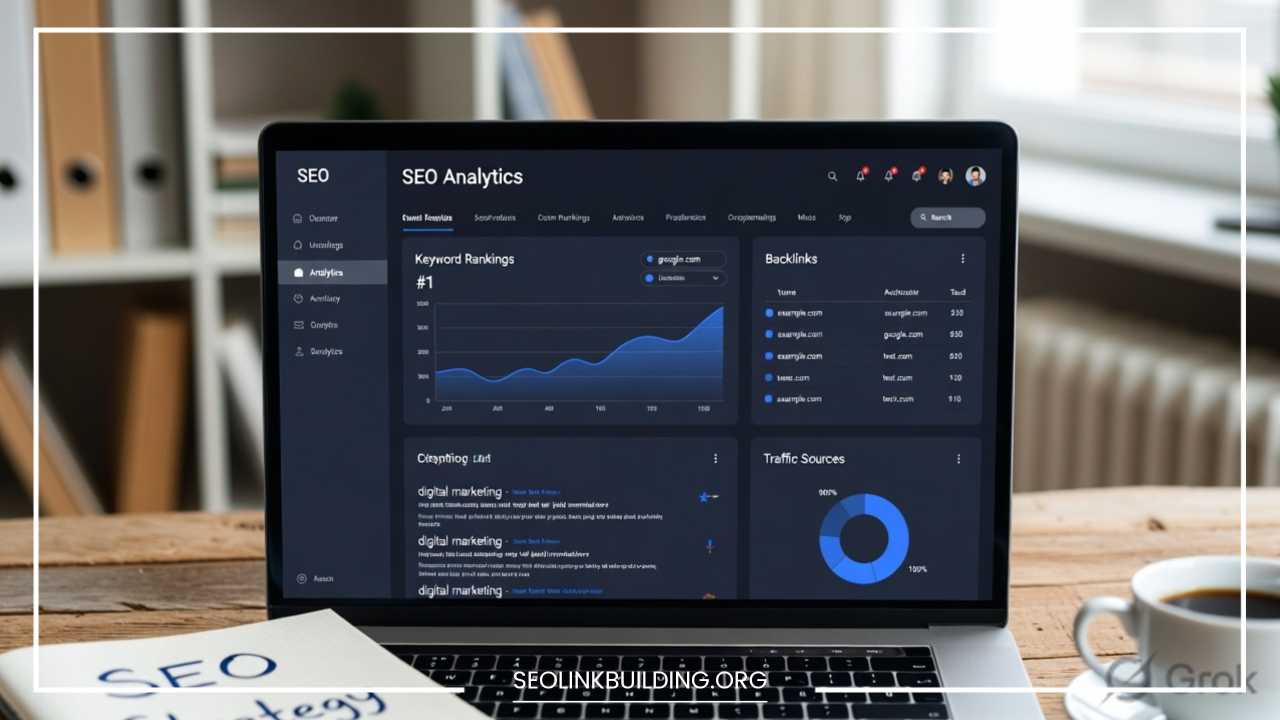
Measurement is the compass that guides your optimization strategy. Without proper analytics, you are flying blind, unable to determine which tactics are working and which are wasting your time.
Two essential platforms form the core analytics stack:
-
Google Analytics tracks user behavior, session duration, page views, traffic sources, and conversion completions once visitors arrive on your site.
-
Google Search Console monitors your site’s presence in search results, showing how Google interacts with your pages.
Key metrics to monitor regularly include:
-
Organic traffic, which measures the total number of visitors arriving from unpaid search results.
-
Impressions, representing how many times your pages appeared in search results.
-
Clicks, indicating how many times users actually clicked your listings.
-
Click-through rate, calculated as clicks divided by impressions, showing how compelling your titles and descriptions are.
-
Average position, tracking where your pages typically rank for target keywords.
-
Bounce rate, viewed in context, helping you understand whether visitors engage with your content or leave immediately.
-
Conversions, tracking desired user actions such as newsletter signups, form submissions, or product purchases.
Tracking matters because search optimization is an iterative process. Analytics provide empirical data, allowing you to double down on winning content, identify underperforming pages that need optimization, and prove the return on investment of your efforts.
Step 8 – Learn Essential SEO Tools
Mastering the right software suite accelerates your workflow and provides data insights that manual audits cannot uncover. Different tools serve distinct functions across the optimization lifecycle.
| Tool | Best For | Beginner Friendly |
| Google Search Console | Monitoring rankings, impressions, and indexing status | Yes |
| Google Analytics | Tracking user behavior and conversion metrics | Moderate |
| Google Keyword Planner | Discovering search volume and ad targeting data | Yes |
| Google Trends | Analyzing seasonal interest and emerging topics | Yes |
| Ahrefs | Comprehensive backlink analysis and competitor research | Moderate |
| Semrush | All-in-one marketing suite, keyword tracking, and audits | Moderate |
| Screaming Frog | Technical site crawls and on-page error detection | Moderate |
| PageSpeed Insights | Measuring page performance and Core Web Vitals | Yes |
| Bing Webmaster Tools | Monitoring performance on Microsoft search engines | Yes |
Step 9 – Practice SEO with a Real Website
Theory provides the necessary framework, but practical execution builds true mastery. You can read every guide and watch every tutorial available, but until you roll up your sleeves and optimize a live website, you will not fully understand the nuances of search engine algorithms.
The best approach is to start a personal blog, build a niche affiliate website, or take over optimization tasks for an existing local business or portfolio project. Publish regular content, experiment with keyword targeting, apply on-page best practices, fix technical errors, and track your ranking movements inside Google Search Console.
When you make mistakes—such as targeting keywords that are too difficult or structuring a page incorrectly—you learn invaluable lessons that no textbook can teach. Practice beats theory every single time in the world of digital marketing.
Common SEO Mistakes Beginners Should Avoid
Navigating your early optimization journey becomes much smoother when you know which pitfalls to sidestep. Avoiding these common errors saves you months of wasted effort:
-
Keyword stuffing ruins readability and triggers search engine spam filters. Always write for human readers first.
-
Ignoring search intent leads to high bounce rates because your content does not deliver what the user actually wanted.
-
Publishing thin content with little original insight fails to satisfy algorithmic quality guidelines.
-
Buying backlinks from cheap networks introduces toxic links that can destroy your domain authority overnight.
-
Forgetting internal links starves your deeper pages of authority and makes site navigation difficult.
-
Slow websites frustrate users and fail Core Web Vitals performance benchmarks.
-
Duplicate content creates confusion for crawlers trying to determine which version of a page to rank.
-
Expecting instant rankings ignores the natural gestation period required for search engines to crawl, index, and evaluate content.
-
Ignoring mobile users alienates the majority of your potential audience.
-
Not updating old content allows valuable pages to decay and lose their ranking positions over time.
Suggested 90-Day SEO Learning Roadmap
To keep your learning curve manageable and structured, break your journey down into a disciplined three-month progression.
Month One
Dedicate the first thirty days to building a rock-solid conceptual foundation. Study how search engines work, understand user intent, master the fundamentals of keyword research using free tools, and learn how to optimize on-page elements like title tags, headers, and meta descriptions.
Month Two
Shift your focus toward content creation and technical execution. Learn how to write engaging, SEO-friendly articles structured with proper headings and lists. Explore technical basics such as XML sitemaps, robots.txt files, and mobile responsiveness. Implement internal linking strategies and set up your analytics accounts.
Month Three
Conclude your foundational roadmap by diving into off-page optimization and link building ethics. Learn how to earn high-quality backlinks through digital PR and outreach. Explore local optimization if relevant to your goals, run your first technical site audit, and commit to publishing and tracking content consistently.
Best Free Resources to Continue Learning SEO
Search algorithms evolve continuously, making ongoing education essential for long-term success. You can deepen your expertise by following trusted industry resources and official documentation:
-
Google Search Central documentation offers direct guidance straight from the source on how search engines view and evaluate web pages.
-
Google Analytics Academy provides free training courses on measuring user behavior and tracking conversions.
-
Moz Beginner’s Guide to SEO remains a classic foundational resource for newcomers.
-
Ahrefs Blog and Semrush Blog deliver world-class case studies, tactical guides, and data-driven insights.
-
Search Engine Journal and Search Engine Land provide daily industry news, algorithm update coverage, and expert commentary.
Final Thoughts
Search optimization is a long-term skill that rewards consistent practice, patience, and analytical thinking. Success does not happen overnight, but by mastering the fundamentals before exploring advanced tactics, you build an unshakeable foundation for digital growth.
The most effective way to internalize these principles is to build, launch, and optimize a real website to gain hands-on experience. Measure your results using robust analytics, refine your strategy based on empirical data, and keep learning as search engines continue to evolve. Your digital growth journey starts today.
Frequently Asked Questions
How long does it take for SEO to show results for beginners?
For a new website, organic search optimization typically takes anywhere from 4 to 12 months to generate consistent, compounding traffic. Search engines need time to crawl, index, establish trust, and evaluate user engagement metrics for your published content.
What is the difference between short-tail and long-tail keywords in SEO?
Short-tail keywords consist of one or two broad words with high search volume and fierce competition, whereas long-tail keywords contain three or more specific words that attract lower volume but higher-intent traffic ready to convert.
Can I do SEO for my website without spending money on paid tools?
Yes, beginners can successfully execute an optimization strategy using powerful free tools like Google Search Console, Google Analytics, Google Keyword Planner, Google Trends, and Bing Webmaster Tools without paying for premium software.
Why is mobile friendliness important for technical SEO?
Google utilizes mobile-first indexing, meaning the mobile version of your website serves as the primary baseline for evaluation and ranking, making responsive design and fast mobile page speeds non-negotiable.
How do I fix duplicate content issues on my WordPress or HTML site?
Duplicate content can be effectively resolved by implementing self-referencing canonical tags on your preferred URLs, utilizing proper 301 redirects, and ensuring unique meta descriptions across every page of your website.
What are the best white-hat link building strategies for new blogs?
Effective and safe link building methods for beginners include guest posting on reputable industry blogs, engaging in digital PR via expert commentary, participating in broken link building, and creating unique data studies that naturally earn editorial backlinks.