Effective SEO Digital Marketing Strategies for Business Growth


Effective SEO Digital Marketing Strategies for Business Growth
In today’s hyper-connected world, a strong online presence isn’t just a benefit; it’s a necessity for sustained business growth. At the core of a successful online strategy lies the powerful tandem of Search Engine Optimization (SEO) and digital marketing. While digital marketing encompasses a wide array of online efforts—from email to social media—SEO is the essential engine that drives the most valuable, high-intent traffic: organic search.
The integration of SEO with broader digital marketing efforts creates a synergistic effect, building a robust, long-term foundation for audience attraction, engagement, and conversion. This article is designed to be a comprehensive guide, meticulously exploring the most effective, modern strategies that businesses must adopt to not only survive but thrive, ultimately achieving substantial and sustainable growth through the strategic application of SEO digital marketing.
Understanding SEO and Digital Marketing
A clear understanding of the roles of these two disciplines is crucial for effective strategy implementation.
Definition of SEO (Search Engine Optimization)
SEO is the practice of increasing the quantity and quality of traffic to your website through organic search engine results. It involves optimizing your website and content to be easily discoverable and highly relevant to users’ search queries, thereby ranking higher on Search Engine Results Pages (SERPs) like Google and Bing. Essentially, it’s about making your site the best possible answer to a user’s question.
Definition of Digital Marketing and its Components
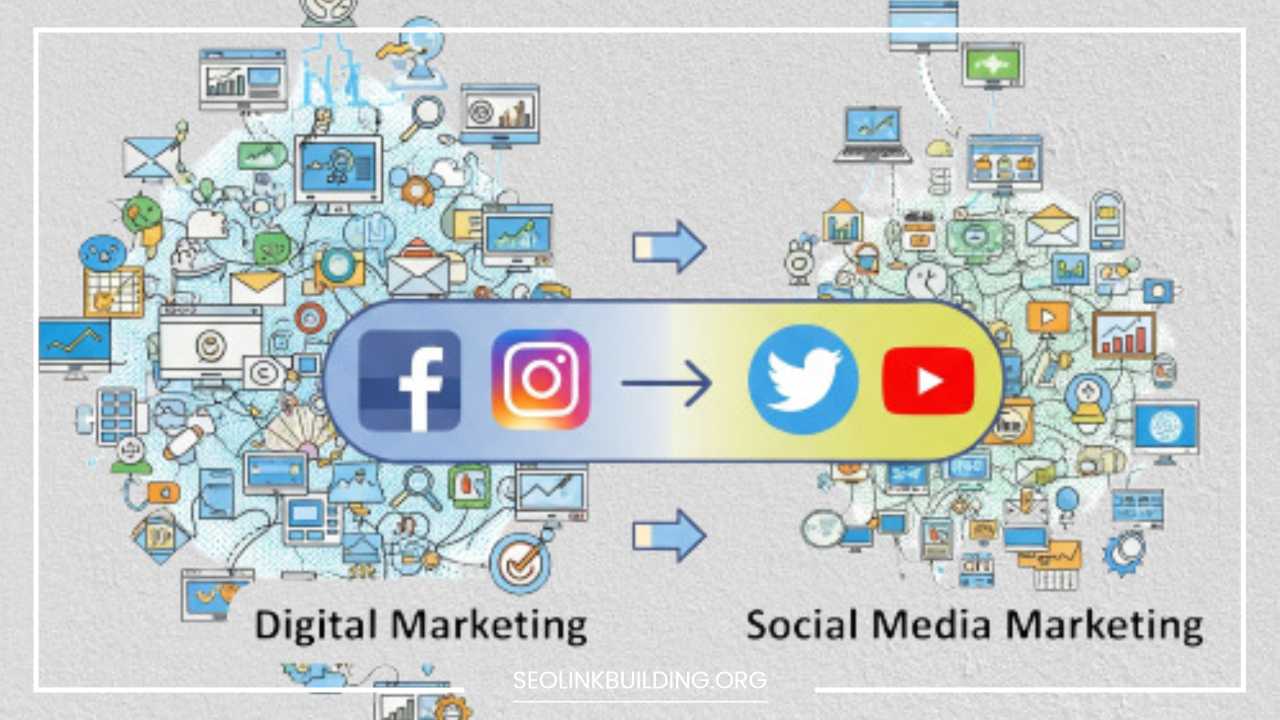
Digital marketing is an umbrella term encompassing all marketing efforts that use electronic devices or the internet. It leverages digital channels such as search engines, social media, email, and websites to connect with current and prospective customers.
Its core components typically include:
- Search Engine Marketing (SEM): Includes both SEO and Paid Search (PPC).
- Content Marketing: Creating and distributing valuable, relevant, and consistent content.
- Social Media Marketing (SMM): Using platforms like Facebook, Instagram, and LinkedIn.
- Email Marketing: Direct marketing to segmented customer lists.
- Affiliate Marketing and Display Advertising.
How SEO Fits into the Broader Digital Marketing Landscape
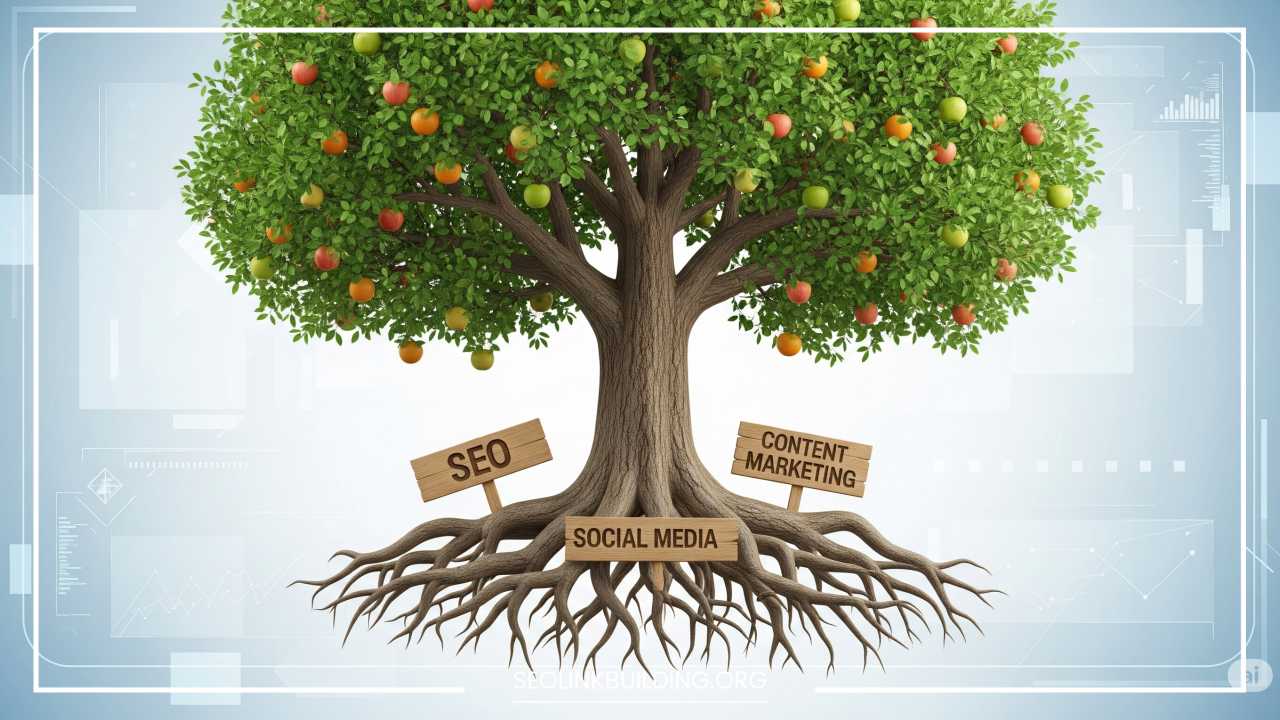
SEO is the foundation of inbound digital marketing. While social media creates immediate buzz and PPC yields quick traffic, SEO builds a long-term asset—a website that consistently attracts qualified leads at minimal ongoing cost. It ensures that when potential customers are actively searching for solutions your business provides, your website is prominently displayed, making it the most direct and reliable source of high-intent traffic.
Why SEO is Critical for Business Growth
The rationale for prioritizing SEO is rooted in its unparalleled ability to generate sustainable, high-quality traffic.
SEO’s Role in Driving Organic Traffic
Organic traffic is arguably the most valuable traffic source. Users arriving via organic search are actively seeking information, products, or services; they are self-qualified and further down the purchase funnel than those who stumble upon an ad. A high-ranking organic result provides a continuous stream of these highly motivated users, resulting in higher conversion rates.
Long-Term Benefits vs. Paid Advertising
While paid advertising (PPC) offers instant visibility, traffic stops the moment the budget runs out. SEO, conversely, is an investment that compounds over time. Once a page ranks highly, it generates traffic 24/7/365 without continuous, transactional ad spend. The cost-per-acquisition (CPA) for organic traffic is significantly lower in the long run, leading to much healthier profit margins.
Building Credibility and Trust with Search Engines and Users
Users inherently trust organic results more than advertisements. Ranking on the first page of Google positions your brand as an authority and a credible source in your industry. Google prioritizes factors like domain authority, high-quality content, and excellent user experience, meaning high rankings are a direct signal of trustworthiness, which translates directly into brand equity and consumer confidence.
Local SEO for Small Businesses
For small or brick-and-mortar businesses, Local SEO is a non-negotiable growth driver. It focuses on increasing visibility in local search results (e.g., “plumber near me”). By optimizing for local queries, small businesses can effectively compete with larger entities, drawing in customers ready to visit their physical location or use their localized service.
Key SEO Digital Marketing Strategies
Effective SEO requires a holistic approach, mastering technical, on-page, and off-page elements, all while integrating robust content marketing.
1. Keyword Research and Targeting
The starting point for all successful SEO strategies is understanding what your audience is searching for.
Importance of Finding the Right Keywords
Keywords are the bridge between what people are searching for and the content you are providing. Targeting the wrong keywords—those with low search volume, high competition, or irrelevant user intent—is the quickest way to waste resources. The goal is to find keywords with a balanced combination of healthy search volume and manageable competition.
Tools for Keyword Research
Essential tools streamline the discovery process:
- Google Keyword Planner: Excellent for initial volume data and related keyword ideas.
- SEMrush / Ahrefs: Comprehensive paid tools that provide competitive analysis, keyword difficulty scores, and in-depth ranking data.
- Google Search Console: Reveals the actual search queries users used to find your site.
Long-Tail Keywords and Buyer Intent
Long-tail keywords are longer, more specific phrases (typically three or more words, e.g., “best budget noise-canceling headphones for travel”). While they have lower search volume individually, they are less competitive and often have much clearer buyer intent (e.g., “buy noise-canceling headphones online”). A strategy focused on high volumes of targeted long-tail keywords can yield significantly higher conversion rates.
2. On-Page SEO Optimization
On-Page SEO involves optimizing the actual content and HTML source code of a page to rank higher and earn more relevant traffic.
Optimizing Title Tags, Meta Descriptions, Headers, and URLs
These are the primary elements that communicate a page’s topic to both search engines and users:
- Title Tags: Must be unique, concise (under 60 characters), and contain the primary target keyword. It’s the most important on-page ranking factor.
- Meta Descriptions: Not a direct ranking factor, but crucial for click-through rate (CTR). They should be compelling, accurately summarize the content, and include a call-to-action (CTA).
- Headers (H1, H2, H3, etc.): Provide structure and hierarchy to the content. The H1 should contain the main keyword, and sub-headers (H2s) should break down the topic logically.
- URLs: Should be short, descriptive, and contain the target keyword, separated by hyphens.
Content Quality and Relevance
Google’s top priority is providing the best possible user experience, which hinges on high-quality, relevant content. Content must be:
- Comprehensive: Thoroughly cover the topic (often referred to as ’10x content’).
- Accurate: Factually correct and well-researched.
- Unique: Offer a distinct perspective or better detail than competitors.
- Relevant: Directly address the user’s search intent.
Internal Linking Strategies
Internal links—links from one page on your domain to another—serve three critical purposes: they help users navigate, define the architecture of your site, and distribute “link equity” (ranking power) across your site. A robust internal linking structure helps search engines understand the relationship between your pages and elevates the authority of key target pages.
Image Optimization (Alt Text, File Names)
Images slow down page loading times if not compressed. Optimization includes:
- Compression: Using tools to reduce file size without losing too much quality.
- Alt Text (Alternative Text): A brief, descriptive sentence included in the image HTML tag that describes the image. It’s crucial for accessibility and helps search engines understand the image content, potentially leading to image search rankings.
- File Names: Descriptive names (e.g.,
effective-seo-strategies.jpginstead ofIMG001.jpg).
3. Technical SEO
Technical SEO ensures that a website can be effectively crawled and indexed by search engines. If the technical foundation is shaky, all other SEO efforts are compromised.
Website Speed and Mobile Responsiveness
Page speed is a critical ranking factor and an even more critical user experience factor. Slow sites frustrate users and increase bounce rates. Utilizing tools like Google PageSpeed Insights helps identify bottlenecks. Furthermore, since Google adopted a mobile-first indexing approach, a site must be perfectly responsive, displaying and functioning flawlessly on all screen sizes, particularly mobile.
SSL Certificates and Secure Browsing
SSL (Secure Sockets Layer) certificates encrypt data transferred between the user and the site. Sites without an SSL certificate (which display “Not Secure” in the browser) are penalized in rankings. Having an https URL is a fundamental security requirement and a mandatory ranking signal.
Crawlability and Site Structure
Search engine “spiders” crawl a site to discover new content. Crawlability is the ease with which they can do this:
- XML Sitemaps: A list of all important pages on your site that you submit to search engines via Google Search Console, guiding the spiders.
- Robots.txt: A file that tells search engine robots which pages or files they can or cannot request from your site. A misconfigured
robots.txtcan hide your most valuable content.
Fixing Broken Links and Duplicate Content
- Broken Links (404 errors): Frustrate users and waste ‘crawl budget.’ They must be regularly audited and fixed, either by updating the link or implementing a 301 redirect.
- Duplicate Content: Occurs when identical or near-identical content appears in multiple locations on the web. Search engines have trouble deciding which version to rank, leading to lower rankings for all. Solutions include canonical tags, 301 redirects, or rewriting the content.
4. Content Marketing Integration
Content is the vehicle for SEO. Without high-quality content, there are no pages to rank.
Creating Valuable, Relevant Content
Every piece of content should be mapped to a specific stage of the buyer’s journey (awareness, consideration, decision) and aligned with a clear user intent (informational, commercial, transactional). The content must be so valuable that users save it, link to it, and share it.
Blogging Strategies Aligned with SEO Goals
A high-frequency, strategic blog is a powerful SEO engine. Blog topics must be derived from comprehensive keyword research, targeting gaps in the market or specific user pain points. Each post should be comprehensively optimized for its primary keyword.
Using Different Content Formats
To cater to diverse audience preferences and leverage various platforms, content shouldn’t be limited to text:
- Videos: Excellent for engagement and necessary for Video SEO (ranking on YouTube and SERP video carousels).
- Infographics: Highly shareable and effective for complex data.
- Podcasts: Build authority and capture an auditory audience.
Content Updating and Repurposing
A core SEO strategy is content freshness. Updating old posts with new data, statistics, and more comprehensive detail can dramatically boost rankings. Repurposing involves turning one piece of content (e.g., a long blog post) into multiple formats (e.g., a short video, an infographic, a series of social media posts) to maximize its reach and value.
5. Link Building and Off-Page SEO
Off-Page SEO primarily involves actions taken outside of your own website to impact your rankings, the most critical of which is link building.
Importance of Backlinks and Domain Authority
Backlinks—links from other websites to yours—are like votes of confidence. Search engines view links from high-authority, relevant websites as a strong indicator that your content is trustworthy and valuable. The quality, relevance, and authority of the linking domain are far more important than the sheer quantity of links. Domain Authority (DA) is a common metric (developed by Moz) used to estimate a website’s strength and is heavily influenced by its backlink profile.
White-Hat Link-Building Strategies
Ethical, long-term link building avoids manipulative practices (black-hat SEO) that can lead to severe penalties. Key white-hat strategies include:
- Creating Linkable Assets: Producing content so exceptional (e.g., original research, comprehensive guides, free tools) that others naturally want to link to it.
- Resource Page Link Building: Identifying relevant pages that list useful resources and suggesting your content for inclusion.
- Broken Link Building: Finding broken links on authoritative sites and offering your content as a replacement.
Guest Blogging, Influencer Partnerships, and PR
- Guest Blogging: Writing an article for another authoritative, relevant website in your niche. This provides a high-quality backlink and exposes your brand to a new audience.
- Influencer Partnerships: Collaborating with established voices in your industry who can link to or mention your content.
- Digital PR: Creating press-worthy content (studies, surveys, reports) and proactively pitching it to journalists and media outlets to earn high-authority news mentions and links.
6. Local SEO Strategies
Local SEO ensures that a business is visible to customers in its immediate vicinity.
Optimizing Google My Business (GMB)
The GMB profile is the centerpiece of local visibility, powering the local “Snack Pack” (the map results) and the knowledge panel. Optimization involves:
- Ensuring the Name, Address, Phone number (NAP) are consistent across all online platforms.
- Selecting accurate business categories.
- Writing a compelling business description.
- Uploading high-quality photos.
- Regularly posting updates.
Getting Positive Reviews and Ratings
Reviews are a major local ranking factor and a huge driver of consumer trust. Businesses must have a proactive strategy for encouraging satisfied customers to leave reviews on GMB and other relevant platforms (e.g., Yelp, industry-specific directories). Responding professionally to all reviews (positive and negative) is equally vital.
Local Citations and Directory Listings
A citation is a mention of your business’s NAP on a third-party website, such as Yelp, Yellow Pages, or industry-specific directories. Consistency across all major citation sources is essential for establishing authority and avoiding confusion for both search engines and customers.
Hyperlocal Content Creation
Creating content that focuses on specific local issues, events, news, or partnerships (e.g., “The best coffee shops in [City District] for freelancers”) helps a business rank for high-intent hyperlocal searches and establishes community relevance.
7. Social Media and SEO Synergy
While social media signals (likes, shares) are not direct, powerful ranking factors, the relationship between social media and SEO is highly symbiotic.
Using Social Media to Amplify SEO Content
Social platforms are perfect for distributing newly published blog posts, videos, or infographics. The initial burst of traffic and engagement generated by a strong social push can signal to Google that the content is valuable and relevant, potentially encouraging it to rank the page higher.
Social Signals and Their Impact on SEO
Social shares and mentions increase brand visibility, which can lead to:
- Increased direct traffic: Users bookmarking or typing the URL.
- Increased brand search queries: Users searching for your company name, which Google uses as a trust/popularity signal.
- Natural Link Acquisition: The more people see your content, the higher the chance it will be linked to by bloggers or journalists.
Building Community and Engagement
A strong, engaged community on social media can be leveraged for keyword research, feedback on content ideas, and building a loyal audience that will return to your website, lowering the bounce rate and increasing time on site—both positive user experience signals for SEO.
Measuring SEO Digital Marketing Success
A data-driven approach is essential to determine ROI and refine strategies.
Key Performance Indicators (KPIs) for SEO
Measuring the right metrics separates successful campaigns from those that merely spin their wheels.
- Organic Traffic: The absolute number of visitors coming from search engines (the primary growth metric).
- Keyword Rankings: Tracking the position of your target keywords over time.
- Click-Through Rate (CTR): The percentage of people who click your result after seeing it on the SERP (a measure of title tag and meta description effectiveness).
- Conversion Rate: The percentage of organic visitors who complete a desired action (e.g., purchase, sign-up, lead form submission).
- Domain Authority/Rating: Tracking the growth of your site’s overall authority due to link building efforts.
- Bounce Rate & Time on Site: User behavior metrics that indicate content quality and relevance.
Tools for Tracking Performance
- Google Analytics (GA): Provides detailed reporting on organic traffic volume, user behavior (bounce rate, pages per session), and conversion tracking.
- Google Search Console (GSC): The most essential free tool for SEO. It shows how Google crawls your site, lists performance data (impressions, clicks, CTR, average position), and highlights technical errors.
- Paid SEO Tools (SEMrush, Ahrefs, Moz): Provide in-depth keyword ranking reports, competitive analysis, and backlink auditing.
Setting Realistic Goals and Benchmarks
SEO is a marathon, not a sprint. Goals should follow the SMART criteria (Specific, Measurable, Achievable, Relevant, Time-bound). For instance, a realistic benchmark might be: “Increase organic traffic by 25% within 12 months by ranking 10 key long-tail keywords in the top 5 positions.”
Common SEO Challenges and How to Overcome Them
Every SEO strategy encounters obstacles, but foresight and preparation allow them to be navigated effectively.
Algorithm Updates and Staying Up-to-Date
Google updates its algorithms hundreds of times a year, with a few major “Core Updates” that can significantly shift rankings.
- How to Overcome: Focus on the fundamental principles—E-E-A-T (Experience, Expertise, Authoritativeness, and Trustworthiness) and exceptional user experience. Sites focused on providing value, not manipulating the algorithm, are usually insulated from penalties and benefit from updates. Regularly follow reputable SEO news sources (e.g., Search Engine Land).
Dealing with Competition and Saturated Markets
In highly competitive niches, direct keyword battles are often unwinnable for new players.
- How to Overcome: Niche Down and Specialize. Target hyper-specific long-tail keywords and develop ultra-specialized, authoritative content. Focus on building domain authority in a sub-niche before expanding to broader, more competitive terms.
Avoiding Black-Hat SEO Penalties
Practices like keyword stuffing, cloaking, or buying low-quality links are Black-Hat SEO and can result in severe manual or algorithmic penalties, erasing years of progress.
- How to Overcome: Adhere strictly to Google’s Webmaster Guidelines. All link-building efforts should be genuinely editorial and earned. Conduct regular audits using GSC to check for any manual actions.
Case Studies / Real-Life Examples
The power of SEO is best demonstrated through results.
- B2B Software Company: A cloud storage provider noticed they were losing traffic due to focusing only on transactional keywords (“buy cloud storage”). They implemented a comprehensive Content Marketing strategy, creating 10x content (e.g., “The Complete Guide to Data Governance and Compliance”). This strategy attracted thousands of informational links, boosting their Domain Authority and consequently raising their transactional pages to the first page, resulting in a 40% increase in qualified sales leads within 18 months.
- Local Restaurant Chain: By aggressively optimizing their Google My Business profile for all 15 locations, standardizing their NAP across 50+ local directories, and implementing a system to drive customer reviews, they achieved a consistent presence in the Local Snack Pack. This led to a measured 25% increase in foot traffic directly attributed to “Near Me” searches and GMB map actions.
Future Trends in SEO and Digital Marketing
The digital landscape is constantly evolving, requiring continuous adaptation.
Voice Search Optimization
With the rise of smart speakers (Alexa, Google Assistant), searches are becoming more conversational and longer (e.g., “What’s the weather like in Mumbai today?”). Optimization requires focusing on natural language and using content that directly answers common questions, often in a Featured Snippet-friendly format.
AI and Machine Learning in SEO
AI is already impacting search (e.g., Google’s BERT and MUM algorithms), which are better at understanding the context and nuance of a search query. For marketers, this means AI can be used for content ideation, identifying optimization opportunities, and automating tedious research tasks. The focus remains on content quality that satisfies complex, multi-faceted user needs.
Video SEO and Interactive Content
Video content dominates consumption. Optimizing videos for search (YouTube, Google SERP) involves using strong titles, detailed descriptions, proper tags, and transcriptions. Interactive content (quizzes, calculators, polls) increases engagement, a strong positive signal for Google, and is highly effective for lead generation.
Mobile-First Indexing and User Experience
Google’s shift to prioritizing the mobile version of a site for indexing is complete. Future SEO success is tied directly to Core Web Vitals—metrics that quantify the user experience of a website’s loading, interactivity, and visual stability. Prioritizing site speed and a flawless mobile UX will be the backbone of technical SEO.
Final Thoughts
The journey to sustained business growth in the digital age is inextricably linked to the master implementation of SEO digital marketing strategies. It’s a holistic endeavor that demands the integration of technical precision, creative content development, and strategic promotion.
We’ve covered the crucial pillars: from the foundational Keyword Research and the architecture of Technical SEO, to the continuous engine of Content Marketing and the authority-building necessity of Link Building. Each element is critical, but their true power is unleashed when they work in concert.
SEO is not a one-time fix; it is a commitment to continuous learning and adapting. The algorithms will change, new technologies will emerge, and the competition will intensify. By focusing on providing the absolute best user experience through high-quality, relevant content and a fast, accessible website, your business will not just navigate the future of digital marketing but lead it. Start implementing these strategies diligently, measure your results religiously, and watch your business growth accelerate.