How to Analyse a Website for SEO

How to Analyse a Website for SEO | Step-by-Step SEO Audit Guide
In the bustling digital landscape of today, where businesses vie for online visibility and customer attention, a website’s performance in search engine results can make or break its success. For businesses in Vapi, Gujarat, and across the globe, understanding how to effectively analyse a website for SEO is not just an advantage—it’s a necessity. It’s the compass that guides your digital marketing strategy, ensuring your online presence is robust, discoverable, and capable of converting visitors into loyal customers.
SEO analysis, at its core, is a meticulous examination of a website’s various components to identify strengths, weaknesses, and opportunities for improvement in search engine rankings. It’s about delving deep into the technical architecture, content quality, backlink profile, and user experience to understand how search engines perceive your site and, more importantly, how users interact with it.
Why is this important? Because search engines like Google are constantly refining their algorithms to deliver the most relevant and high-quality results to users. A thorough SEO analysis helps you align your website with these ever-evolving standards, leading to higher organic traffic, improved keyword rankings, and ultimately, greater business success. Neglecting this crucial step is akin to sailing without a map—you might get somewhere, but it’s unlikely to be your desired destination. This comprehensive guide will walk you through every critical aspect of an SEO analysis, empowering you to audit your own website or that of your clients effectively.
Set Your Goals Before the Audit
Before diving into the nitty-gritty of technical checks and content reviews, the most critical first step is to define the purpose of your SEO analysis. Without clear goals, your audit risks becoming a sprawling, unfocused exercise, yielding ambiguous results. Are you aiming for a significant boost in organic traffic? Do you want to improve rankings for specific high-value keywords relevant to your Vapi business? Is the primary objective to increase conversion rates from organic visitors? Or perhaps you’re launching a new product and need to ensure its discoverability from day one?
Understanding your target audience and business objectives is paramount here. If you’re a local business in Vapi, your audience might primarily be searching for services within a specific geographical radius. Your SEO analysis should then heavily focus on local SEO factors. If you’re an e-commerce store, conversion optimization and product page visibility will take precedence.
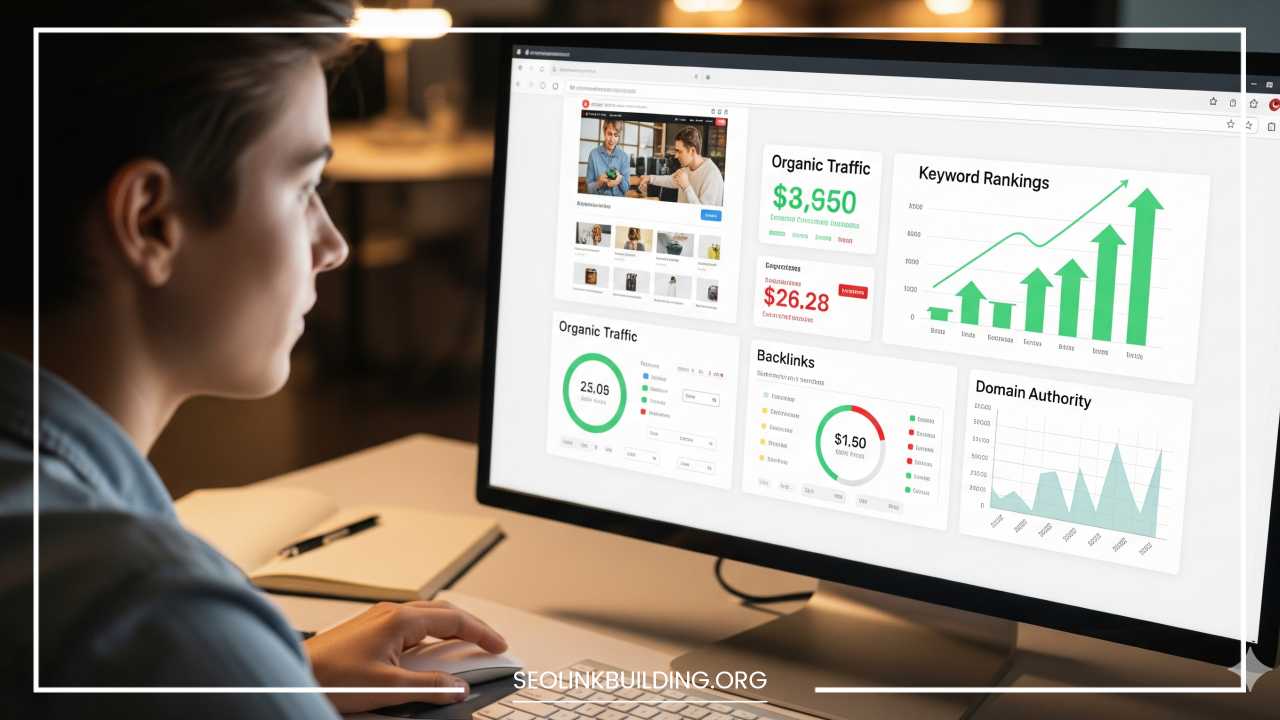
Benchmarking current performance is another indispensable step. How is your website performing right now? What are your current traffic numbers, top-ranking keywords, and conversion rates? Tools like Google Analytics and Google Search Console are your best friends here. Google Analytics provides invaluable data on user behaviour—where they come from, what pages they visit, how long they stay, and their bounce rate. Google Search Console, on the other hand, offers insights directly from Google about your site’s search performance, including keyword rankings, crawl errors, and indexation status. Documenting these initial metrics will provide a baseline against which you can measure the success of your SEO efforts post-audit.
Technical SEO Analysis
Technical SEO is the foundation upon which all other SEO efforts are built. It ensures that search engine crawlers can efficiently access, crawl, interpret, and index your website. Without a solid technical foundation, even the most brilliant content or robust backlink profile might go unnoticed.
1. Site Crawlability & Indexing
Search engine crawlers, often called spiders or bots, traverse the web by following links. Their ability to “crawl” your site and “index” its pages is fundamental.
- XML Sitemaps: An XML sitemap acts as a roadmap for search engines, listing all the important pages on your site that you want them to crawl. Ensure your XML sitemap is up-to-date, free of broken links, and submitted to Google Search Console. It should only include canonical versions of your URLs.
- Robots.txt: This file tells search engine bots which parts of your site they should or shouldn’t crawl. While useful for preventing crawlers from accessing private or unimportant sections, misconfigurations can inadvertently block critical pages. Regularly check your robots.txt file to ensure it’s not disallowing important content.
- Using Tools: Dedicated SEO crawling tools are indispensable for this stage.
- Screaming Frog SEO Spider: This desktop application crawls websites like a search engine, identifying broken links, redirects, duplicate content, and issues with title tags, meta descriptions, and robots.txt.
- Sitebulb: Offers a more visual and intuitive way to crawl your site, providing actionable insights and clear recommendations.
- Ahrefs Site Audit: A cloud-based tool that provides comprehensive technical SEO analysis, flagging over 100 common SEO issues.
2. Site Speed & Performance
In an age of instant gratification, a slow-loading website is a major deterrent for users and a significant ranking factor for search engines. Google prioritizes fast-loading sites, especially with the introduction of Core Web Vitals.
- Importance of Core Web Vitals: These are a set of specific metrics that Google uses to evaluate user experience. They include:
- Largest Contentful Paint (LCP): Measures perceived load speed, marking the point when the page’s main content has likely loaded.
- First Input Delay (FID): Measures responsiveness, quantifying the experience users feel when trying to first interact with the page.
- Cumulative Layout Shift (CLS): Measures visual stability, quantifying the amount of unexpected layout shift of visual page content.
- Tools:
- Google PageSpeed Insights: Provides a detailed report on your site’s performance on both mobile and desktop, offering actionable suggestions for improvement.
- GTmetrix: Analyses your page speed performance and provides detailed recommendations on how to optimize your website.
3. Mobile-Friendliness
With the majority of internet users accessing websites via mobile devices, mobile-friendliness is no longer optional—it’s a critical requirement. Google’s mobile-first indexing means the mobile version of your site is the primary one used for ranking.
- Mobile-First Indexing: This means Google primarily uses the mobile version of your content for indexing and ranking. If your mobile site is subpar, your overall rankings will suffer.
- Responsive Design Check: Ensure your website’s design adapts seamlessly to different screen sizes and devices. Content should be easily readable, buttons clickable, and navigation intuitive on mobile.
- Tool: Google Mobile-Friendly Test: A simple yet effective tool to check if your page is mobile-friendly and identify any issues.
4. HTTPS & Security
Website security is paramount for user trust and search engine rankings. Google explicitly states that HTTPS (Hypertext Transfer Protocol Secure) is a ranking signal.
- SSL Certificate: Ensure your website has an SSL certificate, which encrypts data transmitted between the user’s browser and your server. This is indicated by “https://” in your URL and a padlock icon in the browser.
- Mixed Content Issues: These occur when an HTTPS page loads some resources (like images, scripts, or stylesheets) using non-secure HTTP connections. This can lead to security warnings and negatively impact user trust. Tools like Screaming Frog can help identify mixed content.
5. Structured Data (Schema Markup)
Structured data, often referred to as Schema Markup, helps search engines understand the context of your content. It uses a standardized format to provide information about a page and classify its content.
- Rich Results & CTR: Implementing structured data can enable your site to appear with “rich results” (e.g., star ratings, product prices, event dates) directly in the search results, significantly improving click-through rates (CTR). For a restaurant in Vapi, this could mean displaying average review ratings and opening hours directly in Google.
- Tools:
- Google Rich Results Test: Allows you to test your structured data and see what rich results Google can generate for your pages.
- Schema.org: The official website provides an extensive vocabulary of properties you can use to mark up your content.
On-Page SEO Analysis
On-page SEO focuses on optimizing the content and HTML source code of a page to improve its rankings and attract relevant traffic.
1. Title Tags & Meta Descriptions
These are often the first impression a user gets of your page in the search results.
- Title Tags: The title tag (or page title) is the most prominent element in search results and a crucial ranking factor.
- Best Practices: Keep them concise (typically under 60 characters to avoid truncation), include your primary keyword, and make them compelling.
- Uniqueness: Every page should have a unique title tag.
- Meta Descriptions: While not a direct ranking factor, a well-crafted meta description acts as an advertisement, encouraging users to click.
- Best Practices: Keep them around 150-160 characters, include relevant keywords, and provide a clear, enticing summary of the page’s content.
2. Header Tags (H1–H6)
Header tags structure your content, making it more readable for both users and search engines.
- Proper Hierarchy: Use H1 for your main page title (one per page), and then use H2, H3, etc., to break down your content into logical sections and sub-sections.
- Keyword Usage: Naturally incorporate relevant keywords into your header tags where appropriate, but avoid keyword stuffing.
3. URL Structure
A clean, descriptive URL structure helps both users and search engines understand what a page is about.
- Clean & Keyword-Friendly: URLs should be short, descriptive, and include relevant keywords. Avoid long, complex URLs with unnecessary parameters.
- Good:
yourwebsite.com/services/seo-vapi - Bad:
yourwebsite.com/page?id=123&cat=4
- Good:
4. Content Quality
“Content is king” remains a golden rule in SEO. High-quality, relevant, and engaging content is essential for attracting and retaining users, and for earning high search rankings.
- Uniqueness & Relevance: Your content must be original and directly relevant to the user’s search query. Avoid duplicate content, which can confuse search engines and dilute your rankings.
- Keyword Usage: Integrate keywords naturally throughout your content. Use variations and related terms (LSI keywords) to provide context and avoid keyword stuffing.
- E-E-A-T Principles: Google heavily emphasizes Expertise, Experience, Authoritativeness, and Trustworthiness. Ensure your content demonstrates these qualities, especially for YMYL (Your Money or Your Life) topics (e.g., health, finance). For a Vapi-based financial advisor, demonstrating E-E-A-T is critical.
5. Internal Linking
Internal links connect pages within your own website, helping distribute “link equity” and guiding users and crawlers through your site.
- Anchor Text Optimization: Use descriptive and keyword-rich anchor text for your internal links. Instead of “click here,” use “learn about our Vapi SEO services.”
- Logical Site Structure: Create a clear and intuitive internal linking structure that reflects the hierarchy of your website. This is crucial for user experience and helping search engines understand the relationship between different pages.
Content Audit
Beyond on-page optimization, a dedicated content audit evaluates the overall health and effectiveness of your website’s content.
- Identify Thin or Outdated Content: Pages with minimal content, poor quality, or information that is no longer current should be identified. Consider updating, consolidating, or even removing such pages.
- Check for Duplicate Content: Tools like Copyscape or various SEO crawlers can help you find instances of duplicate content on your site or content that closely mirrors other sites. Address these by canonicalizing, rewriting, or removing.
- Content Gap Analysis vs. Competitors: What topics are your competitors ranking for that you aren’t? This analysis helps you identify new content opportunities to fill gaps in your existing content strategy.
- Tools:
- SEMrush Content Audit: Part of their larger site audit, it helps categorize your content and identify pages needing updates.
- Surfer SEO: Aids in content optimization by analysing top-ranking pages for a given keyword and suggesting content structure, word count, and keyword density.
- Google Search Console: Provides insights into which queries your pages are appearing for, and which aren’t getting clicks, signaling content that might need improvement.
Off-Page SEO & Backlink Analysis
Off-page SEO primarily refers to actions taken outside of your website to impact your search engine rankings, with backlinks being the most significant factor.
- Importance of Backlinks in SEO: Backlinks (links from other websites to yours) are essentially “votes of confidence” from other sites. The more high-quality, relevant backlinks your site has, the more authority and trustworthiness search engines attribute to it.
- Analyzing Backlink Profile: This involves examining the quantity, quality, and relevance of links pointing to your site.
- Quantity: While more links are generally better, quality trumps quantity.
- Quality: Links from authoritative, relevant websites (e.g., a local Vapi news site linking to your Vapi business) carry more weight than links from low-quality, spammy sites.
- Diversity: A healthy backlink profile includes a variety of link types (editorial, directory, guest posts) from different domains.
- Toxic Links and Disavow Process: Low-quality or spammy backlinks can harm your rankings. Identify these “toxic” links and, if necessary, use Google’s disavow tool to tell Google to ignore them.
- Competitor Backlink Research: Analyse the backlink profiles of your top-ranking competitors. This can reveal valuable link-building opportunities and strategies.
- Tools:
- Ahrefs: Widely considered the industry standard for backlink analysis, offering comprehensive data on referring domains, anchor text, and lost/new backlinks.
- Majestic: Focuses heavily on backlink data, providing metrics like Trust Flow and Citation Flow to assess link quality.
- Moz Link Explorer: Offers a robust link analysis tool with metrics like Domain Authority and Page Authority.
User Experience (UX) & Engagement Signals
While not directly SEO factors in the traditional sense, user experience and engagement signals heavily influence how users interact with your site, which in turn impacts rankings. Google rewards sites that provide a good user experience.
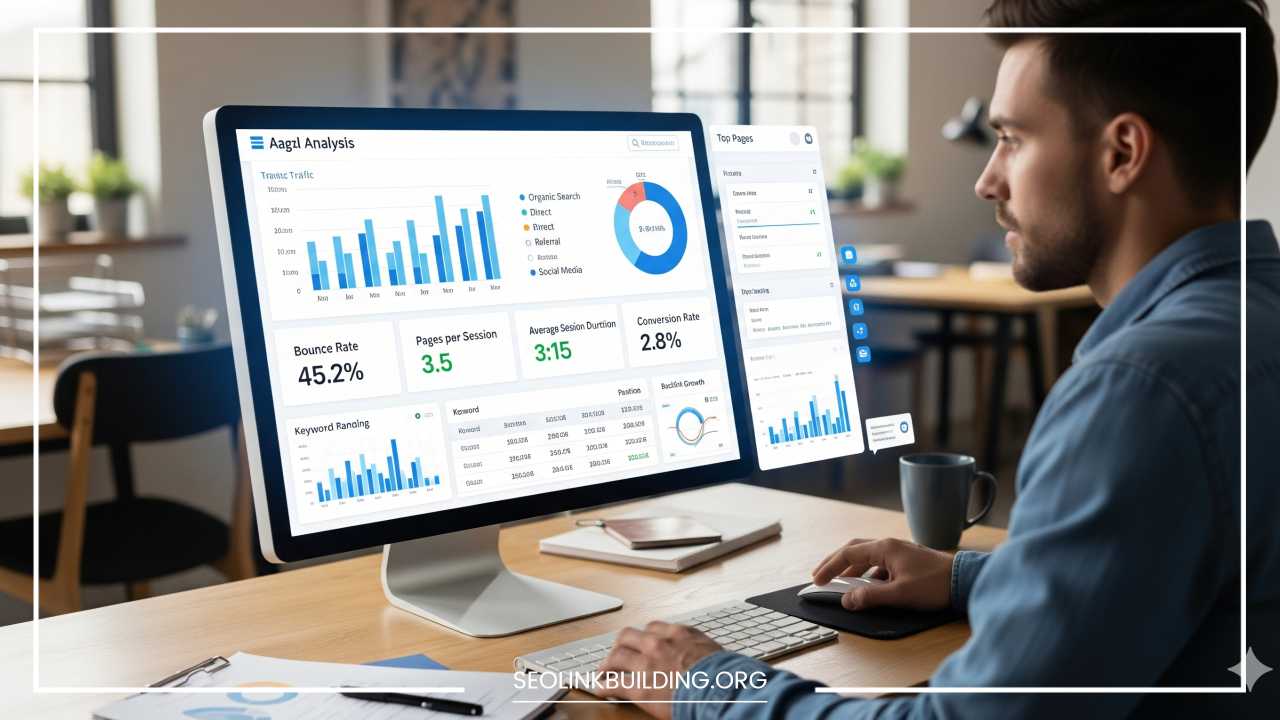
- Bounce Rate, Time on Site, Pages per Session: These metrics from Google Analytics provide insights into user engagement. A high bounce rate or low time on site can indicate a poor user experience, irrelevant content, or slow loading times.
- Navigation Clarity and Site Architecture: An intuitive, easy-to-navigate website is crucial. Users should be able to find what they’re looking for quickly and efficiently. A clear site architecture also helps search engines crawl and understand your site.
- Use of CTAs, Trust Signals (Testimonials, HTTPS):
- Call-to-Actions (CTAs): Clear and compelling CTAs guide users towards desired actions (e.g., “Contact Us for SEO Services in Vapi,” “Buy Now”).
- Trust Signals: Displaying testimonials, security badges, contact information, and ensuring HTTPS builds credibility and trust with users.
Local SEO Factors (Optional, if relevant)
For businesses operating in specific geographical areas like Vapi, Gujarat, Local SEO is critical for attracting nearby customers.
- Google Business Profile Optimization: This is the cornerstone of local SEO. Optimizing your Google Business Profile (formerly Google My Business) listing with accurate information, photos, reviews, and posts is paramount for appearing in local search results and Google Maps.
- NAP Consistency Across Citations: Ensure your Name, Address, and Phone number (NAP) are consistent across all online directories (e.g., Justdial, Yellow Pages, local Vapi business directories). Inconsistencies can confuse search engines.
- Local Keywords and Content: Incorporate location-specific keywords into your content (e.g., “best restaurant in Vapi,” “SEO company Vapi”). Create content that addresses local needs and interests.
Reporting & Next Steps
A comprehensive SEO analysis is only valuable if its findings are clearly communicated and translated into actionable strategies.
- Summarize Findings into Actionable Insights: Don’t just list problems; provide clear, concise explanations of what each issue means and how it impacts SEO.
- Prioritize Based on Impact vs. Effort: Not all issues are created equal. Prioritize fixes that will have the highest impact on your rankings and traffic with the least amount of effort. For instance, fixing critical crawl errors should take precedence over minor meta description tweaks.
- Setup for Ongoing Monitoring and Optimization: SEO is not a one-time task. Establish a system for regular monitoring of your website’s performance, new backlink opportunities, and competitor activity. This ensures your website remains competitive and continues to grow its online presence.
Final Thoughts
Conducting a thorough SEO analysis is an indispensable process for any website aiming for sustained online success. From the foundational technical elements that ensure crawlability to the quality of your content, the strength of your backlink profile, and the overall user experience, every aspect plays a crucial role in how search engines perceive and rank your site. For businesses in Vapi and beyond, regular, systematic audits are not merely good practice but a fundamental requirement to stay ahead in an ever-evolving digital landscape.
By meticulously examining each area discussed—setting clear goals, meticulously checking technical health, refining on-page elements, auditing content, building a robust backlink profile, and optimizing for user experience—you empower your website to achieve higher visibility, attract more qualified traffic, and ultimately convert visitors into loyal customers. Remember to leverage the powerful tools available, such as Google Search Console, Screaming Frog, Ahrefs, SEMrush, Moz, GTmetrix, Surfer SEO, and PageSpeed Insights, as they provide the data and insights necessary to make informed decisions. The digital journey is continuous; regular audits and ongoing optimization are the keys to unlocking and maintaining your website’s full SEO potential.
🔧 Optional Tools
- Google Search Console: Essential for monitoring your site’s search performance, indexation, and identifying crawl errors.
- Screaming Frog SEO Spider: A powerful desktop crawler for technical SEO audits, finding broken links, redirects, and on-page issues.
- Ahrefs: Comprehensive suite for backlink analysis, keyword research, competitor analysis, and site auditing.
- SEMrush: All-in-one marketing toolkit for keyword research, competitor analysis, site audits, and content marketing.
- Moz Pro: Offers tools for keyword research, link analysis, site audits (with the “Crawl Test” feature), and rank tracking.
- GTmetrix: Specializes in website speed and performance analysis, providing detailed reports and optimization recommendations.
- Surfer SEO: Helps optimize content for specific keywords by analyzing top-ranking pages and suggesting content structure, word count, and keyword usage.
- Google PageSpeed Insights: Provides a detailed report on your site’s performance on both mobile and desktop, with actionable suggestions for improvement.
- Google Analytics: Crucial for understanding user behaviour, traffic sources, and website engagement.