What Is Marketing Mix Modelling?


What Is Marketing Mix Modelling? Unlocking Marketing Effectiveness Through Data
In the dynamic world of marketing, where every dollar spent is scrutinized for its impact, understanding the true effectiveness of various marketing efforts is paramount. Marketers constantly grapple with questions like: Which channels are driving sales? How much should be allocated to each? What’s the optimal mix to achieve business objectives? Enter Marketing Mix Modelling (MMM), a powerful analytical technique designed to provide data-driven answers to these critical questions.
At its core, Marketing Mix Modelling is a statistical approach that quantifies the historical impact of different marketing and non-marketing activities on key business outcomes, most commonly sales or revenue. By dissecting past performance, MMM empowers businesses to optimize their future marketing investments, improve return on investment (ROI), and make more informed strategic decisions. This article will delve deep into the intricacies of MMM, exploring its mechanics, benefits, limitations, and its evolving role in the modern marketing landscape.
The Marketing Mix: A Quick Refresher
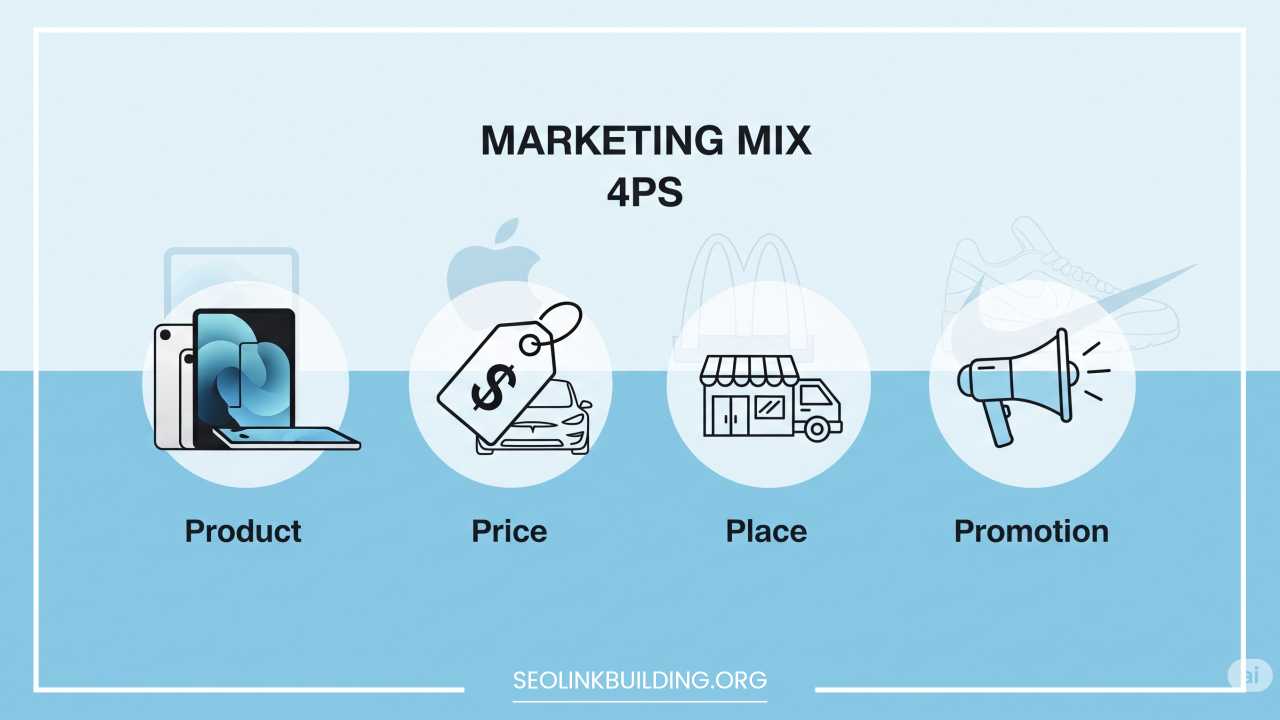
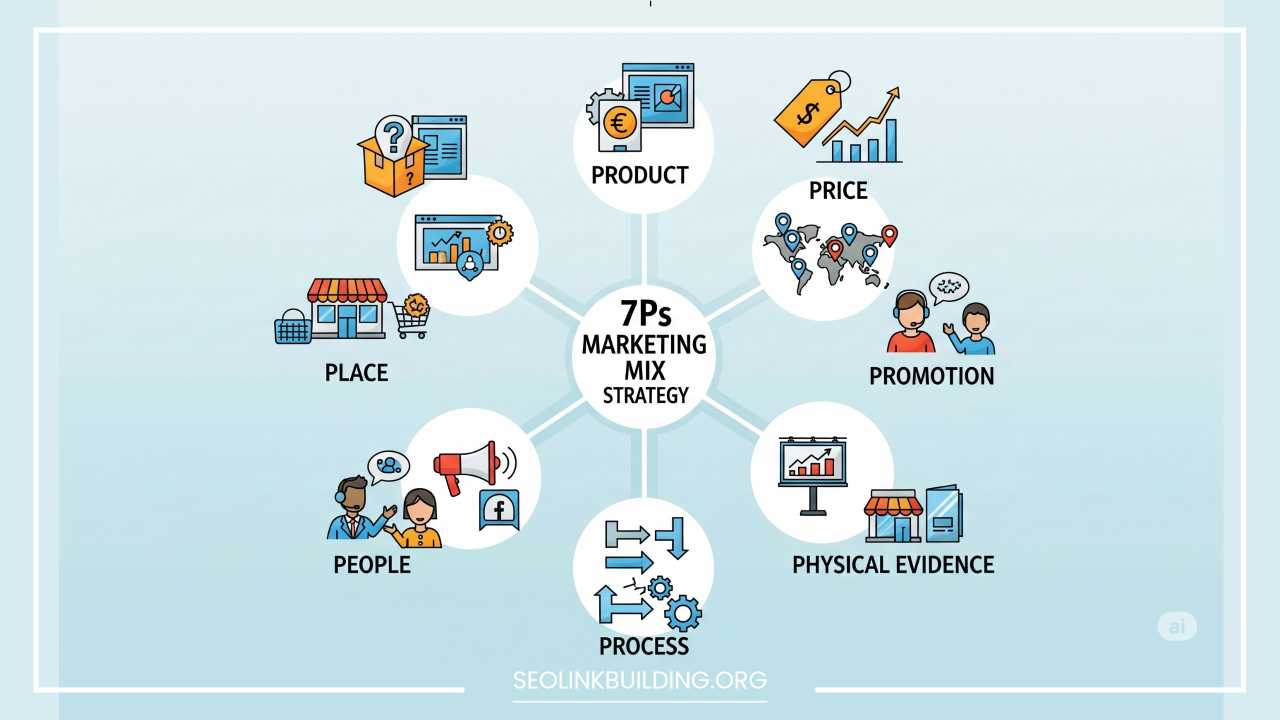
Before we dissect Marketing Mix Modelling itself, it’s crucial to revisit the foundational concept it seeks to analyze: the marketing mix. Traditionally, this is encapsulated by the “4 Ps”:
- Product: This refers to what the company offers to the market. It encompasses features, design, quality, branding, packaging, and services. The product itself, its appeal, and its competitive differentiation significantly influence consumer demand.
- Price: This is the amount consumers pay for the product or service. Pricing strategies—whether premium, competitive, or discount—directly impact perceived value, sales volume, and profitability.
- Place (Distribution): This concerns how the product reaches the customer. It includes distribution channels, logistics, inventory management, and market coverage. An effective distribution strategy ensures the product is available where and when customers want it.
- Promotion: This encompasses all activities designed to communicate the product’s value and persuade customers to buy. It includes advertising (TV, digital, print, radio), public relations, sales promotions, and personal selling. This “P” is often the most heavily analyzed within MMM, as it represents a significant and measurable investment.
These four elements are not isolated; they interact and influence consumer behavior in complex ways. A superior product might command a higher price, while extensive promotion can boost awareness and drive sales through various distribution channels. Analyzing this interplay is critical because, collectively, these elements shape consumer perception, drive purchasing decisions, and ultimately determine a brand’s market success. Understanding their individual and combined impact is precisely what Marketing Mix Modelling aims to achieve.
What Is Marketing Mix Modelling (MMM)?
Marketing Mix Modelling (MMM) is a sophisticated analytical technique that uses historical data to quantify the effectiveness of various marketing and non-marketing variables on a specific business outcome, typically sales or market share. It essentially deconstructs sales performance into its constituent drivers, attributing a portion of sales to each factor.
The origins of MMM can be traced back to the field of econometrics in the 1960s and 70s. Econometricians began applying statistical methods, particularly regression analysis, to understand the relationship between economic variables. This methodology was later adopted by marketing researchers to assess the impact of advertising and promotional spending on sales. Early applications were primarily focused on traditional media channels like TV, radio, and print, due to the availability of aggregated historical data. Over the decades, as marketing channels diversified and data collection capabilities improved, MMM evolved to incorporate a broader range of variables, including digital marketing, social media, and even competitor activities.
The fundamental difference between MMM and many other marketing analytics methods lies in its holistic, top-down approach. While other methods might focus on individual customer journeys or real-time campaign optimization, MMM takes a macro view, examining the aggregate impact of all marketing efforts over a longer period (e.g., weekly, monthly, quarterly data over several years). It doesn’t track individual user interactions but rather analyzes the correlation between overall marketing spend across various channels and total sales. This makes it particularly powerful for strategic planning, budget allocation, and understanding the incremental sales generated by different marketing investments. Unlike direct attribution models that might credit the last touchpoint, MMM considers the total contribution of each marketing element, taking into account their unique characteristics and the often-delayed impact they have on consumer behavior.
How Marketing Mix Modelling Works
The operational backbone of Marketing Mix Modelling lies in its systematic approach to data collection, statistical analysis, and interpretation. Here’s a breakdown of how it works:
Key Inputs:
MMM models require a comprehensive dataset encompassing both the dependent variable (the outcome you want to explain) and the independent variables (the factors influencing that outcome).
- Sales Data: This is the core dependent variable, typically measured as weekly or monthly sales volume or revenue. Consistency and accuracy of this data are paramount.
- Media Spends: Detailed data on investments across various media channels is crucial. This includes:
- Traditional Media: TV (GRPs/spends, ad stock), Radio (spends/impressions), Print (spends/reach).
- Digital Media: Search (PPC clicks/spends), Display (impressions/spends), Social Media (spends/reach), Video (impressions/spends).
- Other Promotions: In-store promotions, discounts, coupon redemptions, direct mail.
- Non-Marketing Variables: These external factors can significantly impact sales and must be accounted for to accurately isolate marketing’s effect:
- Seasonality: Sales often exhibit seasonal patterns (e.g., holiday spikes, summer dips).
- Promotions: Specific promotional activities by the brand (e.g., price reductions, BOGO offers).
- Pricing: Changes in product pricing.
- Distribution: Number of stores, shelf space, availability.
- Competitor Activity: Competitor pricing, promotional activities, new product launches.
- Macroeconomic Factors: GDP growth, inflation, consumer confidence, unemployment rates.
- Category Trends/Events: Industry-wide growth, major events (e.g., Olympics, Super Bowl, natural disasters).
Statistical Methods Used:
The most common statistical technique employed in MMM is multivariate regression analysis.
- Linear Regression: In its simplest form, MMM uses linear regression to establish a mathematical relationship between sales and the various marketing and non-marketing inputs. The model attempts to find the best-fit line (or hyperplane in multiple dimensions) that explains the variation in sales based on the changes in the input variables.
- Econometric Principles: MMM incorporates several econometric principles to account for real-world marketing phenomena:
- Lagged Effects (Adstock/Carryover Effects): Marketing efforts often have a delayed or lingering impact. For example, a TV ad might not immediately drive sales but could build brand awareness that influences purchases weeks or months later. MMM models incorporate “adstock” or “carryover” variables to represent this decaying effect of past media exposure.
- Diminishing Returns (Saturation Effects): Beyond a certain point, increasing marketing spend in a particular channel yields progressively smaller returns. MMM models use non-linear transformations (e.g., logarithmic or S-curve functions) to capture these diminishing returns, indicating the saturation point for each channel.
- Interactions: Sometimes, the effect of one marketing activity depends on the presence or level of another (e.g., a TV campaign might be more effective when combined with digital search ads). MMM can model these interaction effects.
The output of an MMM is an equation that looks something like this (simplified):
Where:
- is the dependent variable.
- is the intercept (baseline sales not explained by other variables).
- are coefficients representing the elasticity or marginal impact of each variable on sales.
- is the error term, accounting for unexplained variation.
Output: Contribution of Each Channel to Sales:
The primary output of an MMM model is a decomposition of sales into contributions from each marketing and non-marketing driver. This is typically presented as:
- Baseline Sales: The sales that would occur without any marketing or promotional activity, driven by factors like brand equity, distribution, and general market conditions.
- Incremental Sales by Channel: The additional sales generated by each specific marketing channel (e.g., TV, Digital Search, Social Media, Print).
- Incremental Sales by Non-Marketing Factors: The impact of factors like pricing, promotions, seasonality, and competitor activity.
This decomposition allows marketers to visualize which elements are contributing most to their overall sales and, crucially, understand the ROI of each marketing dollar spent. For example, the model might reveal that while TV advertising accounts for a large portion of the budget, digital search has a higher ROI due to its targeted nature.
Benefits of Marketing Mix Modelling
Marketing Mix Modelling offers a multitude of strategic and tactical advantages for businesses striving for marketing excellence:
- Optimizing Media and Marketing Spend: This is arguably the most significant benefit. MMM provides a data-driven basis for allocating marketing budgets across various channels. By understanding the historical ROI of each channel, businesses can shift investments from underperforming areas to those with higher returns, maximizing the overall impact of their marketing budget. Instead of relying on gut feeling or anecdotal evidence, decisions are backed by empirical data.
- Improved ROI Tracking: MMM moves beyond simple cost-per-acquisition (CPA) or click-through rates (CTR) by linking marketing efforts directly to sales outcomes. It quantifies the incremental sales generated by each marketing activity, allowing for a more accurate calculation of marketing ROI. This holistic view enables marketers to demonstrate the tangible business value of their campaigns to stakeholders.
- Understanding Short- vs. Long-Term Effects: Not all marketing efforts yield immediate results. Brand-building activities like TV advertising or content marketing often have a delayed, cumulative, and long-lasting impact. MMM, through techniques like adstock, can differentiate between the short-term transactional effects (e.g., sales from a direct response ad) and the longer-term brand equity and awareness building (e.g., increased organic search traffic due to brand recall). This distinction is crucial for developing a balanced marketing strategy that addresses both immediate sales targets and sustainable brand growth.
- Budget Reallocation Insights: Beyond simply optimizing the current budget, MMM provides powerful insights for future budget planning. It can answer questions like: “If we increase our digital spend by 10%, how much more sales can we expect?” or “What would be the impact of shifting 5% of our TV budget to social media?” This allows for scenario planning and enables marketers to make informed decisions about expanding or contracting investments in specific channels based on their expected incremental value. It can highlight channels that are saturated or those that have untapped potential, guiding strategic reallocations for maximum impact.
Challenges and Limitations
Despite its powerful capabilities, Marketing Mix Modelling is not a silver bullet and comes with its own set of challenges and limitations that marketers must acknowledge:
- Data Quality Issues: The accuracy of MMM heavily relies on the quality, granularity, and consistency of the input data. Incomplete, inconsistent, or inaccurate data on sales, media spends, or external factors can lead to flawed models and misleading insights. Sourcing clean, reliable historical data across numerous channels can be a significant undertaking, often requiring extensive data cleaning and harmonization efforts.
- Offline Data Measurement (e.g., TV, Radio): While digital channels provide granular impression and click data, measuring the true exposure and impact of traditional offline media like TV and radio can be challenging. TV data is often based on Gross Rating Points (GRPs) or estimated reach, which are proxies rather than direct individual exposures. Accurately converting these into comparable metrics for modeling alongside digital data requires careful consideration and often involves assumptions.
- Time Lag and Granularity: MMM typically works with aggregated historical data, usually on a weekly or monthly basis over several years. This means it’s excellent for understanding long-term trends and strategic allocations but less suited for real-time, day-to-day campaign optimization. The time lag between a marketing exposure and its resulting sale can vary significantly by channel and product, and accurately capturing these complex lagged effects is crucial but challenging.
- Doesn’t Work Well in Real-Time Environments: Due to its reliance on historical, aggregated data and the time-consuming nature of model building and recalibration, MMM is not designed for real-time bidding or immediate campaign adjustments. For agile, in-flight optimization, other attribution models or real-time analytics platforms are more appropriate. MMM provides strategic direction rather than tactical control.
- Lack of Individual-Level Insights: MMM operates at an aggregate level, meaning it cannot provide insights into individual customer journeys, specific user segments, or the impact of creative variations. It tells you what channels are driving sales overall, but not who is being influenced or how specific messaging resonates. This limits its ability to inform highly personalized marketing efforts.
- Multicollinearity: Marketing channels often correlate with each other (e.g., increased TV spend might coincide with increased digital search spend). This statistical phenomenon, known as multicollinearity, can make it difficult for the model to isolate the independent effect of each variable, potentially leading to unstable coefficients and unreliable insights. Advanced statistical techniques are required to mitigate this.
- Omitted Variable Bias: If important variables that significantly impact sales are left out of the model (e.g., a major competitor’s price change, a PR crisis, or a new product launch by a competitor), the effects of these omitted variables might be incorrectly attributed to the variables included in the model, leading to biased results.
Addressing these limitations often requires experienced data scientists, robust data infrastructure, and a clear understanding of the business context.
MMM vs. Attribution Modelling
In the realm of marketing measurement, Marketing Mix Modelling (MMM) and Attribution Modelling (often Multi-Touch Attribution, MTA) are two prominent but distinct approaches. While both aim to understand the effectiveness of marketing efforts, they operate at different levels of granularity and serve different purposes.
- Marketing Mix Modelling (MMM):
- Level: Macro, aggregate, top-down.
- Data: Historical, aggregated time-series data (e.g., weekly sales, weekly media spends). Includes both online and offline channels.
- Focus: Quantifies the overall impact of different marketing channels (and non-marketing factors like seasonality, price, competition) on total sales or revenue. It assesses the incremental sales generated by each channel at a strategic level.
- Methodology: Primarily statistical regression analysis, econometrics. Accounts for lagged effects and diminishing returns.
- Output: Sales decomposition by driver, ROI per channel, optimal budget allocation recommendations.
- Use Case: Strategic budget planning, understanding long-term effects, justifying overall marketing spend, cross-channel optimization.
- Limitations: Not real-time, no individual user insights, requires substantial historical data, challenges with data quality and multicollinearity.
- Multi-Touch Attribution (MTA):
- Level: Micro, individual user level, bottom-up.
- Data: Granular, event-level data tracking individual customer journeys (e.g., clicks, impressions, website visits, conversions). Primarily focuses on digital channels.
- Focus: Assigns credit for a conversion to various touchpoints a user interacted with along their path to purchase. It aims to understand the influence of each individual interaction in the conversion funnel.
- Methodology: Rule-based (e.g., Last-Click, First-Click, Linear), algorithmic/data-driven (e.g., Shapley value, Markov chains, machine learning).
- Output: Credit distribution across touchpoints, insights into conversion paths, optimization of specific digital campaigns.
- Use Case: Optimizing real-time digital campaign performance, understanding conversion paths, informing bid strategies for digital ads, personalized marketing.
- Limitations: Primarily limited to digital, struggles with offline channels, may over-attribute to last touchpoints if not data-driven, complex data infrastructure required.
When to Use MMM vs. MTA:
- Use MMM when: You need a strategic understanding of your overall marketing budget effectiveness, want to compare online and offline channel performance, understand baseline sales, or plan your annual marketing spend. It’s ideal for high-level resource allocation and proving marketing’s contribution to the bottom line over time.
- Use MTA when: You need to optimize specific digital campaigns in real-time, understand the sequence of touchpoints leading to a conversion, or personalize ad delivery based on user behavior. It’s ideal for tactical adjustments and improving performance within digital ecosystems.
Hybrid Approaches:
Recognizing the complementary nature of these two methods, many advanced marketers are adopting hybrid approaches. This involves using MMM for strategic, top-down budget allocation across all channels (both online and offline) and then leveraging MTA for granular, tactical optimization within digital channels. For instance, MMM might recommend increasing digital spend by 15%, and MTA would then guide how that 15% is best distributed across various digital platforms and tactics. Some sophisticated models even attempt to integrate elements of both, using MMM as a foundational layer and then enriching it with individual-level insights where possible. This blended approach provides a more comprehensive and actionable view of marketing performance.
Applications of MMM in Different Industries
Marketing Mix Modelling’s versatility makes it applicable across a wide array of industries, each leveraging its insights to address specific challenges and opportunities:
- FMCG (Fast-Moving Consumer Goods):
- Challenge: High volume, low-margin products; intense competition; significant spend on mass media (TV, radio, print); heavy reliance on promotions.
- Application: MMM is extensively used to optimize national advertising campaigns, analyze the effectiveness of in-store promotions, understand the impact of distribution changes, and determine the optimal media mix for new product launches. It helps differentiate the impact of brand-building advertising versus promotional activities on sales volume and market share. For example, an FMCG company might use MMM to understand whether increasing TV ad frequency or offering deeper discounts has a greater impact on sales for a particular product line.
- Retail:
- Challenge: Multi-channel customer journeys (online and offline); seasonal sales peaks; importance of store footprint; loyalty programs.
- Application: Retailers use MMM to assess the effectiveness of online advertising driving foot traffic to stores, the impact of circulars and direct mail, and the ROI of loyalty programs. It helps in optimizing promotional calendars, understanding the impact of store openings/closures, and balancing online marketing efforts with traditional brick-and-mortar strategies. An apparel retailer might use MMM to determine the optimal spend on Instagram ads versus local newspaper flyers during a sales event.
- Pharmaceuticals:
- Challenge: Long sales cycles; complex stakeholder ecosystems (patients, doctors, pharmacists); heavy reliance on medical sales representatives and professional journals; strict regulatory environments.
- Application: MMM helps pharmaceutical companies understand the impact of sales force activities, professional journal advertising, conferences, and direct-to-consumer (DTC) advertising (where permitted) on prescription volumes. It can differentiate between the effectiveness of different messaging strategies for various drug indications and optimize the allocation of promotional resources to specific physician segments or geographic regions. MMM can also help evaluate the ROI of new drug launches.
- Banking/Financial Services:
- Challenge: Intangible products; trust and security are paramount; complex product offerings (loans, investments, credit cards); multi-stage conversion funnels.
- Application: Financial institutions leverage MMM to optimize spending on digital marketing (e.g., search ads for mortgage inquiries), branch promotions, direct mail campaigns for credit card offers, and sponsorships. It helps them understand which channels effectively drive new account openings, loan applications, or asset under management growth. MMM can also be used to assess the impact of interest rate changes or competitor offers on customer acquisition and retention. For instance, a bank could use MMM to see if increasing online banner ads for a new savings account yields better returns than traditional print ads.
In each of these industries, MMM provides the data-driven clarity needed to move beyond anecdotal evidence and make strategic, evidence-based decisions about where and how to invest marketing resources for maximum impact.
Modern MMM: AI, Machine Learning & Cloud Tools
The landscape of Marketing Mix Modelling has undergone a significant transformation, moving beyond traditional statistical packages to embrace cutting-edge technologies like Artificial Intelligence (AI), Machine Learning (ML), and robust cloud-based platforms. This evolution addresses many of the historical limitations of MMM, making it more agile, accurate, and accessible.
- How MMM Has Evolved:
- From Manual to Automated: Historically, MMM was a highly manual process, requiring significant time from econometricians to clean data, build models, and run analyses. Modern tools automate much of this, from data ingestion and cleaning to model selection and scenario planning.
- Beyond Linear Regression: While regression remains foundational, modern MMM incorporates more sophisticated ML algorithms. These can better handle non-linear relationships, complex interactions between variables, and vast datasets. Techniques like Bayesian regression, generalized additive models (GAMs), and even neural networks are being explored to capture nuanced marketing effects.
- Granularity and Speed: Cloud computing has enabled the processing of much larger datasets at greater speed, allowing for more granular analyses (e.g., regional MMM, product-level MMM) and more frequent model updates.
- Integration with Other Data Sources: Modern MMM platforms are designed to seamlessly integrate with various data sources, including CRM systems, web analytics platforms, ad server logs, and even external data providers (e.g., weather data, economic indicators), enriching the model with a broader range of explanatory variables.
- Tools & Platforms:
- Established Players: Companies like Nielsen and Neustar (now part of TransUnion) have long been leaders in the MMM space, offering comprehensive solutions that combine their proprietary data with advanced analytics. They often provide full-service consulting alongside their platforms.
- Cloud-Native Solutions: The rise of cloud computing has led to new players and offerings from tech giants:
- Google MMM: Google offers its own MMM solutions, leveraging its vast dataset on search, display, and YouTube advertising. They often provide open-source tools or frameworks that allow businesses to build and customize their own MMM.
- Meta Robyn: Meta (Facebook) has released “Robyn,” an open-source, semi-automated MMM package built in R. Robyn incorporates features like Facebook’s Prophet for time-series forecasting and gradient-based optimization to determine optimal media allocation. It’s a significant step towards democratizing MMM.
- Other Vendors: Numerous specialized marketing analytics firms and data science consultancies now offer proprietary MMM platforms or custom model-building services, often leveraging open-source ML libraries (e.g., scikit-learn, TensorFlow) in cloud environments (AWS, Azure, Google Cloud).
- Role of Automation and Big Data:
- Automation: Automated MMM pipelines can significantly reduce the time and effort required to build, validate, and update models. This means marketers can get insights faster and respond more rapidly to market changes. Automated feature engineering, model selection, and hyperparameter tuning are becoming standard.
- Big Data: The ability to process and analyze “big data” from diverse sources—from granular ad impressions to website clickstreams—allows for more robust and accurate models. It helps in identifying subtle patterns and interactions that might be missed with smaller datasets.
- Scenario Planning & Simulation: Modern MMM tools often include intuitive interfaces for scenario planning and simulation. Marketers can easily input hypothetical budget changes or shifts in marketing mix and instantly see the projected impact on sales, enabling “what-if” analyses and informed decision-making.
- Explainable AI (XAI): As ML models become more complex, there’s a growing emphasis on “explainable AI” within MMM. This involves techniques that help analysts understand why a model is making certain predictions, ensuring transparency and trust in the insights derived.
The integration of AI, ML, and cloud tools is transforming MMM from a niche econometric exercise into a more accessible, scalable, and powerful tool for strategic marketing decision-making.
Steps to Implement Marketing Mix Modelling
Implementing a successful Marketing Mix Modelling project involves a structured approach, from defining objectives to acting on the insights. Here are the typical steps:
- Define Business Questions:
- Before diving into data, clearly articulate what you want to achieve with MMM. What specific business problems are you trying to solve?
- Examples: “What is the optimal budget allocation across our marketing channels for the next quarter?” “Which marketing channels have the highest ROI?” “What is the long-term impact of our brand-building campaigns?” “How do competitor actions affect our sales?” “What is our baseline sales volume?”
- Defining clear, measurable objectives ensures the model is built to provide actionable answers.
- Gather and Clean Data:
- This is often the most time-consuming but critical step.
- Sales Data: Collect historical sales or revenue data (e.g., weekly or monthly) for at least 2-3 years, ideally longer (3-5 years) for more robust models.
- Marketing Spend Data: Compile detailed spend data for all relevant marketing channels (TV, digital display, search, social, print, radio, OOH, promotions, PR, etc.). Ensure consistency in time periods and units.
- Non-Marketing Data: Gather data on external factors: pricing changes, distribution points, competitor marketing activities, economic indicators (GDP, CPI), seasonality (holiday calendars), and any major brand or market events.
- Data Cleaning and Transformation: This involves:
- Handling Missing Data: Imputation or exclusion.
- Outlier Detection: Identifying and addressing unusual data points.
- Standardization/Normalization: Ensuring data is on comparable scales.
- Adstock/Lag Transformations: Applying decaying functions to media spend to capture carryover effects.
- Non-linear Transformations: Using log or S-curve transformations to account for diminishing returns.
- Data Validation: Cross-checking data accuracy with internal reports.
- Model Building and Validation:
- Model Specification: Choose the appropriate statistical techniques (e.g., multiple regression) and define the model structure, including which variables to include and how they relate (linear, non-linear, interactions).
- Statistical Software/Platform: Use specialized MMM software, econometric tools (e.g., R, Python with statistical libraries like
statsmodelsorscikit-learn), or commercial MMM platforms. - Model Training: Feed the cleaned data into the chosen model and run the analysis. The model will identify the statistical relationships between the inputs and sales.
- Model Validation: Critically evaluate the model’s performance:
- Statistical Significance: Are the coefficients statistically significant (i.e., not due to random chance)?
- R-squared/Adjusted R-squared: How much of the variation in sales does the model explain?
- Residual Analysis: Are the errors normally distributed and without patterns?
- Face Validity: Do the coefficients make intuitive sense? For example, does increasing TV spend indeed show a positive impact on sales?
- Out-of-Sample Validation: Test the model’s predictive power on a portion of data it hasn’t seen during training.
- Scenario Testing: Run small “what-if” scenarios to ensure the model behaves logically.
- Scenario Planning and Decision-Making:
- Decomposition Analysis: Present the core output: the breakdown of historical sales attribution by each marketing and non-marketing driver.
- Marginal ROI/Elasticity Analysis: Calculate the incremental sales generated per unit of spend for each channel. This helps identify the most efficient channels.
- Optimization: Based on the model’s insights, simulate various future scenarios.
- “What if we shift 10% of our budget from TV to digital search?”
- “What is the optimal budget for each channel to achieve a target sales growth of X%?”
- “What is the impact of a 5% price reduction combined with a 20% increase in social media spend?”
- Budget Reallocation: Use these simulations to make informed decisions about future marketing budget allocation, focusing on maximizing overall marketing effectiveness and achieving business goals.
- Reporting and Visualization: Present the findings in clear, understandable reports and dashboards, often using interactive visualizations to enable easier exploration of scenarios.
- Monitor and Refine:
- Marketing is dynamic; an MMM model is not a one-time exercise.
- Regularly monitor the model’s performance against actual sales.
- Recalibrate the model periodically (e.g., quarterly or bi-annually) to incorporate new data, account for market shifts, introduce new channels, or adjust for changes in consumer behavior.
- Continuously refine the model by adding new variables, improving data quality, and testing alternative model specifications.
By following these steps, businesses can effectively leverage Marketing Mix Modelling to gain a profound understanding of their marketing effectiveness and drive more impactful investment decisions.
Final Thoughts
In an increasingly data-driven marketing landscape, where accountability and efficiency are paramount, Marketing Mix Modelling (MMM) stands as an indispensable tool for strategic decision-making. By meticulously dissecting the historical impact of various marketing and non-marketing factors on sales, MMM offers a panoramic view of marketing effectiveness that single-channel attribution models simply cannot provide. It empowers businesses to move beyond guesswork, quantifying the tangible contribution of each marketing dollar and revealing the true ROI of their investments.
From optimizing media spend and understanding the intricate interplay between online and offline channels to discerning between short-term sales lifts and long-term brand building, MMM provides the clarity needed for intelligent budget allocation. While it presents challenges related to data quality, the measurement of offline media, and its aggregate nature, the evolution of MMM through AI, Machine Learning, and cloud-based platforms is continuously addressing these limitations, making it more robust, accessible, and agile than ever before.
For any organization serious about maximizing its marketing potential and proving its contribution to the bottom line, investing in Marketing Mix Modelling is no longer a luxury but a strategic imperative. It provides the empirical evidence required to justify marketing expenditure, reallocate resources for optimal performance, and ultimately drive sustainable business growth. Embrace MMM not just as an analytical exercise, but as a foundational pillar for building a truly effective and data-powered marketing strategy in the years to come.