
Why Product Marketing is the True Nexus of Business Growth

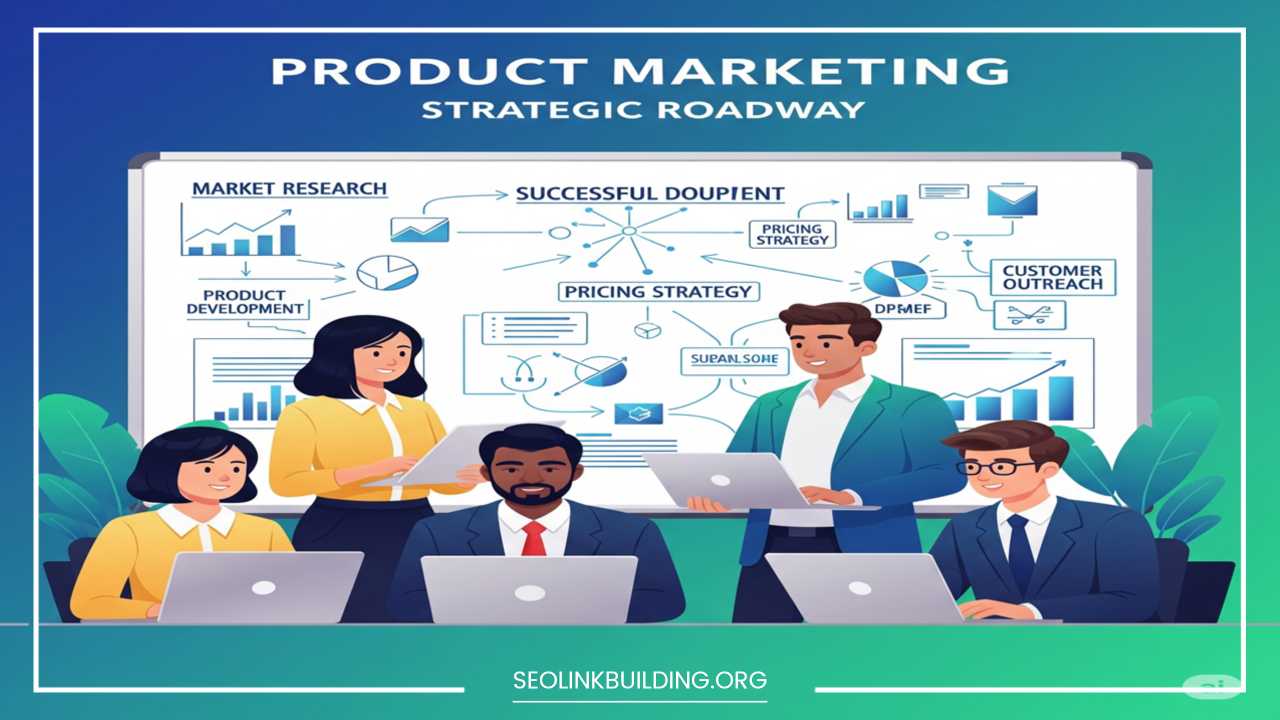
The Unseen Architects: Why Product Marketing is the True Nexus of Business Growth
Abstract: Product Marketing, often misunderstood or underestimated, is not merely about launching products; it is the strategic linchpin connecting product innovation with market demand, sales enablement, and customer success. In an increasingly competitive and fragmented marketplace, the product marketer emerges as the unseen architect, shaping narratives, optimizing Go-to-Market (GTM) strategies, and driving sustainable growth.
This article will delve into the multifaceted role of product marketing, exploring its evolution from a tactical function to a strategic imperative. We will dissect its core pillars – market intelligence, product positioning, GTM strategy, sales enablement, and customer advocacy – and illuminate how a strong product marketing function acts as the true nexus of business growth, fostering synergy across departments and creating compelling value propositions that resonate deeply with target audiences.
Furthermore, we will explore the impact of emerging technologies, particularly Artificial Intelligence, on the future of product marketing, highlighting how these advancements augment, rather than diminish, the product marketer’s strategic importance.
Introduction: Beyond the Launch – Redefining Product Marketing’s Strategic Imperative
For too long, product marketing has occupied a peculiar, often misunderstood, corner of the corporate landscape. Mention “product marketing,” and a common mental image might involve a team frantically preparing for a product launch, churning out press releases, or perhaps designing a few web pages.
This perception, while containing a kernel of truth about a single facet of the role, tragically diminishes the profound and pervasive impact product marketing truly wields within a successful enterprise. It relegates a strategic, cross-functional discipline to a mere tactical function, a post-development clean-up crew rather than a foundational architect.
The reality, however, is dramatically different. In today’s hyper-competitive and increasingly noisy global marketplace, where innovation cycles are accelerating and customer expectations are soaring, product marketing has transcended its traditional boundaries.
It is no longer a department that merely supports the product development lifecycle; it is, in fact, an integral, strategic imperative that commences at the earliest stages of ideation and extends far beyond the initial market splash. Product marketing is the crucial connective tissue that translates raw technological innovation into tangible market success and sustainable revenue. It is the bridge between what a company builds and why anyone should care.
Without a robust and insightful product marketing function, even the most groundbreaking products risk languishing in obscurity, failing to resonate with their intended audience or to capture their rightful share of the market. This article aims to redefine product marketing, elevating it from its often-overlooked status to its rightful place as the indispensable nexus of business growth.
The Evolutionary Journey: From Tactical to Transformative
To truly appreciate the current strategic depth of product marketing, it’s essential to trace its evolutionary arc. In its nascent stages, the function was far more tactical, often an adjunct to engineering or sales. Early product marketers might have been tasked primarily with creating user manuals, translating technical specifications into simpler language for sales teams, or perhaps ensuring product packaging was compliant. The focus was predominantly inward-looking: documenting “what we build.”
The landscape began to shift as markets matured and competition intensified. Companies realized that simply having a product wasn’t enough; they needed to differentiate, explain value, and reach specific customer segments.
This led to a gradual specialization, where dedicated individuals or small teams started focusing on understanding the market, positioning products against competitors, and crafting basic promotional materials. It was a step beyond pure technical documentation, introducing an external market focus.
The true transformation, however, has been catalyzed by the digital disruption and the rise of the software-as-a-service (SaaS) model. Agile development methodologies blurred the lines between product development and market feedback, requiring continuous iteration and rapid response to user needs.
The immediacy of digital communication channels amplified the need for clear, consistent, and compelling messaging that could cut through the online clutter. With subscription-based models, customer acquisition became intrinsically linked to retention, pushing the product marketing remit beyond initial purchase to ongoing adoption and advocacy.
Today, product marketing stands as a strategic partner to product management, sales, executive leadership, and even customer success. The shift has been profound: from merely communicating “what we build” to articulating “who we build for, why it matters, and the transformative impact it can have on their lives or businesses.”
This evolution underscores a critical realization: product marketing is not just about bringing products to market, but about embedding them into the market in a meaningful, valuable, and profitable way. It’s about building a compelling narrative around the product that resonates with target audiences, enables sales teams, and fosters enduring customer relationships.
Pillar 1: The Pulse of the Market – Deep Dive into Market Intelligence
At its core, superior product marketing is predicated on an unshakeable understanding of the market. This isn’t merely about rudimentary market research; it’s about cultivating a deep, almost empathetic, grasp of customer needs, competitive dynamics, and overarching industry trends.
This comprehensive market intelligence forms the bedrock upon which all subsequent product marketing strategies are built. Without it, positioning is speculative, messaging is generic, and Go-to-Market (GTM) efforts are akin to firing arrows in the dark.
The cornerstone of this intelligence is customer obsession. Moving beyond superficial demographics, modern product marketers delve into robust persona development, creating rich, multidimensional profiles that encompass psychographic traits, motivations, daily challenges, and aspirations.
A truly insightful persona isn’t just “Marketing Manager Mary”; it’s “Mary, who struggles with fragmented campaign data, feels pressured by ROI demands, and dreams of a unified platform that makes her look like a strategic genius.”
Furthermore, the Jobs-to-be-Done (JTBD) framework offers a powerful lens, shifting focus from what customers buy to why they “hire” a product to perform a specific “job” in their lives or businesses. Understanding the core job a product solves reveals deeper unmet needs and pain points that features alone cannot address.
Capturing the Voice of Customer (VoC) is another critical dimension. This goes far beyond collecting survey responses. It involves nuanced feedback loops encompassing:
- Direct interviews: One-on-one conversations that uncover qualitative insights and emotional triggers.
- Ethnographic research: Observing customers in their natural environment to understand their workflows and unspoken challenges.
- User feedback platforms: Aggregating and analyzing product reviews, support tickets, and community forum discussions.
- Sales and customer success interactions: Regularly debriefing frontline teams who possess invaluable direct customer insights.
This deep dive into customer understanding allows product marketers to precisely articulate the problems their product solves, identify the unique pain points it alleviates, and understand the unmet needs it addresses, often before the customer themselves can articulate them clearly.
Alongside customer insight, competitor intelligence is equally vital. This isn’t just about ticking boxes on a feature comparison matrix. It’s about understanding:
- Their messaging and positioning: How are they communicating their value? What narrative are they weaving?
- Their Go-to-Market strategies: Which channels do they prioritize? What are their pricing models?
- Their market perception: How are they perceived by customers, analysts, and partners?
- Their strategic moves: What new product lines are they developing? Are they acquiring new companies?
By truly grasping competitor strategies, product marketers can identify genuine differentiators, anticipate competitive responses, and craft counter-messaging that highlights their own product’s superior value.
Finally, trend analysis ensures the product remains relevant in a dynamic market. This involves identifying macro trends (e.g., AI integration, sustainability mandates, remote work shifts) and micro trends within specific industries.
Combining this external market view with internal data analysis – leveraging sales data, usage analytics, customer lifetime value metrics, and product adoption rates – provides a holistic, data-driven understanding of the market and the product’s performance within it.
This comprehensive intelligence isn’t merely for reports; it actively informs product strategy, influences feature prioritization, and provides the essential foundation for all subsequent marketing and sales efforts. It transforms assumptions into actionable insights, making product marketing an evidence-based discipline rather than a creative gamble.
Pillar 2: Crafting the Narrative – The Art and Science of Product Positioning & Messaging
With a profound understanding of the market and its nuances, the product marketer’s next critical task is to sculpt the product’s identity in the minds of its target audience. This is the art and science of product positioning and messaging. In a world saturated with choices and information overload, how a product is perceived can be the ultimate determinant of its success.
Positioning is the strategic act of defining where a product stands in the market relative to its competitors and in the minds of its customers. Messaging is the articulation of that positioning, the words and stories that bring it to life.
Effective positioning demands absolute clarity on several fronts:
- Target Audience Clarity: Who exactly is this product for? What are their specific needs and desires that the product fulfills? This moves beyond broad personas to truly narrow down the ideal customer profile.
- Unique Value Proposition (UVP): What distinct, compelling benefit does this product offer that no other product can? This goes beyond a list of features, focusing on the outcome or transformation the product delivers. For instance, a cloud storage solution doesn’t just offer “terabytes of space”; its UVP might be “unwavering peace of mind through seamless, secure, and instant access to your critical data, anywhere, anytime.”
- Differentiators and Competitive Advantages: What makes this product objectively superior or different from alternatives? This requires a candid assessment of strengths against competitors, whether it’s through innovative technology, superior user experience, pricing models, or a unique ecosystem.
- Brand Promise Integration: How does the product’s positioning align with the overarching brand values and promise? Consistency here builds trust and strengthens brand equity.
Developing compelling messaging frameworks is the subsequent step. This involves creating a comprehensive “master messaging document” that serves as the single source of truth for all external communications. This document includes:
- Core message: The singular, overarching statement about the product’s value.
- Key benefits: Translating features into customer-centric advantages.
- Proof points/evidence: Data, testimonials, case studies that validate claims.
- Objection handling: Proactive responses to common doubts or competitive arguments.
- Layered messaging: Tailoring the core message for different audiences (e.g., an executive summary focusing on ROI, a technical brief detailing API integrations, a user-focused message emphasizing ease of use).
- Emotional vs. Rational Appeals: Understanding when to tap into aspirational desires (e.g., “be more productive,” “achieve peace of mind”) versus logical arguments (e.g., “save 20% on costs,” “reduce errors by 50%”).
Perhaps the most potent tool in the product marketer’s arsenal for bringing positioning and messaging to life is storytelling. Humans are hardwired for stories, not data sheets. A product marketer acts as a master storyteller, weaving narratives that connect with customers on an emotional level, illustrating how the product solves their problems, enhances their lives, or transforms their businesses.
This might involve customer success stories, founder narratives, or even product-centric parables that make complex features relatable and memorable. The iterative nature of positioning and messaging refinement is crucial; it’s not a one-time exercise but an ongoing process, continually shaped by market feedback, competitive shifts, and product evolution.
Pillar 3: Orchestrating the Launch – The Strategic Go-to-Market (GTM) Playbook
The launch of a new product or feature is often seen as the product marketer’s moment in the spotlight. However, a successful launch is not an isolated event but the culmination of a meticulously crafted Go-to-Market (GTM) strategy.
This GTM playbook is a strategic blueprint, not a mere checklist, designed to ensure the product reaches its target audience effectively, efficiently, and with maximum impact. It’s about coordinating every lever of the organization to drive market penetration and adoption.
The key elements of a robust GTM strategy include:
- Market Segmentation & Targeting: Building on the foundational market intelligence, this involves precisely defining the specific customer segments the product will target and prioritizing them based on potential, accessibility, and strategic fit. This precision ensures marketing spend and sales efforts are directed at the most receptive audiences.
- Pricing Strategy: This is a critical lever. It’s not just about cost-plus; it involves value-based pricing (what the customer perceives the value to be), competitive pricing (benchmarking against alternatives), and psychological pricing (e.g., tiered models, freemium). Product marketers must work closely with finance and product teams to define a pricing structure that aligns with value, market expectations, and revenue goals.
- Channel Strategy: How will the product reach its customers? This involves direct channels (e.g., online sales, inside sales), indirect channels (e.g., resellers, distributors, partners), and emerging channels (e.g., social commerce, app marketplaces). Optimizing channel mix ensures maximum reach and efficient delivery.
- Marketing Mix (The 4Ps/7Ps Revisited for the Digital Age): While traditionally focusing on Product, Price, Place, and Promotion, modern GTM strategies often expand to include People (the sales and support teams), Process (how the customer interacts with the company), and Physical Evidence (the tangible aspects of the service or product experience). The product marketer orchestrates the seamless integration of these elements to create a cohesive market offering.
- Promotion: This encompasses the full spectrum of activities to generate awareness and demand: content marketing, digital advertising, PR, events (virtual and physical), social media campaigns, influencer collaborations, and SEO. The product marketer defines the promotional narrative and works with marketing teams to execute it.
- Launch Tiers and Phases: Not all launches are created equal. A tiered approach (e.g., alpha/beta, limited release, general availability) allows for controlled testing, feedback gathering, and iterative refinement. Each phase has specific objectives, messaging, and enablement needs.
- Cross-Functional Alignment: Perhaps the most crucial aspect of GTM is the product marketer’s role as a unifying force. They are the central hub, ensuring product, sales, marketing, support, and executive leadership are all aligned on the GTM strategy, objectives, and execution. This involves regular communication, shared metrics, and mutual accountability.
Post-launch, the GTM strategy doesn’t end. Product marketers are responsible for measurement and optimization. This includes tracking key performance indicators (KPIs) like adoption rates, conversion funnels, market share growth, customer acquisition cost (CAC), and customer lifetime value (CLV). These insights feed back into product development, refine positioning, and inform future GTM iterations, ensuring continuous improvement beyond the initial splash.
Pillar 4: Empowering the Frontline – Sales Enablement as a Strategic Weapon
A brilliant product and a meticulously planned GTM strategy will falter if the sales team isn’t equipped to effectively communicate its value and close deals. This is where sales enablement becomes a strategic weapon, and the product marketer is its chief architect. Sales enablement, often misunderstood as merely providing “battle cards,” is a comprehensive, ongoing effort to arm sales professionals with the knowledge, tools, and confidence to succeed.
Product marketers must deeply understand the sales journey – from prospecting and qualification to demonstration, objection handling, and closing. Their enablement efforts must align content and training with each stage of this journey, addressing the specific information and persuasive arguments needed at each touchpoint.
Key enablement assets developed by product marketers include:
- Tailored Sales Decks: Not one-size-fits-all, but customized presentations for different customer personas, industries, or use cases, highlighting relevant benefits and proof points.
- Compelling Case Studies and Success Stories: Real-world examples of how the product delivers value, providing tangible evidence and building credibility.
- Competitive Intelligence Updates: Regular, concise briefings on competitor moves, messaging, and strategies, empowering sales to articulate differentiators effectively.
- Demo Scripts and Best Practices: Guidance on how to showcase the product’s most impactful features, emphasizing solutions to specific customer problems.
- Objection Handling Guides: Prepared responses to common sales objections, enabling sales reps to confidently address concerns.
- Sales Playbooks: Comprehensive guides outlining optimal strategies for various sales scenarios, including ideal customer profiles, discovery questions, and closing techniques.
Beyond creating assets, product marketers are instrumental in training and ongoing support. This involves:
- Regular Product Briefings: Keeping sales updated on new features, enhancements, and strategic shifts.
- Q&A Sessions: Addressing sales team queries and clarifying product nuances.
- Feedback Loops: Establishing channels for sales to provide insights from customer interactions, informing product roadmap and marketing adjustments. This two-way communication is vital for continuous improvement.
In essence, the product marketer acts as the critical bridge between deep product understanding and effective sales execution. They ensure that the sales team is not just selling a product, but selling a solution, a transformation, and a compelling vision that resonates directly with the customer’s needs and aspirations.
Pillar 5: Cultivating Champions – Product Marketing’s Role in Customer Advocacy & Retention
The product marketing journey does not end with a sale; in many ways, it truly begins there. In today’s subscription economy, where customer lifetime value (CLV) is paramount, customer advocacy and retention have become central to sustainable growth.
Product marketing plays an increasingly vital role in the post-sale customer journey, nurturing relationships, driving adoption, and transforming satisfied users into enthusiastic champions.
One key aspect is driving adoption and engagement. Many products, particularly complex software, require active user education to unlock their full potential. Product marketers work with customer success teams to:
- Develop onboarding materials, tutorials, and in-app guides that simplify initial use and highlight key features.
- Create targeted feature adoption campaigns, showcasing new functionalities and their benefits to existing users.
- Produce educational content (webinars, knowledge base articles, best practice guides) that helps users maximize their investment and achieve their goals with the product.
Beyond adoption, product marketers are instrumental in fostering customer advocacy. Satisfied customers are the most powerful marketing asset. Product marketers strategically cultivate this by:
- Identifying and engaging with “power users” and brand enthusiasts.
- Soliciting and leveraging testimonials and reviews across various platforms.
- Developing compelling case studies and success stories that showcase the product’s real-world impact.
- Implementing referral programs that incentivize existing customers to spread the word.
- Facilitating customer communities and forums where users can share insights and support each other, further strengthening loyalty.
Crucially, product marketers also maintain critical feedback loops for product improvement. Working hand-in-hand with customer success, they identify common customer pain points, feature requests, and areas of delight.
This direct line to the voice of the post-purchase customer is invaluable for the product team, ensuring that future product iterations are truly customer-centric and address evolving needs. In this light, product marketing serves as the enduring voice of the customer within the organization, post-purchase, advocating for continuous value delivery and fostering long-term relationships.
Product Marketing in the AI Era: Future-Proofing the Function
The advent of Artificial Intelligence (AI) is rapidly reshaping the business landscape, and product marketing is no exception. Far from diminishing the role of the product marketer, AI is augmenting it, providing powerful new tools and capabilities that elevate strategic impact and efficiency.
AI’s most immediate impact is seen in market intelligence and personalization. AI-powered analytics can process vast datasets – from social media sentiment to sales trends and competitive activity – far faster and with greater accuracy than humanly possible. This allows product marketers to:
- Identify emerging market trends and shifts in customer behavior in real-time.
- Segment audiences with unprecedented granularity, enabling hyper-personalization of messaging and offers at scale.
- Predict future customer needs and market opportunities with greater confidence, informing proactive product development.
In content creation and messaging, Generative AI (GenAI) tools are becoming invaluable assistants. Product marketers can leverage GenAI to:
- Rapidly draft initial versions of compelling product descriptions, ad copy, email campaigns, and even battle cards.
- Personalize content for different segments or even individual customers, optimizing for engagement.
- Translate complex technical features into clear, benefit-driven language more efficiently.
- Test and iterate on messaging variations at speed, identifying the most effective narratives.
However, the enduring human element remains indispensable. While AI can automate tasks and provide insights, it lacks the strategic intuition, empathy, and creative storytelling prowess that define exceptional product marketing. The future-proof product marketer will be one who masterfully blends AI’s analytical power with their own human insights:
- Strategic thinking: Defining the ‘why’ behind the product, crafting the overarching narrative, and charting the long-term vision.
- Empathy: Truly understanding customer emotions, motivations, and unarticulated needs.
- Creativity: Developing novel positioning, unique campaigns, and emotionally resonant stories that AI cannot yet conjure.
- Cross-functional leadership: Orchestrating complex GTM efforts and aligning diverse teams.
The evolving skill set of the modern product marketer will include not just traditional marketing acumen, but also data literacy, an understanding of AI capabilities, and the ability to effectively prompt and manage AI tools. In this new era, the product marketer becomes an even more critical strategic player, leveraging intelligent automation to amplify their impact and focus on the high-value, human-centric aspects of their role.
Final Thoughts: The Indispensable Nexus – Product Marketing as the Engine of Sustainable Growth
In conclusion, the journey of product marketing from a largely tactical support function to a strategic imperative is now complete. No longer confined to the sidelines, product marketing stands as the indispensable nexus of business growth, the central orchestrator that ensures a product’s journey from conception to market dominance is not merely a trajectory, but a triumph.
We have explored its multifaceted nature, dissecting its core pillars: the relentless pursuit of market intelligence, the meticulous crafting of positioning and messaging, the precise orchestration of Go-to-Market strategies, the unwavering commitment to sales enablement, and the proactive cultivation of customer advocacy. Each pillar is interconnected, contributing to a synergistic whole that drives both immediate revenue and long-term customer relationships.
In an increasingly dynamic and AI-infused business landscape, the product marketer acts as the ultimate translator – transforming technological innovation into market-ready solutions, complex features into compelling benefits, and internal vision into external resonance. They are the voice of the customer within the organization, the strategic partner to product and sales, and the storyteller who articulates the product’s unique promise to the world.
For any organization aspiring to sustained growth, deep market penetration, and enduring customer loyalty, elevating product marketing to its rightful place at the strategic heart is no longer an option, but a categorical imperative. It is the engine that transforms potential into prosperity, making product marketing, truly, the unseen architect of business success.