Marketing vs. Advertising: Key Differences

Marketing vs. Advertising: Unpacking the Core Differences and Dynamic Relationship
In the ever-evolving landscape of modern business, the terms marketing and advertising are frequently used interchangeably.
This common mix-up leads to confusion about their respective roles, often causing businesses to misallocate resources or misjudge strategic priorities.
While both are fundamentally aimed at engaging consumers and driving revenue, they occupy distinct spaces within the commercial ecosystem.
Understanding their differences — as well as how they synergize — is essential for anyone looking to build a brand, grow market share, or foster customer loyalty in an increasingly competitive and fragmented marketplace.
At its core, marketing is the broad, strategic discipline focused on identifying, anticipating, and fulfilling customer needs in a profitable manner.
It encompasses everything from market research and product development to pricing, distribution, promotion, and beyond.
Advertising, by contrast, is a tactical subset of marketing — a paid, persuasive communication strategy aimed at broadcasting a brand’s message to a target audience.
Grasping the distinction between these two concepts — and appreciating their interdependent nature — provides a powerful foundation for crafting business strategies that are both effective and sustainable in today’s rapidly shifting market environment.
A Historical Perspective: Tracing the Evolution of Persuasion
Ancient Beginnings to Industrial Expansion
The lineage of marketing and advertising can be traced back thousands of years to early civilizations.
In Ancient Egypt and Mesopotamia, traders painted messages on stone walls to promote their wares, while town criers served as early “human billboards,” loudly announcing new shipments or services in bustling marketplaces.
The invention of the printing press in the 15th century marked a transformative leap. It democratized the spread of information, enabling businesses to reach wider audiences through printed flyers, pamphlets, and, eventually, newspapers.
This gave birth to modern advertising — the art of crafting messages designed not just to inform, but to persuade and entice.
By the 19th century, as the Industrial Revolution created mass production and increased consumer choice, businesses found themselves needing new ways to stand out.
Advertising boomed. Print ads became more sophisticated. Slogans, mascots, and branded packaging emerged as tools to build identity and trust.
However, while advertising grew, the broader strategic framework that we now call “marketing” was still taking shape.
The Rise of Marketing as a Strategic Discipline
The formalization of marketing gained momentum in the mid-20th century. Academics and professionals began examining consumer behavior, segmentation, targeting, and positioning.
Concepts like the marketing mix were introduced, notably E. Jerome McCarthy’s “4 Ps” — Product, Price, Place, and Promotion — offering a structured way to plan and execute market strategies.
It was within the “Promotion” category that advertising found its place, sharing the stage with public relations, sales promotion, direct marketing, and personal selling.
This categorization reinforced advertising’s role not as the entire strategy, but as one component within a larger, more comprehensive plan.
With the rise of television and, later, digital media, the lines between different promotional tactics began to blur. But the need for a well-defined, overarching marketing strategy remained — and grew more critical.
Marketing: The Strategic Blueprint Behind Business Success
Marketing is the systematic process of understanding market dynamics, interpreting consumer needs, and designing strategies that deliver long-term value.
It’s not a one-off activity, but an ongoing cycle that spans product ideation to post-sale support. In essence, marketing is both the science and the art of building a meaningful, enduring connection between businesses and their customers.
Core Functions of Marketing
Here’s a breakdown of the major components that define the marketing discipline:
Market Research
This is where all effective marketing begins. Market research involves collecting data about customers, competitors, and industry trends.
Surveys, focus groups, social listening, and data analytics help businesses uncover what consumers want, why they buy, and how they make purchasing decisions. These insights drive everything from product development to promotional tone.
Product Development
Marketing plays a pivotal role in shaping a product to align with customer expectations. This includes decisions on design, functionality, packaging, branding, and overall positioning.
A strong marketing strategy ensures that the product not only fills a gap in the market but does so in a way that resonates emotionally and practically with the target audience.
Pricing Strategy
Determining the right price requires balancing customer perception, competitor offerings, and internal cost structures.
Pricing is more than just numbers — it’s a reflection of brand value, market positioning, and the psychological triggers that influence buying behavior.
Distribution (Place)
This refers to how and where customers can access the product or service. It covers everything from online storefronts to physical retail, as well as the logistics involved in getting products into consumers’ hands. Marketing ensures the distribution strategy aligns with customer preferences and expectations.
Promotion
Promotion includes all the ways businesses communicate with their customers. This encompasses advertising, but also public relations, influencer marketing, content marketing, direct mail, email campaigns, and social media.
Each channel must be carefully chosen and coordinated to maintain consistency and maximize impact.
Sales Alignment
Although often housed in separate departments, sales and marketing must be closely aligned. Marketing nurtures leads, creates demand, and builds brand awareness — setting the stage for the sales team to convert interest into transactions.
Public Relations (PR)
PR is the management of public perception. Through media relations, press releases, sponsorships, and community involvement, PR enhances credibility, builds goodwill, and manages brand reputation — especially during crises.
Customer Relationship Management (CRM)
Modern marketing doesn’t end with the sale. CRM strategies use data and personalization to deepen customer relationships, increase retention, and turn buyers into loyal advocates.
Loyalty programs, email newsletters, customer service follow-ups, and personalized recommendations are all part of the equation.
In sum, marketing is about creating, communicating, and delivering value — not just once, but throughout the entire customer lifecycle.
Advertising: The Creative Engine of Promotion
While marketing provides the strategic direction, advertising is the creative vehicle that drives the message home. It involves crafting compelling, targeted messages and broadcasting them through selected media channels to reach and persuade a defined audience.
The Role and Scope of Advertising
Unlike PR or organic social content, advertising is paid media. This distinction is critical — because you pay for it, you control the message, the timing, the placement, and the frequency. Done correctly, advertising has the power to generate awareness, create desire, and prompt immediate action.
Message Development
Advertising begins with a message. That message is shaped by the brand’s identity, its target audience, and the desired action.
Creative teams develop everything from headlines and slogans to visuals and scripts, ensuring the tone and language resonate emotionally and intellectually with the viewer.
Media Planning and Buying
Where and when an ad appears can be just as important as the message itself. Media planners assess where the audience spends their time — be it TV, Instagram, YouTube, podcasts, or billboards — and decide how best to allocate budgets across channels to maximize return on investment (ROI).
Campaign Execution
Once the creative assets are ready and the media has been booked, it’s time to launch. This involves coordinating with platforms, ensuring technical specifications are met, tracking performance metrics, and adjusting in real-time when needed. Agile, responsive execution can make or break a campaign.
Performance Metrics
Success in advertising is measured by KPIs (Key Performance Indicators), which might include impressions, click-through rates, conversions, sales lift, or brand recall.
These analytics help marketers refine future campaigns and prove the value of advertising to stakeholders.
The Interdependent Relationship Between Marketing and Advertising
Despite their distinctions, marketing and advertising are not rivals; they are collaborative partners. Advertising would lack direction without the insights and strategy of marketing.
Marketing, on the other hand, would struggle to effectively deliver its message without the power and reach of advertising.
Think of marketing as the blueprint for a building, and advertising as the vibrant paint and architecture that brings it to life. One lays the foundation, the other catches the eye.
In a successful business strategy, these functions work in harmony, feeding into and supporting one another across campaigns and customer touchpoints.
The Interconnectedness: A Symbiotic Relationship
Marketing and advertising are not mutually exclusive functions; rather, they form a deeply intertwined and symbiotic relationship, each amplifying the impact of the other.
Marketing lays the strategic groundwork, while advertising brings those strategies to life in the public arena.
When done right, they work in harmony to deliver consistent messaging, meaningful engagement, and measurable business results.
Strategic Thinking Meets Tactical Execution
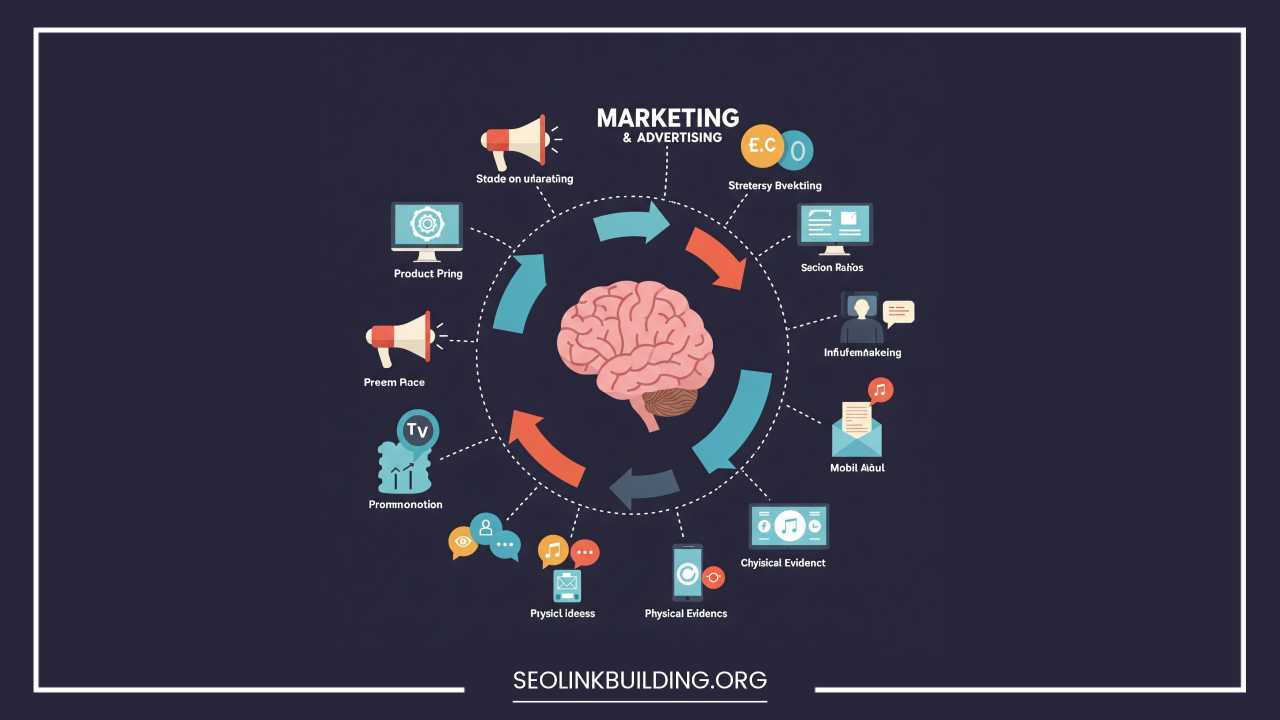
Think of marketing as the brain—analyzing data, crafting strategy, and setting goals. Advertising, in this metaphor, is the mouthpiece—speaking clearly and persuasively to the outside world.
Just as a brain cannot function without a way to communicate, advertising cannot be effective without a strategic message to communicate. Likewise, a voice without intelligent direction risks speaking aimlessly, lacking purpose or impact.
A well-defined marketing strategy informs every facet of the advertising approach. For instance, if in-depth market research reveals that a target demographic is passionate about environmental responsibility, that insight doesn’t just influence the product’s design or packaging—it also becomes central to the advertising narrative.
The ad campaign may emphasize biodegradable packaging, ethical sourcing, or carbon neutrality, all of which were embedded in the broader marketing strategy.
A Feedback Loop for Continuous Improvement
The relationship isn’t one-way. Advertising provides critical real-time feedback that helps marketing teams refine their strategies.
Performance metrics like engagement rates, click-through rates, conversions, and customer sentiment provide a wealth of actionable insights.
These insights inform not just future advertising initiatives but also product development, pricing strategies, and customer service enhancements.
This feedback loop is crucial in today’s fast-paced digital environment, where customer preferences and competitive dynamics shift rapidly.
Businesses that embrace the two-way flow between marketing and advertising are better positioned to adapt, innovate, and maintain relevance.
The Marketing Mix: Beyond the 4 Ps
Traditionally, marketing has been organized around the “4 Ps” framework: Product, Price, Place, and Promotion.
While still foundational, the modern marketing landscape has evolved to encompass additional elements—especially in service-oriented and digital contexts—leading to what many refer to as the extended marketing mix.
The Original 4 Ps
- Product: What you’re offering to meet customer needs—its features, design, brand, and overall value proposition.
- Price: The amount customers pay, which reflects perceived value, competitor pricing, and strategic positioning.
- Place: How and where the product is made available—online platforms, physical stores, direct-to-consumer models, or distribution partners.
- Promotion: All communication efforts to raise awareness and drive sales—this includes advertising, PR, content marketing, influencer outreach, and more.
The Expanded Ps
To address the unique challenges of the digital age and service-based businesses, marketers often add the following:
- People: This includes everyone who directly or indirectly influences the customer experience—employees, support staff, sales reps, and even other customers (e.g., through reviews or forums). Their role is critical in shaping brand perception.
- Process: Refers to the systems and workflows that ensure a smooth customer journey. From checkout processes on e-commerce sites to onboarding in SaaS platforms, efficient processes contribute directly to satisfaction and retention.
- Physical Evidence: The tangible or visual cues that reinforce a brand’s credibility and quality. This might include product packaging, a clean and intuitive website design, branded materials, or even physical spaces like retail stores or offices.
These additional elements highlight how marketing is not confined to communication alone—it encompasses every interaction a customer has with the brand, from first impression to post-sale engagement.
Advertising Channels and Strategies: Reaching the Audience
Advertising has always been about delivering the right message to the right audience at the right time. But the channels and tactics have changed dramatically. Today, marketers must choose from an ever-expanding array of traditional and digital platforms.
Traditional Advertising Channels
These channels still hold considerable value, especially for broad-reach campaigns:
- Print: Newspapers, magazines, brochures, and flyers offer tangible, lasting formats that can engage readers in less cluttered spaces.
- Broadcast: Television and radio reach large, diverse audiences, especially during major events or peak time slots.
- Out-of-Home (OOH): Billboards, transit ads, and digital signage in public places offer high visibility and repeated exposure.
- Direct Mail: Personalized postcards, letters, and catalogs can create a sense of exclusivity and tangibility, often boosting recall and response rates.
Digital Advertising Channels
The digital revolution has diversified the advertising toolkit, enabling targeted, interactive, and measurable campaigns:
- Search Engine Marketing (SEM): Includes SEO to boost organic visibility and PPC advertising to appear in sponsored listings on search engines like Google or Bing.
- Social Media Advertising: Platforms such as Facebook, Instagram, TikTok, LinkedIn, and X (formerly Twitter) allow advertisers to reach highly segmented audiences with demographic and behavioral targeting.
- Display Advertising: Banner ads, pop-ups, and native ads appear on websites and apps, using cookies and tracking data to serve relevant content.
- Video Advertising: Running pre-roll or mid-roll ads on platforms like YouTube, streaming services, and social media, often with high engagement rates.
- Content Marketing: While often associated with organic strategies, paid content distribution—such as sponsored blog posts, native ads, or boosted social content—blurs the line between advertising and value-driven storytelling.
- Influencer Marketing: Partnering with trusted personalities who command loyal followings on digital platforms to promote products in a more authentic, relatable way.
- Email Marketing: A cost-effective way to deliver personalized promotional messages directly to subscribers’ inboxes, driving traffic and conversions.
Integrated Campaigns
Most modern advertisers adopt multi-channel strategies to engage their audience at multiple touchpoints.
For example, a product launch might include a teaser campaign on TikTok, a sponsored blog post, retargeting ads through Google Display Network, and a limited-time discount via email.
This integrated approach ensures broader reach and reinforces brand messages across various platforms.
The Digital Transformation: Reshaping Marketing and Advertising
The digital era has reshaped every aspect of how marketers plan, execute, and evaluate campaigns. Technology has given rise to new tools, new channels, and a new breed of empowered consumers.
Key Transformative Impacts
- Data and Analytics: With tools like Google Analytics, Facebook Insights, and CRM dashboards, marketers can now access real-time data on user behavior, enabling data-driven decisions and hyper-targeted campaigns.
- Personalization: From personalized email subject lines to dynamic product recommendations on e-commerce sites, businesses can deliver more relevant experiences tailored to individual preferences.
- Engagement and Interactivity: Social media platforms facilitate two-way conversations between brands and consumers. Polls, comment sections, and live chats encourage interaction, making marketing more participatory.
- Measurement and ROI Tracking: Unlike traditional ads, digital campaigns offer precise tracking of impressions, clicks, conversions, and sales, allowing for continuous optimization and A/B testing.
- Consumer Empowerment: With comparison tools, peer reviews, and social media at their fingertips, consumers are better informed and more selective, forcing brands to focus on transparency, authenticity, and customer-centricity.
- Skill Set Evolution: Modern marketers require technical competencies—data analytics, SEO, CMS platforms, ad tech, marketing automation—as well as creative and strategic capabilities.
This transformation underscores the need for businesses to embrace agility and innovation, continuously updating their approaches to match emerging trends and technologies.
Current Trends: Navigating the Evolving Landscape
Marketing and advertising are in a state of constant flux. Staying ahead of trends is no longer optional—it’s a competitive imperative.
Emerging Trends Shaping the Future
- Artificial Intelligence (AI) and Machine Learning (ML): These technologies enable predictive analytics, automated customer service, personalized recommendations, and even ad copy generation—streamlining processes and enhancing efficiency.
- Short-Form Video: With attention spans shrinking, platforms like TikTok, Instagram Reels, and YouTube Shorts have made bite-sized content king. Brands are learning to tell compelling stories in 15 to 60 seconds.
- User-Generated Content (UGC): Customer-created content builds trust and authenticity. Brands increasingly repurpose reviews, testimonials, unboxing videos, and social posts as part of their advertising content.
- Community Building: Brands are creating and nurturing online communities where users can share experiences, ask questions, and participate in co-creation. This deepens loyalty and encourages organic advocacy.
- Privacy and Data Ethics: With regulations like GDPR and CCPA, as well as growing public concern over data misuse, companies must prioritize ethical data handling and transparent practices.
- Experiential Marketing: Immersive events, AR/VR activations, and gamified brand experiences offer memorable interactions that strengthen emotional bonds with customers.
- Purpose-Driven Branding: Consumers are aligning with brands that take clear stands on sustainability, diversity, equity, and other societal issues. Authentic purpose-driven messaging is becoming a key differentiator.
These trends highlight an important truth: successful marketing and advertising must now be human-centered, data-informed, and experience-driven.
Final Thoughts: A Unified Approach for Success
Marketing and advertising, though distinct in function, are most powerful when aligned under a unified strategy.
Marketing sets the direction—analyzing needs, shaping offerings, defining audiences—while advertising ensures that message is communicated effectively, consistently, and creatively to the intended recipients.
In today’s fast-moving digital world, where platforms proliferate and consumer expectations soar, this alignment is more crucial than ever.
Businesses that silo marketing and advertising efforts risk mixed messaging, inefficiencies, and missed opportunities.
Those that foster collaboration between these functions are better positioned to build strong brands, forge lasting relationships, and drive sustainable growth.
Understanding the strategic depth of marketing and the tactical precision of advertising is not just academic—it’s a practical framework for thriving in the modern business environment.
As technology advances and consumer behavior continues to evolve, a well-integrated marketing-advertising ecosystem becomes not just a competitive advantage, but a necessity.