
Marketing Objectives: Definition, Examples & How to Set Them

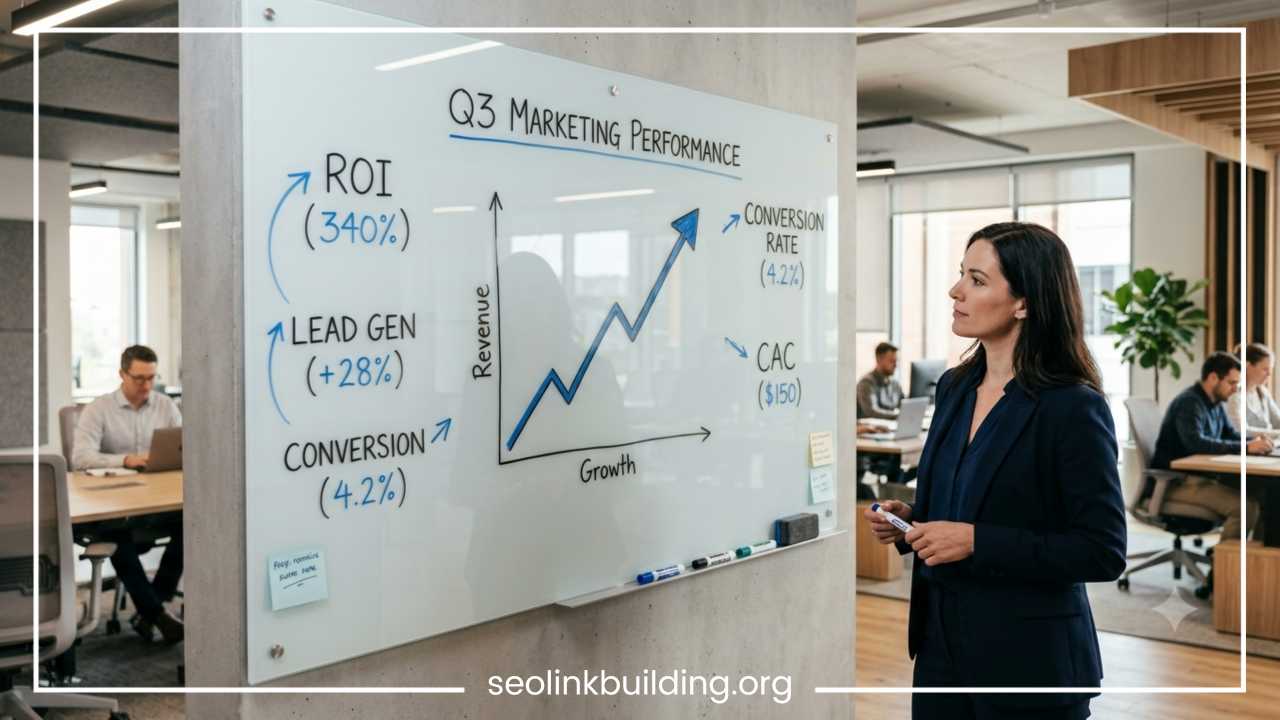
Marketing Objectives: Definition, Examples & How to Set Them
Marketing teams often run multiple campaigns simultaneously, publishing content, launching paid ads, optimizing web pages, and designing email workflows. Yet many of these teams struggle to answer a fundamental question: Are these activities actually moving the business forward? Without clear targets, marketing operations quickly devolve into a series of disconnected creative tasks rather than a structured revenue driver.
This gap between effort and impact is where marketing objectives become essential. Clear marketing objectives act as the bridge between daily execution and high-level corporate strategy. They remove guesswork, focus limited resources on high-impact initiatives, and establish clear benchmarks for success.
Having a measurable goal changes everything about how a marketing department operates. It transforms marketing from a cost center focused on output into a strategic engine evaluated by outcomes.
This guide covers everything required to establish, execute, and measure effective marketing objectives. You will learn what marketing objectives are, why they are vital for business growth, real-world examples across different focus areas, a step-by-step framework for setting SMART objectives, and how to track them to ensure continuous improvement.
What Are Marketing Objectives?
A marketing objective is a specific, measurable target that guides a company’s marketing efforts over a defined period. Unlike broad statements of intent, a true marketing objective defines the exact outcome a team plans to achieve, the metric used to evaluate progress, and the timeframe for completion.
Marketing objectives are designed to translate high-level business goals into actionable marketing priorities. They dictate how budgets are allocated, which channels are prioritized, how team members spend their time, and what tech stack investments are necessary.
Common broad areas covered by marketing objectives include:
-
Increasing brand awareness among targeted audience segments
-
Generating higher volumes of qualified sales leads
-
Accelerating revenue growth and online sales
-
Improving customer retention and lifelong value
-
Expanding market presence into new demographics or geographic territories
To build a reliable marketing framework, it is critical to distinguish between goals, objectives, strategies, and tactics. These terms are often used interchangeably, but they serve distinct operational functions.
| Term | Meaning | Example |
| Marketing Goal | Broad, long-term desired overall outcome | Increase company revenue |
| Marketing Objective | Specific, measurable target supporting the goal | Generate 2,000 qualified leads within six months |
| Marketing Strategy | Comprehensive overall approach taken | Utilize content marketing and paid search campaigns |
| Marketing Tactic | Specific action or deliverable executed | Publish four SEO-optimized articles per month |
Understanding these distinctions prevents confusion. A goal gives you a destination; an objective gives you a quantifiable checkpoint; a strategy gives you the map; and a tactic is the vehicle that carries you forward.
Why Are Marketing Objectives Important?
Establishing defined marketing objectives is not simply an exercise in documentation. It provides practical, operational value across every level of an organization.
Providing Clear Direction
Without clear objectives, marketing teams risk working in silos or chasing vanity metrics. Explicit objectives outline what success looks like, keeping team members aligned around shared priorities rather than disparate tactical preferences.
Aligning Marketing with Business Strategy
Marketing should never operate in isolation. Setting objectives rooted in executive priorities ensures that marketing activities directly support broader organizational health, whether that means entering new markets, boosting gross margins, or driving enterprise sales.
Improving Resource and Budget Allocation
Marketing budgets and staff hours are finite. Clear objectives make it easier to evaluate competing opportunities, fund high-impact programs, and cut underperforming activities. When resources are constrained, objectives provide a rational basis for decision-making.
Creating Accountability and Evaluating Performance
Objectives set a baseline against which performance can be evaluated objectively. They eliminate subjective debates about whether a campaign was “successful” by substituting measurable data. Teams can pinpoint exactly what worked, what fell short, and why.
Fostering Cross-Departmental Collaboration
Sales and marketing alignment frequently collapses due to mismatched expectations. When marketing sets explicit objectives tied to lead quality, revenue contributions, or customer acquisition costs (CAC), it establishes a shared language with sales, finance, and product teams.
Types of Marketing Objectives
Marketing objectives vary based on company maturity, business model, and overall commercial strategy. The primary categories of marketing objectives include:
Brand Awareness Objectives
Brand awareness objectives focus on increasing visibility and familiarity among prospective buyers. These are foundational for top-of-funnel reach.
-
Increase aided brand awareness within a target industry segment
-
Expand organic branded search volume
-
Grow total brand impressions across target digital platforms
Lead Generation Objectives
Lead generation objectives aim to capture contact information and intent signals from prospective customers to feed the sales pipeline.
-
Increase the volume of Marketing Qualified Leads (MQLs) generated per month
-
Improve site-wide lead capture conversion rates
-
Boost consultation or product demonstration requests from high-value accounts
Sales and Revenue Objectives
These objectives tie marketing directly to bottom-line financial metrics, ensuring efforts yield economic value.
-
Drive marketing-sourced annual recurring revenue
-
Improve Return on Investment (ROI) across paid acquisition programs
-
Increase average order value (AOV) for e-commerce transactions
Customer Acquisition Objectives
Customer acquisition targets center on efficiently converting prospects into paying clients.
-
Acquire a specific number of new paying clients within a quarter
-
Reduce average Customer Acquisition Cost (CAC)
-
Shorten the average sales cycle length through lead-nurturing workflows
Customer Retention Objectives
Retaining existing customers is significantly cheaper than acquiring new ones. Retention objectives focus on loyalty, upsells, and churn reduction.
-
Reduce quarterly customer churn rates
-
Increase repeat purchase rates among existing buyers
-
Improve net revenue retention (NRR) through automated cross-sell campaigns
Engagement Objectives
Engagement objectives measure how deeply target audiences interact with a brand’s media and content assets.
-
Improve email open and click-through rates
-
Increase content download volumes for flagship research reports
-
Enhance session duration and depth of engagement on key product pages
Website and Digital Performance Objectives
Digital infrastructure objectives ensure that web properties operate as effective conversion engines.
-
Increase high-intent organic traffic to strategic landing pages
-
Improve website micro-conversion rates
-
Reduce bounce rates on primary product landing pages
Market Expansion Objectives
When an enterprise enters a new sector, region, or vertical, expansion objectives keep the launch focused.
-
Establish initial brand presence in a target geographic territory
-
Capture market share within a newly launched product category
-
Generate baseline prospective leads within a new customer vertical
Marketing Objectives Examples
To make marketing objectives actionable, they must move beyond abstract desires and incorporate quantifiable targets, metrics, and explicit timeframes. Here are ten realistic, fully structured examples across core disciplines.
Example 1: Increase Brand Awareness
-
Statement: Increase aided brand awareness among IT directors in North America from 25% to 35% within 12 months.
-
Context: Uses market research surveys to measure progress, ensuring top-of-funnel awareness tactics yield actual recall among targeted decision-makers.
Example 2: Generate More Qualified Leads
-
Statement: Generate 1,200 Marketing Qualified Leads (MQLs) for the enterprise sales team within the next two quarters.
-
Context: Focuses strictly on qualified leads based on explicit Ideal Customer Profile criteria, ensuring sales reps spend time on viable deals.
Example 3: Increase Organic Traffic
-
Statement: Increase organic search traffic to core solution pages by 40% over the next nine months.
-
Context: Targets organic growth specifically on solution pages rather than top-of-funnel blog posts to attract traffic with higher commercial intent.
Example 4: Improve Landing Page Conversion Rate
-
Statement: Increase the average conversion rate on primary demo request landing pages from 2.8% to 4.5% by the end of Q3.
-
Context: Employs conversion rate optimization, explicit copy updates, and testing to gain more value from existing web traffic.
Example 5: Increase Marketing-Attributed Revenue
-
Statement: Generate $750,000 in marketing-sourced closed-won revenue during the current fiscal year.
-
Context: Directly ties marketing performance to bottom-line revenue outcomes, aligning marketing efforts with executive goals.
Example 6: Reduce Customer Acquisition Cost
-
Statement: Reduce average Customer Acquisition Cost (CAC) across paid digital channels from $180 to $140 within six months.
-
Context: Prioritizes channel optimization, landing page performance, and ad targeting to preserve pipeline volume while reducing spending.
Example 7: Improve Customer Retention Rate
-
Statement: Increase the annual customer retention rate from 78% to 85% within the next four quarters.
-
Context: Focuses marketing resources on customer onboarding programs, retention campaigns, and lifecycle communications to protect recurring revenue.
Example 8: Increase Email Engagement
-
Statement: Boost the average click-through rate on weekly newsletter broadcasts from 2.1% to 3.5% over the next six months.
-
Context: Requires list hygiene, deeper segmentation, and targeted copywriting improvements to increase subscriber interaction.
Example 9: Expand Social Media Engagement
-
Statement: Increase qualified social media engagement (comments, shares, direct messages) on LinkedIn by 30% over two quarters.
-
Context: Filters out passive likes to measure active interactions that signal brand affinity among industry peers.
Example 10: Support New Market Entry
-
Statement: Acquire 400 new qualified prospective leads in the European market during the first six months following product launch.
-
Context: Provides a dedicated target to evaluate localized launch campaigns, event sponsorships, and targeted media outreach.
| Objective Category | Target Metric | Target | Timeframe |
| Brand Awareness | Aided Awareness Survey Rate | From 25% to 35% | 12 Months |
| Lead Generation | Marketing Qualified Leads (MQLs) | 1,200 MQLs | 2 Quarters |
| Website Growth | Organic Traffic to Solution Pages | +40% Increase | 9 Months |
| Conversion Optimization | Demo Landing Page Conversion Rate | From 2.8% to 4.5% | End of Q3 |
| Revenue Generation | Marketing-Sourced Closed Revenue | $750,000 USD | Fiscal Year |
| Cost Efficiency | Paid Channel CAC | From $180 to $140 | 6 Months |
| Customer Retention | Annual Customer Retention Rate | From 78% to 85% | 4 Quarters |
| Email Performance | Newsletter Click-Through Rate | From 2.1% to 3.5% | 6 Months |
What Makes a Good Marketing Objective?
A poorly framed objective creates ambiguity, while a well-structured objective provides clarity. The most effective framework for setting marketing objectives is the SMART framework.
SMART Marketing Objectives
To ensure objectives drive action, evaluate them against these five criteria:
-
Specific: Clearly defines what needs to happen. Avoid vague language like “grow,” “improve,” or “scale” without specifying the target area.
-
Measurable: Contains a numeric metric, baseline, or quantifiable index that proves success or failure definitively.
-
Achievable: Realistic given available budgets, headcount, operational capacity, and baseline trends.
-
Relevant: Directly connected to broader corporate goals, sales needs, or financial priorities.
-
Time-bound: Features an explicit deadline or target window for completion.
Weak vs. SMART Objectives
To see how applying SMART principles transforms strategic intent, compare these examples:
-
Weak: “We need to increase our social media reach.”
-
Problem: Vague, unmeasurable, lacks deadline, does not explain business relevance.
-
-
SMART: “Increase qualified inbound traffic from LinkedIn by 25% over the next two quarters by publishing three research-backed articles per week.”
-
Why it works: Identifies the channel (LinkedIn), sets a numeric goal (25%), specifies the traffic type (qualified inbound), establishes a timeline (two quarters), and outlines the core execution strategy.
-
-
Weak: “Improve lead generation from our website.”
-
Problem: Lacks metrics, defined parameters, or operational context.
-
-
SMART: “Increase monthly inbound marketing-qualified lead volume from 300 to 450 within six months by optimizing core product page conversion flows.”
-
Why it works: Establishes a concrete numeric baseline (300) and target (450), specifies the lead stage (MQL), sets a deadline (six months), and defines the strategic focus (conversion optimization).
-
How to Set Marketing Objectives Step by Step
Setting marketing objectives requires a deliberate, structured approach. Following a systematic step-by-step process ensures objectives are grounded in real data and business needs.
| Step | Action Item | Core Operational Focus |
| Step 1 | Start With Business Objectives | Align marketing priorities with overarching executive revenue and growth targets. |
| Step 2 | Audit Baseline Performance | Review historical data for web traffic, conversion rates, CAC, CPL, and lead pipeline. |
| Step 3 | Identify Key Priorities | Pinpoint strategic conversion bottlenecks, channel opportunities, and major business risks. |
| Step 4 | Select Core KPIs | Define primary numerical indicators and secondary contextual metrics for tracking. |
| Step 5 | Define Targets & Deadlines | Attach specific quantitative baselines, target numbers, and realistic deadlines. |
| Step 6 | Validate Feasibility | Cross-reference goals with team capacity, available budget, and baseline trajectories. |
| Step 7 | Assign Ownership | Document objectives centrally and assign direct responsibility to individual team owners. |
| Step 8 | Establish Review Cycles | Schedule regular monthly and quarterly reviews to evaluate trends and adapt tactics. |
Step 1: Start With Overall Business Objectives
Marketing should never establish goals in a vacuum. Begin by reviewing the organization’s overarching corporate priorities for the upcoming period.
-
Business Goal: Increase enterprise subscription revenue by 20%.
-
Derived Marketing Objective: Increase marketing-generated pipeline for enterprise accounts by 25%.
Step 2: Conduct a Thorough Baseline Performance Audit
Before determining where you want to go, you must know where you stand today. Audit historical marketing performance over the past 6 to 12 months.
Review baseline metrics such as:
-
Monthly organic traffic and referral sources
-
Historical conversion rates across key pages
-
Average cost per lead (CPL) and acquisition costs (CAC)
-
Email open rates, click-through rates, and unsubscribe trends
-
Sales cycle lengths and pipeline velocity
Setting a target to generate 1,000 monthly leads when current output is 100 leads per month is setting the team up for failure unless budget and resources scale proportionately.
Step 3: Identify Strategic Marketing Priorities
Avoid trying to fix every channel or metric at once. Focus resources on areas with the highest potential impact on commercial growth. Ask:
-
Where are the biggest conversion bottlenecks in our current marketing funnel?
-
Which marketing channels offer the highest return on spend?
-
What major business risks must marketing help mitigate (e.g., high churn, declining market awareness)?
Step 4: Select Key Performance Indicators (KPIs)
Determine the exact metrics that will track progress toward each objective. Ensure primary KPIs reflect core business outcomes, while secondary indicators provide context on tactical health.
-
Objective: Improve customer retention.
-
Primary KPI: Net Revenue Retention (NRR) percentage.
-
Secondary Metrics: Customer login activity, email engagement rates, feature adoption.
Step 5: Define Numeric Targets and Clear Timeframes
Attach specific numbers, baselines, and deadlines to your priorities. Replace qualitative language with quantitative targets.
-
Vague: “Shorten the sales cycle for self-serve users.”
-
Defined: “Reduce average trial-to-paid conversion time from 18 days to 12 days by the end of Q4.”
Step 6: Validate Feasibility and Resource Availability
Sanity-check targets against available resources. Review whether the objective is realistic given:
-
Total allocated marketing budget
-
Team capacity, internal skill sets, and bandwidth
-
Historical performance data and growth trajectories
-
Current market conditions, competitive pressure, and sales capacity
If an ambitious target requires doubling production output without additional budget or headcount, adjust the scope or request additional funding.
Step 7: Document, Assign Ownership, and Communicate
Document every objective in a centralized framework visible to all stakeholders. Assign clear individual ownership to each objective. A single team leader should be responsible for tracking, reporting, and driving progress toward each target.
Step 8: Establish Continuous Review and Adjustment Cycles
Treat objectives as dynamic strategic guides rather than static documents. Schedule regular monthly or quarterly reviews to track progress, evaluate variance, identify operational blockers, and adjust campaign tactics as market conditions evolve.
How to Align Marketing Objectives With Business Objectives
Disconnects between executive strategy and marketing execution often lead to wasted effort and budget. Alignment requires connecting high-level corporate ambitions directly to tactical execution.
| Hierarchy Level | Strategic Focus | Operational Example |
| Level 1: Corporate Goal | Overall executive priority | Increase annual enterprise revenue by 15% |
| Level 2: Marketing Objective | Measurable marketing contribution | Generate $2.5M in marketing-attributed enterprise pipeline within 12 months |
| Level 3: Key Performance Indicator | Progress tracking metric | Total volume of enterprise-level Marketing Qualified Opportunities |
| Level 4: Strategic Campaign | Focused core initiative | Account-Based Marketing program targeting top 200 high-value accounts |
| Level 5: Tactical Execution | Specific action deliverables | Direct mail kits, personalized landing pages, and targeted paid ads |
When marketing can present this strategic chain to executive leadership, it clearly demonstrates how specific tactics (e.g., building custom landing pages or running ad sets) directly support top-level business growth targets.
Marketing Objectives vs. KPIs: What’s the Difference?
The terms “marketing objective” and “key performance indicator” (KPI) are often confused, but they serve complementary roles in strategy execution.
-
Marketing Objective: The overall outcome you aim to achieve within a set timeframe. It defines the destination.
-
KPI (Key Performance Indicator): The quantifiable metric used to measure progress toward that objective. It tracks performance along the journey.
Think of an objective as the goal line, while KPIs are the yard markers on the field.
| Strategic Element | Definition | Examples |
| Marketing Objective | The explicit goal or outcome to be achieved |
• Increase overall qualified sales pipeline • Improve customer retention • Reduce customer acquisition cost |
| Supporting KPIs | Metrics used to track velocity and success |
• Monthly MQL and SQL totals • Churn Rate, NRR, Expansion Revenue • CAC by channel, Cost per Lead |
An objective can be supported by multiple KPIs. For example, if your objective is to “Improve Customer Retention,” supporting KPIs might include Customer Churn Rate, Repeat Purchase Rate, Customer Lifetime Value (LTV), and Net Promoter Score (NPS).
Common Mistakes When Setting Marketing Objectives
Even experienced teams run into pitfalls when framing marketing objectives. Avoid these common mistakes:
1. Setting Vague, Unmeasurable Objectives
Objectives like “build brand awareness,” “engage prospects,” or “optimize content” are statements of general intent, not actionable objectives. Without numbers or deadlines, evaluating success is impossible.
2. Prioritizing Vanity Metrics Over Business Impact
Metrics like page views, social impressions, video views, and post likes can look positive on paper, but they rarely correlate directly with revenue growth. Always connect top-of-funnel reach to meaningful downstream business outcomes.
3. Setting Too Many Objectives Simultaneously
Attempting to tackle ten primary objectives at once dilutes budget, focus, and energy. Limit core priorities to three to five primary objectives per planning cycle to keep resources focused on what matters most.
4. Ignoring Baseline Historical Data
Establishing a target without reviewing baseline data leads to unrealistic expectations. If past organic growth has averaged 5% per year, setting an objective to grow organic traffic by 200% in six months—without significant budget or operational shifts—is unrealistic.
5. Confusing Tactics with Objectives
“Launch a new podcast,” “Redesign the website,” and “Run Facebook Ads” are tactics, not objectives. The objective is the intended business outcome derived from executing those tactics, such as “Increase brand awareness” or “Generate qualified leads.”
6. Failing to Assign Direct Ownership
When an objective is owned collectively by “the team,” no single person is accountable for monitoring progress, adjusting tactics, or reporting on variances. Assign every objective to a single owner.
How to Measure and Track Marketing Objectives
Tracking marketing objectives requires structured operational habits. Rather than waiting until the end of a campaign to evaluate performance, establish a real-time monitoring system.
Establish Performance Dashboards
Centralize performance data using analytics platforms, CRM software, and marketing automation systems. Automated dashboards eliminate manual data gathering and give teams real-time insight into performance trends.
Set a Standardized Review Cadence
Structure performance updates around set operational cadences:
-
Weekly: Review tactical inputs, campaign pacing, ad spend, and micro-conversions.
-
Monthly: Evaluate primary KPIs, lead generation counts, traffic growth, and channel-level performance.
-
Quarterly: Assess overall progress toward top-level marketing objectives, evaluate CAC/ROI, and reallocate budgets based on performance.
Use a Variance Analysis Framework
When actual results deviate from targets, use a systematic operational review process to evaluate variances and implement corrections.
| Framework Stage | Analysis Objective | Real-World Scenario Example |
| 1. Target Outcome | Expected performance target | Generate 1,000 MQLs in Q2 |
| 2. Actual Result | Recorded real-world output | Generated 750 MQLs |
| 3. Variance Calculation | Discrepancy percentage | Target missed by 25% |
| 4. Root Cause Analysis | Underlying operational bottleneck | Click-through rates met targets, but landing page conversion rate dropped from 4% to 2.2% after redesign |
| 5. Corrective Action | Strategic adjustment | Revert to original landing page layout, run copy tests, and adjust CTA placement |
Marketing Objectives by Marketing Channel
While top-level marketing objectives drive strategic direction, individual channel managers need tailored targets that fit their execution environments.
Search Engine Optimization (SEO)
-
Increase targeted organic sessions to revenue-generating solution pages
-
Secure top-tier rankings for core high-intent commercial keyword groups
-
Increase organic lead generation output while reducing dependence on paid acquisition
Content Marketing
-
Increase multi-touch content-assisted conversions across middle-of-funnel assets
-
Drive research report downloads from enterprise prospect accounts
-
Increase organic domain backlink profiles through original research and data reports
Email Marketing
-
Increase list conversion rates across automated onboarding and welcome flows
-
Boost repeat customer purchase frequencies through segmented product recommendations
-
Reduce list attrition and bounce rates through ongoing list hygiene
Social Media Marketing
-
Expand organic referral traffic from high-intent platforms like LinkedIn
-
Increase direct engagement with target industry decision-makers
-
Grow total audience reach among verified industry accounts
Paid Advertising (PPC)
-
Maximize total conversion volumes within target budget parameters
-
Reduce overall Cost Per Acquisition (CPA) across search and display channels
-
Improve overall Return on Ad Spend (ROAS) across retargeting campaigns
Field Marketing and Events
-
Drive target prospective accounts to attend hosted executive roundtables
-
Convert event booth interactions into qualified sales opportunities
-
Shorten open deal velocity through localized customer dinners and interactive workshops
Marketing Objectives Template
Use this operational framework to draft clear, SMART marketing objectives for your team:
Fill-in-the-Blank Objective Formula
“We will [insert specific outcome] by [insert quantitative target] from a baseline of [insert current baseline] within [insert explicit timeframe], measured by [insert primary KPI], to support the corporate goal of [insert overarching business goal].”
Practical Example
“We will increase qualified inbound demo requests by 35% from a baseline of 120 per month to 162 per month within six months, measured by CRM demo request logs, to support the corporate goal of growing net new SaaS revenue by 20%.”
Strategic Planning Worksheet
| Planning Element | Objective Definition |
| Overarching Business Goal | Expand annual recurring subscription revenue by 18%. |
| Primary Marketing Objective | Increase sales-qualified opportunities generated via inbound channels. |
| Historical Baseline | Currently generating 80 qualified opportunities per month. |
| Quantitative Target | Achieve 115 qualified opportunities per month (+43.7% increase). |
| Target Deadline | End of Q4. |
| Primary KPI | Monthly Sales Qualified Leads (SQLs) accepted by sales. |
| Designated Owner | VP of Demand Generation. |
| Key Strategic Initiatives | Content optimization, high-intent paid search, site CRO. |
Final Thoughts
Marketing objectives turn vague ambitions into measurable, actionable targets. They bring order to complex campaigns, align marketing teams with corporate strategy, and establish clear accountability for resource allocation.
Effective marketing objectives adhere strictly to the SMART framework. They avoid vanity metrics, incorporate historical baselines, and tie directly into bottom-line financial goals. When tracked consistently through a structured review process, well-defined objectives show marketing teams exactly what is working, what needs adjustment, and how their efforts contribute to broader growth.
Set clear targets, align them with overall business priorities, measure progress consistently, and adapt strategies as data unfolds. Defining what success looks like is the single most important step toward achieving it.
Frequently Asked Questions About Marketing Objectives
What is the difference between a marketing goal and a marketing objective?
A marketing goal is a broad, long-term business ambition (such as increasing company revenue or expanding market share), whereas a marketing objective is a specific, measurable target with a defined timeline that directly supports that goal (such as generating 1,500 qualified leads in six months).
How do you write SMART marketing objectives step by step?
To write SMART marketing objectives, define a outcome that is Specific (target metric), Measurable (concrete numbers), Achievable (realistic based on team resources), Relevant (tied directly to top-level business goals), and Time-bound (assigned a strict deadline or quarterly timeframe).
What are the 5 main types of marketing objectives for businesses?
The five primary types of marketing objectives include brand awareness objectives (increasing reach and recognition), lead generation objectives (capturing prospective buyer information), sales and revenue objectives (driving closed-won deals), customer acquisition/retention objectives (reducing acquisition costs and churn), and digital performance objectives (improving traffic and conversion rates).
What are some real examples of marketing objectives for small businesses?
Common small business marketing objectives include increasing local Google Search traffic by 30% over six months, boosting monthly email newsletter sign-ups from 200 to 500 subscribers, increasing landing page lead conversion rates from 2% to 4%, or lowering paid customer acquisition costs by 15% within two quarters.
How do marketing KPIs differ from marketing objectives?
A marketing objective defines the ultimate outcome or destination you want to reach (for example, improving customer retention by 10%), while a marketing Key Performance Indicator (KPI) represents the continuous metric used to track progress toward that outcome along the way (such as monthly churn rate, Net Promoter Score, or customer repeat purchase rate).
Why do most marketing objectives fail to drive revenue?
Marketing objectives usually fail when they focus on vanity metrics (like social media likes or page impressions) rather than business impact, lack baseline data to ground targets in reality, fail to designate a single clear owner, or operate in isolation without alignment to sales and executive priorities.