Is SEO Worth It?

Is SEO Worth It? Benefits, ROI & Expert Insights
In today’s digital landscape, the question “Is SEO worth it?” echoes through countless boardrooms and small business owner meetings. With marketing budgets constantly scrutinised, businesses are right to debate where their dollars and efforts should go. Should they invest in instant-impact paid ads, or commit to the slow, steady climb of Search Engine Optimization (SEO)?
SEO, in its simplest form, is the practice of optimising a website to increase the quality and quantity of its traffic from a search engine’s organic results. It is the engine that drives organic visibility on platforms like Google, Bing, and other search engines. Yet, unlike the immediate results of a paid campaign, the rewards of SEO often take months to materialise, making its immediate value proposition less obvious.
This article aims to cut through the noise and provide a definitive answer. We will not just define SEO; we will evaluate its tangible ROI, explore its multifaceted benefits, and synthesise expert insights to determine its true long-term value. As the digital marketing space continues its relentless growth, and as search engines solidify their role as the primary discovery tool for consumers, understanding SEO’s contribution is no longer optional—it’s essential for sustained business success. We will demonstrate that for most businesses, SEO is not merely a marketing tactic; it’s a fundamental business strategy.
What is SEO?
Search Engine Optimization is a holistic discipline focused on improving a website’s position in search engine results pages (SERPs) for relevant keywords. It’s fundamentally about making your website an authority in the eyes of both users and search engine algorithms.
SEO is typically broken down into three core pillars:
- On-Page SEO: This involves optimizing elements on your actual website. This includes creating high-quality, relevant content, optimizing title tags, meta descriptions, image alt text, and ensuring proper keyword density and use of heading tags (H1, H2, etc.). The goal is to clearly signal to the search engine what the page is about and how it provides value to the user.
- Off-Page SEO: This focuses on actions taken outside your website to impact rankings. The primary component is link building—acquiring high-quality, relevant backlinks from other reputable websites. This signals to search engines that your site is a trusted authority, viewing each backlink as a “vote of confidence.” Other off-page tactics include social media marketing and brand mentions.
- Technical SEO: This is the backend optimization, ensuring a website is crawlable and indexable by search engine bots. Key aspects include site speed, mobile-friendliness, site architecture, structured data markup, and ensuring the site uses a secure connection (HTTPS). A technically sound website is the foundation upon which On-Page and Off-Page efforts can succeed.
This concerted effort directly impacts online visibility and search rankings. Higher rankings mean more impressions, clicks, and, ultimately, organic traffic. While broad, general SEO applies to all businesses, strategies can be refined:
- Local SEO focuses on appearing in geographical searches (e.g., “plumbers near me”), crucial for brick-and-mortar stores.
- eCommerce SEO targets product pages and categories, focusing on converting searchers into buyers.
Why Businesses Consider SEO
The decision to allocate resources to SEO stems from a compelling set of business needs, each directly linked to growth and competitive advantage. Businesses consider SEO primarily for its ability to generate high-quality, sustainable results across several key performance indicators.
Increasing Website Traffic
The most immediate goal is driving more visitors. Unlike paid traffic, organic traffic is seen as more valuable because it comes from users who are actively searching for the product, service, or information you provide. This intent-driven audience is far more likely to engage and convert. A consistently high-ranking page becomes a perpetual traffic machine, generating clicks long after the initial investment in content and optimization is made.
Brand Awareness and Credibility
Appearing on the first page of Google, particularly in the top three positions, instantly boosts a brand’s perceived authority. Users instinctively trust search engines to surface the best, most relevant results. Consistent visibility translates directly into higher brand recall and the perception of being an industry leader. This organic credibility is something paid advertising struggles to replicate.
Lead Generation and Customer Acquisition
For many businesses, SEO is their primary lead generation funnel. By optimizing for keywords related to buying intent (e.g., “best accounting software,” “hire digital marketing agency”), they capture customers at the moment they are ready to purchase or inquire. The leads generated through organic search often have a lower cost-per-acquisition (CPA) and a higher lifetime value (LTV) compared to other channels.
Long-Term Strategy vs. Paid Ads (PPC)
The comparison with Paid Ads (PPC) is crucial. While PPC offers instantaneous visibility, it stops the moment the budget runs out. SEO, conversely, is a long-term strategy. The content created and the authority built through effective SEO efforts compound over time. The results are durable: even if you temporarily halt SEO investment, your existing high-ranking pages will continue to drive traffic, making it a sustainable asset rather than a temporary expense. It’s an investment in digital real estate that appreciates over time.
Key Benefits of SEO
The value proposition of SEO extends far beyond simply getting clicks. Its benefits weave into the very fabric of a successful digital business, offering sustainable growth and competitive advantages that other marketing channels often cannot match.
1. Higher Visibility in Search Engines
This is the most obvious benefit. Achieving a high rank ensures your business is seen by the vast majority of searchers. Statistics consistently show that the #1 organic search result captures over 25% of all clicks, and the top three positions take the lion’s share. Improved visibility is directly correlated with market dominance in the digital space. It’s about being present when the customer is looking, ensuring your brand isn’t simply an option, but the first solution found.
2. Long-Term Cost Efficiency Compared to Paid Ads
While SEO requires an initial investment in content, technical audits, and link building, the cost-per-click (CPC) for organic traffic is effectively zero once the page ranks. Over time, the accumulated organic traffic becomes significantly cheaper than the continuous, escalating costs of PPC.
- Mini Case Study: A B2B software company spent $10,000 on a year of SEO services, resulting in a blog post that ranked #1. That post delivered 1,000 qualified clicks per month. To purchase those same 12,000 clicks via PPC at a typical industry CPC of $5 would have cost $60,000. SEO provided a 6x return on investment based purely on traffic cost savings.
This compounding return makes SEO a highly attractive long-term play.
3. Better User Experience & Website Structure
Search engine algorithms, particularly Google’s, have evolved to prioritize User Experience (UX). Modern SEO is inextricably linked to making a website fast, mobile-friendly, easy to navigate, and full of high-quality, relevant information. Technical SEO fixes (like improving site speed) and on-page improvements (like clear navigation) don’t just please Google—they delight the user. A better UX leads to lower bounce rates, higher time-on-site, and, crucially, higher conversion rates.
4. Credibility and Trust-Building with Users
Organic ranking is an earned asset, not a purchased slot. When a user sees a business ranked highly organically, they implicitly trust it more than a sponsored ad. This organic placement is seen as a third-party endorsement by the search engine, signifying that the content is the most authoritative and trustworthy answer to the user’s query. This trust is foundational for building brand loyalty and achieving repeat business.
5. Targeted Traffic: Reaching People Actively Searching
SEO excels at delivering high-intent traffic. By focusing on specific long-tail keywords (e.g., “best noise-cancelling headphones for travel in 2025” instead of just “headphones”), businesses can attract users who are deep into the decision-making process. This laser-focused targeting ensures that website visitors are highly qualified and far more likely to become customers, resulting in a higher quality of leads.
6. Insights Through Analytics (Customer Behavior, Trends)
The data harvested from SEO is invaluable. Tools like Google Analytics and Google Search Console provide a wealth of information on:
- Customer Behavior: What content users consume most, where they drop off, and the exact path they take before converting.
- Search Trends: Emerging keywords, seasonal demand shifts, and the language customers use, which can inform product development and overall marketing strategy well beyond search itself.
SEO, therefore, acts as a market intelligence tool, providing a continuous feedback loop that sharpens the business’s understanding of its audience and the competitive landscape.
Measuring SEO ROI
The biggest hurdle for many businesses is proving the financial viability of SEO. However, modern tracking tools and methodologies make it entirely possible to calculate a tangible Return on Investment (ROI).
How to Track ROI:
- Organic Traffic Value: Track the volume of organic sessions that lead to a specific conversion goal (e.g., a purchase, a contact form submission, an eBook download).
- Conversion Value: Assign a financial value to each conversion. For an e-commerce site, this is the order value. For a lead generation site, this requires calculating the average lead-to-customer close rate and the average customer lifetime value (LTV).
- Example: If 100 organic leads close at a 10% rate, and the average customer value is $2,000, then the value of those 100 leads is (100 $\times$ 10% $\times$ $2,000) = $20,000.
- Keyword Rankings: While not a direct ROI metric, monitoring rankings for high-value, commercial intent keywords is a leading indicator of future success.
- Cost of SEO: This includes agency fees, in-house team salaries, content creation costs, and tool subscriptions.
Essential Tools to Measure:
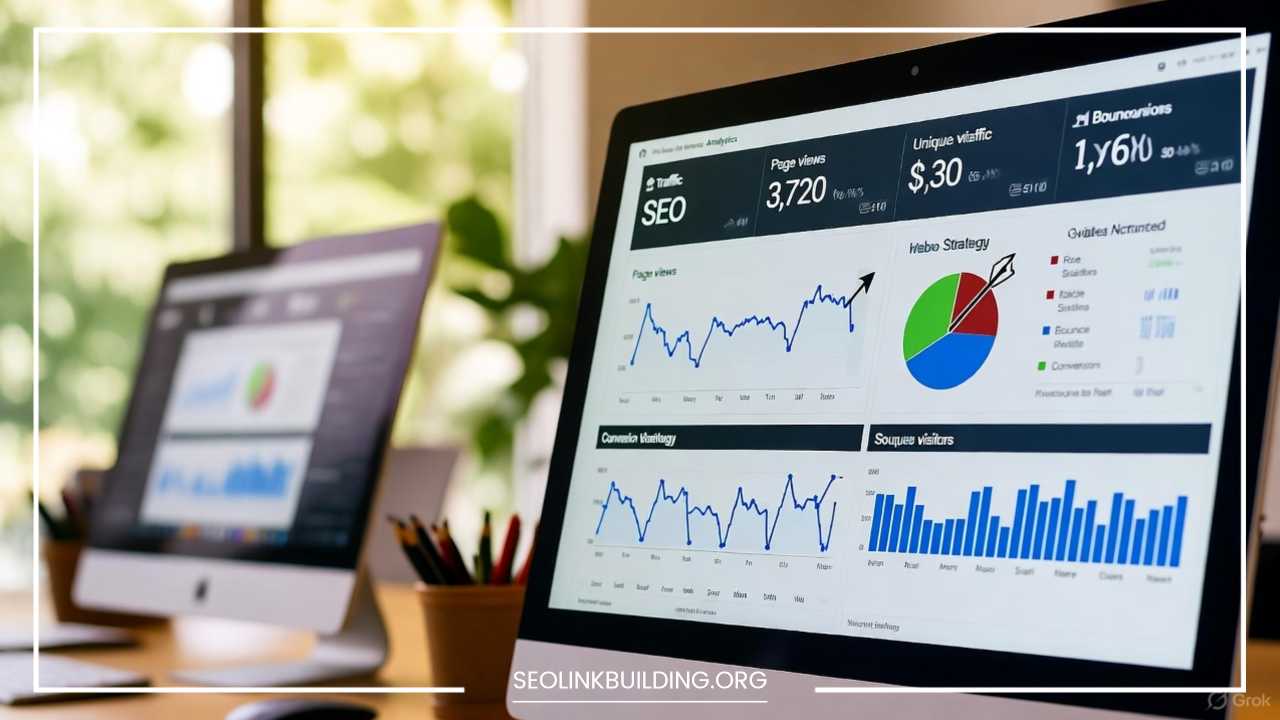
- Google Analytics (GA4): The cornerstone for tracking organic traffic, user behavior (bounce rate, time on site), and, most importantly, goal completions and revenue attribution to the “Organic Search” channel.
- Google Search Console (GSC): Essential for performance data—impressions, click-through-rates (CTR), and average ranking position for specific keywords. GSC shows the pre-click data that GA cannot.
- SEMrush / Ahrefs / Moz: These professional tools provide competitive analysis, backlink monitoring, and offer a “Traffic Value” metric—an estimate of what it would cost to buy your organic traffic volume via PPC. This is a powerful, conservative measure of ROI.
Short-Term vs. Long-Term ROI
- Short-Term ROI (3–6 months): Focuses on quick wins, such as fixing technical issues (improving crawlability) or optimizing existing high-performing content. ROI is typically lower but proves methodology.
- Long-Term ROI (12+ months): This is where the true value emerges. As domain authority compounds, new content ranks faster, driving exponential increases in traffic and conversions. The investment cost plateaus while the value continues to rise, leading to a much higher long-term ROI. The first year is often the most expensive relative to return; subsequent years deliver much greater leverage.
Common Challenges & Misconceptions
Despite its demonstrable value, SEO is often misunderstood. Several common challenges and enduring myths can derail a company’s investment or lead to premature abandonment.
The Challenge of Time: Not Instant Results
The single biggest deterrent is patience. SEO is not a light switch; it’s a marathon. New websites can take 6 to 12 months to see significant traffic gains, and complex industries may take longer. This delay is due to the “Google Sandbox” effect (new sites are tested slowly) and the time required to build meaningful domain authority through consistent content creation and link acquisition. Businesses that expect PPC-level results in 30 days are almost always disappointed and may quit before the strategy pays off.
The Volatility of Algorithm Changes
Search engines, especially Google, continuously update their algorithms (often dozens of minor changes per week, and several major “Core Updates” per year). A major update can cause significant, sudden drops or spikes in traffic. This creates a perception of instability.
- The Reality: High-quality, white-hat SEO—which focuses on the user experience and exceptional content—is the best defence against algorithm volatility. Updates typically penalize sites relying on manipulative, “black-hat” tactics, reinforcing the need for ethical practice.
Poor SEO Practices Can Harm Rather Than Help
Attempting to “game the system” with tactics like keyword stuffing, cloaking, or buying spammy links (Black Hat SEO) can result in a severe manual penalty from Google, which can take months and significant effort to recover from. This is why professional expertise is critical; amateur SEO can be riskier than no SEO at all.
Common Myths:
- Myth 1: “SEO is Dead.” Search engines process billions of queries daily. As long as people use search to find information, products, or services, SEO will be alive. The tactics evolve, but the need for optimization remains.
- Myth 2: “SEO is Only for Google.” While Google dominates, SEO principles apply to Bing, DuckDuckGo, YouTube, Amazon, and even Pinterest. The core concepts of relevance, authority, and user experience are universal to search-driven platforms.
- Myth 3: “More Keywords = Better Ranking.” Keyword stuffing is an obsolete, harmful practice. Modern SEO focuses on topical authority—creating comprehensive content that satisfies the user’s entire search intent, not just scattering keywords. Quality content, not quantity of keywords, drives modern rankings.
Expert Insights & Opinions
The consensus among industry leaders is clear: SEO is a necessary, high-ROI component of a modern marketing mix. Their insights help solidify the long-term value proposition.
Viewpoints from Marketing Experts
Rand Fishkin (Co-founder of Moz and SparkToro): Fishkin frequently highlights the compounding returns of SEO. He argues that the content and authority built today continue to deliver value years down the line, distinguishing it from PPC which only pays for the instant. His view is that SEO’s true value lies in its longevity and the equity it builds for the brand.
Aleyda Solis (International SEO Consultant): Solis emphasizes the strategic integration of SEO with business goals. She points out that SEO is no longer a separate discipline but rather the data-driven framework for content strategy, product development, and technical website health. “SEO is about understanding your customer’s intent better than your competitors do,” she states.
Statistics from Industry Reports:
- Organic Search is the Primary Traffic Driver: HubSpot reports consistently show that organic search is the leading source of website traffic (often over 50% for high-performing sites) and lead generation for most businesses.
- ROI Data: Studies from firms like BrightEdge and others often find that the average cost of a lead generated through SEO is 61% lower than the cost of a lead generated through outbound marketing.
- Mobile and Voice: Google’s own data shows that nearly 50% of all product searches start on Google, and the explosion of voice search requires SEO-driven content that is concise and answers direct questions, indicating that the landscape is evolving, but the need to optimize for search intent is growing.
When SEO Works Best (Industry-Specific Examples)
SEO is most effective for businesses with a long customer research cycle and a high customer lifetime value (LTV).
- B2B Software (SaaS): A strong SEO strategy allows these companies to capture users at every stage of the funnel: awareness (“what is project management software?”), consideration (“best alternatives to Asana”), and decision (“buy ClickUp pricing”). The LTV of a single subscription often justifies a significant SEO investment.
- Service-Based Industries (Plumbing, Legal, Medical): Local SEO is paramount here. Optimizing for “personal injury lawyer near me” or “emergency dentist in Chicago” directly leads to high-value, immediate conversions.
- Content-Heavy Industries (Publishing, Finance): Their business model is traffic. SEO is the foundational revenue stream, driving ad impressions and affiliate revenue by achieving high rankings for thousands of informational and commercial keywords.
Alternatives to SEO & When It’s Less Effective
While SEO is powerful, it is not a panacea. A balanced marketing portfolio often requires leveraging alternatives, and in specific scenarios, other channels may provide a superior short-term ROI.
Effective Alternatives to Consider:
- Paid Advertising (PPC/SEM): Ideal for immediate visibility, short-term promotions, and market testing. If you need traffic today to validate a new product or capitalize on a fleeting trend, PPC (Google Ads, Bing Ads) is the superior choice. Social Media Ads (Facebook, Instagram) are better for demand generation—creating interest among users who aren’t actively searching.
- Influencer Marketing or PR: Excellent for building immediate brand credibility and tapping into highly engaged niche communities. If a product launch requires a massive, quick burst of awareness, working with established figures in an industry can accelerate the process faster than organic search can.
- Email Campaigns: An invaluable channel for customer retention, upselling, and driving repeat purchases. The cost is low, the targeting is precise, and the ROI is often very high for existing customer lists.
Industries or Scenarios Where SEO ROI is Lower:
- Hyper-Niche Products/Services with Zero Search Volume: If only ten people in the world are searching for your specific, proprietary widget, the effort to rank for those ten searches is rarely justifiable. Here, direct sales or niche social media is better.
- Short-Term Product Launches (Pop-ups, Seasonal): For a temporary, six-week holiday pop-up store, the 6+ months required for SEO to rank will completely miss the window. PPC, local listing ads, and social media are the appropriate tools.
- High-Competition, Low-LTV Products: For businesses selling an extremely low-margin, mass-market product (e.g., generic phone cases) in a market dominated by Amazon and huge retailers, the time and cost required to compete for general keywords might exceed the lifetime value of the customer acquired.
The best approach is often a hybrid strategy, using PPC to capture immediate, high-intent traffic while SEO builds the long-term, cost-effective foundation.
Final Thoughts
The extensive analysis of the question “Is SEO Worth It?” leads to a resounding, albeit conditional, “Yes.” SEO is not a fleeting trend or an optional add-on; it is a foundational strategic asset for virtually any business operating in the digital economy.
Key Takeaways:
- SEO is Long-Term Equity: Unlike paid campaigns, the investment in content and authority compounds, delivering returns for years and making the cost-per-click negligible over time. It builds digital real estate that appreciates.
- It’s Not Just Clicks—It’s Credibility: Organic visibility builds higher trust and perceived authority than paid ads, directly influencing brand awareness and customer confidence.
- It is Measurable: Through tools like Google Analytics and Search Console, the value of organic conversions can be accurately tracked and benchmarked against the cost, allowing for a clear, demonstrable ROI calculation.
The condition, however, is crucial: SEO is only worth it if done right. This means committing to a strategic, patient, and ethical (white-hat) approach that prioritizes user intent and exceptional content quality over quick-fix tactics. It requires a sustained commitment for at least 12 months before its true economic value becomes apparent.
For businesses seeking sustainable growth, reduced customer acquisition costs, and enduring brand visibility, the strategic investment in Search Engine Optimization is not just worthwhile—it is indispensable.