How to Drive Traffic to Your Website

How to Drive Traffic to Your Website: A Comprehensive Guide to Online Growth
In today’s digital landscape, a website is often the cornerstone of a business or personal brand. However, merely having a website isn’t enough; for it to be a valuable asset, it needs visitors. Website traffic is the lifeblood of online success, driving everything from brand awareness and lead generation to sales and community building. Without a consistent flow of visitors, even the most beautifully designed or functionally robust website can fall short of its potential.
Understanding and implementing effective traffic generation methods is therefore not just beneficial, but absolutely crucial for anyone looking to thrive online. This article will explore a range of practical and proven strategies designed to help you significantly boost your website’s visibility and attract the right audience.
Understanding Website Traffic
Definition of Website Traffic
Website traffic refers to the total number of visits a website receives. It encompasses all interactions with your site, including page views, unique visitors, and the overall volume of data sent and received. While “visitors” generally refers to unique individuals accessing your site, “traffic volume” represents the cumulative total of all visits, including repeat visits from the same individual. High traffic volume often indicates a popular and engaging website, but it’s crucial to understand that not all traffic is created equal.
Types of Website Traffic
Understanding the different sources of website traffic is fundamental to developing a holistic strategy:
- Organic Traffic (SEO): This is traffic that comes from search engines like Google, Bing, and DuckDuckGo when users find your website through unpaid search results. It’s often considered the most valuable type of traffic due to its high intent and sustained nature, driven by effective Search Engine Optimization (SEO).
- Paid Traffic (PPC/Ads): This refers to visitors who arrive at your website through paid advertising campaigns, such as Google Ads (Pay-Per-Click), social media ads, or banner ads on other websites. While requiring an investment, paid traffic offers immediate visibility and precise targeting.
- Referral Traffic (Backlinks): This traffic originates from other websites that link to your site. This can include links from blogs, news articles, directories, or partnerships. High-quality referral traffic from authoritative sites can significantly boost your website’s credibility and search engine rankings.
- Social Traffic (From Social Media): Visitors arriving from social media platforms like Facebook, Instagram, X (formerly Twitter), LinkedIn, and Pinterest fall into this category. This traffic is often driven by engaging content, social sharing, and direct links in posts or profiles.
- Direct Traffic (From bookmarks or direct entry): This occurs when users type your website’s URL directly into their browser, use a bookmark, or click on a link in an offline document (like a PDF). It often indicates strong brand recognition and user loyalty.
Importance of Targeted Traffic vs. General Traffic
While a high volume of traffic might seem impressive, the quality of that traffic is far more important. Targeted traffic consists of visitors who are genuinely interested in your products, services, or content. These visitors are more likely to engage, subscribe, or make a purchase, leading to higher conversion rates. In contrast, general traffic might include a large number of visitors who have no real interest in what you offer, resulting in high bounce rates and low conversions. Focusing on attracting targeted traffic ensures that your efforts are efficient and yield meaningful results for your online objectives.
SEO: The Power of Organic Traffic
Search Engine Optimization (SEO) is the cornerstone of sustainable online growth, driving highly valuable organic traffic to your website. It’s about optimizing your website to rank higher in search engine results pages (SERPs), making it easier for potential customers to1 find you.
On-Page SEO
On-page SEO refers to all the optimizations you make directly on your website to improve its search engine ranking.
- Optimizing your website’s content for search engines (keywords, meta tags, headers):
- Keywords: Thorough keyword research is the starting point. Identify terms and phrases your target audience uses when searching for information related to your business. Integrate these keywords naturally into your content,2 aiming for a healthy keyword density without keyword stuffing.
- Meta Tags: The meta title and meta description are crucial. The meta title, ideally including your primary keyword, is what appears as the clickable headline in search results. The meta description, while not directly a ranking factor, influences click-through rates by providing a compelling summary of your page’s content.
- Headers (H1, H2, H3, etc.): Use headers to structure your content logically, making it easy to read for both users and search engine crawlers. Your H1 tag should contain your primary keyword and accurately reflect the page’s topic. Subsequent H2, H3 tags help break down subtopics.
- Importance of high-quality, relevant content: Search engines prioritize content that is valuable, comprehensive, and directly answers user queries. Focus on creating original, well-researched, and engaging content that genuinely helps your audience. Avoid thin or duplicate content.
- Internal linking strategies: Strategically linking related pages within your own website helps search engine crawlers discover more of your content and understand the hierarchy of your site. It also distributes “link equity” across your pages and keeps users engaged by guiding them to relevant information.
Off-Page SEO
Off-page SEO encompasses activities performed outside of your website to improve its search engine ranking.
- Backlinks: Building authority through backlinks and guest blogging: Backlinks (links from other websites to yours) are one of the most critical ranking factors. They act as “votes of confidence” from other sites, signaling to search engines that your content is valuable and authoritative.3
- Guest Blogging: Writing high-quality articles for other reputable websites in your niche and including a link back to your site is an excellent way to earn valuable backlinks and expose your brand to a new audience.
- Social signals and their effect on SEO: While not direct ranking factors, social shares, likes, and comments can indirectly influence SEO. High social engagement can increase content visibility, leading to more organic searches for your brand and potentially more backlinks.
Technical SEO
Technical SEO deals with the backend aspects of your website to ensure search engines can easily crawl, index, and understand your site.
- Website speed optimization: A fast-loading website is crucial for both user experience and SEO. Google favors faster sites. Optimize images, leverage browser caching, minimize CSS and JavaScript, and consider a Content Delivery Network (CDN).
- Mobile responsiveness and user experience: With the majority of internet users accessing websites via mobile devices, having a mobile-responsive design is non-negotiable.4 Google uses mobile-first indexing, meaning it primarily uses the mobile version of your content for indexing and ranking.5 A positive user experience (UX) – easy navigation, clear calls to action, readable fonts – also contributes to higher rankings.
- XML sitemaps and structured data (schema markup):
- XML Sitemaps: An XML sitemap is a file that lists all the important pages on your website, helping search engines understand your site’s6 structure and crawl it more effectively.
- Structured Data (Schema Markup): Schema markup is a type of code that you can add to your website to help search engines understand the context7 of your content. For example, marking up reviews, products, or events can lead to rich snippets in search results, improving visibility and click-through rates.
- Long-Tail Keywords: While short, broad keywords are highly competitive, long-tail keywords (longer, more specific phrases, e.g., “best vegan cafes in Vapi” instead of just “cafes”) often have lower search volume but much higher conversion rates. Users searching for long-tail keywords have a clearer intent, making them excellent for driving highly targeted traffic.
Paid Traffic Strategies (PPC and Ads)
Paid traffic strategies offer immediate visibility and precise targeting, allowing you to reach your ideal audience quickly. While they require a budget, they can deliver significant returns on investment when executed effectively.
Google Ads (Search and Display)
Google Ads is the largest and most popular platform for paid search advertising, offering two main networks:
- Search Network:
- Setting up an ad campaign: This involves selecting keywords that trigger your ads, crafting compelling ad copy (headlines and descriptions), setting a budget, and choosing your bidding strategy. You pay each time someone clicks on your ad (Pay-Per-Click or PPC).
- Targeting the right audience using keywords and demographics: Google Ads allows for highly granular targeting. Beyond keywords, you can target users based on their location, language, device, and even demographics like age and income (though some demographic targeting is limited for certain ad types). Precise targeting ensures your ads are shown to people most likely to be interested in your offering. For example, a local bakery in Vapi could target “best sourdough bread in Vapi” to reach customers actively searching for that specific product nearby.
- Display Network: This network allows your ads (text, image, or video) to appear on a vast network of websites, apps, and YouTube videos. It’s excellent for brand awareness and reaching users earlier in their buying journey. You can target audiences based on interests, topics of visited websites, or even specific placements.
Social Media Advertising
Social media platforms have evolved into powerful advertising channels due to their immense user bases and sophisticated targeting capabilities.
- Facebook, Instagram, LinkedIn Ads:
- Facebook & Instagram Ads: These platforms, both owned by Meta, offer unparalleled audience targeting based on demographics, interests, behaviors, and connections. You can run various ad formats, including image ads, video ads, carousel ads, and stories ads, to drive traffic, generate leads, and boost sales.
- LinkedIn Ads: Ideal for B2B businesses, LinkedIn Ads allows you to target professionals based on job title, industry, company size, skills, and more. This makes it highly effective for reaching decision-makers and generating business leads.
- The importance of targeted ads for niche audiences: Social media advertising excels at reaching niche audiences. For example, a specialized software company can target IT managers in specific industries on LinkedIn, or a sustainable fashion brand can target environmentally conscious individuals interested in ethical clothing on Instagram. This precision minimizes wasted ad spend and maximizes impact.
Retargeting Ads
Retargeting (also known as remarketing) is a highly effective strategy for converting warm leads.
- How retargeting can help bring back visitors who didn’t convert: Retargeting works by placing a small, anonymous cookie on a visitor’s browser when they visit your website. Later, as they browse other sites (that are part of the ad network), your retargeting ads will be displayed to them. This reminds them of your brand and encourages them to return to your site to complete an action (e.g., a purchase they abandoned, signing up for a newsletter they considered). It leverages the fact that most first-time visitors don’t convert immediately, offering a second chance to engage.
Social Media Marketing
Social media marketing is about building a strong online presence and leveraging various platforms to connect with your audience, share content, and drive traffic back to your website.
Choosing the Right Social Platforms
- Tailoring your approach based on where your target audience spends time: Don’t try to be everywhere at once. Research which social media platforms your ideal customers frequent the most. For instance:
- Facebook: Broad audience, good for community building and diverse content.
- Instagram: Visually driven, ideal for lifestyle brands, fashion, food, and e-commerce.
- X (formerly Twitter): Real-time conversations, news, and quick updates.
- LinkedIn: Professional networking, B2B marketing, thought leadership.
- Pinterest: Visual discovery, great for inspiration, DIY, recipes, and product curation.
- TikTok: Short-form video, highly engaging, popular with younger demographics.
Building an Organic Social Media Presence
- Regular posting and engagement strategies: Consistency is key. Post high-quality, relevant content regularly. More importantly, engage with your audience:
- Respond to comments and messages promptly.
- Ask questions to encourage interaction.
- Run polls and quizzes.
- Participate in relevant conversations and trending topics.
- Creating shareable content (infographics, memes, videos): Content that resonates with your audience and is easy to share naturally extends your reach.
- Infographics: Visually appealing summaries of data or complex information.
- Memes: Relatable and humorous content that can go viral.
- Videos: Short-form videos (reels, stories, TikToks) are highly engaging and have excellent reach potential. Long-form videos can provide in-depth value.
- Behind-the-scenes content: Builds authenticity and connection.
Leveraging Influencer Marketing
- Collaborating with influencers to drive traffic: Influencer marketing involves partnering with individuals who have a significant following on social media.
- Identify relevant influencers: Look for influencers whose audience aligns with your target market and whose values resonate with your brand.8
- Collaborate on content: This could involve sponsored posts, product reviews, giveaways, or co-created content where the influencer promotes your website or specific products/services. Their endorsement can drive a highly engaged and trusting audience directly to your site.
Using Social Media Ads
- Creating effective ads to drive traffic: As discussed in the Paid Traffic section, social media platforms offer robust advertising tools.
- Clear Call-to-Action (CTA): Ensure your ads have a compelling CTA that directs users to your website (e.g., “Shop Now,” “Learn More,” “Download Guide”).
- High-quality visuals: Visually appealing images or videos are critical for capturing attention in a busy social feed.
- A/B testing: Continuously test different ad creatives, headlines, and targeting options to optimize performance and maximize click-through rates to your website.
Content Marketing: Creating Shareable & Valuable Content
Content marketing is a strategic approach focused on creating and distributing valuable, relevant, and consistent content to attract and retain a clearly defined audience — and, ultimately, to drive profitable customer action.
Blogging
- Importance of high-quality, consistent blogging for traffic: A blog is the cornerstone of many content marketing strategies.
- SEO Benefits: Each blog post is a new indexed page, offering fresh opportunities to rank for keywords and drive organic traffic. Consistent blogging signals to search engines that your site is active and authoritative.
- Thought Leadership: Regular, insightful posts establish you as an expert in your field, building trust and credibility.
- Lead Generation: Blog posts can include calls to action, leading readers to sign up for newsletters, download resources, or contact you.
- Shareability: Well-written blog posts are naturally shareable on social media, extending your reach. For example, a financial advisor’s blog could feature articles on “Understanding Mutual Funds” or “Retirement Planning Tips,” attracting individuals seeking financial guidance.
Video Content
- Leveraging platforms like YouTube, TikTok, or even embedded video on your website: Video is incredibly engaging and its popularity continues to soar.
- YouTube: The second largest search engine. Optimize video titles, descriptions, and tags for discoverability. Link prominently to your website in descriptions and end screens.
- TikTok/Instagram Reels: Short, dynamic videos are perfect for quick tips, behind-the-scenes glimpses, or product showcases. Use trending audio and relevant hashtags to boost visibility.
- Embedded Video: Embedding videos on your website (e.g., in blog posts, product pages, or landing pages) can increase time on site, improve user engagement, and enrich the user experience.
Podcasts
- How podcasts can help build authority and attract traffic: Podcasts are gaining immense popularity as a medium for consuming content on the go.
- Authority Building: Hosting a podcast allows you to share expertise, interview industry leaders, and establish yourself as a thought leader.
- New Audience Reach: Podcasts tap into an audio-first audience, potentially attracting listeners who might not engage with traditional blog posts.
- Traffic Generation: Include clear calls to action within your podcast episodes, directing listeners to specific pages on your website for more resources, show notes, or products mentioned.
Infographics and Visual Content
- Visual content that drives social shares and backlinks: Our brains process visuals much faster than text.
- Infographics: Present complex data or processes in an easily digestible, visually appealing format. They are highly shareable on social media and can attract valuable backlinks if others cite your data.
- Charts, Graphs, Illustrations: Break up text, explain concepts, and make your content more engaging.
- High-quality images: Use compelling images throughout your website and content to capture attention and convey messages.
Content Upgrades & Lead Magnets
- Using free resources (eBooks, guides) to increase engagement and traffic: Content upgrades are bonus content offered in exchange for an email address, typically related to the content of a specific blog post. Lead magnets are standalone valuable resources.
- E-books, Guides, Checklists, Templates, Webinars: These provide significant value to your audience.
- Traffic Generation: While primarily for lead generation, promoting these resources through blog posts, social media, and ads can significantly drive traffic to dedicated landing pages on your website, where users can access the free content in exchange for their information. This also builds your email list for future traffic generation efforts.
Email Marketing for Traffic
Email marketing remains one of the most effective and direct channels for driving traffic back to your website. It allows you to communicate directly with an engaged audience who has already expressed interest in your brand.
Building an Email List
- The value of an email list for driving traffic back to your website: Your email list is an invaluable asset. Unlike social media algorithms or search engine rankings, you own your email list. This means you have direct access to your audience without relying on third-party platforms.
- Consistent Engagement: It enables you to send regular updates, promotions, and new content directly to subscribers, consistently bringing them back to your site.
- High Conversion Rates: Email subscribers are often your most loyal and engaged audience, leading to higher open rates, click-through rates, and ultimately, conversion rates when directed back to your website.
- Methods to build your list: Offer valuable lead magnets (eBooks, webinars, checklists), use pop-ups, signup forms on your website, and calls to action in your content and social media.
Email Campaigns
- How to drive traffic using email newsletters and promotional emails:
- Newsletters: Send regular newsletters highlighting your latest blog posts, new product announcements, company news, or curated industry content. Each item should include a clear call-to-action (CTA) button or link directing subscribers to the relevant page on your website.
- Promotional Emails: Use emails to announce sales, product launches, or special offers. Ensure these emails have enticing visuals and compelling copy that encourages clicks to your product or service pages.
- Automated Campaigns: Set up automated welcome sequences for new subscribers, abandoned cart reminders, or re-engagement campaigns that link back to specific website content.
Segmentation & Personalization
- Targeting specific groups with tailored messages: Not all subscribers are the same. Segmenting your email list allows you to send highly relevant content to different groups, significantly increasing engagement and click-through rates to your website.
- Segmentation criteria: Segment based on subscriber interests, purchase history, geographic location, engagement levels, or how they joined your list.
- Personalization: Address subscribers by their first name, and tailor content recommendations based on their past interactions with your site. For example, if a subscriber frequently reads your articles on SEO, send them an email with your latest SEO blog posts. This hyper-relevance makes your emails more appealing and effective in driving traffic.
Collaborations and Partnerships
Collaborating with other businesses or individuals can be a powerful way to tap into new audiences, leverage existing credibility, and significantly drive referral traffic to your website.
Guest Blogging
- Writing guest posts to gain backlinks and traffic: As mentioned in the SEO section, guest blogging is a fantastic strategy.
- Mutual Benefit: You gain exposure to the host blog’s audience and a valuable backlink to your website, while the host gains fresh, high-quality content.
- Targeted Audience: Choose blogs in your niche or industry to ensure the traffic you gain is relevant and interested in your offerings. For example, a fitness coach could write a guest post on a healthy eating blog, linking back to their fitness program or a specific workout guide on their site.
Joint Ventures and Webinars
- Partnering with other brands for joint promotions or webinars:
- Joint Ventures (JVs): Two or more businesses collaborate on a marketing initiative, product launch, or service offering. This allows each partner to promote to their respective audiences, effectively doubling or tripling the reach and driving traffic to shared landing pages or individual websites.
- Webinars: Co-hosting a webinar with a complementary business or industry expert is an excellent way to generate leads and drive traffic. Each partner promotes the webinar to their audience, bringing together a larger, interested group. During the webinar, you can direct attendees to your website for more resources, exclusive offers, or to sign up for your services.
Affiliate Marketing
- Using affiliate marketers to drive traffic and sales to your website: Affiliate marketing involves partnering with individuals or businesses (affiliates) who promote your products or services in exchange for a commission9 on sales or leads generated.10
- Performance-Based: You only pay when a desired action (e.g., a sale or lead) occurs, making it a cost-effective traffic generation method.
- Leverage Their Audience: Affiliates, often bloggers, influencers, or content creators, direct their audience to your website through unique tracking links. This taps into established audiences that trust the affiliate, leading to highly qualified traffic. For example, an e-commerce store selling organic skincare could partner with beauty bloggers who review their products and link to the store using their affiliate ID.
Analyze, Test, and Optimize
Driving traffic isn’t a one-and-done task; it’s an ongoing process that requires constant monitoring, analysis, and refinement. To truly maximize your efforts and achieve sustainable growth, you must embrace a data-driven approach.
Traffic Analytics
- Using tools like Google Analytics to track and measure traffic sources: Google Analytics (GA4) is an indispensable tool for understanding your website’s performance.
- Identify Traffic Sources: GA allows you to see where your visitors are coming from (organic search, social media, direct, referral, paid ads). This helps you understand which of your traffic-driving strategies are most effective.
- Understand User Behavior: Track metrics like bounce rate, time on page, pages per session, and conversion rates. This reveals how users interact with your site once they arrive. High bounce rates from a specific source might indicate a mismatch between your content and their expectations.
- Goal Tracking: Set up goals to track conversions (e.g., form submissions, purchases, newsletter sign-ups). This helps you measure the ROI of your traffic generation efforts. For example, if Google Analytics shows a significant drop in organic traffic, it might signal a technical SEO issue or a recent algorithm update requiring content optimization.
A/B Testing
- Testing landing pages, ad copies, or content strategies to see what works best: A/B testing (or split testing) involves comparing two versions of a webpage, ad, or email to see which performs better.
- Elements to Test:
- Landing Pages: Test different headlines, calls to action (CTAs), layouts, or images to improve conversion rates for traffic coming from ads or specific campaigns.
- Ad Copies: Experiment with different headlines, descriptions, and CTAs in your Google Ads or social media campaigns to see which resonate most with your target audience and drive more clicks.
- Content Strategies: Test different blog post titles, featured images, or even content formats to see what generates more social shares or engagement.
- Benefits: A/B testing provides concrete data to guide your optimization decisions, rather than relying on guesswork. Even small improvements in click-through rates or conversion rates can lead to significant gains in traffic and overall website performance.
- Elements to Test:
Continuous Improvement
- The importance of refining your strategies based on data: The digital marketing landscape is constantly evolving. What worked last year might not work today.
- Regular Review: Regularly review your analytics data and A/B test results. Identify trends, opportunities, and areas for improvement.
- Adapt and Innovate: Be prepared to adapt your strategies based on new data, algorithm updates, and emerging platforms. For example, if your email marketing efforts are driving a lot of traffic but users are bouncing immediately from your landing pages, your data suggests you need to optimize the landing page experience, not necessarily increase email volume. This iterative process of analysis, testing, and optimization is crucial for long-term website growth.
Final Thoughts
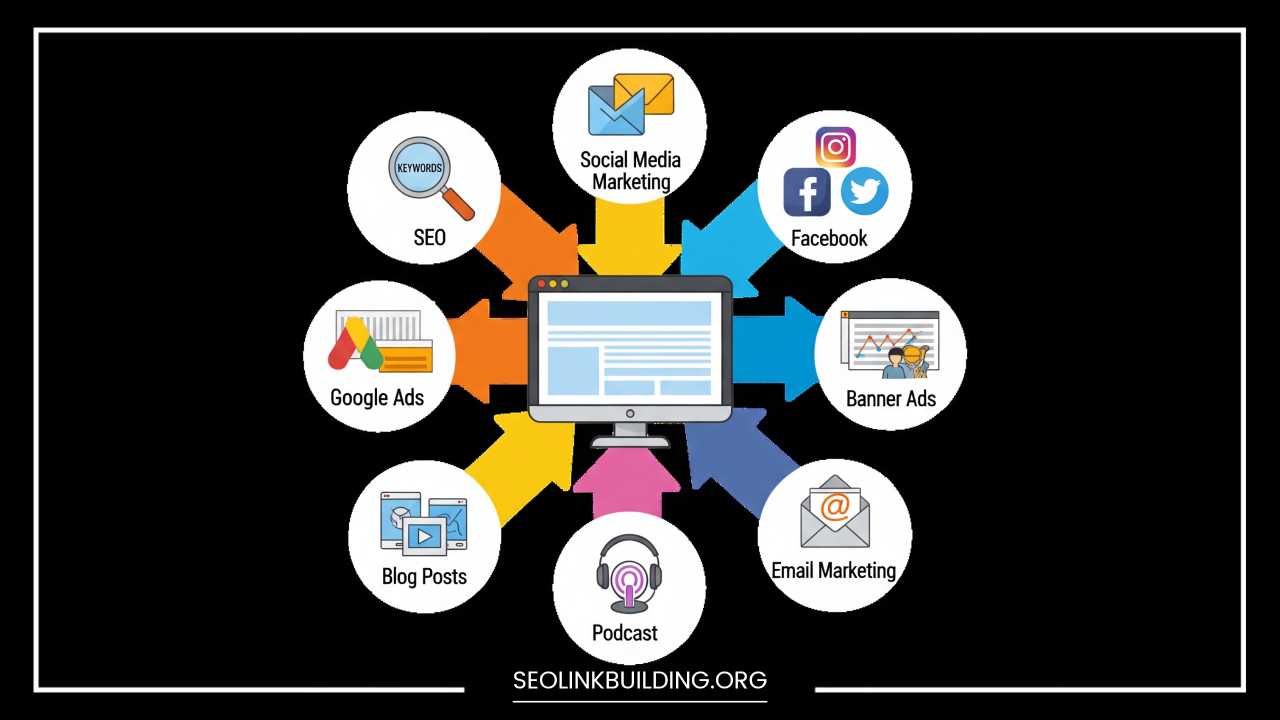
Driving traffic to your website is not a singular task but a continuous journey that requires a multifaceted approach. As we’ve explored, success hinges on a blend of foundational strategies and dynamic adaptation. From the sustainable power of SEO, drawing in high-intent organic visitors, to the immediate impact and precise targeting of Paid Traffic campaigns, each method offers unique advantages.
Building a vibrant Social Media presence fosters community and shares content, while robust Content Marketing establishes authority and answers audience needs. Email Marketing provides a direct line to your most engaged audience, and strategic Collaborations unlock access to new, relevant communities. Ultimately, the most effective approach combines these elements, creating a synergistic ecosystem that consistently funnels visitors to your digital doorstep.
Remember, the digital landscape is ever-changing. The key to sustainable growth lies in the iterative process of analyzing your data, testing what works, and optimizing your strategies based on real-world results. Don’t be afraid to experiment, learn from your data, and refine your efforts. Choose one or two of the discussed strategies that best align with your resources and goals, implement them diligently, and meticulously measure their impact. Your website’s growth journey begins now.
Bonus: Common Traffic Mistakes to Avoid
Even with the best intentions, certain pitfalls can hinder your website traffic efforts. Being aware of these common mistakes can save you time, money, and frustration.
- Overlooking Mobile Optimization: In an era dominated by smartphones, neglecting mobile responsiveness is a fatal flaw. A clunky, slow, or difficult-to-navigate mobile experience will deter users and negatively impact your search engine rankings, especially with Google’s mobile-first indexing.
- Ignoring User Experience (UX): Beyond mobile, a poor overall user experience (slow loading times, confusing navigation, overwhelming pop-ups, broken links) will lead to high bounce rates, low engagement, and a damaged brand reputation, regardless of how much traffic you manage to attract. Users will leave if your site isn’t user-friendly.
- Focusing Only on Paid Ads: While paid ads offer quick results, relying solely on them creates a dependency. The moment your budget runs out, your traffic disappears. A balanced approach that includes organic strategies (SEO, content marketing) provides long-term, sustainable traffic.
- Neglecting SEO: Conversely, building a website without considering SEO from the outset is like building a beautiful storefront in a hidden alley. Without proper keyword research, content optimization, and technical SEO, your site will struggle to be discovered organically, leaving vast amounts of potential traffic untapped.
- Using Low-Quality Content: “Content is King” is a timeless adage for a reason. Publishing thin, unoriginal, or poorly written content not only fails to engage your audience but also signals to search engines that your site lacks value, negatively impacting your rankings and ability to attract repeat visitors. Always prioritize quality, relevance, and value for your audience.