Analyse Your Website to Improve SEO

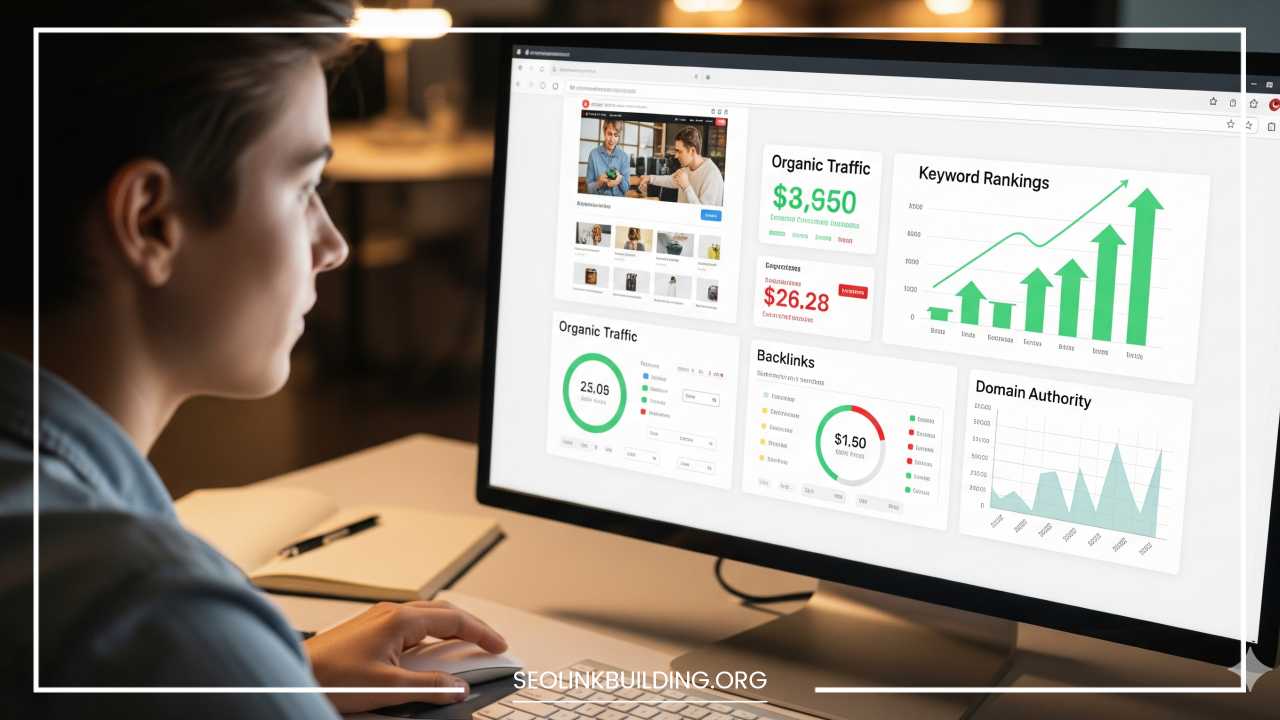
Analyse Your Website to Improve SEO | Boost Rankings & Performance
In the vast digital landscape, a website is a business’s storefront, and Search Engine Optimization (SEO) is the signage that guides customers to its door. In a world where trillions of searches happen annually, showing up on the first page of Google isn’t just a goal; it’s a necessity for survival and growth. Without proper visibility, even the most beautifully designed, well-stocked website remains undiscovered. This is where website analysis comes in. It’s the critical process of dissecting your site’s performance, identifying its strengths and weaknesses, and uncovering opportunities for improvement.
This isn’t a one-time task but a continuous journey of understanding how search engines and users perceive your site. In this article, we’ll walk you through a comprehensive framework for analyzing your website to improve its SEO. You’ll learn what to analyze, which tools to use, and how to create an actionable plan to boost your site’s search rankings and overall performance.
What is Website SEO Analysis?
Website SEO analysis is the systematic process of evaluating a website’s overall health and performance from a search engine’s perspective. It involves examining various on-page, off-page, and technical factors to determine how well the site adheres to search engine guidelines and user experience best practices. While an SEO audit is a one-off, deep-dive evaluation often conducted at the beginning of a new SEO project, ongoing analysis is a continuous, cyclical process. It’s about monitoring performance metrics, identifying new issues as they arise, and adapting to changes in search algorithms and user behavior. Think of an audit as a comprehensive health check-up, while ongoing analysis is like your daily fitness tracker—both are essential for maintaining peak performance.
To perform these analyses, you need the right tools. The digital marketing world offers a vast toolkit, but some stand out as indispensable: Google Search Console (GSC) provides direct insights from Google about your site’s crawl and indexing status, Google Analytics 4 (GA4) helps you understand user behavior, and tools like Ahrefs, SEMrush, and Moz offer powerful data on keywords, backlinks, and competitor analysis. Screaming Frog is another essential tool, a website crawler that helps you identify technical SEO issues.
Technical SEO Analysis
Technical SEO is the foundation of a high-performing website. It involves optimizing the backend of your site to help search engines crawl and index it more effectively. Without a solid technical foundation, your content and on-page efforts may go unnoticed.
1. Website Speed & Performance
The speed at which your pages load is a critical ranking factor and a key component of user experience. Slower sites lead to higher bounce rates and frustrated users. Google’s PageSpeed Insights and GTmetrix are invaluable tools for analyzing your site’s speed. They provide a score and detailed recommendations for improvement. Common optimization tips include compressing images, leveraging browser caching, minifying CSS and JavaScript files, and using a Content Delivery Network (CDN).
2. Mobile-Friendliness
With Google’s mobile-first indexing, the mobile version of your site is the primary one used for ranking. If your site isn’t optimized for mobile devices, it won’t rank well. Use the Google Mobile-Friendly Test to quickly assess your site’s usability on mobile. Common issues include unreadable text, crowded links, and content that doesn’t fit on the screen. Ensuring a responsive design that adapts to all screen sizes is the best practice.
3. Crawlability & Indexability
For a page to rank, Google’s crawlers must be able to find and index it. Crawlability refers to a search engine’s ability to access and “read” your pages, while indexability refers to its ability to add those pages to its index. Your robots.txt file tells crawlers which parts of your site they can and cannot access. Your sitemap.xml file is a map for crawlers, listing all the important pages on your site. Use Google Search Console’s Coverage report to find pages that are not indexed and identify the reasons why, such as “Discovered – currently not indexed” or “Blocked by robots.txt.
4. Site Architecture & URL Structure
A clean and logical site architecture is like a well-organized library. It helps search engines understand the relationships between your pages and allows users to navigate your site easily. Aim for a shallow, hierarchical structure where important pages are only a few clicks from the homepage. Your URL structure should be simple, descriptive, and keyword-rich (e.g., yoursite.com/category/product-name). Avoid long, cryptic URLs with unnecessary parameters. Internal linking is crucial for this. Linking from high-authority pages to new or important pages helps spread “link equity” and signals their importance to search engines.
On-Page SEO Analysis
On-page SEO refers to the elements on your web pages that you can optimize to improve rankings. It’s about creating content that is not only valuable to users but also understandable to search engines.
1. Meta Tags Optimization
Title tags are one of the most important on-page ranking factors. They should be concise, compelling, and include your primary keyword, all while remaining under 60 characters to avoid being cut off in search results. The meta description doesn’t directly influence rankings but is crucial for click-through rate (CTR). It should be a persuasive, keyword-rich summary of the page’s content. Header tags (H1-H6) provide structure to your content. The H1 should contain the main topic of the page, while H2s and H3s should be used to organize subheadings, improving readability for both users and search engines.
2. Content Quality & Relevance
High-quality content is the cornerstone of SEO. It must be relevant to the user’s search intent, providing comprehensive and valuable information. Keyword targeting is key here; you must ensure your content is aligned with the keywords users are searching for. However, simply stuffing keywords is a thing of the past. Modern SEO emphasizes readability and value. Use clear language, short paragraphs, and relevant examples. Google’s E-E-A-T (Experience, Expertise, Authoritativeness, and Trustworthiness) signals are more important than ever. Your content should demonstrate that you are an expert in your field.
3. Image Optimization
Images can significantly impact page load time and user experience. To optimize them, you should: compress file size without compromising quality, choose the right file format (JPEG for photos, PNG for graphics), and use a descriptive filename. Most importantly, you must use alt attributes. An alt tag describes the image for visually impaired users and helps search engines understand what the image is about, which can help it rank in image searches.
4. Keyword Usage & Cannibalization
A natural and strategic use of keywords is essential. Don’t focus on a single, outdated concept like keyword density; instead, focus on using keywords and their variations naturally throughout your content. A common issue to watch for is keyword cannibalization, where multiple pages on your site are optimized for the same or very similar keywords. This confuses search engines, as they don’t know which page to rank, often leading to no pages ranking well. Identify and consolidate or differentiate content to resolve this.
Off-Page SEO Factors
Off-page SEO involves actions taken outside of your own website to impact your rankings. The most prominent of these is backlink building.
1. Backlink Profile Audit
Backlinks, or links from other websites to yours, are essentially “votes of confidence.” However, not all votes are equal. A quality backlink from a reputable, relevant site is far more valuable than a hundred low-quality or spammy links. Use tools like Ahrefs, Moz, or SEMrush to audit your backlink profile. Look for a natural link profile, identify spammy or toxic links, and use Google’s Disavow tool to tell Google to ignore these links.
2. Brand Mentions & Citations
Even without a hyperlink, a mention of your brand can contribute to your online authority. Citations, especially in the context of local SEO, are crucial. This refers to the consistency of your NAP (Name, Address, Phone Number) across various online directories like Yelp, Yellow Pages, and Google Business Profile. Inconsistent NAP can confuse search engines and harm your local search rankings.
User Experience (UX) & Engagement Signals
Google increasingly uses user behavior as a ranking signal. A site that provides a great user experience is more likely to rank highly.
Bounce rate (the percentage of visitors who leave your site after viewing only one page) and dwell time (the time a user spends on your page) are crucial engagement metrics. A high bounce rate or low dwell time signals to Google that your content isn’t satisfying the user’s intent. Similarly, a high CTR from SERPs indicates that your title and meta description are compelling, encouraging users to click.
Core Web Vitals are a set of specific, quantifiable metrics introduced by Google to measure user experience. They include:
- Largest Contentful Paint (LCP): Measures loading performance.
- First Input Delay (FID): Measures interactivity. (Note: FID has been replaced by Interaction to Next Paint (INP) which is a better measure of page responsiveness.)
- Cumulative Layout Shift (CLS): Measures visual stability.
These metrics are now direct ranking factors, and you can analyze them using Google Search Console‘s Core Web Vitals report and PageSpeed Insights. Your site’s navigation and site structure also play a massive role in UX. A clear, intuitive menu and logical internal links help users find what they’re looking for, reducing frustration and keeping them on your site longer.
Content Gap & Competitor Analysis
To truly dominate your niche, you must understand what your competitors are doing right and where you can fill the gaps they’ve missed.
Content gap analysis is the process of identifying keywords and topics that your target audience is searching for but that you haven’t covered on your site. Tools like Ahrefs Content Gap or SEMrush can compare your site’s keyword rankings with those of your top competitors. This allows you to find “easy wins”—keywords where they’re ranking but you’re not, even with a little effort.
Competitor analysis goes a step further. It involves benchmarking your performance against your top-performing competitors. Analyze their content strategies, backlink profiles, and on-page optimization. What kind of content are they creating? Where are they getting their backlinks from? This intelligence can provide a clear roadmap for your own SEO strategy.
Setting Up SEO Reporting & Monitoring
Analysis is only useful if you can track the results of your efforts. Setting up a robust reporting system is crucial for demonstrating ROI and guiding future decisions.
Key metrics to track include organic traffic (the number of visitors from search engines), keyword rankings (your position in search results for target keywords), and most importantly, conversions (the number of visitors who complete a desired action, like a purchase or form submission). Use Google Search Console to monitor keyword rankings and search impressions, and Google Analytics 4 to track organic traffic and user behavior. For more advanced reporting, consider using a dashboard tool like Google Looker Studio to combine data from multiple sources into a single, easy-to-read report.
Action Plan: Prioritizing and Fixing Issues
After you’ve analyzed your site and collected a mountain of data, the real work begins. The goal is to interpret this data and create a prioritized SEO roadmap.
Start by classifying your findings into three categories: quick wins, major projects, and ongoing tasks. Quick wins are issues that are easy to fix and have a high impact (e.g., optimizing a few key title tags). Major projects require more time and resources but offer significant long-term benefits (e.g., a site-wide technical audit or a content restructuring plan). Ongoing tasks are activities that need to be done regularly (e.g., monitoring new backlinks, publishing new content). Create a simple plan outlining who is responsible for each task and a realistic timeline for completion. Regular audit intervals—for example, a mini-audit every quarter and a full audit every year—ensure that your site remains in top shape.
Final Thoughts
Analyzing your website to improve SEO is a continuous and multifaceted process. It’s not about a single audit or a quick fix but about a persistent commitment to understanding and improving your site from all angles. We’ve covered the key pillars: a strong technical foundation, high-quality on-page content, a healthy off-page backlink profile, and a flawless user experience. The digital landscape is ever-changing, with new algorithm updates and evolving user behaviors. By regularly analyzing your site, you are not just reacting to these changes but proactively positioning your website for long-term success. So, take the first step, open your analytics tools, and start the journey of optimizing your website to its full potential. The effort you put into analysis today will pay dividends in organic visibility and business growth tomorrow.