Benefits of SEO: Why Your Business Needs It


Benefits of SEO: Why Your Business Needs It
The digital landscape has fundamentally transformed how consumers discover, evaluate, and purchase products and services. Today, the vast majority of buying journeys begin with a single action: entering a query into a search engine bar. Whether a consumer is looking for a local coffee shop, researching software solutions for their enterprise, or trying to understand a complex medical symptom, search engines serve as the definitive gateway to information. Because of this shift in user behavior, visibility on these platforms is no longer a luxury reserved for massive corporations with endless marketing budgets; it is an absolute necessity for any business looking to survive and thrive.
Search Engine Optimization, commonly known as SEO, is the strategic practice of optimizing a website to improve its visibility and ranking in the organic (unpaid) sections of search engine results pages. As online spaces grow increasingly crowded, traditional advertising methods face declining engagement rates and rising costs. Consumers have developed banner blindness and actively block intrusive pop-ups, choosing instead to trust search engines to curate the most relevant, reliable answers to their questions. SEO positions your brand directly in front of these highly motivated prospects at the precise moment they seek answers.
Far from being a fleeting marketing trend or a superficial technical trick, a robust optimization strategy represents a foundational, long-term asset that compounds in value over time. By aligning your digital presence with human search behavior and platform guidelines, you establish a reliable source of awareness and customer acquisition. This comprehensive guide will explore the mechanics of search optimization, analyze its evolving importance in a highly competitive digital market, and detail the profound structural advantages it offers your business.
What Is SEO?
At its core, Search Engine Optimization is a methodology aimed at making your business website more accessible, understandable, and valuable to both search engines and human users. Search engines operate by continuously deploying automated bots, often called crawlers or spiders, across the internet. These crawlers systematically discover web pages, follow links, and extract data from the content. This extracted information is then compiled into a massive database known as an index. When a user enters a query, the search engine utilizes complex algorithms to analyze the index and rank the available pages based on relevance, quality, and authority.
It is vital to distinguish organic search listings from paid advertising, such as Pay-Per-Click (PPC) ads. Paid advertisements appear at the very top and bottom of search results, designated by a specific tag. Every time a user clicks on a paid ad, the advertiser incurs a direct fee. Organic listings, conversely, occupy the primary real estate of the search page. Rankings here cannot be purchased; they are earned by demonstrating to the search engine that your content provides the absolute best solution to the user’s intent.
An effective strategy relies on three interconnected foundational pillars, each addressing a distinct aspect of website performance:
-
On-Page SEO: This pillar focuses entirely on the elements within your website’s individual pages. It involves optimizing text, using clear headlines, constructing intuitive URL structures, embedding descriptive image alt text, and strategically incorporating relevant keywords into natural, high-quality copy that solves user queries.
-
Off-Page SEO: This encompasses actions taken outside of your own website to impact your rankings. The primary focus of off-page optimization is building authority, which is achieved through acquiring high-quality backlinks from reputable, authoritative websites. These external links serve as digital votes of confidence that signal your trustworthiness to algorithms.
-
Technical SEO: This relates to optimizing your website’s underlying backend architecture. It ensures that search engine crawlers can easily access, read, and index your site without encountering errors. Key elements include optimizing site speed, establishing secure connections, generating clean XML sitemaps, and ensuring error-free site architecture.
Why SEO Matters More Than Ever
The digital marketplace is experiencing unprecedented expansion, resulting in a dramatic increase in online competition across every imaginable industry vertical. Major search engines process billions of queries every single day, translating to trillions of opportunities globally each year for businesses to connect with audiences. This staggering volume highlights a critical truth: your target audience is already searching for what you offer. If your website does not appear on the first page of results, you are effectively invisible to those prospects, handing market share directly to your competitors.
User psychology has shifted profoundly, cementing a deep reliance on search engine recommendations. Users trust search algorithms to filter out spam and prioritize high-quality, genuine businesses. Consequently, ranking highly in organic results conveys an immediate stamp of legitimacy and industry leadership. Furthermore, consumer browsing habits have undergone an irrevocable transformation, with mobile devices generating more than half of global web traffic. This shift means that websites must be flawlessly optimized for mobile screens and local contexts to remain competitive.
Simultaneously, the integration of advanced Artificial Intelligence within search ecosystems is redefining search behavior. Algorithms are now capable of understanding natural language patterns, contextual nuances, and the underlying intent behind complex queries, moving far beyond simple keyword matching. Users are increasingly asking specific, conversational questions and expecting highly accurate, nuanced answers. Businesses that fail to adapt their strategies to these sophisticated behavioral shifts risk falling far behind.
Top Benefits of SEO
Increases Organic Traffic
The most visible benefit of a successful optimization campaign is a significant, sustained increase in organic traffic to your website. Unlike paid traffic campaigns, which disappear the moment your advertising budget runs dry, organic traffic flows continuously once your content establishes strong rankings. This continuous flow consists of qualified traffic, meaning visitors who land on your site are actively seeking the specific information, products, or services you provide.
When you optimize your website comprehensively, you do not simply rank for a single, broad keyword. Instead, your deep content clusters allow you to rank for hundreds of related long-tail keywords, secondary phrases, and informational queries. This broad search visibility dramatically widens the top of your marketing funnel, ensuring a steady stream of prospective customers discover your brand at various points of their research process.
Builds Brand Awareness
Achieving prominent placement on search engine results pages is one of the most effective ways to build widespread brand awareness. When consumers repeatedly see your business name appearing at the top of results for industry-related queries, it creates a powerful psychological effect of familiarity and trust. Even if a user does not click on your link during their first search, seeing your brand consistently associated with their queries builds mental real estate.
Over time, this continuous exposure transforms your business from an unfamiliar option into a trusted industry authority. By consistently producing optimized content that addresses your market’s pain points, your brand becomes synonymous with solutions. This widespread awareness pays massive dividends across your entire marketing ecosystem, improving the performance of your word-of-mouth referrals, email outreach, and social media campaigns.
Generates High-Quality Leads
Lead generation is the lifeblood of business growth, and search engine optimization excels at delivering exceptionally high-quality leads. The secret lies in capturing search intent. Traditional outbound marketing methods, like cold calling or direct mail, rely on interrupting consumers with a sales pitch when they may have no interest in your product. In contrast, inbound search traffic captures users who are already actively seeking an immediate solution.
When a prospect finds your website through an organic search, they are looking to solve a problem or fulfill a need. By providing clear, actionable answers and pairing them with intuitive conversion opportunities, you can seamlessly guide these users into your sales pipeline. This alignment between user need and your solution results in substantially higher lead-to-conversion rates compared to cold marketing channels.
Improves User Experience
A common misconception is that SEO is performed solely to satisfy artificial search algorithms. In reality, modern search engines evaluate websites based heavily on real-world user experience (UX) signals. Algorithms track how quickly a page loads, whether it displays properly on mobile devices, how easily users navigate the layout, and how long visitors stay on the page before leaving.
| User Experience Element | Direct Impact on SEO Ranking | Business Outcome |
| Fast Page Loading Speed | Core algorithmic ranking factor | Lowers bounce rates and increases page views |
| Mobile Responsiveness | Mobile-first indexing requirement | Captures and retains smartphone traffic |
| Intuitive Site Navigation | Enhances crawler indexing efficiency | Encourages deeper browsing and interaction |
| High-Quality Content | Increases user on-page dwell time | Establishes brand authority and drives conversions |
By optimizing your technical architecture and design to rank higher, you naturally create a vastly superior experience for your human visitors. A fast, accessible, and intuitive website keeps users engaged, reduces frustration, and significantly increases the likelihood that they will complete a purchase or contact your team.
Higher Credibility and Trust
In the modern business environment, credibility is a vital currency, and securing an organic spot on the first page of search results is a powerful endorsement. Consumers have developed an intuitive understanding that top organic spots are earned through merit, value, and prolonged quality. They view businesses listed in these top positions as verified market leaders, while relegating lower-ranked sites to a status of lesser relevance or trust.
Building this deep algorithmic and user trust requires a multi-layered approach. It involves securing high-quality backlinks from other reputable websites, earning positive customer reviews across digital directories, and publishing authoritative, thoroughly researched content. Additionally, ensuring a secure browsing environment through proper security protocols like HTTPS protects user data, further reinforcing your brand’s reputation as a safe, professional, and reliable partner.
Better ROI Than Many Marketing Channels
When analyzing marketing investments, Return on Investment (ROI) is the ultimate metric of success. Search optimization consistently outpaces many traditional and digital marketing channels because it operates as an incoming pull strategy rather than an outgoing push strategy. Paid advertising models, such as PPC or paid social media ads, require continuous financial injections; the moment your spending stops, your traffic, lead flow, and revenue generation drop to zero.
While organic optimization requires an upfront investment of time, expertise, and resources, it functions as a long-term business asset. Once a piece of content ranks highly, it generates continuous traffic and conversions without incurring an incremental cost per click. This creates a compounding return on investment, steadily driving down your customer acquisition costs and maximizing your overall profitability over the long term.
Supports Every Stage of the Customer Journey
The path a consumer takes from discovering a problem to making a purchase is rarely a straight line. It is a nuanced journey composed of multiple distinct phases: awareness, consideration, decision, and retention. A comprehensive optimization strategy allows your business to create targeted content that addresses the unique informational needs of prospective buyers at every single step of this journey.
During the initial awareness phase, you can publish educational blog posts that define problems and offer objective insights. As users transition into the consideration phase, you can provide detailed comparison guides, case studies, and expert breakdowns. When they reach the critical decision stage, optimized product pages, pricing breakdowns, and service descriptions validate their choice. By supporting the consumer throughout their journey, you build deep-seated loyalty that carries over into long-term customer retention.
Helps Local Businesses Get More Customers
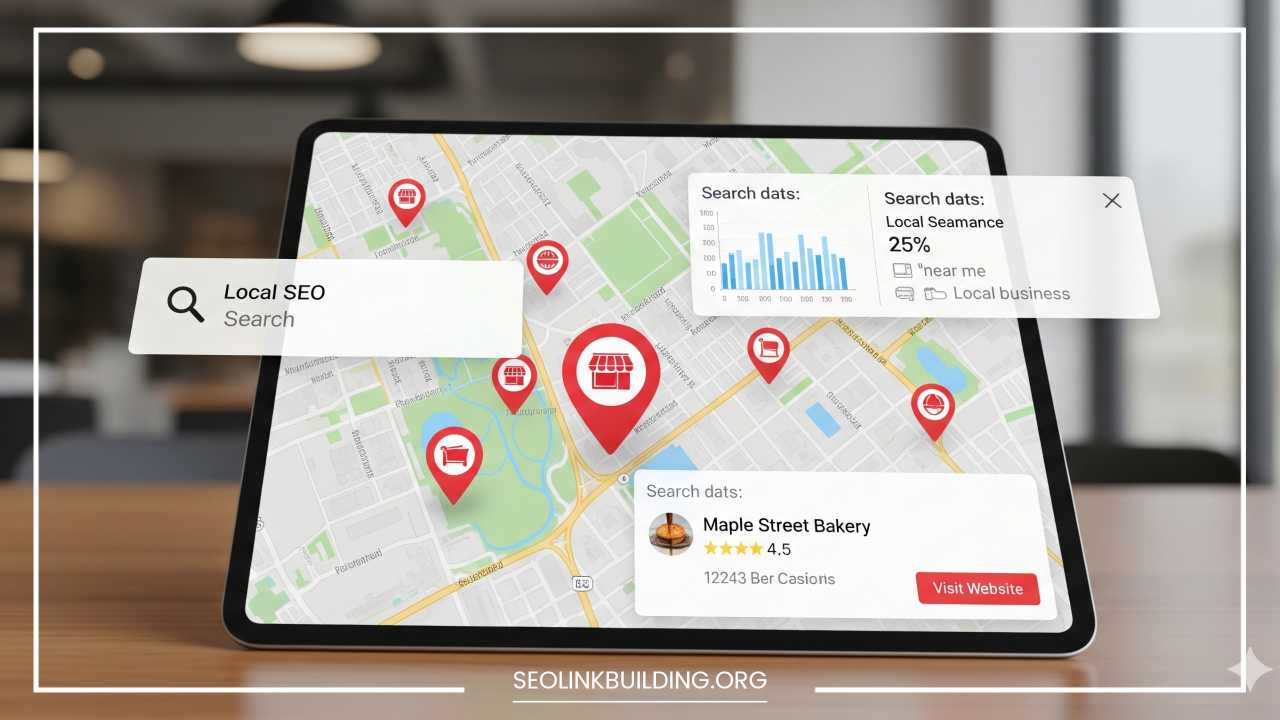
For businesses that serve specific geographic areas, local SEO is an indispensable tool for attracting highly targeted walk-in and service traffic. Millions of consumers execute searches containing phrases like “near me” or specific city names daily. These users exhibit exceptionally high commercial intent, often planning to visit a physical establishment or hire a local service provider within hours of performing their search.
Optimizing your local online presence involves managing your business profile across search maps and directories, curating authentic customer reviews, and keeping your name, address, and phone number perfectly consistent across the web. When your business dominates the local map results, you ensure that nearby customers discover your physical storefront or service area instantly, driving physical foot traffic and local inbound phone calls.
Gives Long-Term Results
One of the most profound advantages of organic search optimization is its long-term durability. Unlike short-term marketing stunts, flash sales, or paid ad groups that must be continually updated and funded, organic rankings provide an enduring foundation for your digital real estate. A piece of high-quality, deeply informative content written today can continue to attract visitors, capture leads, and close sales for months or even years to come.
This longevity is made possible by focusing on evergreen content topics that remain consistently relevant to your target market over time. While routine maintenance, minor updates, and periodic link monitoring are required to preserve your positions against competitors, the core asset remains active indefinitely. It works tirelessly for your business twenty-four hours a day, seven days a week, independent of active advertising spend.
Competitive Advantage
In every industry vertical, your direct competitors are actively vying for the attention of the exact same target audience. If your competitors are investing heavily in optimizing their websites while your business relies solely on traditional marketing, they will systematically capture the highest-value traffic and digital market share. Conversely, initiating a proactive strategy allows you to gain a major competitive advantage.
By identifying gaps in your competitors’ content, uncovering high-volume keywords they have overlooked, and building a technically superior user experience, you can systematically overtake them in rankings. Securing top placements effectively intercepts prospective buyers before they ever have a chance to discover your competitors’ websites, cementing your position as the dominant choice in your market.
Works Alongside Other Marketing Channels
Optimization does not operate in an isolated silo; instead, it acts as a powerful force multiplier that enhances the effectiveness of every other marketing channel you employ. For instance, the high-quality content developed for your SEO strategy can be repurposed into engaging sequences for email marketing, shared to boost social media engagement, or utilized as downloadable assets to drive lead generation campaigns.
Furthermore, your organic search data provides invaluable insights for your paid advertising (PPC) initiatives. By analyzing which organic keywords generate the highest conversion rates, your team can allocate your paid ad budget toward terms proven to generate revenue. Conversely, high-converting copy from paid ads can be integrated into your organic meta tags to boost organic click-through rates, creating a highly cooperative digital marketing ecosystem.
Provides Measurable Results
A major frustration with traditional advertising channels is the difficulty of accurately measuring performance. With organic optimization, guessing is completely eliminated. Every single aspect of your performance can be precisely tracked, analyzed, and quantified using reliable analytics platforms like Google Analytics and Google Search Console.
Through these comprehensive reporting dashboards, your business can closely monitor an array of vital performance indicators:
-
Organic Traffic Growth: The total volume of visitors arriving via non-paid search results over time.
-
Keyword Rankings: The exact positional movement of your target phrases on search result pages.
-
Click-Through Rate (CTR): The percentage of users who click on your link after seeing it in search results.
-
Conversion Rate: The proportion of organic visitors who complete a desired action, such as buying a product or signing up for a newsletter.
-
Bounce Rate and Dwell Time: Metrics that reveal how users interact with your content and how long they remain engaged.
This granular visibility ensures you can track every dollar spent back to concrete outcomes, allowing you to make data-driven marketing decisions that continuously optimize your return on investment.
SEO vs Paid Advertising
To design a truly comprehensive digital marketing plan, it is vital to understand how organic optimization compares directly to paid advertising, such as Pay-Per-Click campaigns. While both strategies aim to capture premium real estate on search engine results pages, they utilize radically different mechanics, financial models, and long-term sustainability paths.
| Marketing Dimension | Search Engine Optimization (SEO) | Pay-Per-Click Advertising (PPC) |
| Primary Timeline | Long-term strategy; requires months to build momentum | Short-term strategy; delivers immediate search visibility |
| Cost Mechanics | Fixed investment in content and technical health | Variable cost; charged on a direct per-click basis |
| Sustainability | Retains visibility and traffic if budget pauses | Visibility drops to zero immediately when budget ends |
| Authority Building | Establishes deep organic trust and brand leadership | Buys temporary visibility independent of brand authority |
| Long-Term ROI | Highly scalable with compounding long-term returns | ROI remains flat as scaling requires increased spend |
Rather than viewing these two approaches as mutually exclusive options, successful businesses recognize that they are highly complementary. A balanced approach uses immediate paid ads to capture quick sales and test keyword viability, while simultaneously building an underlying organic SEO engine to secure long-term, cost-effective digital dominance.
Common SEO Myths
As search engine algorithms have grown more sophisticated, the digital marketing industry has become clouded by a variety of persistent myths and outdated misconceptions. Misunderstanding these realities can lead businesses to abandon their efforts prematurely or invest in counterproductive tactics that hurt their visibility.
Myth 1: SEO is dead
This claim surfaces frequently following major core algorithm updates. In reality, SEO is not dead; it simply evolves. What does die are manipulative shortcuts, keyword stuffing tactics, and low-quality spam schemes. As long as search engines exist to connect users with information, optimization will remain a vital and highly effective practice for businesses.
Myth 2: SEO works overnight
Because digital platforms move quickly, business owners often expect immediate ranking transformations. However, optimization is a deliberate process. Search engines require time to discover updates, analyze content quality, track user signals, and update their indexes. Real, sustainable organic growth requires patience, consistency, and a long-term strategic focus.
Myth 3: SEO is only about keywords
While identifying and targeting the right phrases remains a core component, modern optimization is far more comprehensive. Algorithms prioritize holistic factors like mobile responsiveness, site architecture, page speed, user engagement, and the authoritative value of your content. Focusing solely on repeating keywords will yield poor results.
Myth 4: Anyone can rank instantly
Achieving top rankings in a competitive market requires specialized expertise, deep analytical insight, and ongoing effort. There are no secret tricks or magical fixes that can instantly bypass algorithmic quality guidelines. True rankings are earned by consistently providing the absolute best answer to a user’s intent.
Myth 5: SEO is a one-time task
Some companies treat optimization as a checklist item to be completed during a website launch and then ignored. However, search engine guidelines change constantly, competitor websites are continually improving, and consumer search behavior shifts over time. Maintaining strong rankings requires ongoing monitoring, content updates, and technical adjustments.
How Long Does SEO Take?
A realistic understanding of timelines is essential when launching an optimization strategy. Generally, businesses can expect to see initial signs of improvement, such as minor ranking adjustments and early shifts in organic traffic, within three to six months of consistent implementation. Stronger, more transformative business outcomes, such as prominent first-page rankings and a steady influx of high-quality leads, typically manifest within six to twelve months of sustained effort.
The exact time required to see meaningful returns depends on a variety of unique business factors:
-
Industry Competition: Ranking in highly saturated industries with deeply entrenched competitors requires significantly more time and effort than ranking in niche or localized markets.
-
Website History and Age: A well-established domain with historical authority will generally earn rankings much faster than a brand-new website starting completely from scratch.
-
Content Depth and Quality: The speed at which you produce thoroughly researched, user-focused content impacts how quickly search engines recognize your topic authority.
-
Technical Website Health: Eliminating crawling roadblocks, fixing broken links, and optimizing page speeds can unlock rapid improvements in indexing efficiency.
Is SEO Worth the Investment?
When assessing whether optimization justifies its resource allocation, the answer is a definitive yes across virtually every business model and company size. The compounding value it builds over time ensures that the upfront investment transforms into a highly profitable revenue generator for the long term.
Consider how various business models reap these unique rewards:
-
Small Businesses and Startups: SEO evens the playing field, allowing agile businesses to compete directly with massive industry corporations by dominating hyper-targeted niche and local search phrases.
-
Local Service Providers: It ensures that your services appear at the exact moment a nearby customer experiences an emergency, maximizing high-intent phone calls and bookings.
-
E-Commerce Brands: It places your specific product catalogs directly in front of buyers actively researching options, capturing sales without eating into profit margins via ad costs.
-
SaaS and B2B Firms: It helps establish deep industry thought leadership, addressing complex technical questions throughout prolonged enterprise sales cycles to secure high-value contracts.
Final Thoughts
Investing in Search Engine Optimization is a foundational requirement for any business seeking long-term success in a digital-first marketplace. By expanding your organic search visibility, you build continuous brand awareness, earn credibility and consumer trust, optimize the user experience, and establish a reliable engine for high-quality lead generation. Unlike temporary advertising campaigns that stop producing the moment your funding runs dry, a well-executed optimization strategy functions as an enduring business asset that grows more valuable over time.
While building top organic positions requires an upfront investment of time, strategic planning, and ongoing care, the compounding return on investment it delivers remains unmatched by traditional outbound marketing channels. Do not allow your direct competitors to continue capturing your target audience’s digital attention. Commit to building your organic search presence today, and establish the robust digital foundation your business needs to grow and thrive for years to come.
Frequently Asked Questions
What are the main benefits of SEO for small businesses with limited marketing budgets?
For small businesses, SEO is one of the most cost-effective ways to compete with larger corporations. Unlike paid advertising, which requires continuous funding, organic search optimization creates a long-term digital asset. By targeting niche, long-tail keywords and optimizing for local search, smaller companies can attract high-intent local customers at a significantly lower long-term customer acquisition cost (CAC) than print or social media ads.
How does search engine optimization improve website user experience and conversion rates?
Modern search engines reward websites that provide an excellent user experience (UX). Optimizing your site means fixing slow page speeds, ensuring seamless mobile responsiveness, building an intuitive navigation menu, and creating clear, structured content. When human visitors land on a fast, easy-to-use website that immediately answers their questions, they stay longer, trust the brand more, and are far more likely to complete a purchase or fill out a lead form.
Why does a long-term organic search strategy offer a better ROI than pay-per-click advertising?
While Pay-Per-Click (PPC) ads offer immediate visibility, their traffic stops completely the moment your ad budget is exhausted. An organic strategy requires upfront effort and resources, but its returns compound over time. Once an authoritative blog post or landing page ranks on the first page of search results, it continues to bring in qualified traffic and leads 24/7 without incurring an incremental cost-per-click, maximizing your overall marketing return on investment (ROI).
What is the average timeline to see measurable business results from a new SEO campaign?
On average, most businesses begin to see early signs of improvement—such as keyword rank shifts and subtle traffic increases—within 3 to 6 months of launching a campaign. Stronger, more transformative business results like steady inbound leads and dominant first-page rankings typically require 6 to 12 months of consistent effort. This timeline varies depending on your website’s age, current technical health, and how competitive your industry vertical is.
Can a business website maintain high search engine rankings without continuous content updates?
No, rankings are rarely permanent. Search engine algorithms change frequently, consumer search behaviors shift, and your direct competitors are constantly publishing new content to outrank you. To maintain high visibility, a business must routinely audit its technical performance, update outdated statistics or information in older posts, and continue to publish fresh, valuable content that satisfies search intent.