Quora Advertising 101: Setup, Targeting, and Best Practices


Quora Ads 101: How to Set Up, Target & Optimize Campaigns
In the vast landscape of digital marketing, where social media feeds are often cluttered with fleeting entertainment and search engines are becoming increasingly competitive, Quora stands out as a unique sanctuary for high-intent users. Quora advertising offers a distinct advantage: the ability to reach people while they are in a research mindset, actively seeking answers to specific problems. Unlike platforms where users scroll passively, Quora users are engaged in a deliberate quest for knowledge.
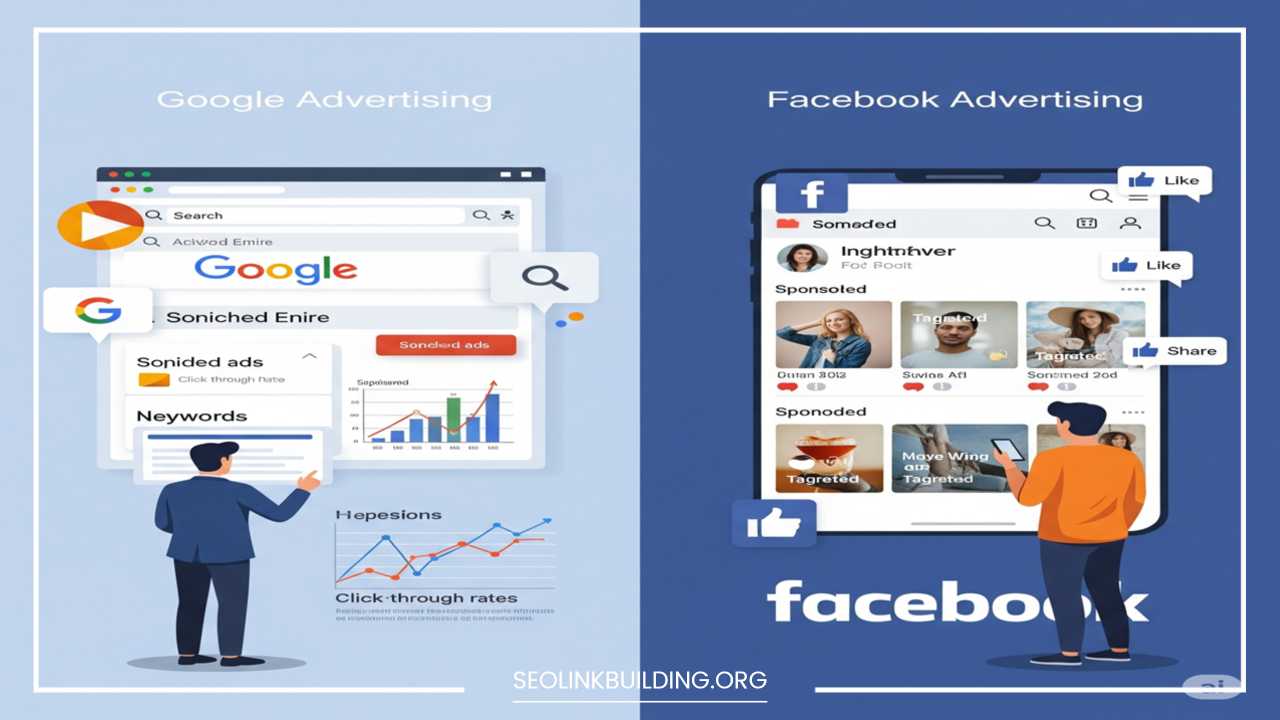
As traditional platforms like Google Ads and Facebook Ads become more saturated and expensive, savvy marketers are turning to Quora to diversify their traffic sources. Quora has gained significant traction because it bridges the gap between the intent-based search of Google and the demographic-based targeting of Facebook. By placing your brand in the middle of a conversation where users are already expressing interest in your niche, you can achieve higher engagement and conversion rates at a often lower cost per acquisition. This guide will take you through the entire journey, from the foundational setup of your account to advanced targeting strategies and the best practices needed to scale your efforts.
What Is Quora Advertising?
Quora is a knowledge-sharing platform where millions of people ask questions and provide answers every day. The Quora Ads platform allows businesses to insert their messaging directly into this flow of information. Because Quora attracts a highly educated and professional demographic, the quality of traffic is often superior to many other social networks.
Ads on Quora typically appear in three primary locations. First, they appear in the user’s home feed, tailored to their interests and past behavior. Second, and perhaps most importantly, they appear on specific question pages. This is where the magic of Quora happens; if a user is reading a question about “The best CRM for small businesses,” and your ad for a CRM software appears right beneath the question, the relevance is undeniable. Third, ads can appear within the answers themselves, tucked neatly between a user’s response and the next piece of content.
The audience behavior on Quora is fundamentally different from other platforms. Users are in an “active learning” or “research” state. They aren’t looking for memes; they are looking for solutions. This makes the platform ideal for B2B companies, SaaS providers, educational institutions, and high-consideration consumer products. When a purchase requires a bit of thinking and comparison, Quora is the place where those decisions are often influenced.
Types of Quora Ads
To succeed on Quora, you must choose the format that best aligns with your campaign goals. The platform offers several distinct ad types, each serving a specific purpose in the marketing funnel.
Image Ads are the most common format. They consist of a headline, a brief description, a high-quality image, and a call-to-action button. These are excellent for brand awareness and driving traffic to landing pages where visual appeal is necessary to grab attention. The key with image ads is to ensure the visual is professional and not overly “salesy,” as Quora users value authenticity.
Text Ads are the minimalist’s choice. They look almost exactly like the organic questions and answers on the site. Because they lack an image, they blend in perfectly with the text-heavy nature of the platform. For marketers who want to appear as a native part of the knowledge-sharing experience, text ads are a powerful tool. They often have higher click-through rates because they don’t look like traditional advertisements.
Promoted Answers are perhaps the most unique and effective tool in the Quora arsenal. Instead of a standard ad, you take an existing, high-quality answer—either written by your company or a supportive brand advocate—and pay to boost its visibility. This is content marketing at its finest. It allows you to provide genuine value first, establishing your brand as a thought leader before asking for a click.
Video Ads allow you to tell a story or demonstrate a product in motion. While Quora is primarily a text-based site, video ads can be highly disruptive in a good way, catching the eye of someone scrolling through long answers. For beginners, it is generally recommended to start with Promoted Answers or Image Ads to find your footing before investing heavily in video production.
Setting Up Your Quora Ads Account
Getting started on Quora is a straightforward process, but attention to detail in the beginning will save you significant headaches later. First, you must create an account in the Quora Ads Manager. You can link this to your existing personal Quora profile or create a separate business identity. Once the account is created, the first order of business is adding your billing details to ensure there are no interruptions once your campaigns go live.
One of the most critical steps in the setup phase is installing the Quora Pixel. Similar to the Facebook Pixel or Google’s tracking tags, the Quora Pixel is a small piece of code placed on your website. This code allows Quora to track what users do after they click your ad. Without it, you are flying blind. The pixel enables you to track conversion events—such as lead form submissions, sign-ups, or purchases—and allows for the creation of retargeting audiences.
After the pixel is verified, you will choose your campaign objective. Quora categorizes these into several buckets: Awareness (to get maximum impressions), Traffic (to get clicks to your site), Conversions (to drive specific actions), and Lead Generation (using native Quora forms). For most businesses, starting with a Traffic or Conversion objective is the best way to see a tangible return on investment early on.
Campaign Structure Basics
A well-organized account is the backbone of successful advertising. Quora follows a traditional three-tier hierarchy: Campaign, Ad Set, and Ad.
At the Campaign level, you define your overarching objective and your budget. It is best to organize campaigns by the stage of the marketing funnel. For example, you might have one campaign for “Brand Awareness” targeting broad topics, and another for “Direct Conversions” targeting specific competitive questions. Alternatively, you can organize campaigns by product line or service category.
The Ad Set level is where the heavy lifting happens. This is where you define your targeting, bidding strategy, and ad placement. It is a best practice to keep your ad sets distinct. If you want to test two different targeting methods—say, Topic Targeting versus Keyword Targeting—create two separate ad sets. This allows you to see exactly which method is performing better without the data getting muddled.
Finally, the Ad level is where the creative lives. Each ad set should ideally contain 2 to 4 different ad variations. This allows the Quora algorithm to test different headlines and images to see which combination resonates most with your chosen audience. Consistent naming conventions, such as “ProductA_TopicTargeting_ImageAd1,” are vital for staying organized as you scale.
Targeting Options Explained
Targeting is where Quora truly shines. The platform offers a granular level of control that allows you to pinpoint users based on exactly what they are thinking about at that moment.
Topic Targeting is the broadest form of targeting. You select specific topics, such as “Digital Marketing” or “Organic Gardening,” and your ads appear to users who have shown interest in those topics by reading or writing about them. This is great for reaching a large audience within a specific niche.
Question Targeting is the most precise. You can hand-select specific questions where you want your ad to appear. This is incredibly high-intent. If you sell a productivity app, you can target the question “What is the best way to manage my daily tasks?” Your ad is placed in front of someone who is literally asking for your solution.
Keyword Targeting works similarly to search engine marketing. You provide a list of keywords, and your ads appear on question pages that contain those keywords or in the feeds of users who have searched for those terms. This is a fantastic way to capture traffic from people who may not be following a specific topic but are using specific language to find information.
Audience Targeting allows you to reach people based on their past behavior. This includes Website Traffic (retargeting people who have visited your site), Lookalike Audiences (people who “look” like your existing customers), and List Match (uploading your email list to target those specific individuals).
When comparing intent levels, think of Question and Keyword targeting as “High Intent.” These users are looking for something specific right now. Topic targeting is “Medium Intent,” as they are interested in the field but maybe not a specific product yet. Interest-based targeting is “Low Intent,” best used for broad brand awareness. To find the best keywords or questions, you can use tools like SEMrush or Ahrefs to see which Quora pages are already ranking high on Google for your target terms.
Keyword & Question Research Strategy
To maximize your ROI, you need a strategy for finding the right places to show your ads. Start by thinking about the pain points your product solves. Search Quora for those pain points. Look for questions that have a high number of followers but perhaps don’t have a “definitive” answer yet. These are gold mines for Promoted Answers.
Identifying pain-point queries involves looking for questions that start with “How do I,” “What is the best,” or “Why does [Problem] happen.” These signify a user who is in the middle of a struggle and is open to a solution. Another powerful strategy is competitor research. Search for your competitors on Quora. Are people asking how to use their product? Are they asking for alternatives? You can target those specific questions with your own ads to position your brand as a better option.
Long-tail targeting is also highly effective. Instead of just targeting a broad topic like “Software,” target long-tail questions like “What is the best project management software for remote architectural firms?” The volume will be lower, but the conversion rate will likely be much higher because the relevance is so specific.
Creating High-Performing Ads
The most successful ads on Quora don’t look like ads. They look like helpful contributions to the community. This “native” approach is essential. Your ad copy should blend in with the surrounding content while still providing a clear reason to click.
Crafting a headline is the most important part of your creative. Instead of a sales pitch like “Buy Our Software Now,” try a headline that sparks curiosity or offers value, such as “The 5 Frameworks Top Managers Use to Stay Organized.” This fits the educational vibe of the platform. The description should then expand on this promise, providing just enough information to make the user want to click through to learn more.
Your call-to-action (CTA) should be firm but appropriate. If you are targeting a high-intent question, “Get a Demo” or “Start Free Trial” works well. If you are targeting a broader topic, “Learn More” or “Read the Full Guide” is often less intimidating and more effective at driving clicks. Always remember the native advertising angle: if your ad feels like an answer, it will be treated with more respect by the user.
Landing Page Best Practices
A great ad is wasted if it leads to a poor landing page. The transition from Quora to your website should be seamless. The intent of the user on Quora must be matched on the landing page. If your ad promised “A Guide to Better Sleep,” the landing page should immediately present that guide, not your homepage with a thousand different links.
Avoid generic pages at all costs. Every ad set should ideally have a dedicated landing page that mirrors the language and targeting of the ad. If you are targeting a question about “Affordable Marketing Tools,” your landing page headline should include the words “Affordable” and “Marketing Tools.”
Key elements of a high-converting landing page include a clear, bold headline that matches the ad, social proof such as testimonials or logos of companies you’ve worked with, and a single, focused CTA. Tools like Unbounce or Instapage can help you quickly build and test these pages without needing a developer. The faster and more relevant the page, the lower your bounce rate will be.
Budgeting & Bidding
Understanding how to spend your money is just as important as how you target it. Quora offers two main bidding types: CPC (Cost Per Click) and CPM (Cost Per Mille/1000 impressions). For most performance marketers, CPC is the preferred route because you only pay when someone actually shows interest by clicking.
You can set daily budgets to control your spending or lifetime budgets for specific short-term campaigns. When it comes to bidding, you can choose between manual bidding (where you set the max you’re willing to pay) and automatic bidding (where Quora’s algorithm tries to get you the most results for your budget).
For beginners, a suggested strategy is to start with manual bidding. Quora will provide a suggested range; starting near the lower end of that range and slowly increasing it if you aren’t getting enough impressions is a safe way to start. Once you have enough conversion data (at least 20-30 conversions per week), you can experiment with automatic bidding to let the machine learning optimize for you.
Tracking & Measuring Performance
You cannot improve what you do not measure. The Quora Ads Manager provides a robust dashboard to track your success. The key metrics to keep an eye on are CTR (Click-Through Rate), which tells you how engaging your creative is, and CPC, which tells you how much you are paying for that engagement.
However, the most important metrics are Conversion Rate and CPA (Cost Per Action). Just because an ad has a high CTR doesn’t mean it’s successful if none of those people are buying. Use the Quora Pixel data to see which ad sets are driving actual revenue or leads.
Set realistic expectations from the start. Quora often has a longer “consideration cycle” than other platforms. A user might read your ad, think about it, and come back a week later to convert. Don’t be too quick to turn off a campaign after only 48 hours. Give the platform enough time and data—usually at least 7 days—to stabilize before making major changes.
Best Practices for Quora Advertising
To truly excel on Quora, you must adopt a mindset of continuous improvement. The first best practice is to focus on intent. Always ask yourself: “What is the person reading this question actually trying to achieve?” Align your ad to that goal.
Start narrow and then expand. It is tempting to target every topic related to your business, but you will likely burn through your budget quickly. Start with your highest-intent questions and keywords. Once you prove ROI there, gradually move into broader topic targeting.
Use native-style ads. Experiment with Promoted Answers, as they often carry more weight and authority than a standard image ad. People trust people more than they trust brands. If you have an expert within your company, have them write the answer and then promote it.
Continuously test your creatives. Change headlines, swap images, and try different CTA buttons. Even a small change can lead to a significant jump in performance. Finally, refresh your ads regularly. Even the best ad will eventually suffer from “creative fatigue” where the same audience sees it too many times and stops clicking.
Common Mistakes to Avoid
Many marketers fail on Quora because they skip the foundational steps. The most common mistake is skipping the Quora Pixel. Without it, you are guessing, and guessing is expensive. Another mistake is targeting too broadly. If your audience is “everyone,” your ad is for “no one.” Be specific.
Poor landing page matching is another silent killer of campaigns. If the ad and the landing page feel like they belong to two different companies, users will leave immediately. Furthermore, many people make the mistake of not testing multiple ads within an ad set. They put all their eggs in one creative basket and then wonder why it didn’t work.
Lastly, avoid expecting instant results. Quora is a platform built on trust and information. It might take a few touches before a user feels comfortable clicking through and giving you their information. Patience and consistent optimization are the keys to long-term success.
When to Use (and Not Use) Quora Ads
Quora advertising is an incredible tool, but it isn’t for everyone. It is best for B2B companies where the sales cycle involves research and education. SaaS companies find great success here because they can answer technical questions and show off features. Educational institutions, from bootcamps to universities, also thrive because Quora is a hub for people looking to improve their skills or careers.
However, Quora might not be ideal for impulse-buy products. If you are selling a $10 novelty t-shirt, the research-heavy mindset of a Quora user might not be the right fit. Similarly, ultra-visual brands—like high-fashion or home decor—might find better engagement on highly visual platforms like Instagram or Pinterest, although Quora can still work for these brands if they focus on the “how-to” or “advice” side of their industry.
Final Thoughts
Quora advertising offers a unique opportunity to capture high-intent traffic in a way that feels helpful rather than intrusive. By following the hierarchy of setup, targeting, and creative optimization, you can build a sustainable source of leads and sales that complements your other marketing channels.
Remember to start small. Master the Quora Pixel, find your winning questions, and write ads that genuinely contribute to the conversation. As you gather data and see what resonates with the Quora community, you can scale your budget and expand your reach. Digital marketing is an experiment, and Quora is one of the most rewarding laboratories available to the modern marketer. Start experimenting, stay patient, and focus on providing value to your audience.
Frequently Asked Questions About Quora Advertising
Adding a detailed FAQ section is an excellent way to capture long-tail search traffic and address the specific, granular queries that potential advertisers often type into search engines. Below are the most common questions regarding the platform, answered with a focus on actionable insights.
How does the Quora Ads bidding system work for small budgets?
Quora operates on an auction-based system where advertisers compete for ad placement. For those with smaller budgets, the platform is quite accessible because you can set a floor for your bids. You can choose between Manual CPC (Cost Per Click), where you set the maximum amount you are willing to pay for a click, or Target CPA (Cost Per Action), which optimizes your spend toward conversions. To make a small budget stretch further, it is best to focus on specific Question Targeting rather than broad Topic Targeting. This ensures your money is only spent on the highest-intent users who are most likely to convert.
Can I run Quora ads without a large following on my personal profile?
Absolutely. Your success with Quora advertising is entirely independent of your organic following or your “upvote” count. While having a reputable profile can help if you are using Promoted Answers, standard Image Ads and Text Ads run through the Ads Manager and do not require any prior social standing on the platform. The Quora Ads Manager is a professional tool similar to LinkedIn Ads or Google Ads, where your visibility is determined by your targeting settings, ad quality, and bid strength rather than organic social metrics.
What is the average conversion rate for B2B SaaS on Quora?
While conversion rates vary by industry and offer, many B2B SaaS companies report that Quora traffic often converts at a higher rate than general social media traffic because of the research-oriented mindset of the users. On average, well-targeted campaigns can see conversion rates ranging from 2% to 5% for lead magnet downloads, and 1% to 2% for free trial sign-ups. The key to hitting these numbers is ensuring your landing page is highly relevant to the specific question or topic you are targeting.
Is the Quora Pixel necessary for tracking lead generation?
While you can technically run ads without it, the Quora Pixel is essential for any serious lead generation strategy. The pixel allows you to track specific actions taken on your website after a user clicks your ad. More importantly, it enables “Conversion Optimized Bidding.” Without the pixel, the Quora algorithm cannot “learn” which types of users are actually filling out your forms, which means it cannot optimize your campaign to find more people like them. It also allows you to create retargeting audiences, which are often the most profitable segments of any ad account.
How do Promoted Answers differ from standard Image Ads?
Standard Image Ads appear with a visual, a headline, and a short description, looking very much like a traditional display ad. Promoted Answers, however, are actual answers written in response to a question on Quora. When you promote an answer, it appears in users’ feeds and on question pages with a “Promoted” label, but it retains the format of a helpful, long-form response. Promoted Answers are generally better for building authority, explaining complex products, and nurturing leads who are in the early stages of the buying cycle.
What are the best targeting options for reaching niche audiences?
For highly specific or “niche” audiences, Question Targeting and Keyword Targeting are the most effective. Instead of targeting a broad category like “Finance,” you can target specific questions such as “How to set up a self-directed IRA for real estate?” This allows you to bypass the noise and speak directly to a user who has a very specific problem that your business can solve. Additionally, using “List Match” audiences allows you to upload a list of existing leads or customers to target them specifically on Quora, making it a powerful tool for account-based marketing (ABM).
How long does it take for Quora ads to start showing results?
Quora’s algorithm usually requires a learning phase of about 3 to 7 days. During this time, the system is testing your ads against different segments of your target audience to see who is most likely to engage. It is important not to make major changes to your budget or targeting during this window. Most advertisers begin to see stabilized performance and a clearer picture of their CPA after the first week of consistent spending.
Can I target my competitors’ questions on Quora?
Yes, this is one of the most powerful strategies on the platform. You can identify questions that specifically mention your competitors—such as “Is [Competitor Name] worth the price?”—and place your ads on those pages. This allows you to offer your product as an alternative or a better-value solution exactly when a user is evaluating a competitor. However, it is important to keep your ad copy professional and objective rather than aggressive to maintain the trust of the Quora community.