How to Start a Small Clothing Business From Home

How to Start a Small Clothing Business From Home (Step-by-Step Guide)
Starting a clothing business from home has transitioned from a distant dream to a highly accessible reality for creative entrepreneurs. In the past, launching a fashion brand required significant capital, physical storefronts, and complex supply chain connections that were often gated by industry insiders. Today, the landscape is entirely different. The explosion of e-commerce, the democratization of professional design tools, and the power of social media have leveled the playing field, allowing anyone with a vision and a laptop to compete in the global marketplace.
The growth of online shopping has fundamentally shifted consumer behavior. People are increasingly seeking out unique, niche brands that reflect their personal values and aesthetic, rather than settling for mass-produced items from corporate giants. This shift represents a massive opportunity for the “micro-brand.” Consumers now value the story behind the garment, the ethics of the production, and the specific community a brand represents.
This guide is designed for beginners, side hustlers, and creatives who want to harness this shift. Whether you are looking to replace your full-time income or simply want a creative outlet that pays, this comprehensive roadmap will take you through every essential step of building a sustainable clothing brand from your own living room. We will move beyond the “fun” part of designing and dive deep into the mechanics of logistics, legalities, and the long-term scaling strategies required to turn a hobby into a legacy.
Define Your Niche
One of the most common mistakes new entrepreneurs make is trying to sell everything to everyone. In the fashion industry, being a generalist is a recipe for invisibility. To succeed, you must define your niche. A niche is a specific segment of the market with its own unique needs, preferences, and identity. By narrowing your focus, you reduce your direct competition and make it much easier to speak directly to a loyal customer base.
When you try to cater to everyone, your marketing messages become diluted. However, when you target a specific niche, your audience feels like you are reading their minds. Consider the following examples of successful niches:
-
Streetwear: Focuses on bold graphics, oversized fits, and limited-edition “drops” that create a sense of urgency.
-
Sustainable Clothing: Centers on organic fabrics, ethical labor practices, and timeless designs meant to last years rather than seasons.
-
Athleisure: High-performance gear that transitions seamlessly from the gym to professional or social settings.
-
Adaptive Fashion: Clothing specifically designed for individuals with disabilities, focusing on ease of dressing and sensory-friendly materials.
-
Vintage-Inspired: Modern garments that recreate the aesthetic of specific decades like the 70s or 90s, appealing to nostalgia.
To find your niche, you must research trends and demand. Use tools like Google Trends to see which styles are gaining momentum over a multi-year period. Browse marketplaces like Etsy to see what is currently selling and, perhaps more importantly, read the reviews. Look for “gaps”—customers complaining about poor fit in a certain category or the lack of color options in another. If you can find a gap where high demand meets low quality or poor selection, you have found your niche.
Identify Your Target Audience
Once you have a niche, you need to understand the people within it. Your target audience is the specific group of consumers most likely to buy your products. Without a clear picture of who they are, your marketing efforts will be scattered and ineffective.
Start by defining their demographics:
-
Age and Gender: Is your brand for Gen Z trendsetters or professional women in their 40s?
-
Location: Are you targeting local customers, a specific climate, or an international audience?
-
Income Level: Is your pricing accessible for students, or are you aiming for a luxury market where quality justifies a high price point?
Beyond demographics, you must understand their psychographics and pain points. What do they value? Do they prioritize comfort over style? Are they willing to pay more for eco-friendly materials? Perhaps they struggle to find clothing that fits correctly or is durable enough for their active lifestyle.
Creating a simple “customer persona” helps solidify this. Give your ideal customer a name. “Sarah is a 30-year-old remote worker who values comfort but wants to look professional on video calls. She cares about sustainability but is on a budget.” Every design you create and every caption you write should be tested against this persona: Would Sarah buy this? Would this message resonate with her?
Choose a Business Model
Your business model dictates how you produce, store, and ship your clothing. It is the framework of your daily operations. Each model has varying levels of risk, cost, and required skill.
Print-on-Demand (POD)
This is the lowest-risk entry point. When a customer places an order, a third-party provider (like Printful or Printify) prints your design on a blank garment and ships it directly to them.
-
Pros: No upfront inventory costs, no shipping logistics to manage, easy to test many designs quickly.
-
Cons: Lower profit margins (the supplier takes a large cut), less control over packaging, and you are limited to the blank garments the supplier stocks.
Dropshipping
Similar to POD, you act as the middleman. You list products from a supplier on your website, and they ship them to the customer.
-
Pros: Wide variety of products without holding any stock or owning a sewing machine.
-
Cons: Very high competition and potential for long shipping times if the supplier is overseas. You are also held responsible for quality issues you didn’t cause.
Handmade and Custom Clothing
You design and sew the garments yourself. This is ideal for those with strong technical skills and a love for the craft.
-
Pros: Maximum quality control, truly unique products, and high perceived value for “handmade” items.
-
Cons: Extremely time-consuming. You are essentially trading time for money, which makes it very difficult to scale without eventually hiring a team.
Wholesale and Reselling (Curated Boutique)
You buy existing clothing in bulk from manufacturers or wholesalers at a discount and sell it at a retail price under your own brand’s curation.
-
Pros: Faster to launch than designing from scratch; you focus on marketing and curation.
-
Cons: Requires storage space and significant upfront capital for inventory. You have no control over the design or construction.
Private Label (Custom Manufacturing)
You work with a manufacturer to produce garments based on your specific designs and brand them with your custom labels and tags.
-
Pros: Full brand control, unique silhouettes, and the highest profit margins at scale.
-
Cons: High minimum order quantities (MOQs) and significant initial investment for samples and production runs.
Create a Business Plan
A business plan doesn’t need to be a hundred-page document meant for a bank. For a home-based startup, it serves as a simple roadmap to keep you focused when things get overwhelming.
Begin with your Brand Vision and Mission. What is the “why” behind your business? If your mission is to provide affordable, high-quality basics for working parents, let that guide every subsequent decision. When you are tempted to design an expensive evening gown, your mission statement will pull you back to your core purpose.
Next, outline your Product Strategy. What are your “hero” products? Start small—perhaps three to five items that perfectly represent your brand. Don’t try to launch a 50-piece collection. Define your Pricing Strategy by calculating the cost of goods sold (COGS) and adding a margin that allows for growth.
Finally, establish a Budget. List your startup costs, including website hosting, initial samples, sewing supplies, and marketing. Set realistic Revenue Goals for the first six months. Having these numbers on paper turns a hobby into a professional venture and helps you track if you are actually making a profit.
Choose a Brand Name and Identity
Your brand name is the first thing people will encounter. It should be memorable, easy to spell, and reflective of your niche. Avoid names that are too specific if you plan to expand later (e.g., “OnlyBlueSocks” might be a problem if you want to sell shirts eventually). Before falling in love with a name, check for domain availability (.com is still the gold standard) and social media handles. Consistency across platforms is vital for brand recognition.
Identity goes beyond the name. It is the “vibe” of your brand. It includes:
-
Logo: A clean, versatile symbol that works on a website and a tiny garment tag. Avoid overly complex designs that become unreadable when shrunk down.
-
Color Palette: Colors evoke emotions. Blue can represent trust and calm; neon yellow suggests high energy and youth. Stick to 2-3 primary colors.
-
Typography: The fonts you choose should match your vibe. Serif fonts (like Times New Roman) feel classic and luxury; sans-serif (like Arial or Helvetica) feel modern and clean.
-
Brand Voice: How do you talk to your customers? Is your tone edgy and sarcastic, or warm and encouraging? This should be consistent in your emails, captions, and product descriptions.
Legal Requirements and Setup
Operating from home doesn’t exempt you from legal responsibilities. While the specifics vary by region, most business owners should follow these steps to protect themselves and their assets:
-
Register Your Business: Choose a structure. Many start as a Sole Proprietorship, but an LLC (Limited Liability Company) is often recommended to separate your personal assets from your business liabilities.
-
Obtain Necessary Permits: Check if your local municipality requires a “Home Occupation Permit.” Some areas have restrictions on how much inventory you can keep or how many deliveries you can receive in a residential zone.
-
Taxes: Register for an Employer Identification Number (EIN) or the equivalent in your country. This is necessary for opening a bank account and paying taxes. Keep meticulous records of your expenses; since you are working from home, a portion of your rent, internet, and utilities may be tax-deductible.
-
Insurance: Standard homeowners’ insurance often doesn’t cover business equipment or liability. Consider a small business insurance policy to protect your inventory and equipment from fire, theft, or lawsuits.
-
Banking: Open a dedicated business bank account. Mixing personal and business finances is a major mistake that makes accounting a nightmare and can even jeopardize your legal protection in an LLC.
Design Your Clothing Line
Designing is where your creativity takes center stage, but it must be tempered by practicality. You don’t need to be a master illustrator to start.
Begin with basic sketches to visualize the silhouette, seam lines, and details like pocket placement or hardware. If you aren’t an artist, you can use “croquis”—pre-drawn body templates that you can sketch over.
Next, choose your fabrics. The material you select determines the quality and “feel” of your brand. Do you want the structured feel of heavy denim or the drape of a bamboo jersey? Request fabric swatches from suppliers to test how they feel against the skin and how they react to washing.
If you are outsourcing production, you will need to create Tech Packs. These are essentially the blueprints for your garments. They include:
-
Technical drawings (flats).
-
A “Bill of Materials” (every button, zipper, and thread type).
-
Detailed measurements for every size (the “grading” scale).
-
Care label instructions and placement.
Tools like Canva are excellent for creating simple graphic tees, while software like Adobe Illustrator is the industry standard for professional technical sketches.
Find Suppliers or Manufacturers
Finding the right partner is the difference between a successful launch and a logistics disaster. You have two main options:
Local Suppliers
-
Pros: Easier communication, no time-zone hurdles, and faster shipping. You can often visit the factory to inspect conditions and quality. “Made in [Your Country]” can also be a significant marketing advantage for ethical consumers.
-
Cons: Generally higher production costs, which means higher retail prices for your customers.
Overseas Suppliers
-
Pros: Significantly lower production costs and access to specialized machinery or fabrics not available locally. Platforms like Alibaba and IndiaMART make finding these manufacturers accessible.
-
Cons: Long shipping times (often weeks or months), language barriers, and higher risks regarding quality consistency.
Always check a supplier’s Minimum Order Quantity (MOQ). As a home-based startup, look for suppliers who specialize in “small-batch” production. Most importantly, order samples before committing to a full production run. You must see and wear the product to ensure the fit is correct and the fabric meets your expectations.
Set Up Your Home Workspace
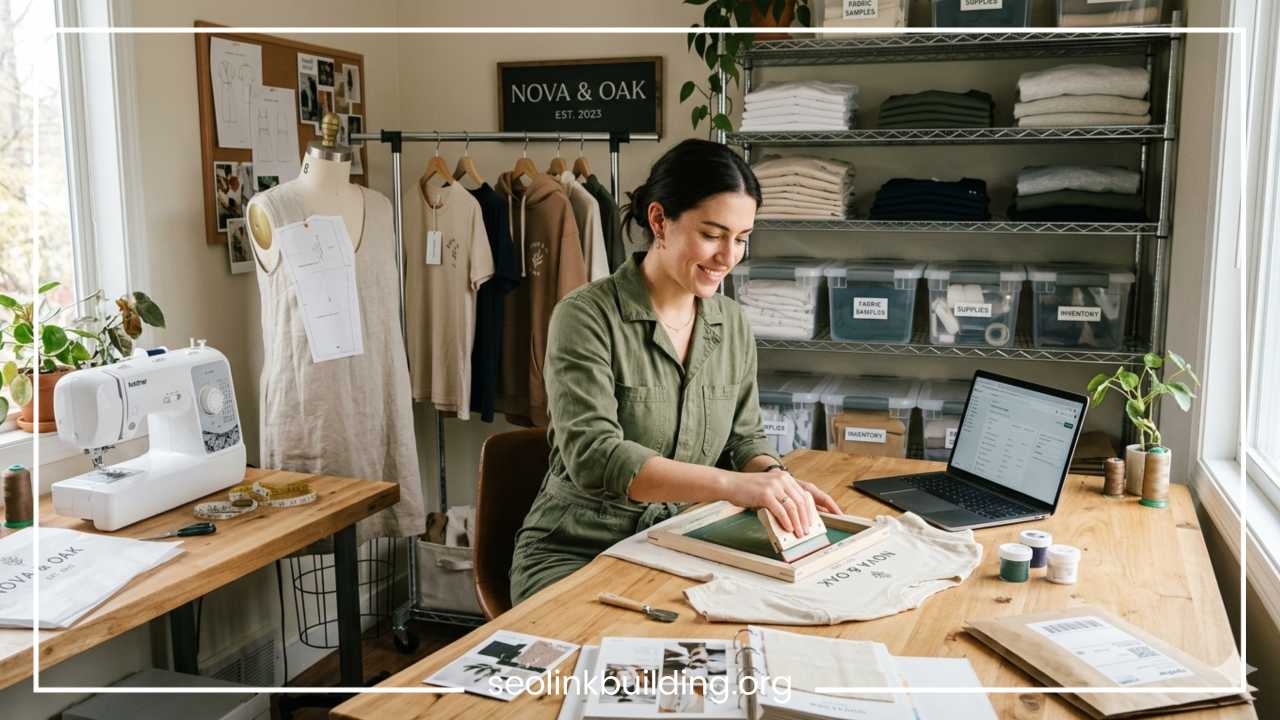
A disorganized workspace leads to a disorganized business. Even if you are working from a small corner, you need to designate specific zones for different tasks to maintain efficiency and mental clarity.
-
Design and Admin Zone: A desk for your computer, sketches, and paperwork. This is where you manage orders and your website.
-
Production Zone: If you are sewing or heat-pressing shirts, ensure your equipment is set up with proper ergonomics and lighting. Poor lighting leads to mistakes in stitching and quality control.
-
Storage Zone: Use vertical shelving and clear bins to organize fabric, notions, and finished inventory. Label everything. Keeping stock off the floor prevents damage from dust or pets.
-
Packing Station: Create a streamlined area with your shipping labels, boxes, tissue paper, and branding stickers. Having everything in one place makes the “fulfillment” part of your day much faster.
Pricing Your Products
Pricing is a delicate balance of math and psychology. You must cover your costs, pay yourself for your time, and still remain attractive to your target audience.
Use this detailed formula for each item:
Cost of Materials + Production Labor (even if it’s your own time) + Shipping/Packaging + Marketing Costs + Overhead (software, electricity) = Base Cost.
To find your retail price, many brands use Keystone Pricing, which involves doubling the base cost. However, you should also consider:
-
Market Positioning: Are you a “budget” brand competing on price, or a “premium” brand competing on quality and exclusivity?
-
Competitor Research: What are similar brands in your niche charging? If you are significantly higher, you must clearly communicate why (e.g., “hand-stitched” or “organic”).
-
Value-Based Pricing: If your design is truly unique or solves a specific problem (like a perfect-fit jean for petite women), customers may be willing to pay a premium regardless of your production cost.
Don’t forget to factor in the cost of returns, shipping labels, and the transaction fees charged by platforms like Shopify or PayPal.
Build Your Online Store
Your website is your storefront. In a home-based business, it is the only way most customers will ever interact with your brand. It must be professional, fast, and mobile-friendly.
-
Shopify: Often considered the gold standard for e-commerce. It is user-friendly, has great templates, and handles everything from payments to inventory tracking.
-
Etsy: Perfect for handmade or vintage items. It provides a built-in audience, making it easier to get your first few sales, though they take a higher fee than your own site.
-
WooCommerce: A great choice if you are already familiar with WordPress and want total control over every technical detail.
Your Product Pages are where the sale happens. Each page needs:
-
A clear, descriptive title.
-
Bullet points for features (fabric, care, fit).
-
A “Benefits” section: Why will the customer feel great in this?
-
A clear, easy-to-read Sizing Chart. Inconsistent sizing is the #1 reason for returns in fashion.
Ensure your payment gateway is secure and offers modern options like digital wallets, which significantly increase conversion rates on mobile devices.
Create High-Quality Product Photos
In online fashion, the customer cannot touch, feel, or try on the clothing. Therefore, the photo is the product in their mind. You don’t need a professional studio, but you do need professional standards.
Use a modern smartphone and natural light. Set up your shoot near a large window during the day. Avoid using the flash, as it washes out colors and creates harsh shadows.
-
Lifestyle Shots: Show the clothing on a person in a real-world setting. This helps customers visualize how the garment fits and moves.
-
Flat Lays: Neatly laid-out items on a clean, neutral background. This is great for social media and secondary product photos.
-
Detail Shots: Take close-ups of the fabric texture, unique buttons, or intricate embroidery. This builds trust in your quality.
Keep your backgrounds consistent throughout your website to give your brand a cohesive, high-end feel.
Marketing Your Clothing Brand
Marketing is the engine that drives your business. You can have the best designs in the world, but they won’t sell if no one knows they exist. Because you are starting from home, you should focus on “organic” and community-based marketing first.
Social Media Strategy
-
Instagram: This is a visual platform perfect for fashion. Use Reels to show “3 ways to style” a single piece. Use Stories to share the “behind the scenes” of your home studio to build a personal connection.
-
TikTok: Lean into the “founder’s journey.” People love seeing the process of a small brand growing. Authenticity and raw, unedited footage often perform better here than polished ads.
-
Pinterest: Think of this as a search engine, not social media. Pin high-quality images of your products. Since pins can “go viral” months or years later, this provides long-term traffic to your store.
Influencer Collaborations
You don’t need to hire celebrities. Reach out to “micro-influencers” (those with 5,000 to 20,000 followers) who align with your niche. Send them a free sample in exchange for an honest review or a style post. Their audience is usually highly engaged and trusts their recommendations.
Email Marketing
Start an email list from day one. Offer a 10% discount for signing up. Social media algorithms are unpredictable, but you “own” your email list. It is the most effective way to announce new launches and drive repeat sales.
Manage Orders and Customer Service
Excellent customer service is how a small home-based brand competes with giant retailers. When an order comes in, the “unboxing experience” should be a highlight for the customer.
-
Packaging: Use custom tissue paper, a branded sticker, or even just a clean, sustainable mailer.
-
The Personal Touch: Include a handwritten thank-you note. Mentioning the customer’s name and thanking them for supporting a small business goes a long way toward building loyalty.
-
Shipping Transparency: Provide tracking numbers as soon as the label is printed. If there is a delay (which happens!), be proactive and email the customer before they have to ask you.
-
Returns: Have a clear, fair return policy. While returns are expensive for a small business, a difficult return process will ensure that customer never shops with you again.
Scale Your Business
Once you have consistent sales and a growing community, it is time to think about expansion. Scaling a home business requires a shift from “doing everything” to “managing systems.”
-
Expand Your Product Line: Listen to customer feedback. If they love your shirts, ask if they want matching pants or accessories. Don’t guess; use your data.
-
Outsource Fulfillment: When you find yourself spending 4 hours a day packing boxes instead of designing, it’s time for a third-party logistics (3PL) company. They store your inventory and ship orders for you.
-
Paid Advertising: Once you have a website that converts well, use Facebook and Instagram ads to reach a wider audience. Start with a small budget and only increase it once you see a positive return on investment.
-
Hire Help: Look for freelancers for specific tasks like SEO, graphic design, or managing your social media comments. This frees you up to focus on the high-level vision of the brand.
Common Mistakes to Avoid
Success in the clothing industry often comes down to avoiding these frequent pitfalls:
-
Trying to Please Everyone: If you try to make your brand appeal to everyone, you end up appealing to no one. Stay firm in your niche.
-
Ignoring Branding: A brand is more than a logo. It’s the feeling a customer gets when they visit your site. If your brand feels “cheap” or “rushed,” they won’t pay premium prices.
-
Underpricing Your Work: Beginners often price too low because they are afraid of rejection. This leads to burnout because you aren’t making enough profit to reinvest in the business.
-
Poor Quality Control: One bad batch of clothing can result in a wave of returns and negative reviews that are hard to recover from. Always inspect your samples and production runs.
-
Waiting for “Perfect”: Don’t wait until everything is perfect to launch. Launch with your core products, learn from the feedback, and improve as you go.
Final Thoughts
Starting a small clothing business from home is a journey of both immense creativity and significant grit. It requires you to be a designer one hour and a logistics manager the next. However, the current digital age provides an unprecedented opportunity to bypass traditional gatekeepers and build something truly unique.
Remember that every major fashion house started somewhere. Many of the world’s most recognizable brands began on a kitchen table, in a small garage, or in a spare bedroom. Success does not come from having a massive budget; it comes from having a clear vision, a deep understanding of your customer, and the consistency to show up every day.
Do not be discouraged by slow starts or technical hurdles. Treat every mistake as a data point that helps you refine your process. Start small, focus on quality, and build a brand that you are proud of. Take that first step today—whether it’s finalizing your niche or ordering your first fabric samples—and begin the process of turning your home-based dream into a thriving fashion reality.
Frequently Asked Questions
How much does it cost to start a clothing brand from home?
The initial investment for a home-based clothing business can range from $500 to $5,000 depending on your chosen business model. If you use a print-on-demand model, your startup costs are minimal, primarily involving website hosting and design software. However, if you choose to manufacture private label garments, you will need to budget for fabric sourcing, samples, and minimum order quantities from manufacturers.
Can I run a small clothing business from an apartment?
Yes, running a clothing brand from a small apartment is entirely possible by utilizing vertical storage and choosing a low-inventory business model like dropshipping or print-on-demand. For those sewing their own designs, a compact, foldable cutting table and clear organizational bins can help maximize a small living space without cluttering your home environment.
How do I find ethical clothing manufacturers for small businesses?
Finding ethical suppliers involves researching manufacturers that provide certifications like GOTS (Global Organic Textile Standard) or Fair Trade. Platforms like Alibaba or IndiaMART allow you to filter for verified suppliers. Always request a “Code of Conduct” and order samples to verify the quality and labor standards before entering into a long-term production agreement.
What is the best platform to sell clothes online for beginners?
For beginners, Shopify is widely considered the best all-in-one e-commerce platform due to its scalability and ease of use. If you are creating handmade or vintage items, Etsy is an excellent alternative because it provides a built-in audience of shoppers specifically looking for unique, artisanal products. Many successful brands start on Etsy and eventually migrate to a standalone Shopify store.
How do I market a new clothing brand on social media with no followers?
To grow a clothing brand from zero, focus on short-form video content like Instagram Reels and TikToks that showcase your “behind-the-scenes” process or styling tips. Utilizing niche-specific hashtags and collaborating with micro-influencers can help you reach a targeted audience quickly. Additionally, Pinterest is a powerful tool for driving long-term organic traffic to your product pages through high-quality visual pins.
Do I need a business license to sell clothes from home?
Most regions require some form of registration, such as a Sole Proprietorship or an LLC, to legally sell products and collect sales tax. You should also check with your local municipality regarding “home occupation” permits, which ensure your business activities comply with residential zoning laws. Opening a dedicated business bank account is also a critical step for legal and tax compliance.
How do I choose the right fabric for my clothing line?
Choosing the right fabric starts with ordering fabric swatches from various textile suppliers to test for “hand-feel,” stretch, and durability. Consider the end-use of the garment; for example, high-performance athleisure requires moisture-wicking synthetics, while sustainable loungewear is best suited for organic cotton or bamboo jersey. Always wash-test your samples to see if the fabric shrinks or loses color.
What are the most profitable clothing niches for startups?
Currently, some of the most profitable and high-growth niches include sustainable and eco-friendly fashion, oversized streetwear, gender-neutral basics, and adaptive clothing for people with disabilities. The key to profitability is finding a niche with a high “passion factor” where customers are willing to pay a premium for specific aesthetics or values that are not available in big-box retail stores.