SEO Marketing for Small Business

SEO Marketing for Small Business | Boost Online Visibility & Growth
In the modern digital marketplace, the visibility of a small business is no longer determined solely by its physical storefront or the size of its billboard. Instead, growth is dictated by how easily a brand can be found when a potential customer types a query into a search engine. This is the essence of Search Engine Optimization (SEO). At its core, SEO is the process of improving your website to increase its visibility for relevant searches. The higher your pages appear in search results, the more likely you are to garner attention and attract prospective and existing customers to your business.
For small businesses, SEO is not just a luxury; it is a fundamental survival strategy. Unlike large corporations with multi-million dollar advertising budgets, small businesses often rely on organic reach to level the playing field. SEO provides a cost-effective way to reach a highly targeted audience at the exact moment they are looking for a solution, product, or service. It drives high-quality traffic—users who have a specific intent—which leads to higher conversion rates and sustainable long-term growth.
This comprehensive guide will delve into the mechanics of SEO tailored specifically for the unique needs of small businesses. We will explore the foundational pillars of search strategy, from keyword research and on-page optimization to the critical nuances of local SEO and link building. By the end of this article, you will have a clear roadmap to navigate the complexities of search engines and transform your online presence into a powerful engine for business expansion.
Understanding SEO for Small Business
To master SEO, one must first understand that it is not a singular task but a combination of three distinct yet interconnected pillars: on-page, off-page, and technical SEO. Each plays a specific role in how search engines like Google perceive your site’s relevance and authority.
On-Page SEO
On-page SEO refers to the elements on your website that you have direct control over. This includes your content, HTML tags (like titles and headers), and internal linking structures. It is about making sure search engines understand what your pages are about. For a small business, this often involves clearly defining services so that a bot can categorize the business accurately.
Off-Page SEO
Off-page SEO involves actions taken outside of your own website to impact your rankings within search engine results pages. The primary focus here is building high-quality backlinks, which act as “votes of confidence” from other sites. It also encompasses managing social media signals, brand mentions, and local directory listings. For a small business, off-page SEO is essentially digital word-of-mouth.
Technical SEO
Technical SEO focuses on the backend of your website. It ensures that search engine crawlers can easily access, crawl, and index your site. This includes site speed, mobile responsiveness, XML sitemaps, and secure connections (HTTPS). If your technical foundation is weak, even the best content in the world may never be seen by a user because search engines cannot find it.
Small Business vs. Enterprise SEO
Small business SEO differs significantly from enterprise-level strategy. Large corporations often focus on high-volume, competitive national or international keywords. They have the “domain authority” to compete for broad terms like “shoes” or “insurance.” In contrast, small businesses find their greatest success by dominating niche markets and local searches. A small hardware store does not need to outrank a global home improvement chain for the word “hammer”; it needs to outrank everyone else for “best hardware store in the North End.”
Common Misconceptions
There are several misconceptions that often hold small business owners back. The most common is the belief that SEO is a “one-and-done” project. In reality, SEO is an ongoing process of maintenance and adaptation as algorithms change and competitors improve. Another myth is that SEO is too expensive. While professional services cost money, many foundational SEO tasks can be performed by business owners themselves with the right knowledge. Finally, many assume SEO is only about search engines. On the contrary, good SEO is synonymous with a good user experience; what is good for the visitor is almost always good for the search engine.
Keyword Research & Strategy
Keyword research is the foundation of any successful SEO campaign. It is the process of identifying the actual terms that people enter into search engines. For a small business, this isn’t just about finding words with the highest search volume; it’s about finding the words that signify a “buyer’s intent.”
The Importance of Research
Without research, you are essentially guessing what your customers want. Keyword research reveals the language your customers use. For instance, you might call your service “clerical assistance,” but your customers might be searching for “virtual assistant.” Aligning your vocabulary with theirs is the first step toward visibility.
Essential Tools
To begin, you must identify your core topics. If you run a boutique pet grooming service, your core topics might be “dog grooming,” “cat nail trimming,” or “organic pet shampoos.” From there, you can use tools to expand these into specific keywords.
-
Google Keyword Planner: A great starting point for seeing search volume and competition levels.
-
Ahrefs and SEMrush: Professional tools that provide deeper insights into what your competitors are ranking for.
-
AnswerThePublic: Helps identify the specific questions your customers are asking (e.g., “How much does dog grooming cost?”).
-
Google Search Console: Shows you which keywords are already bringing people to your site.
Long-Tail vs. Short-Tail Keywords
Understanding the difference between short-tail and long-tail keywords is vital for a limited budget.
-
Short-tail keywords are broad, one-to-two-word phrases (e.g., “bakery”). They have high search volume but are incredibly competitive and often have low conversion rates because the user’s intent is unclear.
-
Long-tail keywords are longer, more specific phrases (e.g., “gluten-free sourdough bakery in downtown Seattle”). These have lower search volume, but the competition is lower, and the conversion rate is much higher because the user knows exactly what they want.
Keyword Mapping
Once you have a list of keywords, you must engage in keyword mapping. This is the practice of assigning specific keywords to specific pages on your site. You shouldn’t try to rank your homepage for every single keyword. Instead, create dedicated pages for your services. Your “Services” page might target “pet grooming,” while a specific blog post targets “how to keep a dog calm during a bath.” This prevents your own pages from competing against each other (keyword cannibalization) and tells search engines exactly which page is the most relevant for a specific query.
On-Page SEO Essentials
On-page SEO is where you tell search engines exactly what your content offers. It is the process of optimizing individual web pages to rank higher and earn more relevant traffic.
Metadata: Title Tags and Descriptions
It begins with Title Tags and Meta Descriptions. The Title Tag is the clickable headline that appears in search results. It should be concise (under 60 characters), include your primary keyword, and ideally, your brand name. The Meta Description is the short summary beneath the title. While it isn’t a direct ranking factor, a well-written description acts as “ad copy” that encourages users to click through to your site.
Header Tags (H1, H2, H3)
Header tags are used to structure your content. Your H1 should be your main title and contain your primary keyword. Use H2s and H3s to break down the topic into sub-sections. This makes your content readable for humans and easily “scannable” for search engine bots. A wall of text is a deterrent for users; headers provide a visual hierarchy that keeps them engaged.
High-Quality Content
Content remains the king of SEO. High-quality content is informative, unique, and addresses the user’s needs. Keyword placement should feel natural; “keyword stuffing” (forcing keywords into text where they don’t belong) will lead to penalties from search engines. Aim to include your primary keyword in the first 100 words and use related synonyms (LSI keywords) throughout the piece to provide context.
Internal Linking Strategies
Internal linking is another essential strategy. By linking from one page on your site to another, you help search engines discover new pages and spread “link equity” (ranking power) throughout your site. For example, a blog post about “winter lawn care” should link back to your “professional landscaping services” page. It also keeps users on your site longer, which is a positive signal to Google.
Image Optimization and Alt Tags
Don’t overlook Image Optimization. Search engines cannot “see” images, so they rely on Alt Tags—text descriptions of the image. Using descriptive alt tags that include keywords helps your images show up in Google Image Search and improves accessibility for visually impaired users. Furthermore, compressing your images ensures they don’t slow down your site speed.
Mobile-Friendliness and Page Speed
Finally, technical on-page factors like mobile-friendliness and page speed are non-negotiable. Most searches now happen on mobile devices. If your site is slow to load or difficult to navigate on a phone, search engines will rank you lower. Use tools like Google PageSpeed Insights to identify and fix issues like oversized images or slow server response times.
Local SEO for Small Businesses
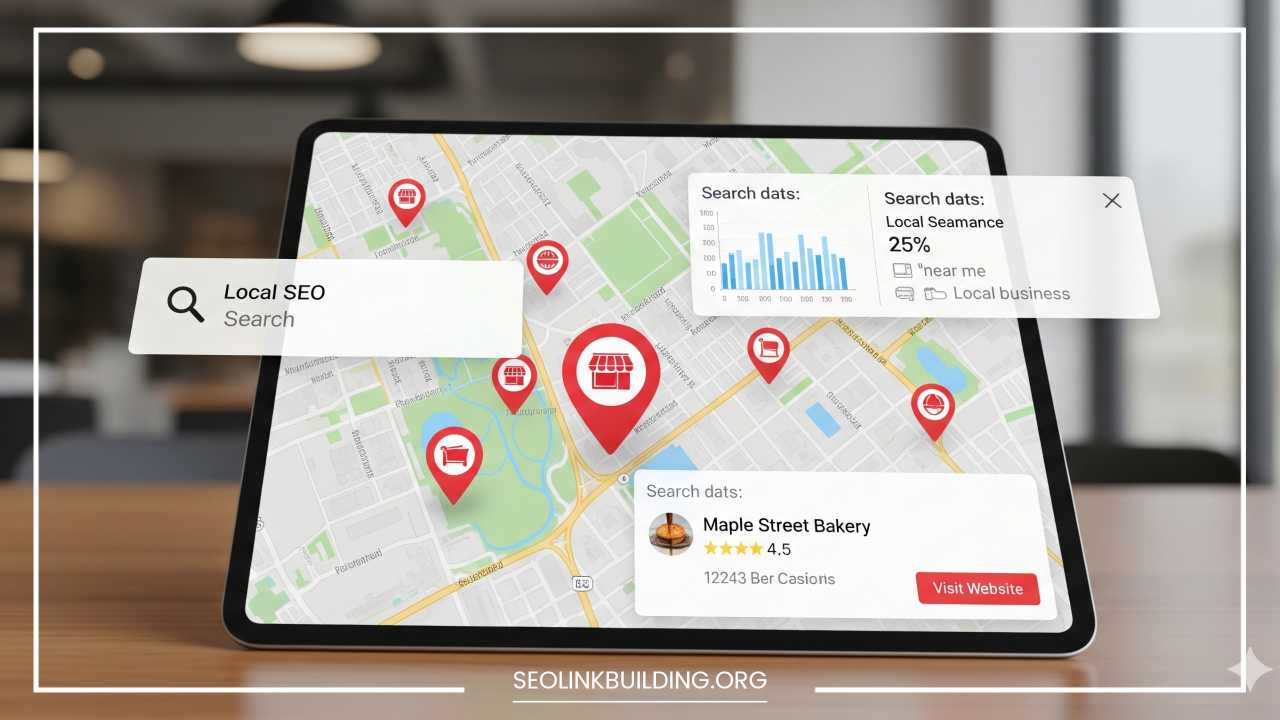
For most small businesses, the local community is their primary source of revenue. Local SEO ensures that when someone nearby searches for your services, your business appears in the “Map Pack” or local results.
Google Business Profile
The most critical step in local SEO is claiming and optimizing your Google Business Profile (GBP). This is a free listing that displays your business name, address, phone number (NAP), hours of operation, and photos. To optimize it:
-
Ensure your NAP information is 100% consistent across the web.
-
Select the correct business categories (e.g., “Italian Restaurant” vs. just “Restaurant”).
-
Upload high-quality photos of your location, products, or team.
-
Post regular updates, events, or offers to your profile to show activity.
Local Keywords and Geo-Targeting
Local keywords involve incorporating your city, neighborhood, or region name into your website’s metadata and content. Instead of just “plumbing services,” use “emergency plumbing services in Brooklyn.” This signals to Google that your business is highly relevant to users in that specific geographic area. Creating “Location Pages” for different cities you serve can also be a powerful tactic.
The Power of Reviews
Reviews and ratings are digital word-of-mouth and a major ranking signal for local search. Encourage satisfied customers to leave positive reviews on your GBP. Respond to all reviews—both positive and negative—to show that you are an engaged and professional business owner. High ratings improve your “click-through rate” from the search results, as users naturally gravitate toward highly-rated businesses.
Local Citations and Directories
Lastly, focus on local citations. A citation is any mention of your business name, address, and phone number on other websites, such as Yelp, Yellow Pages, or local Chamber of Commerce directories. Consistent citations across these platforms build trust with search engines, verifying that your business is legitimate and located where you say it is. Inconsistency in your phone number or address across these sites can actually hurt your rankings.
Content Marketing & SEO
Content marketing is the vehicle that carries your SEO strategy. For a small business, creating content is the best way to demonstrate authority and build trust with your audience. Blogs, “how-to” guides, and FAQ sections are excellent tools for capturing search traffic.
Strategic Content Types
When brainstorming content ideas, think about the problems your customers are trying to solve.
-
Blogs: Share industry news or deep dives into specific topics.
-
Guides: Offer comprehensive solutions to common problems (e.g., “The Ultimate Guide to Maintaining Your HVAC”).
-
FAQs: Answer the exact questions your customers ask over the phone or via email.
Answering Search Intent
This type of content answers search intent—it provides the exact information the user was looking for when they performed their search. There are four primary types of search intent you should target:
-
Informational: The user wants to learn (e.g., “how to fix a leaky faucet”).
-
Navigational: The user wants a specific site (e.g., “Home Depot website”).
-
Commercial: The user is researching (e.g., “best eco-friendly detergents”).
-
Transactional: The user is ready to buy (e.g., “plumber near me”).
Small businesses should focus heavily on informational and commercial intent content. By answering questions through FAQs, you can even land in the “People Also Ask” boxes on Google, which significantly increases visibility.
Multimedia Integration
To boost engagement, incorporate multimedia. A short video demonstrating a product or an infographic summarizing a complex process can keep users on your page longer. “Dwell time”—the amount of time a user spends on your site—is an indirect signal to search engines that your content is valuable and relevant.
Link Building & Off-Page SEO
If on-page SEO is about what you say about yourself, off-page SEO is about what others say about you. The most important component of off-page SEO is link building. A backlink is a link from another website to yours. Search engines view these as endorsements; the more high-quality, relevant websites that link to you, the more “authoritative” your site becomes.
Quality Over Quantity
For small businesses, link building should be about quality over quantity. One link from a local news outlet or a well-known industry blog is worth more than a hundred links from obscure, irrelevant sites. Effective strategies include:
-
Local Partnerships: Reach out to complementary (but not competing) local businesses. A wedding photographer and a florist could link to each other’s websites as recommended vendors.
-
Guest Posting: Write a guest article for a reputable industry publication. In exchange, you usually get a link back to your website in your author bio.
-
Local Sponsorships: Sponsoring a local charity event often results in a link from the organization’s “Sponsors” page.
-
Press Releases: If your business does something noteworthy, send a press release to local media.
Social Signals and Community
Social signals—likes, shares, and overall engagement on social media—do not directly affect your SEO ranking, but they do increase the reach of your content. More reach leads to more eyes on your site, which increases the likelihood of someone eventually linking to your content. Community engagement in local forums or Reddit groups also helps establish your brand as a helpful authority, driving branded searches.
Measuring SEO Success
You cannot improve what you do not measure. SEO is a long-term game, and it can take months to see significant results. Therefore, tracking the right Key Performance Indicators (KPIs) is essential to stay informed.
Key Metrics to Track
-
Organic Traffic: This is the number of visitors coming to your site from search engines (excluding paid ads). This is the most direct indicator of SEO success.
-
Keyword Rankings: Track where your target keywords appear in search results. Are you moving from page five to page one?
-
Conversion Rate: Traffic is useless if it doesn’t lead to action. Track how many visitors are signing up for newsletters, calling your business, or making a purchase.
-
Bounce Rate: If users leave your site immediately after arriving, it may indicate that your content isn’t meeting their expectations or your site is too slow.
Essential Analysis Tools
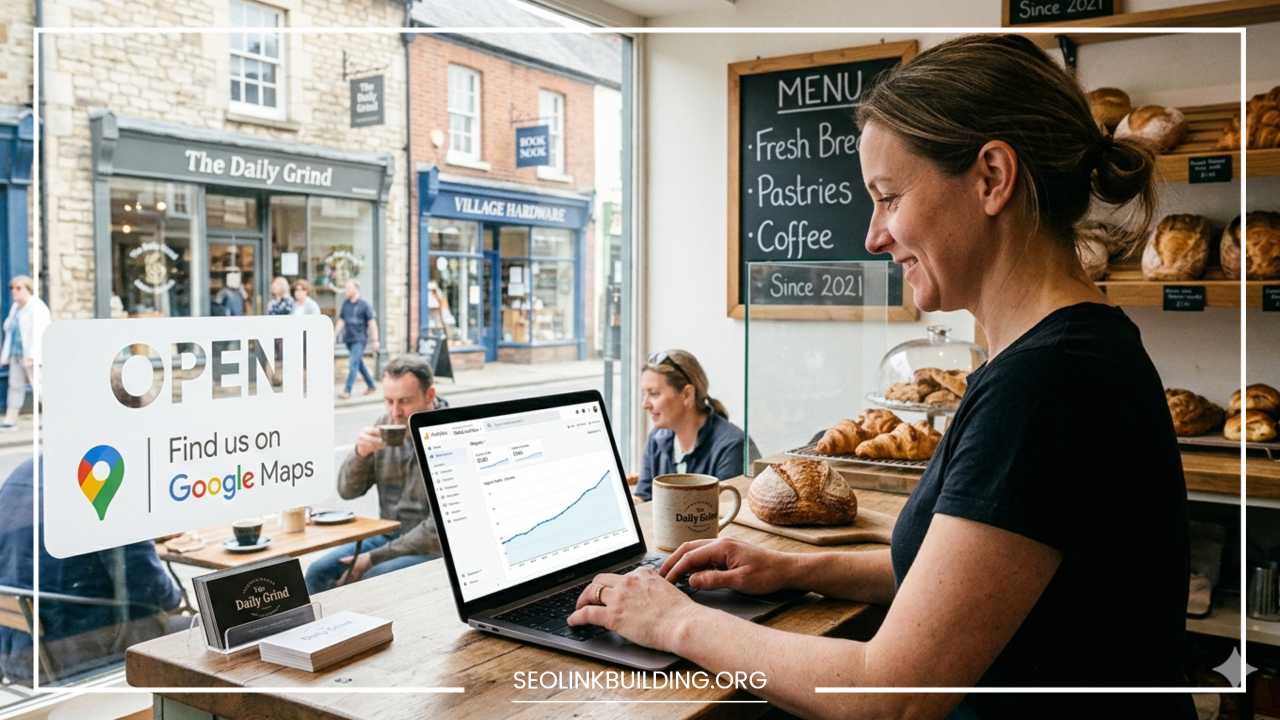
To track these metrics, you must use Google Analytics and Google Search Console. Google Analytics tells you what people do once they are on your site, while Search Console tells you how people find you and alerts you to any technical errors or security issues. Based on the data, you should adjust your strategy—double down on content that is already ranking well and improve pages that have high impressions but low click-through rates.
Common SEO Mistakes to Avoid
Small business owners often fall into a few common traps that can hinder their SEO progress.
Technical and Content Pitfalls
One of the biggest mistakes is keyword stuffing. Overloading your content with keywords makes it unreadable and can lead to search engine penalties. Always write for humans first and search engines second.
Another frequent error is ignoring mobile optimization. With the majority of web traffic coming from mobile devices, having a site that doesn’t scale properly to different screen sizes is a guaranteed way to lose rankings. Similarly, ignoring local SEO is a missed opportunity for any business with a physical location.
Structural Issues
Duplicate content is another issue. Copying descriptions from manufacturers or other websites confuses search engines, as they don’t know which version to index. Always create original content. Finally, many businesses have a poor website structure. If your site is a maze of unlinked pages and broken links, search engines will have a hard time crawling it. Keep your navigation simple and intuitive.
Final Thoughts
SEO is one of the most powerful tools available to small businesses today. It provides a way to gain visibility, build authority, and drive growth without the need for an astronomical marketing budget. While the world of search engines can seem daunting, the core principles remain constant: understand your audience, provide high-quality and relevant content, ensure your website is technically sound, and engage with your local community.
The journey to the top of the search results is a marathon, not a sprint. It requires patience, consistency, and a willingness to learn. However, the rewards—sustainable traffic, increased brand awareness, and a steady stream of new customers—are well worth the effort.
Now is the time to take control of your digital destiny. Start by auditing your current website, claiming your Google Business Profile, and researching the keywords your customers are actually using. If you stay committed to these strategies, you will see your online presence grow, and with it, your business. For more resources on growing your business through digital marketing, or to explore tools that can help you automate your SEO tasks, begin by setting up your Google Search Console account today. Your future customers are searching for you—make sure they can find you.