Local Online Marketing Tips for Small Business Growth

Local Online Marketing Tips for Small Business Growth
In the modern digital landscape, the phrase “shop local” is no longer just a window sticker or a community slogan; it is a digital behavior. As we move through 2026, the bridge between a physical storefront and a digital presence has completely dissolved. For a small business, local online marketing is the primary engine for growth, customer retention, and brand authority.
The statistics tell a compelling story. Over 90% of consumers use search engines to find local businesses, and nearly half of all Google searches have “local intent.” This means that when someone searches for a service, they aren’t looking for a global conglomerate; they are looking for a solution within a five-to-ten-mile radius. Mobile users are even more action-oriented, with a significant percentage of “near me” searches resulting in a store visit or a phone call within 24 hours.
Small businesses often feel intimidated by the massive marketing budgets of national chains. However, local marketing is the great equalizer. Search engines prioritize relevance and proximity over sheer size. By mastering local SEO, optimizing social engagement, and maintaining a stellar online reputation, a local hardware store can outrank a big-box retailer in its specific neighborhood. This guide provides a comprehensive roadmap to mastering these tactics and ensuring your business thrives in its own backyard.
What Is Local Online Marketing?
Local online marketing is the process of optimizing your digital presence to attract customers from a specific, well-defined geographic area. While general digital marketing focuses on reaching as many people as possible regardless of location, local marketing is hyper-targeted. It focuses on appearing in front of people who are physically close enough to visit your shop, book your services, or order delivery.
Online vs. Offline Local Marketing
Traditionally, local marketing meant flyers, newspaper ads, and billboards. While these still have a place, online local marketing is more efficient because it catches the consumer at the exact moment of “intent.” If someone sees a billboard for a plumber, they might forget the name by the time they need one. If they search “emergency plumber near me” on Google Maps, the business that appears at the top wins the job.
Online marketing also allows for two-way communication. A billboard cannot answer a customer’s question about whether you have a specific item in stock; a Google Business Profile or a Facebook message can. This interactivity builds trust far faster than passive traditional media.
Why Local Intent Is Powerful
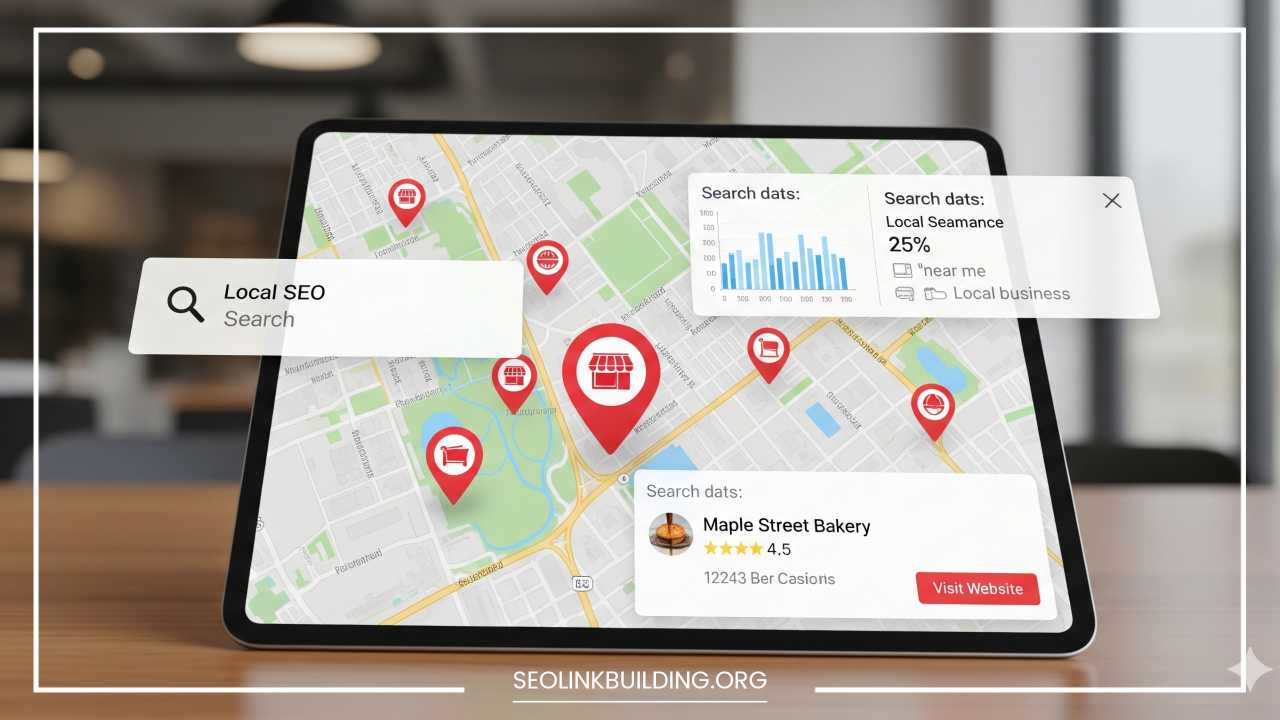
The rise of voice search (Siri, Alexa, and Google Assistant) has further amplified the power of local intent. Most voice queries are local in nature, such as “where is the closest coffee shop?” or “find an accountant in downtown Chicago.” Furthermore, Google’s “Local Pack”—the map and three business listings that appear at the top of search results—dominates user attention. Understanding local marketing means understanding how to live in that Local Pack.
Optimize Your Google Business Profile (GBP)
Your Google Business Profile is arguably your most important digital asset—more so than your website in some cases. It is your digital storefront. When people search for your business or the services you provide, your GBP is often the first thing they see.
Claiming and Verifying Your Profile
The first step is ensuring you own your listing. Visit the Google Business Profile gateway and search for your business. If it exists but isn’t yours, claim it. If it doesn’t exist, create it. Google will usually require verification via a phone code, email, or a postcard sent to your physical address to prove you are actually operating at that location. Do not skip this; an unverified profile has almost zero chance of ranking in the Local Pack.
Choosing the Right Categories
Your primary category tells Google what you are, while secondary categories tell Google what you have. If you run a “Pizza Restaurant,” that is your primary category. Secondary categories might include “Italian Restaurant,” “Pizza Delivery,” or “Catering Service.” Be specific but accurate; choosing irrelevant categories to “cast a wider net” can actually hurt your ranking by diluting your relevance.
Writing a Keyword-Rich Description
Your business description should be a blend of your brand story and strategic keywords. Use the 750 characters allowed to explain what makes you unique. Mention the specific neighborhoods you serve and the core services you provide. Avoid “keyword stuffing” (listing words without context); write for humans first, search engines second. Mention your history, your values, and what a customer can expect when they walk through your doors.
Adding Services and Products
Google allows you to create a digital menu or catalog. If you are a hair salon, list every type of cut, color, and treatment you offer with a brief description and price point. This not only helps customers make decisions but also gives Google more text to index, helping you show up for specific searches like “balayage hair color near me.”
The GBP Optimization Checklist
-
Photos and Videos: Businesses with photos receive 42% more requests for directions. Upload high-quality shots of your interior, exterior, products, and staff. Show the “human side” of your business.
-
Weekly Updates: Use “Google Posts” to share news, offers, or event details. These appear directly in your profile and signal to Google that your business is active and engaged.
-
Attributes: Mark if you are “Women-owned,” “Veteran-owned,” or if you offer “Free Wi-Fi” or “Outdoor Seating.” These micro-details are often filters that users apply during their search.
-
Q&A Section: You can actually post your own Frequently Asked Questions here. This prevents confusion and provides immediate answers to potential leads.
Local SEO for Small Businesses
Search Engine Optimization (SEO) is the science of making your website more attractive to search engines. For small businesses, this is divided into three pillars: On-Page, Technical, and Keyword-driven.
On-Page Local SEO
On-page SEO refers to the content and structure of your website.
-
NAP Consistency: Your Name, Address, and Phone number (NAP) must be identical across your website, GBP, and every social media profile. Even small discrepancies like “St.” vs. “Street” can confuse search algorithms. Use the footer of your website to display this info on every page.
-
Location Pages: If you serve multiple cities or neighborhoods, create a dedicated page for each. A “Plumbing in Austin” page and a “Plumbing in Round Rock” page allow you to target specific local searches more effectively. Each page should have unique content, local testimonials, and a map embed.
-
Schema Markup: Use “LocalBusiness” schema—a snippet of code—to help search engines understand your hours, address, and niche. This increases the chances of getting “rich snippets” (like star ratings or hours) directly in search results.
Technical SEO
If your site is slow or broken, Google won’t recommend it.
-
Mobile Optimization: Most local searches happen on smartphones. Your site must be responsive, meaning it adjusts perfectly to any screen size. Buttons should be easy to click with a thumb, and text should be legible without zooming.
-
Page Speed: Users expect a site to load in under three seconds. Use tools like Google PageSpeed Insights to find bottlenecks. Optimize images and use caching to speed things up.
-
HTTPS: Security is a ranking factor. Ensure you have an SSL certificate installed. Chrome now flags non-HTTPS sites as “Not Secure,” which can instantly kill a customer’s trust.
Local Keyword Research
Stop trying to rank for broad terms like “shoes.” Instead, target “running shoes in Seattle.”
-
Geo-modified Keywords: These include your city, county, or neighborhood (e.g., “Brooklyn yoga studio”).
-
“Near Me” Optimization: You don’t actually need to type “near me” on your website. Google determines “near me” based on the user’s GPS location and your NAP info. Focus on city and neighborhood names instead.
-
Google Autocomplete: Start typing your service into Google and see what suggestions pop up. These are the real phrases your neighbors are using. If you see “best HVAC repair for old homes,” and you specialize in that, make it a headline.
Online Reviews and Reputation Management
In a local market, trust is currency. Online reviews are the digital version of word-of-mouth recommendations, and they heavily influence Google’s ranking algorithm.
Why Reviews Impact Rankings
Google wants to provide the best experience for its users. If a business has a 4.8-star rating with 500 reviews, Google views it as a “safe bet” and is more likely to show it at the top of the search results. Velocity (how often you get reviews), recency (how new they are), and diversity (getting reviews on different platforms) also matter.
How to Ask for Reviews
Don’t be shy. Most satisfied customers are happy to leave a review, but they need a reminder.
-
The Follow-Up: Send a text or email shortly after the service is completed.
-
QR Codes: Place QR codes at your checkout counter or on your business cards that link directly to your Google review page.
-
Training Staff: Ensure your team knows how to ask. A simple “If you enjoyed your service today, it would mean the world if you left us a review” goes a long way.
-
Review Platforms: While Google is king, don’t ignore Yelp, Facebook, or industry-specific sites like Angie’s List or Tripadvisor.
Responding to Feedback
You must respond to every review—good and bad.
-
Positive Reviews: Thank the customer and mention a specific detail (e.g., “Glad you enjoyed the latte, Sarah! We love that bean roast too.”).
-
Negative Reviews: Stay professional. Acknowledge the issue, apologize, and move the conversation offline. A public response like, “We’re sorry to hear about your experience. Please call us at [number] so we can make it right,” shows potential customers that you are accountable and care about quality. Never get into a “flame war” online.
Local Content Marketing Strategy
Content marketing isn’t just for national blogs. For a local business, content should be about becoming a “local authority.” You want to be the business that knows the neighborhood best.
Writing for Your Community
Create content that solves local problems or celebrates local events. If you are a landscaper in Phoenix, write a blog post titled “The Best Drought-Resistant Plants for Phoenix Backyards.” This targets local keywords while providing genuine value to your neighbors. This builds a “halo effect”—even if someone isn’t ready to buy today, they will remember you as the expert when they are.
Community Involvement and Storytelling
People buy from people, not just businesses. Share your story. Why did you start this business in this town?
-
Event Guides: “The Top 10 Things to Do in [City] This Summer.”
-
Case Studies: “How We Helped a [Neighborhood] Homeowner Save 30% on Heating.”
-
Charity Work: Post about your sponsorship of a Little League team or your participation in a local food drive. Use photos of your team at the event.
FAQs as Content
Look at your sent emails. What questions do customers ask you every single day? Each one of those is a blog post. If you’re a mechanic, write “Why does the salt on [City] roads ruin your brakes?” This is highly searchable and incredibly relevant to your specific customer base.
Social Media for Local Businesses
Social media is where your brand personality shines. For local growth, focus on engagement over follower counts. 1,000 local followers who live in your zip code are worth more than 100,000 followers from around the globe.
Facebook and Instagram
These remain the heavyweights for local business. Use Facebook Groups (the modern-day town square) to join community discussions. Be helpful first, promotional second. On Instagram, use Geo-tags on every post and story. When someone clicks a geo-tag for your city, they should see your content appearing in the “Recent” or “Top” posts.
Local Hashtags and Tagging
Use a mix of broad and hyper-local hashtags. For a bakery in Miami, use #MiamiEats, #CoralGablesBakery, and #MiamiSmallBusiness. Additionally, tag other local businesses. If you’re a coffee shop and you use milk from a local dairy, tag them! They might share your post to their own local audience, expanding your reach for free.
Short-Form Video (Reels, TikTok)
Video content is highly favored by algorithms in 2026. You don’t need a film crew. Show “behind the scenes” footage, introduce your staff, or do a “day in the life” of your business. Authenticity performs better than polished, expensive commercials. A 15-second video of a fresh tray of cookies coming out of the oven is more effective than a static graphic.
Local Paid Advertising
Sometimes you need to pay for visibility to jumpstart growth. Local ads allow for surgical precision in who sees your message.
Google Local Search Ads
These are the ads that appear at the very top of Google Maps and the Local Pack. They are “Pay-Per-Click” (PPC), meaning you only pay when someone actually engages with your ad. This is one of the most cost-effective ways to get “hot” leads who are currently looking for what you offer.
Google Local Services Ads (LSAs)
For service-based businesses like plumbers, electricians, or locksmiths, LSAs are a game-changer. These ads appear at the very top of search results with a “Google Guaranteed” checkmark. Unlike standard ads, you pay “per lead” rather than per click. If someone calls you through the ad, you pay. If they just look at it, you don’t.
Facebook and Instagram Geo-Targeting
Facebook’s ad platform allows you to drop a pin on your shop and show ads only to people within a 1-to-5-mile radius. You can even target people who “recently visited” your area—perfect for restaurants or tourist attractions. Use these ads for “top-of-funnel” awareness, like promoting a grand opening or a seasonal sale.
Local Link Building Strategies
In SEO, a “link” from another website is a vote of confidence. For local SEO, you want “local” votes. A link from the local high school’s website or the city’s newspaper is often more valuable for local rankings than a link from a national blog.
Building a Local Link Profile
-
Chamber of Commerce: Joining your local Chamber usually results in a high-quality link from their directory to your site. It also provides networking opportunities that lead to more organic mentions.
-
Local Directories: Ensure you are listed on Yelp, Yellow Pages, and niche-specific directories (like Houzz for contractors or Zocdoc for doctors).
-
Sponsorships: Sponsoring a 5K run or a high school theater production often earns you a mention and a link on the organization’s “Sponsors” page. It’s “doing good” while also doing good SEO.
-
Partnering: If you are a wedding photographer, trade links with a local florist or venue. This “referral” network is highly effective for both SEO and actual business leads.
Email and SMS Marketing for Local Customers
Once you’ve attracted a local customer, you need to keep them. Email and SMS are the best tools for driving repeat business and increasing “customer lifetime value.”
Building Your List
Digital marketing shouldn’t just be about finding new people; it should be about capturing the ones you have. Ask customers to join your “VIP Club” at the point of sale. Offer an immediate incentive, like a free appetizer or a 10% discount on their next service. Use a simple tablet at the checkout counter to collect names and numbers.
Loyalty Programs and Promotions
-
Birthday Offers: A simple “Happy Birthday! Have a treat on us” email can create a customer for life. It feels personal and local.
-
Appointment Reminders: For service businesses, automated SMS reminders reduce “no-shows” and keep your schedule full.
-
SMS Flash Deals: If you have a slow Tuesday, send an SMS blast: “Slow Tuesday Special! 20% off all services until 5 PM today.” Because SMS has a nearly 98% open rate, this can fill your schedule instantly in a way that an email or social post can’t.
Track and Measure Your Results
Marketing without tracking is just guessing. You need to know which of these tactics is actually putting money in the bank.
Google Business Profile Insights
This dashboard is a goldmine. It shows you how many people called you, requested directions, or visited your website directly from your Google listing. It even shows you which keywords people used to find you. If you see people searching for “organic dog food” and you realize you have that in stock but haven’t highlighted it, you now have a new marketing angle.
Call Tracking and Search Console
Use a unique phone number for your ads. This allows you to know exactly which marketing channel generated a phone call. Meanwhile, Google Search Console tells you how your website is performing in “organic” (non-paid) search. If your “Location Page” for a certain city isn’t getting clicks, it might need more content or better meta-descriptions.
Conversion Tracking
In Google Analytics, set up “Goals.” A goal could be someone filling out a contact form or clicking your “Book Now” button. This helps you calculate your Return on Investment (ROI). If you spend $500 on Facebook ads and it results in $5,000 of new bookings, you know that campaign is a winner.
Common Local Online Marketing Mistakes
Even with the best intentions, many small businesses stumble. Avoid these common pitfalls to stay ahead of the competition:
-
Inconsistent NAP Information: If your address is “123 Main St” on Google and “123 Main Street” on Yelp, it can hurt your credibility with search engines. Be meticulous about formatting.
-
Ignoring Negative Reviews: Leaving a bad review unanswered suggests you don’t care about customer service. Addressing it shows you are human and professional.
-
Broad Keyword Targeting: Trying to rank for “Legal Services” is a waste of money. Aim for “Divorce Lawyer in [City Name].”
-
No Clear Call to Action (CTA): Every page on your site and every social post should tell the customer what to do next (e.g., “Call now,” “Visit our shop,” “Download the coupon”). Don’t make them guess.
-
Neglecting Mobile Users: If your website is hard to navigate on a phone, local customers will bounce to a competitor within seconds. Speed and ease of use are paramount.
-
Set It and Forget It: Marketing is a garden. If you don’t water it (update posts, respond to reviews, refresh content), it will wither.
Final Thoughts and Action Plan
Local online marketing is not a “set it and forget it” task. It requires consistent effort and a genuine connection to your community. However, the rewards for a small business are immense. By dominating your local digital space, you build a resilient business that isn’t just a name on a screen, but a pillar of the neighborhood.
In 2026, customers want to support businesses that are present, responsive, and local. By following this guide, you aren’t just “doing SEO”—you are building a relationship with your community.
Your 5-Step Quick-Start Checklist
-
Claim and Verify your Google Business Profile and fill out every single section, including the “Services” and “Products” tabs.
-
Audit your NAP (Name, Address, Phone) across the web. Use a tool like Moz Local or BrightLocal to find and fix inconsistencies.
-
Ask three loyal customers for a review this week. Respond to them as soon as they appear.
-
Create one piece of local content. Write a short blog post about why you love your city or a specific problem you solved for a local client.
-
Install Google Analytics and Search Console on your website so you can start seeing where your traffic is coming from and what they do when they get there.
The journey to local growth begins with these small, manageable steps. Start today, stay consistent, and watch your local footprint—and your revenue—expand.