Digital Marketing Tactics: Proven Strategies to Grow Your Brand

Digital Marketing Tactics: Proven Strategies to Grow Your Brand
In the hyper-connected landscape of 2026, the term digital marketing tactics has evolved from a luxury for tech startups into the very lifeblood of global commerce. For any brand seeking to establish a foothold in today’s economy, the question is no longer whether to engage in digital marketing, but which specific tactics will yield the highest return on investment. The digital arena is crowded, noisy, and governed by ever-changing algorithms. To rise above the static, brands need more than just a presence; they need a sophisticated, integrated approach that prioritizes proven strategies over fleeting trends.
The evolution of digital marketing has moved from the era of “spray and pray” advertising to a precision-based science. In the early days, simply having a website and a few banner ads was enough to capture attention. Today, consumers are more discerning, privacy-conscious, and tech-savvy. They expect personalized experiences, instant gratification, and authentic brand storytelling. This shift means that modern tactics must be rooted in data, empathy, and technical excellence.
In this comprehensive guide, we will explore the foundational and advanced digital marketing tactics required to drive brand growth, increase visibility, and maximize conversions. From the long-term compounding value of Search Engine Optimization (SEO) to the immediate impact of paid advertising and the relationship-building power of email, you will learn how to build a scalable framework that adapts to the needs of your audience.
Understanding Digital Marketing Tactics vs. Strategy
Before diving into the “how,” it is vital to distinguish between strategy and tactics. These terms are often used interchangeably, but confusing them can lead to a fragmented marketing effort that lacks a cohesive direction.
A digital marketing strategy is your master plan—your “north star.” It defines your long-term goals, such as increasing market share by 15% or becoming the top-of-mind brand for sustainable fashion. Strategy involves identifying your target audience, defining your unique value proposition, and setting the overarching objectives for your business. It is the conceptual work that happens before a single post is scheduled or a single ad is bought.
Digital marketing tactics, on the other hand, are the specific actions and tools used to execute that strategy. If your strategy is brand growth, your tactics might include an SEO-driven content plan, a series of targeted LinkedIn ads, or a monthly email newsletter. Tactics are the “boots on the ground” maneuvers.
To illustrate:
-
Strategy: To become the leading authority in home office ergonomics for remote workers within two years.
-
Tactics: Publishing weekly long-form blog posts on spine health, running Instagram video ads showcasing desk setups, and launching an automated email series for new subscribers that offers a “Home Office Checklist.”
Why does this alignment matter? Without a strategy, your tactics are disconnected pulses of energy that fail to build momentum. You might get a “viral” hit on TikTok, but if that video doesn’t lead viewers back to a conversion point defined by your strategy, that growth is hollow. Conversely, a strategy without tactics is a dormant document. Success lies in the symbiotic relationship between the vision and the execution.
Search Engine Optimization (SEO) Tactics for Long-Term Growth
SEO remains the cornerstone of sustainable brand visibility. Unlike paid channels, where traffic stops the moment you stop paying, SEO provides a compounding return on investment. By optimizing your digital presence to align with search engine algorithms, you ensure that your brand is present at the exact moment a potential customer is looking for a solution.
Keyword Research and Search Intent
Modern SEO starts with understanding search intent. It is no longer enough to rank for high-volume keywords; you must rank for the right keywords. In 2026, search engines are sophisticated enough to understand the “why” behind a query. Search intent generally falls into four categories:
-
Informational: The user wants to learn something (e.g., “how to fix a leaky faucet”). Tactics here involve educational blog posts and guides.
-
Navigational: The user is looking for a specific site or brand (e.g., “Nike running shoes”). Tactics involve ensuring your brand name and key pages are easily findable.
-
Commercial Investigation: The user is researching products but hasn’t committed (e.g., “best laptops for video editing”). Tactics include comparison articles and “top 10” lists.
-
Transactional: The user is ready to buy (e.g., “MacBook Pro 16 inch price”). Tactics involve optimized product pages and clear checkout paths.
On-Page SEO: Structuring for Success
On-page SEO involves everything you do on your own website to help search engines understand your content. This starts with Title Tags and Meta Descriptions. These aren’t just for bots; they are your “digital storefront.” A meta description should act as an ad for the page, using compelling language to drive a high click-through rate (CTR).
Internal linking is another critical tactic. By linking from high-authority pages on your site to newer or deeper pages, you distribute “link equity” and help search engines crawl your entire site more effectively. Use descriptive anchor text to give context to both the user and the search engine.
Technical SEO: The Silent Killer
You can have the best content in the world, but if your technical foundation is weak, you will never rank. Site speed is a primary ranking factor. In a world of 5G and instant gratification, a one-second delay in page load time can lead to a 7% drop in conversions.
Mobile-friendliness is equally critical. Google uses mobile-first indexing, meaning it looks at the mobile version of your site to determine rankings. Ensure your design is responsive, buttons are easy to click on small screens, and text is legible without zooming.
Link-Building and Authority Signals
Think of links as the currency of the internet. A link from a reputable site like The New York Times or a major industry journal is a “vote of confidence.” Tactical link-building today isn’t about spamming forums; it’s about Digital PR. This involves creating original research, proprietary data, or unique insights that journalists and other bloggers want to link to.
Content Marketing Tactics That Build Trust & Authority
If SEO is the engine, content is the fuel. Content marketing is the practice of creating and distributing valuable, relevant, and consistent material to attract and retain a clearly defined audience. It is the bridge between “stranger” and “customer.”
Blogging for Brand Awareness
Blogging is not dead; it has simply matured. In 2026, the tactic is to move away from “fluff” pieces and toward authoritative, long-form content. Articles that exceed 2,000 words often rank better because they provide a comprehensive answer to a user’s problem. This is known as “Skyscraper Content”—finding the best piece of content on a topic and building something even better, more updated, and more visually appealing.
Content Types and the Funnel
Your content should mirror the customer journey:
-
Top of Funnel (Awareness): Infographics, “how-to” videos, and broad blog topics that introduce the problem.
-
Middle of Funnel (Consideration): Case studies, white papers, and webinars that showcase your specific expertise and solution.
-
Bottom of Funnel (Decision): Product demos, testimonials, and detailed pricing guides.
The Role of Storytelling
Humans are hardwired for stories. A tactic that separates great brands from mediocre ones is the ability to weave a narrative. Instead of listing features, tell the story of a client whose life was changed by your service. Storytelling humanizes your brand, making it more memorable in a sea of sterile corporate messaging.
Content Distribution Strategies
Creating content is only 20% of the battle; the other 80% is distribution. Tactical distribution includes:
-
Repurposing: Turning one long-form article into five LinkedIn posts, three TikTok scripts, and an infographic.
-
Syndication: Publishing your content on platforms like Medium or industry-specific hubs to reach new audiences.
-
Employee Advocacy: Encouraging your team to share content on their professional networks.
Social Media Marketing Tactics to Increase Engagement
Social media is no longer just a megaphone for broadcasting messages; it is a two-way street for community building. To grow your brand on social, you must be social.
Platform-Specific Nuances
Every platform has a unique “culture” and algorithm. Tactical success requires adapting your content to fit:
-
Instagram/TikTok: High-energy, short-form video (Reels/TikToks). The tactic here is to capture attention in the first 1.5 seconds.
-
LinkedIn: Professional, thought-leadership-oriented text and document posts. This is the place for “behind-the-scenes” of your business operations.
-
X (formerly Twitter): Real-time engagement and “threads” that break down complex topics into bite-sized thoughts.
Organic vs. Paid Social
Organic reach—the number of people who see your posts without you paying—has declined across almost all platforms. To combat this, a dual-tactic approach is necessary. Use organic social to nurture your existing fans and provide customer service. Use paid social to reach specific demographics who haven’t discovered you yet. Even a small “boost” on a high-performing organic post can significantly expand your brand’s footprint.
Building Community
True brand growth comes from advocacy. This means moving beyond “followers” and toward “fans.” Tactics for community building include hosting live Q&A sessions, responding to every comment (even the negative ones), and creating “user-generated content” (UGC) campaigns where customers share their own photos and videos using your product.
Email Marketing Tactics for Lead Nurturing & Retention
Despite the flashiness of social media, email remains the highest ROI channel in digital marketing. This is because you “own” the connection. If an algorithm changes tomorrow, your email list remains your most valuable asset.
Building an Ethical List
The days of buying email lists are over. Not only is it ineffective, but it can also land you in legal trouble. The modern tactic is to use lead magnets. These are high-value “bribes” like a free e-book, a discount code, or a seat at a private webinar offered in exchange for an email address.
Segmentation and Personalization
The “blast” email is dead. If you send a discount for men’s shoes to the women on your list, you lose trust. Segmentation involves dividing your list based on data:
-
Demographics: Age, gender, location.
-
Behavioral: What they bought, what links they clicked, or when they last opened an email.
-
Stage of Journey: Are they a new subscriber or a loyal customer of five years?
Automation and Lifecycle Marketing
Automation allows you to send the right message at exactly the right time. Key automated tactics include:
-
The Welcome Sequence: A series of 3–5 emails that introduce your brand and provide value immediately after someone signs up.
-
Abandoned Cart Recovery: A gentle nudge to users who added items to their cart but didn’t finish the purchase.
-
Win-Back Campaigns: Targeting customers who haven’t engaged in 90 days with a special “we miss you” offer.
Paid Advertising Tactics for Faster Results
While SEO and content marketing are “marathons,” paid advertising (PPC) is a “sprint.” It allows you to buy your way to the top of the results page or the center of a social feed.
Google Ads: Capturing Intent
Google Ads (Search) is powerful because it targets people who are actively looking for what you sell. The tactic here is negative keyword management. This involves telling Google what you don’t want to rank for, ensuring you aren’t wasting money on irrelevant clicks. For example, if you sell high-end watches, you might add “cheap” or “free” as negative keywords.
Display and Retargeting
Display ads appear on other websites, while retargeting follows a user after they leave your site. This is a crucial tactic for brand recall. If a user looked at a specific pair of boots on your site, showing them an ad for those same boots while they are reading the news a day later is a highly effective way to bring them back to complete the sale.
Ad Creative and Copy
In paid ads, your creative is your “hook.” In 2026, the trend is toward unpolished, authentic-looking ads—especially on social media. High-production commercials often get scrolled past, while a video that looks like it was filmed on a phone by a real customer often yields higher engagement.
Conversion Rate Optimization (CRO) Tactics
Traffic is a “vanity metric” if it doesn’t lead to sales. CRO is the science of making your current traffic work harder for you.
Landing Page Best Practices
Every ad campaign should have a dedicated landing page. Tactics for high conversion include:
-
Eliminating the Header/Footer: Remove links that might lead the user away from the conversion goal.
-
The Power of One: One offer, one headline, one call-to-action (CTA).
-
Social Proof: Placing testimonials or “trusted by” logos directly next to the CTA button to reduce “buyer’s friction.”
A/B Testing: Never Stop Experimenting
You should never assume you know what your audience likes. A/B testing allows you to test variables:
-
Test a green button vs. a red button.
-
Test a “Buy Now” CTA vs. a “Get Started” CTA.
- Test a long form vs. a short form.By making incremental changes based on data, you can significantly increase your profit margins without increasing your ad spend.
UX and Friction Reduction
User Experience (UX) is about removing the hurdles between a user and their goal. If your checkout process has five pages, try to reduce it to one. If your site requires a login to buy, offer a “guest checkout” option. Every click you remove increases the likelihood of a completed transaction.
Data-Driven Marketing & Analytics Tactics
In the digital world, data is the “truth.” Without it, you are just guessing. Data-driven marketing involves using numbers to justify your actions and refine your tactics.
Key Metrics (KPIs) to Monitor
To grow your brand, you must move beyond “likes” and look at:
-
Customer Acquisition Cost (CAC): How much do you spend in marketing to get one new customer?
-
Customer Lifetime Value (CLV): How much is that customer worth to you over the next year or five years?
-
Attribution: Which channel actually closed the sale? Was it the first Facebook ad they saw, or the final email they opened?
Tools for Growth
Google Analytics 4 (GA4) is the foundation, but advanced brands use Heatmapping tools (like Hotjar) to see where users get stuck on a page. They also use CRM (Customer Relationship Management) systems like Salesforce or HubSpot to track a single user’s journey from their first click to their tenth purchase.
Emerging Digital Marketing Tactics to Watch
As we look toward the future of 2026 and beyond, several “fringe” tactics are becoming essential for brand growth.
AI and Machine Learning
AI is no longer just for generating text. It is being used for Dynamic Pricing (adjusting prices based on demand), Predictive Customer Service (identifying which customers are likely to quit and offering them an incentive to stay), and Hyper-Personalization (changing the actual layout of a website based on who is visiting).
Voice and Visual Search
With the rise of smart assistants, people are searching with their voices. This requires a tactic of targeting “natural language” phrases. Similarly, visual search (using a camera to find a product) is growing. Optimizing your product images with high-quality metadata is the key to being found in this new search landscape.
Omnichannel Integration
The modern customer journey is messy. They might see an ad on Instagram, research on a laptop, and finally buy through a mobile app. An omnichannel tactic ensures that the experience is seamless. If they put an item in their cart on the app, it should be there when they log in on their desktop.
Common Digital Marketing Mistakes to Avoid
Even the best-funded campaigns can fail if they fall into these common traps:
-
Ignoring the “Bottom” of the Funnel: Many brands spend all their money on “awareness” but forget to optimize the checkout process or the “thank you” page.
-
Over-Automation: While automation is great, losing the human touch can alienate customers. If a customer is complaining on social media, a bot response is the worst thing you can provide.
-
Inconsistency: Digital marketing is about frequency and trust. Posting five times in one week and then disappearing for a month destroys your brand’s perceived reliability.
-
Chasing Every New Shiny Object: You don’t need to be on every platform. It is better to dominate two platforms than to be mediocre on six.
-
Focusing on Quantity over Quality: In 2026, algorithms penalize “spammy” content. One great blog post is worth more than fifty AI-generated, low-value articles.
Final Thoughts: Building a Scalable Digital Marketing Framework
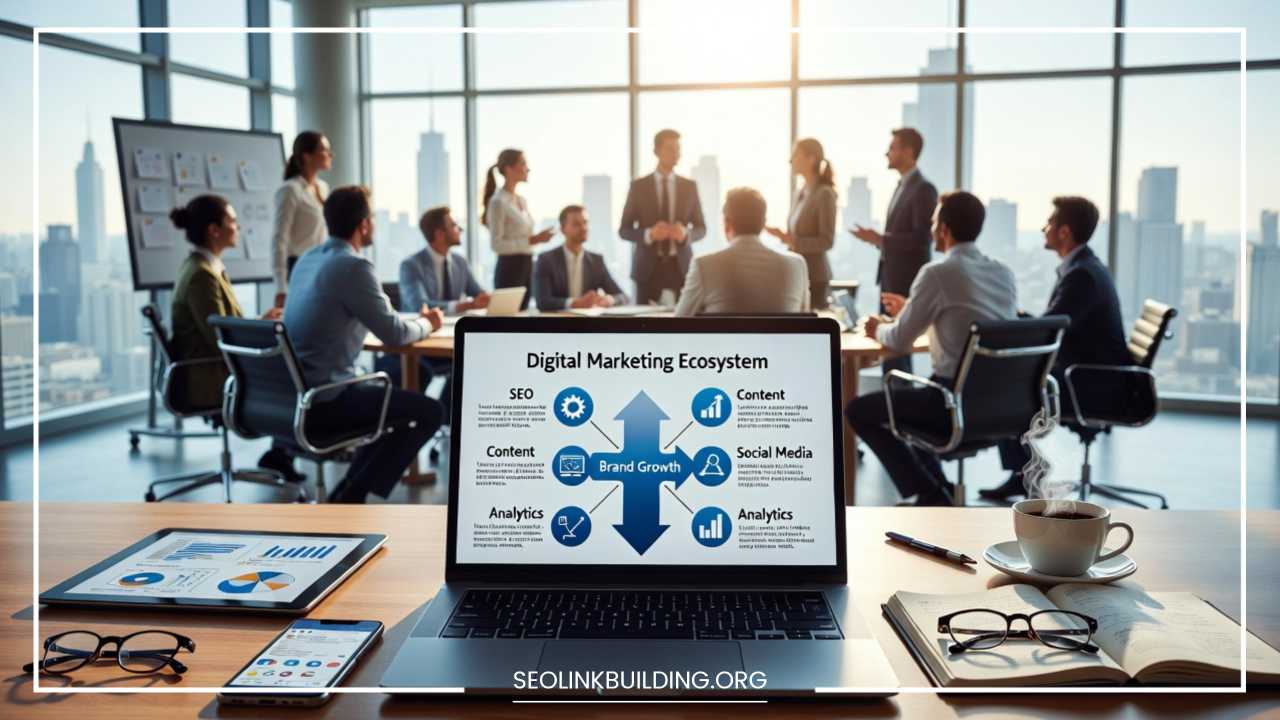
Digital marketing is not a “set it and forget it” endeavor. It is a living, breathing part of your business. The tactics outlined in this guide—from the structural integrity of SEO to the psychological triggers of CRO—form a comprehensive ecosystem. When these elements work together, they create a “flywheel effect” where each success feeds into the next, making your brand growth more efficient over time.
To begin, don’t try to implement all these tactics at once. Start with your strategy. Define who you are and who you serve. Once that is clear, pick two foundational tactics—likely SEO and Email Marketing—and master them. As you gather data and generate revenue, reinvest those profits into “accelerant” tactics like Paid Ads and Advanced Automation.
The brands that will win in the coming years are those that remain obsessed with the customer experience. Technology will change, and platforms will rise and fall, but the human desire for value, connection, and ease of use remains constant. Use these tactics not just to “sell,” but to serve your audience, and brand growth will follow naturally.