Plumber Search Engine Optimization for Local Rankings

Plumber Search Engine Optimization for Local Rankings
Why Local SEO Matters for Plumbers: In the plumbing industry, timing is everything. When a homeowner discovers a burst pipe at 2:00 AM or a failing water heater on a Monday morning, they aren’t looking for a brand they recognize from a national television commercial. They are looking for a solution that is immediate, reliable, and, most importantly, nearby. This is the essence of high-intent local service marketing.
Plumbing is a “need-it-now” business. Unlike retail, where a customer might browse for weeks, a plumbing lead often converts within minutes of the initial search. Most of these searches happen on mobile devices and include phrases like “plumber near me,” “emergency drain cleaning,” or “water heater repair in [City Name].” If your business doesn’t appear at the top of these search results, you are effectively invisible to the most motivated customers in your service area.
Historically, plumbers relied on the Yellow Pages or local newspaper ads. Today, the digital landscape has replaced the physical directory. Search Engine Optimization (SEO) is the process of ensuring your business is the first one a customer sees when they turn to Google. While traditional marketing pushes a message out to a broad audience, SEO pulls in customers who are already actively looking for your specific services.
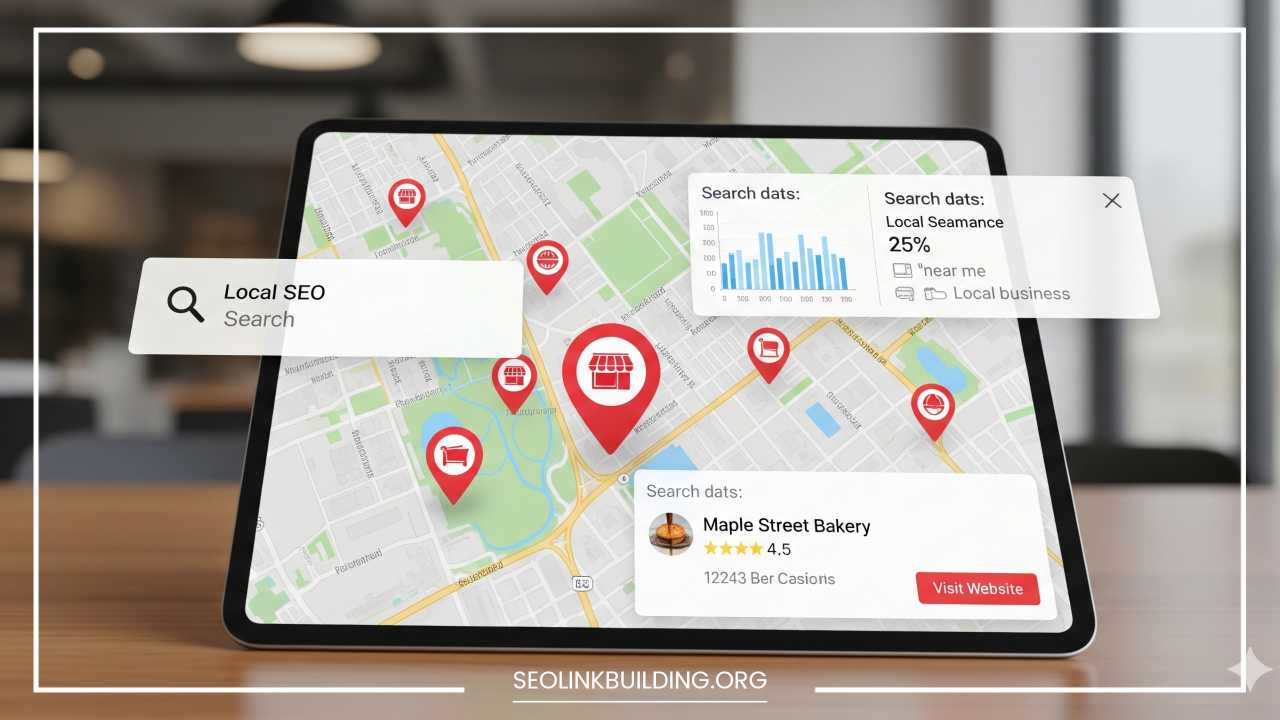
Local rankings are generally divided into two main areas: the Google Map Pack (the three listings that appear alongside a map) and the organic search results below them. Achieving visibility in both areas requires a specialized strategy known as Local SEO. This article provides a comprehensive roadmap for plumbers to dominate their local market, increase their lead flow, and build a sustainable digital asset that generates revenue long after an ad campaign ends.
What Is Plumber Search Engine Optimization?
Plumber SEO is a specialized branch of digital marketing focused on optimizing a plumbing company’s online presence to increase visibility in local search results. Unlike national SEO, which aims to drive traffic from anywhere in the country, plumber SEO is hyper-targeted. The goal is not just to get traffic, but to get traffic from individuals within your specific service radius who require plumbing assistance.
For service-area businesses (SABs) like plumbers, SEO presents unique challenges. Often, a plumber may not have a traditional storefront where customers visit; instead, they go to the customer. This requires a different approach to Google Business Profiles and location-based keywords. A successful strategy must balance four core components:
-
On-Page SEO: Optimizing the actual content and code on your website.
-
Off-Page SEO: Building the authority of your brand through external links and citations.
-
Technical SEO: Ensuring search engine crawlers can easily read and index your site.
-
Local Signals: Managing reviews, local maps, and location-specific data.
It is important to set realistic expectations regarding the timeline for results. SEO is a marathon, not a sprint. While a well-optimized Google Business Profile can sometimes see movement within weeks, a full-scale organic ranking strategy typically takes six to twelve months to reach its full potential. However, once established, these rankings provide a much higher return on investment (ROI) than “pay-to-play” models like Google Ads, where leads stop the moment you stop paying.
How Google Ranks Local Plumbers
To outrank your competitors, you must understand the “algorithm” Google uses to determine who gets the top spot. For local searches, Google prioritizes three primary pillars: Relevance, Distance, and Prominence.
Relevance
Relevance refers to how well your business matches what the user is searching for. If someone searches for “sump pump repair,” Google will look for businesses that explicitly list this service on their website and Google Business Profile. This is why having detailed service pages is more effective than a single “Services” page that lists everything in a bulleted list.
Distance
Distance (or proximity) is a major factor, though it is the one you have the least control over. Google tries to show the results closest to the user’s physical location at the time of the search. However, proximity alone is not enough to rank. A highly prominent plumber five miles away will often outrank a mediocre plumber two blocks away.
Prominence
Prominence is essentially your business’s reputation and “fame” on the web. Google measures this through:
-
The number and quality of backlinks to your site.
-
The quantity and sentiment of your Google reviews.
-
Your presence in local directories and news.
-
The accuracy of your business information across the web.
The Google Map Pack is the “Holy Grail” for plumbers. It sits at the very top of the search results and generates the majority of phone calls. To get there, Google analyzes behavioral signals—such as how many people click your “Call” button versus your competitors’—to determine if you are the best answer for the user’s problem.
Keyword Research for Plumbing Businesses
Keyword research is the foundation of your entire SEO strategy. It is the process of identifying the exact words and phrases your customers use when they have a plumbing problem.
Service-Based Keywords
Start with your core offerings. These are high-volume terms that describe what you do:
-
Drain cleaning
-
Pipe repair
-
Water heater installation
-
Emergency plumbing
-
Sewer line replacement
-
Leak detection
Location-Based Keywords
Combine your services with your service areas. For example, “Plumber in Dallas” or “Drain cleaning Plano.” You should also target neighborhood-level keywords if you operate in a large metropolitan area, as these often have lower competition and higher conversion rates.
Intent-Driven Keywords
Not all keywords are created equal. A user searching for “how to fix a leaky faucet” has informational intent; they want to do it themselves. A user searching for “emergency plumber near me” has transactional intent; they are ready to hire. Your strategy should prioritize transactional keywords while using informational keywords for blog posts to build authority.
Tools and Mapping
Plumbers can use free tools like Google Keyword Planner or Google Search Console to see what terms are already driving traffic. Once you have a list, “map” each keyword to a specific page on your site. For instance, your “Tankless Water Heater” keyword should point to a dedicated page about tankless heaters, not your homepage.
Optimizing Your Plumbing Website for Local SEO
Your website is your digital storefront. If it is disorganized or slow, Google will not recommend it to users.
On-Page SEO Essentials
Every page on your site should be optimized for a specific service and location.
-
Title Tags: This is the blue link that appears in search results. A good format is: Service + City | Business Name. For example: Emergency Drain Cleaning in Phoenix | ABC Plumbing.
-
Meta Descriptions: These are the short snippets below the title. While not a direct ranking factor, they influence whether people click. Make them punchy and include a call to action like “Call for 24/7 service.”
-
Header Tags (H1, H2, H3): Use your H1 for your primary service and city. Use H2s for sub-topics like “Signs You Need Professional Rooter Service.”
Content Strategy
Google rewards “depth of expertise.” Instead of one page for “Plumbing Services,” create individual pages for every service you offer. Furthermore, if you serve multiple cities, create unique “City Pages.” However, avoid “doorway pages” that are just copies of each other with the city name swapped out; each city page should have unique content about your work in that specific community.
Schema Markup
Schema is a hidden code you add to your website that helps Google understand your data. For plumbers, LocalBusiness and Service schema are vital. This code tells Google your physical address, phone number, price range, and service area in a language the search engine understands perfectly.
Google Business Profile Optimization for Plumbers
For local rankings, your Google Business Profile (GBP) is just as important—if not more important—than your website. It is the listing that appears in Google Maps.
Claiming and Verifying
The first step is claiming your profile. If you operate out of your home, you can hide your address and set a “Service Area” (e.g., a 20-mile radius). Verification usually happens via a postcard sent to your business address.
Optimizing the Profile
-
Business Name: Use your legal business name. Avoid “keyword stuffing” (e.g., “Best Fast Cheap Plumber NYC”) as this can lead to a suspension.
-
Categories: Your primary category should be “Plumber.” Use secondary categories like “Drainage service” or “Heating contractor” if applicable.
-
Photos and Videos: Profiles with photos get significantly more clicks. Upload real photos of your trucks, your team in uniform, and “before and after” shots of your work.
-
Updates and Offers: Use the “Posts” feature to share company news, seasonal discounts (like a “Winter Pipe Inspection Special”), or recent job completions.
Monitoring your GBP Insights is crucial. This data shows you exactly how many people called you directly from the map listing, giving you a clear picture of your ROI.
Local Citations and NAP Consistency
A “citation” is any mention of your business’s Name, Address, and Phone number (NAP) on the internet. Google uses these citations to verify that your business is legitimate and located where you say it is.
The Importance of Consistency
If your website lists your phone number as (555) 123-4567, but your Yelp profile lists it as (555) 987-6543, Google gets confused. Inconsistency signals a lack of reliability, which can hurt your rankings. Ensure your NAP is identical across:
-
Your website footer
-
Google Business Profile
-
Yelp
-
Angi (formerly Angie’s List)
-
The Better Business Bureau (BBB)
-
Local Chamber of Commerce directories
Industry-Specific Directories
Beyond general sites like Facebook or Yelp, plumbers should seek listings in industry-specific directories. Sites like HomeAdvisor, Thumbtack, and Houzz are highly relevant to Google. These citations carry more weight because they are contextually related to the home services industry.
Reviews and Reputation Management
In the plumbing world, reviews are social proof. A 4.8-star rating with 200 reviews will almost always beat a 5.0-star rating with only three reviews.
Impact on Rankings
Review signals (quantity, frequency, and diversity) are a major ranking factor for the Map Pack. Google wants to recommend businesses that have a proven track record of happy customers.
Best Practices for Getting Reviews
-
Ask Immediately: The best time to ask for a review is right after the job is finished and the customer is happy.
-
Make it Easy: Use QR codes on business cards or send a follow-up text with a direct link to your Google review page.
-
Respond to Everyone: Always respond to reviews. Thanking positive reviewers shows you care. Responding professionally to negative reviews shows potential customers that you are accountable and willing to make things right.
Avoiding Penalties
Never buy fake reviews or “gate” reviews (only asking happy customers while discouraging unhappy ones). Google’s algorithm is increasingly sophisticated at detecting fraudulent review patterns, and the penalty for being caught is often a permanent removal from search results.
Local Link Building for Plumbing Companies
Link building is the process of getting other websites to link to yours. In SEO, a link is a “vote of confidence.” For a plumber, the best links are those that are locally relevant.
Local Partnerships
Partner with other local home service businesses that aren’t direct competitors, such as electricians, HVAC technicians, or landscapers. You can link to each other’s sites as “Recommended Local Partners.”
Community Involvement
Sponsoring a local Little League team or donating to a local charity often results in a link from their “Sponsors” page. These .org or local community links are highly valuable for local SEO because they prove your physical presence in the area.
Supplier and Manufacturer Links
If you install specific brands like Rheem, Moen, or Kohler, check if they have a “Dealer Locator” or “Find an Installer” section on their website. Being listed there provides a high-authority backlink that is perfectly relevant to your trade.
Mobile SEO and Website Performance
Most plumbing emergencies are searched for on a smartphone while the user is standing in a puddle of water. If your site doesn’t load instantly or is hard to navigate on a small screen, that customer is gone.
Mobile-First Indexing
Google primarily uses the mobile version of a site for indexing and ranking. Your mobile site shouldn’t be a “lite” version; it should have all the same content and authority as the desktop version, but optimized for touch.
Performance Metrics
-
Page Speed: Use tools like Google PageSpeed Insights. Aim for a load time of under 3 seconds.
-
Core Web Vitals: These are specific metrics Google uses to measure user experience, such as how quickly the main content loads and whether elements “jump around” while loading.
-
Click-to-Call: This is non-negotiable. Ensure your phone number is a prominent, clickable button at the top of the mobile screen.
Tracking SEO Performance and ROI
You cannot improve what you do not measure. A successful SEO strategy requires regular monitoring of several key data points.
Essential Tools
-
Google Search Console (GSC): This shows you which keywords are bringing people to your site and if there are any technical errors.
-
Google Analytics 4 (GA4): This helps you understand user behavior—how long they stay on your site and which pages they visit before calling.
-
GBP Insights: Tracks how many people viewed your profile, requested directions, or clicked to call.
Call Tracking
Since many plumbing leads come via phone calls rather than contact forms, using a call-tracking service (like CallRail) is helpful. This allows you to see exactly which calls were generated by SEO versus other marketing channels, giving you a precise “Cost Per Lead” calculation.
Common SEO Mistakes Plumbers Should Avoid
Many plumbing companies waste money on SEO because they fall into common traps.
-
Thin Service Pages: Creating pages with only 100 words of text tells Google you aren’t an authority. Aim for at least 500–800 words of helpful, original content per service.
-
Keyword Stuffing: Overloading your text with “Plumber Denver Cheap Plumber Denver” makes your site unreadable and can lead to search penalties.
-
Duplicate Content: Never copy-paste text from another plumber’s website or use the exact same text for ten different city pages. Google rewards unique content.
-
Ignoring the “Contact Us” Page: Your NAP should be clear, and your contact form should be easy to use. If a user can’t figure out how to hire you in five seconds, your SEO efforts are wasted.
DIY SEO vs. Hiring a Plumber SEO Expert
Can you do SEO yourself? Yes, but it depends on your goals and your competition.
The DIY Path
If you are in a small town with little competition, you can likely rank well by simply claiming your Google Business Profile, getting a few reviews, and ensuring your website has clear service pages. This is a great way to save money when starting out.
When to Hire an Expert
In competitive metropolitan areas, SEO becomes a full-time job. An agency or consultant brings specialized tools, technical knowledge, and link-building connections that are difficult for a business owner to manage while also out in the field fixing pipes. When looking for an agency, avoid anyone who “guarantees” a #1 ranking. Instead, look for a partner who focuses on lead volume, transparency, and long-term growth.
Final Thoughts: Winning Local Rankings as a Plumber
SEO is no longer an optional “extra” for plumbing businesses; it is the primary engine of modern growth. By focusing on a strong technical foundation, creating high-quality local content, and aggressively managing your Google Business Profile, you can ensure that your business is the one customers find when they need help the most.
The digital landscape is constantly shifting, but the fundamentals of local SEO—Relevance, Distance, and Prominence—remain the same. Start by claiming your listings, cleaning up your website, and asking your happy customers for reviews. Over time, these small actions compound into a dominant online presence that keeps your dispatch board full.