How Long Does SEO Take to Work?

How Long Does SEO Take to Work? | SEO Timeline Explained
The world of digital marketing is full of promises, but few strategies are as consistently powerful and yet as misunderstood as Search Engine Optimization (SEO). If you’ve invested time, money, or effort into optimizing your website, the most burning question on your mind is likely: “How long will it take before I see results?”
It’s a fair question, and one that every business owner, marketing manager, and website developer asks. Unfortunately, there is no magic number—no standard 30-day guarantee for the top spot on Google. SEO is not a short-term campaign; it is a long-term investment, and the timeline for seeing tangible, measurable results can vary dramatically, ranging from as little as three months to well over a year.
In this comprehensive 2,600-word guide, we will pull back the curtain on the SEO timeline. We’ll establish realistic expectations, dissect the critical factors that speed up or slow down your progress, and provide a clear, phase-by-phase explanation of what you can expect during your first year of dedicated SEO work. By the end, you’ll have a clear understanding of the journey ahead, allowing you to set smart goals and commit to the consistent effort that ultimately wins the search engine race.
Understanding SEO
Before diving into the timeline, it’s crucial to understand exactly what SEO is and how search engines operate. This context is the foundation for understanding why results aren’t immediate.
What SEO Is
SEO is the practice of increasing the quantity and quality of traffic to your website through organic (non-paid) search engine results. It’s a multifaceted discipline broken down into three main pillars:
-
On-Page SEO: Optimizing the content on your website. This includes keyword placement, title tags, meta descriptions, image optimization, header tags, and content quality.
-
Off-Page SEO: Actions taken outside of your website to influence rankings. The most important factor here is building high-quality backlinks from other reputable websites, which signal authority and trust to search engines.
-
Technical SEO: Optimizing the technical aspects of your website to help search engines crawl and index it more effectively. This involves site speed, mobile-friendliness, site architecture, and fixing crawl errors.
How Search Engines Work (Crawling, Indexing, Ranking)
Search engines like Google don’t just magically know what’s on your site. They rely on a process that inherently introduces a delay:
-
Crawling: Google uses automated programs called “crawlers” or “spiders” to follow links from known websites to discover new pages.
-
Indexing: Once a page is crawled, the search engine analyzes its content, categorizes it, and stores it in a massive database called the index. Your page must be indexed to appear in search results.
-
Ranking: When a user performs a search, the search engine sifts through its index and uses a complex algorithm (comprising hundreds of factors) to rank the most relevant and authoritative pages for that specific query.
Why SEO Results Aren’t Immediate
The delay in seeing results is due to a combination of factors related to this process:
-
Discovery Lag: It takes time for crawlers to find and process new content or changes to existing pages.
-
Algorithm Processing: Google needs time to evaluate your site’s quality, authority, and relevance against the existing competition.
-
Trust and Authority: Search engines are inherently cautious, especially with new or heavily modified sites. They wait to see consistent, positive signals (good user engagement, quality content, strong backlinks) before elevating your rankings. This vetting process is not instantaneous.
Factors Affecting the SEO Timeline
While there is a typical timeline, several crucial variables can either dramatically compress or significantly extend the time it takes for your SEO efforts to bear fruit. Understanding these factors allows you to tailor your expectations to your specific situation.
Website Age and Authority
-
New Websites (0–6 months old): These sites face the “sandbox” effect, where search engines are hesitant to grant high rankings until the site demonstrates consistent quality and traffic. Expect the longest timelines (6–12+ months) for meaningful results.
-
Established Websites (2+ years old): Sites with an existing history, domain authority (DA), and backlink profile will typically see results much faster. They have built-in trust that new sites lack. SEO on an established site may show ranking movements within 3–6 months.
Competition and Niche Difficulty
The competitive landscape is perhaps the single biggest determinant of your timeline.
-
Highly Competitive Industries (e.g., finance, insurance, law, software): Ranking for broad, high-value terms in these niches can take 12–24+ months of relentless effort, as you are competing against well-funded, established entities with massive link profiles.
-
Low-Competition/Niche Industries (e.g., specialized local services, unique hobbies): Ranking for relevant, long-tail keywords can be achieved much faster, sometimes in 3–6 months, as the existing competition is weaker.
Keyword Difficulty
Related to competition, the specific keywords you target matter immensely.
-
High Search Volume/High Difficulty Keywords (e.g., “best project management software”): These keywords are sought after by everyone and require immense authority. They will take the longest to rank for (6–12+ months).
-
Low Search Volume/Low Difficulty Keywords (e.g., “project management software for small architectural firms”): These long-tail keywords are often less competitive but more specific and can drive highly qualified traffic quickly. Prioritizing these can yield initial results in 3–6 months.
Content Quality and Frequency
Google’s primary goal is to provide the best possible answer to a user’s query.
-
Thin or Duplicate Content: Content that doesn’t fully address the user’s need or is copied from elsewhere is a massive barrier to ranking and significantly extends the timeline.
-
Regular, Valuable Content: Websites that consistently publish high-quality, comprehensive, and engaging content that users spend time reading are rewarded faster. A robust content strategy helps build topical authority, accelerating results.
Technical SEO Health
A technically flawed website is like a leaky pipe—no matter how much effort you pour into content and links, it won’t perform.
-
Poor Technical Health (Slow site speed, poor mobile experience, numerous crawl errors): These issues prevent Google from efficiently indexing your site and frustrate users. Fixing these is a prerequisite for any results, and ignoring them will indefinitely delay success.
-
Optimized Technical Health: A fast, mobile-friendly site with a clear structure allows Google to crawl quickly and improves user experience signals, which can help accelerate ranking improvements.
Backlinks and Domain Authority
Backlinks are essentially “votes of confidence” from other websites. They are one of the most heavily weighted ranking factors.
-
Weak/Non-Existent Backlink Profile: Without high-quality links, it is extremely difficult to compete for anything other than very low-competition keywords. Building a strong, natural-looking backlink profile takes time and effort, usually being the primary reason competitive rankings take 6–12+ months.
-
Strong, Relevant Backlinks: Earning authoritative links (e.g., from industry-leading publications) can provide a significant boost, compressing the time it takes to see results.
Local vs. Global SEO
-
Local SEO: Focusing on terms like “plumber in [city name]” often involves ranking in the Google Map Pack and organic local listings. Due to the smaller competitive pool (only businesses in the city), results can often be seen faster, sometimes within 3–6 months.
-
Global SEO: Targeting broad, international or national terms has a vastly larger, more competitive pool, pushing the timeline towards 6–12+ months.
The Typical SEO Timeline: A Phase-by-Phase Explanation
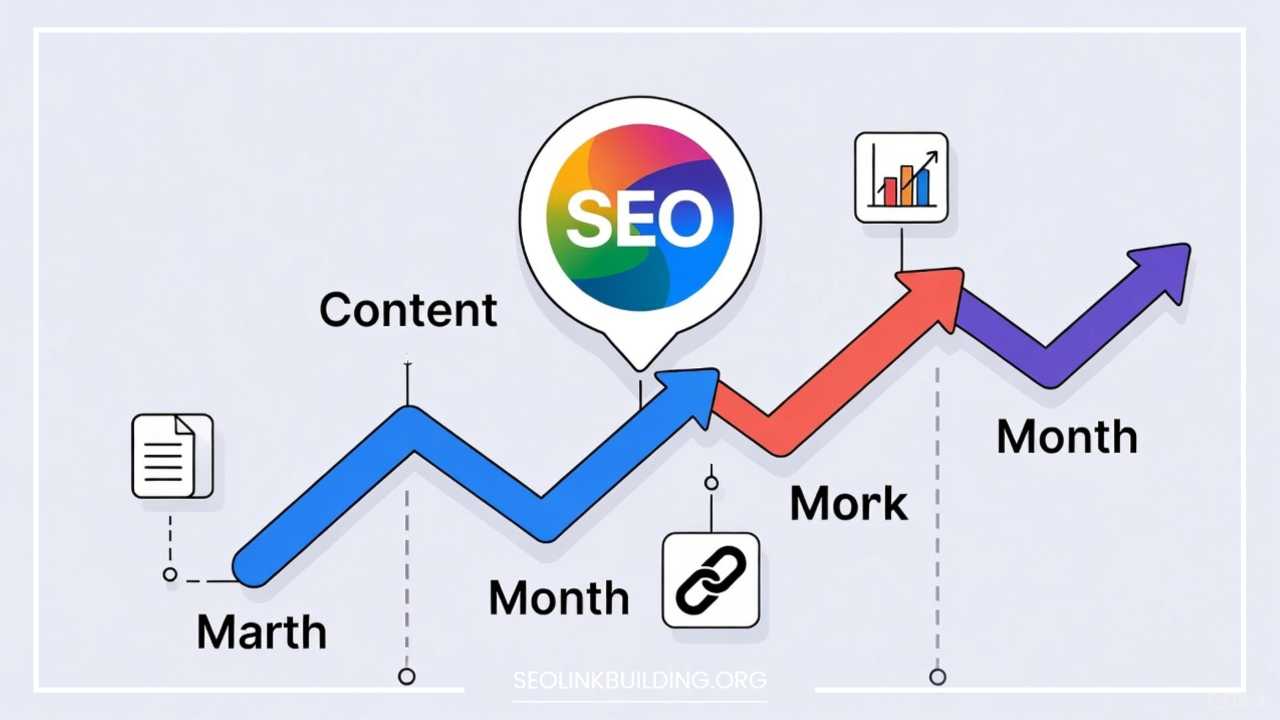
While the factors above introduce variability, most successful SEO campaigns follow a predictable trajectory. This timeline outlines the focus of work and the realistic expectations for results over the first year.
Month 1–3: The Foundation and Setup Phase (The “Zero-to-One” Stage)
The first three months are characterized by intensive analysis, technical cleanup, and strategic preparation. Don’t expect significant traffic changes, but this phase is non-negotiable for future success.
Focus of Work:
-
Comprehensive Site Audit: Full analysis of the website’s technical health (speed, mobile, indexation), on-page structure, and content gaps.
-
Technical Fixes: Resolving critical crawl errors, fixing broken links, improving site structure, optimizing the
robots.txtfile, and submitting an XML sitemap to Google Search Console. -
In-Depth Keyword Research: Identifying a blend of high-volume, long-term targets, and low-competition, high-intent keywords for quick wins.
-
Initial On-Page Optimization: Optimizing core service/product pages and existing content with targeted keywords, improved titles, and metadata.
-
Tracking Setup: Installing and configuring Google Analytics and Google Search Console to accurately measure future performance.
Expectation of Results:
-
Traffic: Minimal change, possibly a slight dip due to technical restructuring.
-
Rankings: A few low-competition, long-tail keywords may enter the top 50, but nothing in the coveted top 10.
-
Key Signal: Initial crawl and successful indexing of new pages and site fixes.
Month 3–6: The Implementation and Early Growth Phase (The “Content and Consistency” Stage)
This phase shifts from repair to creation. You are actively building out your content library and beginning off-page efforts.
Focus of Work:
-
Content Publishing: Consistent publishing of high-quality, targeted blog posts and pillar pages based on the low-competition keyword strategy.
-
Internal Linking: Establishing a strong network of internal links to connect relevant pages and boost the authority of core money pages.
-
Link-Building Initiation: Starting a systematic outreach plan to acquire initial, high-quality backlinks (guest posting, unlinked mentions, resource pages).
-
UX/CRO Improvements: Analyzing early user behavior data (bounce rate, time on page) and making adjustments to improve user experience (UX) and conversion rate optimization (CRO).
Expectation of Results:
-
Traffic: A noticeable, but modest, increase in organic traffic (often 10%–50% growth from the initial baseline). This traffic comes mostly from long-tail, informational keywords.
-
Rankings: Many low-competition keywords will start to move into the top 20-30. Your optimized core pages should start moving from positions 50-100 up to the 30-50 range.
-
Key Signal: Your website’s Domain Authority (DA) or Domain Rating (DR) should show its first movement, indicating Google is starting to recognize your site.
Month 6–12: The Acceleration and Authority Phase (The “Breakout” Stage)
This is typically when dedicated SEO efforts truly begin to pay off. The compounding effect of content and links starts to generate significant momentum.
Focus of Work:
-
Content Optimization: Auditing existing content, updating older posts, and consolidating similar topics to create more authoritative “super-pages.”
-
Competitive Link Building: Scaling up link-building efforts, targeting higher-authority sites, and focusing on acquiring links to core commercial pages.
-
Performance Analysis: Deep diving into search console data to identify underperforming pages and pages that are just outside the top 10 (e.g., position 11-20) and giving them a targeted boost.
-
Advanced Technical Audits: Fine-tuning site performance, focusing on Core Web Vitals, and identifying opportunities for structured data implementation.
Expectation of Results:
-
Traffic: Significant, often exponential growth. It’s common to see organic traffic double or triple the early baseline from Month 1-6.
-
Rankings: Highly sought-after, commercial keywords will begin entering the top 10. Pages previously stuck in the 20-30 range should move into the 4-10 spots.
-
Key Signal: A strong increase in qualified leads or sales from organic traffic, as the high-intent keywords are now ranking.
12+ Months: The Maturity and Dominance Phase (The “Maintenance and Scale” Stage)
After a year of consistent, strategic work, your SEO is no longer about fighting for initial traction—it’s about maintaining dominance and scaling your success.
Focus of Work:
-
Content Hubs and Topical Authority: Building massive, interconnected content hubs that establish your site as the definitive source for key topics in your industry.
-
Advanced Link-Building: Focusing on institutional-level links (partnerships, PR, data reports) that are difficult for competitors to replicate.
-
Competitive Gap Analysis: Regularly identifying high-value keywords your top competitors rank for that you do not, and creating content to bridge the gap.
-
SEO Maintenance: Continuous monitoring of site health, link profile, and algorithm updates to ensure sustained performance.
Expectation of Results:
-
Traffic: Consistent, high-volume organic traffic. While the percentage growth slows, the absolute number of visitors continues to rise steadily.
-
Rankings: Dominance in your niche, with numerous top 3 rankings for highly competitive, high-value keywords.
-
Key Signal: Your website acts as a significant, reliable, and predictable engine for business revenue, requiring less initial investment and more sustained maintenance.
How to Measure SEO Progress
One of the common mistakes businesses make is measuring the wrong things, which can lead to premature abandonment of a sound strategy. To accurately assess the timeline, you must focus on key performance indicators (KPIs) that reflect true growth.
Key Metrics to Track
-
Organic Traffic: The absolute number of visitors coming from search engines. This is the ultimate health check for SEO.
-
Keyword Rankings: Tracking the position of your target keywords. While top rankings are the goal, tracking movements from Page 4 to Page 2 is a vital early signal.
-
Click-Through Rate (CTR): The percentage of users who click your listing after seeing it in the search results. A low CTR indicates your title tag or meta description needs optimization, even if your ranking is good.
-
Conversions and Goal Completions: The number of users from organic traffic who complete a desired action (e.g., purchasing, filling out a form, signing up for a newsletter). This is the true measure of ROI.
Essential Tools for Measurement
You cannot measure progress without the right tools, most of which are free and non-negotiable for a professional campaign:
-
Google Analytics (GA4): Provides detailed data on organic traffic, user behavior (bounce rate, time on page), and goal completions/conversions.
-
Google Search Console (GSC): Your direct communication line with Google. It tells you which pages are indexed, how many times they appear in search results, their average ranking, and any technical crawl errors. Always check GSC first for ranking data.
-
Third-Party SEO Tools (e.g., Ahrefs, SEMrush, Moz): These tools provide deeper competitive analysis, keyword research difficulty scores, and reliable estimates of your Domain Authority/Rating and backlink profile growth.
Why Focusing Only on Rankings Can Be Misleading
In the early stages (Months 1–6), obsessing only over ranking for a few “vanity” keywords (e.g., “best corporate lawyer”) is a mistake.
-
Vanity vs. Value: Ranking #1 for a generic term with no commercial intent is less valuable than ranking #5 for a highly specific, high-intent term that generates a lead.
-
The Long-Tail Effect: Early traffic growth is often driven by hundreds of long-tail keywords, none of which are in the top 10, but collectively drive significant targeted traffic. Track the total number of keywords your site is ranking for, not just a handful of primary terms.
Common SEO Mistakes That Delay Results
Nothing extends the SEO timeline more than a flawed strategy or inconsistent execution. Avoiding these common pitfalls is essential for staying on track.
Expecting Instant Results
The single greatest killer of SEO campaigns is impatience. Businesses often start an SEO effort, expect to see significant traffic within 90 days, and then pivot to paid advertising or another channel when the quick wins don’t materialize. This stop-and-start approach is counter-productive. SEO thrives on consistency and longevity. Pulling the plug too early wastes all the foundational work you’ve already completed.
Poor Keyword Targeting
-
Targeting only “Fat Head” Keywords: Focusing solely on highly competitive, short-tail keywords (e.g., “CRM software”) without the requisite authority. This is a guaranteed path to being stuck on Page 5 for a year.
-
Ignoring User Intent: Creating content around a keyword without understanding why the user searched for it. Content that doesn’t match search intent will be quickly rejected by both users and Google.
Ignoring Technical SEO Issues
Technical SEO is boring but crucial. Failing to address issues like slow page speed, a lack of mobile responsiveness, or indexation errors means all subsequent content and link-building efforts are built on a shaky, inefficient foundation. A slow site will always struggle to outrank a fast one, regardless of content quality.
Thin or Duplicate Content
-
Thin Content: Pages with minimal text (under 300 words) that offer no real value. These pages are often ignored or de-prioritized by Google.
-
Duplicate Content: Having identical or near-identical content accessible via multiple URLs. This confuses Google, forces it to choose one version, and dilutes the authority that could be concentrated on a single, strong page.
Neglecting Backlinks
Content is critical, but it’s only half the equation. Without a consistent, high-quality link-building strategy, your website will be viewed as irrelevant or unauthoritative by search engines. In competitive niches, your timeline is almost entirely dictated by how quickly and effectively you can acquire powerful links. A “build it and they will link” mentality is a myth. You must actively earn links.
Tips to Speed Up SEO Results
While you can’t fully circumvent the natural time it takes for Google to process and trust your site, a smart, focused strategy can help you compress the timeline.
Focus on Low-Competition, High-Intent Keywords
The fastest path to early traffic is targeting the low-hanging fruit:
-
Long-Tail Keywords: Focus on phrases of four or more words (e.g., “best noise-canceling headphones under $100 for work”). These have lower search volume but much higher conversion rates and far less competition.
-
Niche Keywords: Target keywords specific to your industry, location, or customer pain point that large competitors overlook. This builds a foundation of early wins and traffic that can feed your long-term efforts.
Regular Content Updates and Optimization
Don’t just publish new content; maintain your existing library. Content decay is real. Regularly revisit your top-performing posts (every 6–12 months) and update them with new statistics, recent data, and improved depth. This “freshness” signal can often provide a rapid, immediate bump in rankings.
Prioritize Internal Linking Strategy
A well-executed internal linking strategy is one of the quickest, most effective, and most cost-efficient SEO tactics:
-
Link from your high-authority blog posts to your core commercial pages (product/service pages). This passes authority (link equity) to the pages that generate revenue.
-
Use descriptive, keyword-rich anchor text in your internal links to clearly signal the topic of the destination page to Google.
Aggressive and Strategic Outreach and Link-Building
Don’t wait. Make link-building an active, weekly effort from Month 3 onward.
-
Broken Link Building: Find broken links on reputable, relevant websites and suggest your content as a replacement.
-
Unlinked Mentions: Search for mentions of your brand or product that don’t currently link to your site and ask the author to turn the mention into a hyperlink.
-
Guest Posting (with strict quality control): Write truly valuable, non-promotional content for other reputable blogs in your industry that includes a link back to a relevant page on your site.
Improving UX and Site Speed
Google’s Core Web Vitals (CWV) are a direct ranking factor. Investing in a developer to improve your Largest Contentful Paint (LCP) and Cumulative Layout Shift (CLS) will ensure that the content and links you’ve worked so hard for aren’t wasted by a poor user experience. A fast site has better engagement metrics, which Google interprets as a sign of high quality.
Case Studies / Examples
The true variability of the SEO timeline is best illustrated through real-world examples, highlighting how the core factors (authority, competition, and effort) interact.
Example 1: The New Niche Blog (6-Month Success)
-
Industry: Specialized hobby/niche interest (e.g., advanced watercolor painting techniques).
-
Website Age/Authority: Brand new, zero Domain Authority.
-
Competition: Low. Competing against small, unoptimized personal sites.
-
Strategy: Immediate focus on long-tail, informational keywords (e.g., “how to use masking fluid for fine details”). Published 3-4 highly detailed, visual articles per week. Did minimal link building.
-
Results: Within 6 months, the blog was generating over 15,000 organic visitors per month. While they didn’t rank for the broad term “watercolor painting,” they dominated the niche, driving traffic from hundreds of high-intent, low-competition keywords.
-
Lesson: Low competition + high content velocity = accelerated timeline.
Example 2: The Competitive SaaS Platform (12+ Month Marathon)
-
Industry: Software as a Service (SaaS), marketing automation platform.
-
Website Age/Authority: Established site (3 years old) with decent authority, but competing against industry giants (HubSpot, Mailchimp).
-
Competition: Extremely high for commercial terms.
-
Strategy: Started with a technical audit to fix years of accumulated errors. Then focused on content and aggressive link-building. It took 6 months of publishing 2 detailed articles/week and active outreach to secure 10-15 high-authority links per month.
-
Results: At the 6-month mark, traffic had only increased by 20%. Discouragingly slow. However, between Month 9 and Month 12, the compounding authority of the links and content kicked in. Their primary keyword, “best marketing automation platform,” jumped from Page 3 to Position 6, triggering a 400% jump in organic traffic and a massive increase in trial signups.
-
Lesson: High competition requires a longer timeline and relentless focus on both content and link acquisition. The payoff is higher, but the investment phase is longer.
Variability and The Effort Multiplier
These examples highlight a critical truth: the timeline is not linear and not guaranteed. If you have an established site but fail to address technical issues, you will delay the timeline indefinitely. If you are a brand new site in a competitive niche but only publish one article a month, your timeline will extend well past the 24-month mark. Your effort is the ultimate multiplier: A comprehensive, aggressive, and well-funded strategy will always see results faster than a passive one.
Final Thoughts
The journey to SEO success is best viewed not as a sprint, but as a marathon where every strategic step compounds into meaningful progress. To answer the core question, “How long does SEO take to work?” the most realistic answer is 6 to 12 months for significant, measurable results—and often much longer for truly competitive, high-value keywords.
The first few months are about laying the groundwork—the crawl, the index, the initial trust. The middle months are about creating and amplifying—the content, the links, the movement into the top 20. The later months are about dominance and revenue—the top 10 rankings and the resulting qualified traffic and conversions.
Embrace the long game. Set realistic, phase-based goals, not quick-win expectations. Commit to the three pillars of technical health, quality content, and authority-building links, and measure your success by the strategic metrics that truly drive your business forward. Consistency is the secret ingredient, and patience is the virtue that ultimately separates the SEO winners from those who gave up just before their breakthrough.