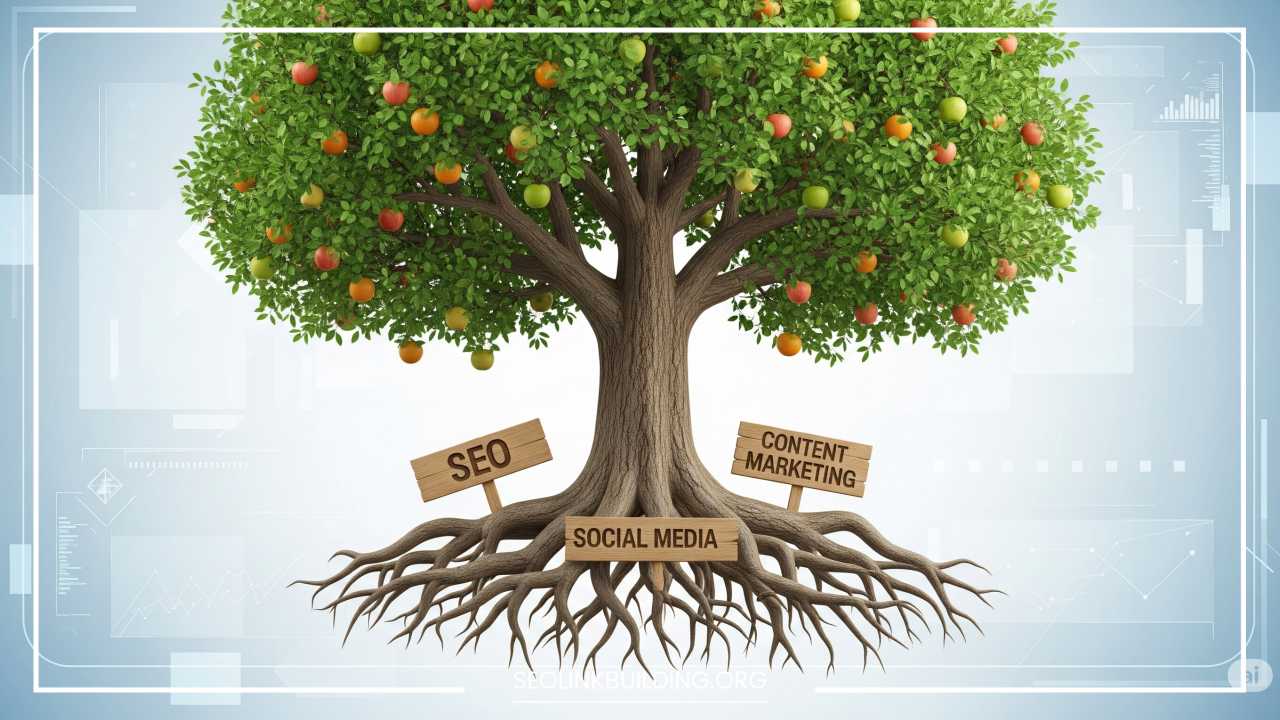
How to Write Relevant Content

How to Write Relevant Content (That Actually Works)
In the vast, overwhelming digital landscape, the difference between a successful content strategy and one that simply fades into the background boils down to a single, critical factor: relevance.
Every second, thousands of articles, videos, and social media posts are published. The competition isn’t just for attention; it’s for the small, precious sliver of time a potential customer is willing to invest in consuming your work. Content that gets ignored isn’t necessarily badly written or low quality; often, it’s just irrelevant to the person seeing it at that specific moment.
Relevance is the new currency online. It is the bridge between what you want to say and what your audience actually needs to hear. A high-quality, 5,000-word article on advanced thermodynamics is useless to a user searching for “how to reset my iPhone password.” No matter how well-researched, it misses the mark on intent, timing, and need.
This comprehensive guide is designed to move you past the vague goal of “creating good content” into the actionable process of writing content that resonates, drives traffic, and converts. We will explore the psychology, strategy, and technical steps necessary to ensure every piece you publish is laser-focused on solving your audience’s problems, thereby guaranteeing its relevance and, ultimately, its success.
What Makes Content “Relevant”?
Before we dive into the ‘how,’ we must first define the ‘what.’
In content marketing, relevance is the degree to which a piece of content addresses the immediate, current, and unstated needs, questions, or desires of a specific audience member at the point of consumption. It’s the feeling a reader gets when they think, “Wow, they wrote this specifically for me.”
Relevance vs. Quality: Why They’re Not the Same
It’s a common misconception that content relevance is simply a function of quality. While high-quality writing is always important, it doesn’t guarantee relevance.
-
Quality is about execution: flawless grammar, professional tone, deep research, and clear structure.
-
Relevance is about fit: addressing the right topic, at the right time, with the right tone, and matching the user’s underlying reason for searching.
A poorly researched article (low quality) can still be highly relevant if it perfectly answers a niche, urgent question no one else has addressed. Conversely, a beautifully written, 10,000-word essay on the history of marketing (high quality) can be utterly irrelevant if the reader is seeking a quick “best marketing software” list.
Psychological Triggers Behind Relevance
Truly relevant content triggers several psychological responses:
-
Usefulness (The Functional Connection): It provides a clear, practical answer or solution. It either saves the reader time, saves them money, or solves a painful problem.
-
Timeliness (The Current Connection): It speaks to an event, trend, or concern happening right now. This could be news, a recent product update, or a seasonal topic.
-
Emotional Connection (The Relational Connection): It validates the reader’s feelings, understands their struggle, or inspires them to action. It uses language and tone that makes the reader feel seen.
Examples of Highly Relevant Content:
-
Timeliness: An article titled “How to Master the New Instagram Reels Algorithm Update (December 2025)”
-
Usefulness: A quick-start guide titled “The 3-Step Checklist to Launching Your First Podcast Episode Today”
-
Emotional: A blog post titled “Why Your Side Hustle Feels Hard Right Now (And How to Push Through)”
By focusing on these triggers, you move beyond merely informing your audience; you become essential to them.
Know Your Audience Better Than They Know Themselves
The foundation of relevance is not based on what you want to write, but what your audience needs you to write. You must conduct content reconnaissance to truly understand the people you are trying to reach.
Importance of Audience Research
Audience research helps you determine:
-
Their Pain Points: What keeps them up at night? What are the biggest obstacles to their goals?
-
Their Desires: What is their ultimate, aspirational outcome?
-
Their Language: What specific words, phrases, and jargon do they use when describing their problems? (Crucial for SEO and connection).
-
Their Knowledge Level: Are they a complete beginner, an intermediate user, or an industry expert? This dictates the complexity and depth of your content.
How to Create a Simple Audience Persona
A persona is a fictional, generalized representation of your ideal customer. For relevance, focus on these key aspects:
| Persona Component | Relevance Impact |
| Demographics | Content distribution (where they hang out) |
| Goals & Aspirations | The desired outcome your content promises |
| Primary Challenge (Pain Point) | The central problem your content solves |
| Information Sources | What kind of content they already consume (videos, long-form blogs, podcasts) |
| Fears/Hesitations | Objections your content must address and overcome |
Example: New Entrepreneur Nick. Goal: Launch a profitable online course. Pain Point: Overwhelmed by tech setup. Knowledge Level: Beginner. Fear: Wasting money on unnecessary software. Your relevant content for Nick should be simple, step-by-step guides on cheap or free software, focusing heavily on reducing the feeling of overwhelm.
Tools for Audience Insights
You don’t need a massive budget for deep insights. Use these readily available tools:
-
Social Listening: Monitor Facebook groups, subreddits, and LinkedIn where your audience discusses their problems. Look for common threads, repeated questions, and the exact language they use.
-
Q&A Platforms (Quora, Reddit, industry forums): These are goldmines. Search for your core topic and see the specific questions people are asking. These often represent topics where existing content is failing to provide a clear, relevant answer.
-
Search Intent Tools (Ahrefs, SEMrush, AnswerThePublic): These show you the questions related to your keywords, revealing the true user intent behind the search.
-
Customer Support Logs & Sales Calls: If you have access, this data provides the most direct line to real-world customer issues.
The Instant Relevance Boost
By understanding your audience’s pain points and language, you can phrase your headlines and introductions using their exact terms. This provides an instant relevance boost, signaling to the reader, “Yes, I know exactly what you’re struggling with.”
Master Search Intent
If you are writing for the web, especially for organic search, mastering Search Intent is non-negotiable for relevance. If your content doesn’t match the intent behind a search query, Google will rarely rank it, and even if it does, the user will quickly hit the back button (a negative signal).
What Search Intent Is and Why It Matters
Search intent, or user intent, is the underlying goal a person has when they type a query into a search engine. It is the “why” behind the words.
-
A search for “best blender” is fundamentally different from a search for “how to fix a leaky blender.”
-
If you write a comparison guide (“best blenders”) for the “how to fix” query, your content is irrelevant.
Matching search intent is the single most powerful factor in delivering relevant content via search engines.
The 4 Main Types of Search Intent
You must align your content goal and format with one of these four categories:
-
Informational: The user is seeking an answer to a question, information on a topic, or data.
-
Examples: “What is content marketing,” “How does an engine work,” “Symptoms of the flu.”
-
Relevant Content Type: Blog posts, ultimate guides, definitions, explainers.
-
-
Navigational: The user is looking for a specific website or page.
-
Examples: “Facebook login,” “Nike store near me,” “SEMrush pricing.”
-
Relevant Content Type: Generally homepage or specific product/service pages (less common for blog content).
-
-
Commercial Investigation: The user is researching products or services before making a purchase. They are comparing options.
-
Examples: “Best project management software,” “iPhone 15 vs Samsung S24,” “AirPods Pro review.”
-
Relevant Content Type: Reviews, comparison articles, “best of” lists, case studies.
-
-
Transactional: The user is ready to complete an action, usually a purchase or a sign-up.
-
Examples: “Buy cheap t-shirts online,” “HubSpot free trial,” “Download content marketing template.”
-
Relevant Content Type: Product pages, landing pages, free tool pages, sign-up forms.
-
How to Analyze the SERP to Determine True Intent
The Search Engine Results Page (SERP) is your cheat sheet. Google has already determined the most relevant intent for a keyword based on massive user data. You just have to look:
-
Search the Keyword: Type the keyword you want to target into Google.
-
Analyze the Top 10 Results:
-
Format: Are the top results mostly listicles (Commercial Investigation), “How-To” guides (Informational), or definition pages (Informational)?
-
Angle: Do they focus on beginners or experts? Are they product-focused or strategy-focused?
-
Title/H1: Do the titles suggest a quick answer or a deep dive?
-
If the top 10 results are all listicles (e.g., “10 Best CRM Tools”), and you write a comprehensive guide on “What is a CRM,” your content will be deemed irrelevant by Google and users, regardless of its quality.
Adjusting Structure to Match Intent
Once you know the intent, you must adjust your content structure accordingly:
-
Informational/How-To: Start with the problem, offer the immediate solution, then provide context and depth. Focus on clear, step-by-step instructions.
-
Commercial/Listicles: Jump straight to the top recommendations. Use comparison tables. Lead with the pros and cons to help the user make a fast decision.
Make Every Piece of Content Purpose-Driven
Before your fingers even touch the keyboard, you must have a clear, singular answer to the question: What is the goal of this piece of content?
Content that tries to do too many things—educate, entertain, convert a sale, and get social shares—often fails to do any of them well. Relevant content is focused content.
Clarifying Your Goal Before Writing
Your purpose should align with your business goals and the stage of the customer journey (awareness, consideration, decision).
| Content Purpose | Reader Action Goal | Relevant Metrics | Customer Journey Stage |
| Educate | Understand a concept/solve a small problem | Time on page, organic traffic | Awareness/Consideration |
| Inspire | Adopt a new mindset or approach | Social shares, comments | Awareness |
| Capture Lead | Submit an email/download an asset | Conversion rate to lead | Consideration |
| Convert | Purchase a product/book a demo | Conversion rate to sale | Decision |
How Purpose Affects Tone, Structure, CTA, and Depth
The defined purpose must dictate every aspect of the final article:
-
Tone: An educational piece should be authoritative and objective. A piece designed to inspire can be emotional and personal.
-
Depth: A piece intended to drive a quick conversion should be shorter and focused on benefits. A piece intended to educate should be long and comprehensive (an ultimate guide).
-
Call-to-Action (CTA): A piece meant to educate should have a soft, informational CTA (“Download our free checklist”). A piece meant to convert should have a hard CTA (“Buy Now” or “Book a Demo”).
The “One Piece, One Purpose” Rule
Sticking to this rule ensures maximum relevance. The moment you dilute your focus—say, by trying to educate a beginner and sell them an advanced product in the same 1,000-word article—you confuse the reader and diminish the relevance of the message. Clarity of purpose is clarity of relevance.
Crafting a Strong, Relevant Outline
The outline is the architecture of your article. A strong outline prevents “irrelevant fluff,” ensuring that every section directly serves the article’s purpose and addresses the reader’s intent.
Why Outlines Prevent Irrelevant Fluff
Without a disciplined outline, it’s easy to wander off-topic, include tangents, or delve into historical context that the reader doesn’t care about. An outline acts as a content guardrail, ensuring you only cover the subtopics that contribute to solving the reader’s central problem.
Using the “Reader First” Method
Approach your outline from the reader’s perspective, moving them logically from their current state (having a problem/question) to their desired state (having the answer/solution).
-
Define the Core Question (H1): This is the single, overarching question the reader is trying to answer.
-
Define the Key Takeaways: What three to five essential things must the reader know by the end? These often become your main H2 headings.
-
Sequence the Solution: Arrange the H2s and H3s in the most logical order. What information do they need first to understand the second step? (e.g., Define the concept, then explain the benefits, then detail the step-by-step process).
How to Choose Subtopics Your Audience Actually Cares About
Use the audience research and search intent analysis you performed earlier to validate your subtopics:
-
Analyze SERP “People Also Ask” (PAA): These are direct questions Google knows users are interested in. Including them as H2s or H3s guarantees relevance.
-
Scout Competitor Outlines: Look at the top-ranking articles. What H2s do they all include? This is the baseline of expected, relevant coverage. What are they missing? That’s your opportunity for unique value.
-
Address Objections: Include a section that directly counters potential reader skepticism or confusion (e.g., “Myth Busting: Why X Strategy Doesn’t Work Anymore”).
Organizing Information for Flow and Retention
Relevant content is also usable content. Use a hierarchical structure:
-
H1: The central topic/problem.
-
H2: The main stages or categories of the solution.
-
H3: Specific steps, examples, or details within each stage.
-
H4: Minor supporting points or clarifications.
This clean structure signals relevance to both search engines and the reader, who can quickly scan to find the exact information they need.
Write With Clarity, Simplicity & Authority
Even the most perfectly targeted content can lose relevance if it is poorly communicated. Relevant writing is clear, direct, and speaks with an authoritative, yet accessible, voice.
Eliminating Jargon
Nothing kills relevance faster than confusing your reader. If your audience is a beginner, using overly technical jargon signals that the content isn’t for them, despite the topic being relevant.
-
Rule of Thumb: Use the simplest word that accurately conveys your meaning. If a technical term is necessary, immediately follow it with a simple definition or parenthetical explanation.
Structuring Paragraphs for Readability
Relevant content is easy to read. Complex, dense blocks of text are intimidating and lead to abandonment.
-
The 1-2 Sentence Rule: Aim for paragraphs that are two to four lines long maximum. Use the first sentence to state the main idea.
-
The “One Idea Per Paragraph” Rule: If a new thought or concept is introduced, start a new paragraph. This maintains visual white space and cognitive clarity.
Using Examples, Data, and Stories to Increase Relevance
Theory is abstract; application is relevant.
-
Examples: Instead of saying, “Content should be engaging,” say, “A relevant example is the SaaS company, Dropbox, which used a simple explainer video to drive early adoption.”
-
Data/Stats: Back up your claims with recent, verifiable data. This instantly increases the authority of your content.
-
Stories: A well-placed, brief personal anecdote or case study connects emotionally with the reader, validating their struggle and demonstrating that the solution is achievable.
Writing in the Reader’s Language
Use the tone and language you discovered during your audience research:
-
Second Person (You/Your): Write directly to the reader. This creates an intimate, relevant connection: “You are struggling with X, and here is how you solve it.”
-
Match the Tone: Is your audience serious and professional? Use a formal tone. Are they entrepreneurs looking for motivation? Use an energetic, encouraging tone.
Formatting for Skimmability
Modern readers don’t read; they skim. Content that is easy to skim is perceived as more relevant because the reader can quickly find the exact section they need.
-
Use bold text to highlight key phrases and takeaways.
-
Employ bulleted or numbered lists for steps, features, or summaries.
-
Use H2 and H3 headings frequently and ensure they are descriptive (e.g., don’t use “The Final Step;” use “Step 3: Test and Iterate Your CTA“).
Add Unique Value
In a crowded marketplace, covering a relevant topic isn’t enough; you must cover it better or differently. Unique value is what makes your content stand out and earn the attention it deserves.
What Makes Content Stand Out
Unique value is any element your competitors lack that benefits the reader:
-
Original Research: A survey you conducted, an exclusive interview, or proprietary data.
-
A Unique Framework: A new methodology or step-by-step process you created and named.
-
Personal Experience: A story of success or failure that gives you unique credibility.
-
A Contrarian Angle: Challenging a widely accepted industry myth or belief.
How to Include Unique Angles and Original Insights
Identify a relevant topic that has been covered hundreds of times (e.g., “email marketing tips”). Instead of writing the same generic list, apply a unique filter:
-
Generic: “10 Email Marketing Tips”
-
Unique Angle: “10 Email Marketing Tips That ONLY Work for Solopreneurs” (Focuses on a niche audience)
-
Unique Angle: “The 3 Counterintuitive Email Marketing Strategies We Used to Halve Our Unsubscribe Rate” (Focuses on a proprietary, result-driven insight)
Why Google Rewards Unique Value
Google’s core mission is to serve the best and most relevant result. If ten articles cover the same topic adequately, but yours introduces a unique data set or a proprietary workflow, it offers something the others don’t. This is what Google calls E-E-A-T (Experience, Expertise, Authoritativeness, and Trustworthiness), and unique value is the cornerstone of demonstrating real-world experience.
Examples of “Same Topic, Different Approach”
| Generic Topic | Relevant, Unique Angle |
| How to Write an eBook | The 7-Day Sprint: How to Outline, Draft, and Publish a High-Quality eBook |
| Best Time to Post on Social Media | Forget Peak Times: How to Find Your Audience’s Actual Best Time to Post |
| SEO Checklist | The Hyper-Specific SEO Checklist for 2-Person Startups (Focus on efficiency) |
Update Content for Ongoing Relevance
Relevance is not a fixed state; it’s perishable. The most relevant piece of content published today will begin to decay in relevance tomorrow. This is especially true for informational content.
Why Relevance Decays Over Time
Content becomes less relevant due to:
-
Shifting Search Intent: Google’s understanding of user intent changes as new data comes in. The intent for “best SEO tips” five years ago is different from today.
-
Outdated Information: Statistics, examples, software interfaces, and best practices change constantly.
-
Competitor Improvement: New articles are published that are deeper, clearer, or have more current data.
How to Audit and Refresh Content
Content auditing is the process of identifying which articles need updating to maintain relevance and performance.
-
Identify Underperforming Pages: Use Google Search Console and Analytics to find articles that are:
-
Getting decent traffic but have a low time on page or a high bounce rate.
-
Have slipped in ranking from page one to page two or three.
-
Show a drop-off in traffic over the last 6-12 months.
-
-
Rethink the Intent: Search the target keyword again. Has the SERP changed? If your old article was a “How-To,” but the SERP is now dominated by “Best Of” lists, the intent has shifted, and a major rewrite is needed.
What to Update
Focus your refresh efforts on the most visible and time-sensitive elements:
-
Update the Publish Date: Change the date in your CMS and include a note like, “Last updated: December 2025” for both search engines and readers.
-
Replace Outdated Stats and Examples: The first thing a reader notices is an old date or a broken link to a source.
-
Refresh Screenshots: Interface changes for software make old screenshots instantly irrelevant.
-
Integrate New Keywords: Use your research tools to identify new long-tail keywords or PAA questions that have emerged since you first published the article, and naturally weave them in.
-
Strengthen the CTA: Ensure the final action links to your most current and relevant offering.
Optimize for Engagement
Engagement—the time a user spends consuming your content, their willingness to interact, and their overall satisfaction—is the final metric of content relevance. Google and other platforms view highly engaged content as highly relevant content.
How Engagement Boosts Perceived Relevance
If a reader spends 8 minutes reading your 10-minute article and leaves a comment, it signals that the content:
-
Kept its Promise (Relevance): The title and introduction accurately reflected the content.
-
Was Valuable (Quality): It was well-written and solved their problem.
High engagement lowers the bounce rate and increases time on page, which are strong positive signals to search engines.
Writing Compelling Introductions and Conclusions
The introduction is where you prove initial relevance. The conclusion is where you seal the deal and prompt the next action.
-
The Problem/Agitate/Solve (PAS) Intro:
-
Problem: State the audience’s pain point (e.g., “Tired of creating content no one reads?”).
-
Agitate: Validate the problem’s severity (e.g., “It’s frustrating to invest hours for zero traffic.”).
-
Solve: Immediately promise a solution, proving relevance (e.g., “This guide will show you the exact framework to fix it.”)
-
-
The Reiterate/Summarize/Call-to-Action Conclusion: Briefly summarize the main takeaways, reiterate the core relevance (how you solved their problem), and end with a strong CTA.
Adding Visuals, Charts, and Examples
Visuals break up text and make complex information more digestible. A complex process can feel less relevant if it’s all text; a flowchart instantly makes it more accessible.
-
Use custom charts or graphs for proprietary data or to simplify complex concepts.
-
Add instructional images or video embeds for step-by-step guides.
-
Include pull quotes of key, relevant phrases to add visual interest.
Strategic CTA Placement
CTAs should be relevant to the reader’s current stage and the article’s purpose.
-
Top of Article: Use a soft, informational CTA for lead capture (e.g., “Download the free checklist related to this topic”).
-
Middle of Article: Integrate a contextual, related CTA mid-way through a relevant section (e.g., in a section about budgeting, link to your relevant product page).
-
Bottom of Article: Use the main, final CTA that aligns with the article’s purpose (e.g., “Schedule a Free Demo”).
Encouraging Comments or Shares
Ask a relevant, open-ended question at the end of the article. Instead of a generic, “What do you think?” try:
“We shared our three favorite audience research tools. What is the single most valuable tool you use to find out what your audience is struggling with? Share your insights in the comments below!”
This encourages engagement and creates a relevant community around your content.
Final Thoughts
Writing relevant content is not an accident; it is the deliberate execution of a robust, audience-first strategy. It requires moving beyond what you find interesting and focusing relentlessly on what your audience finds essential.
The core principles of highly relevant content are:
-
Empathy: Knowing your audience’s pain better than they do.
-
Clarity: Matching the user’s search intent perfectly.
-
Purpose: Ensuring every piece has a defined, singular goal.
-
Authority: Delivering unique value that demonstrates real-world experience.
-
Vigilance: Constantly updating content to keep it fresh and current.
Relevance is not a one-time achievement; it’s an ongoing practice. By applying these steps, you will transition from a content creator who hopes for traffic to a strategic publisher whose work consistently solves problems, drives action, and actually works.
Are you ready to transform your content strategy? Take the next step and download our free, comprehensive Content Relevance Checklist to audit your existing content and kickstart your new approach today.