What Is Branded Search?

What is Branded Search? Definition, Importance & How to Optimize It
In the vast, ever-shifting landscape of digital marketing, where billions of search queries are executed daily, there’s a specific type of search that holds disproportionate power and value: branded search. It’s the digital handshake, the direct inquiry, the moment a consumer moves past general curiosity and names your company, product, or service specifically
Branded search refers to any search query that includes a specific brand name, product name, or trademarked term, such as “Starbucks menu prices,” “Tesla Model 3 review,” or “Adobe Photoshop features.” It’s an unambiguous signal of recognition and intent, marking a crucial step in the customer journey. Unlike generic searches like “best coffee shop near me” or “electric cars,” a branded search indicates the user has already been exposed to the brand and is actively seeking more information, a conversion, or support.
Understanding and dominating your branded search results is not just a marketing best practice; it’s a fundamental necessity for modern business success. It directly impacts trust, conversions, online reputation, and overall business health. This comprehensive guide will dissect the concept of branded search, explore its critical role in digital marketing, differentiate it from non-branded search, and provide actionable strategies for optimization across both organic and paid channels. We will explore its definition, types of queries, its impact on SEO and paid advertising, methods for tracking, and the critical steps needed to ensure your brand’s digital front door is always welcoming, authoritative, and dominant.
What Is Branded Search?
Definition of Branded Search
Branded search is defined as a search engine query that contains a unique identifier of a specific brand, company, product, or service. The key element is the explicit mention of a trademarked or proprietary name.
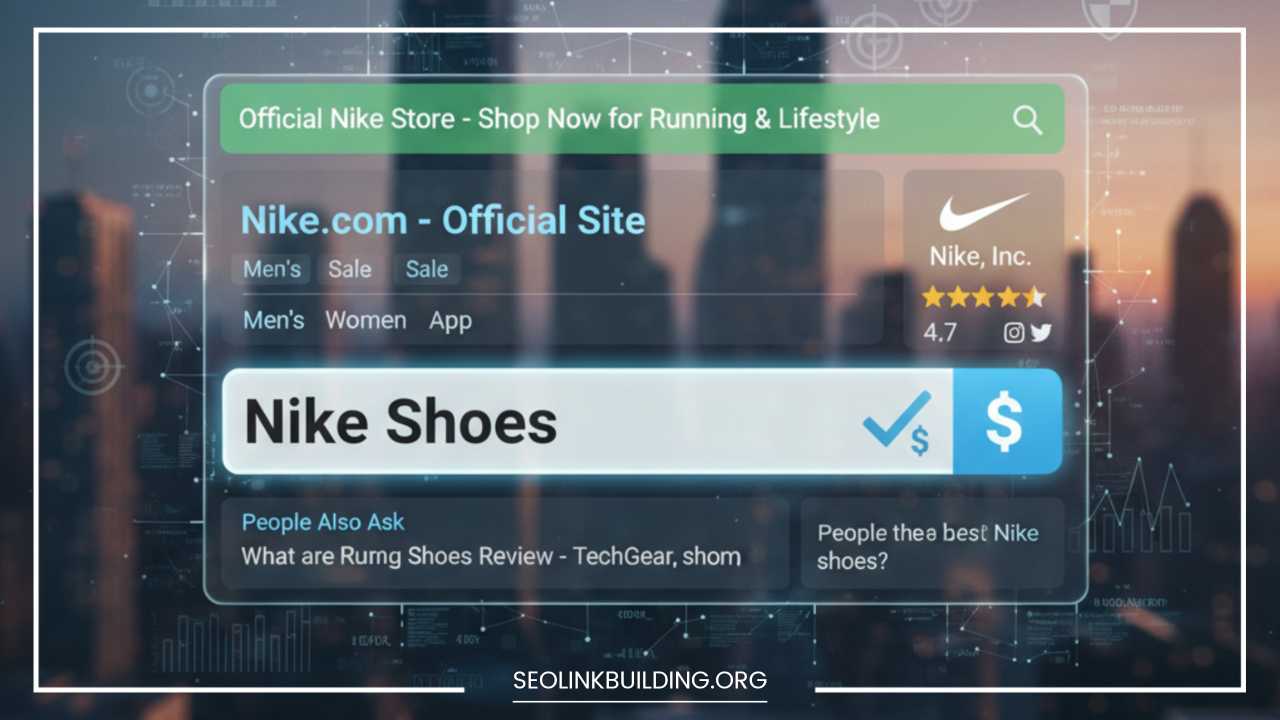
For instance, a search for “Nike running shoes” is a branded search because it explicitly names the Nike brand. In contrast, “best running shoes” is a non-branded (generic) search. Even searches that include common misspellings (e.g., “Niek shoes”) or specific product lines (e.g., “iPhone 15 specs”) are categorized as branded, as the intent is clearly focused on the associated brand.
Examples of Branded Search Terms
Branded searches are diverse and can range across the entire customer lifecycle:
- Company Name: “Amazon customer service number,” “Coca-Cola history”
- Product/Service Name: “Microsoft Office 365 pricing,” “buy Samsung Galaxy S23”
- Domain Name: “cnn.com,” “spotify login”
- People Associated with the Brand: “Elon Musk Tesla,” “Jeff Bezos books”
- Specific Campaigns/Slogans: “Apple Think Different campaign,” “Geico insurance quote”
Difference Between Branded and Non-Branded Search
The core distinction lies in the user’s intent and knowledge.
| Feature | Branded Search | Non-Branded Search |
| Search Query | Includes a specific brand name (e.g., “Lexus reviews”) | General/generic keywords (e.g., “luxury car reviews”) |
| User Intent | High intent; already aware of the brand and seeking specific information or action. | Low/Mid intent; often in the research or awareness phase, comparing options. |
| Search Volume | Generally lower volume, but highly targeted. | High volume, but highly competitive. |
| Conversion Rate | Significantly higher (users are closer to a purchase). | Lower, as users are still exploring. |
Where Branded Search Fits in the Customer Journey
Branded search typically occurs in the later stages of the customer journey, primarily the Consideration and Decision phases.
- Awareness: (Non-Branded) A user searches “best laptop for video editing.“
- Consideration: (Branded/Non-Branded Mix) The user narrows it down and searches “Dell XPS vs MacBook Pro” or “Dell XPS reviews.“
- Decision/Action: (Branded) The user is ready to buy and searches “buy Dell XPS 15” or “Dell customer support.”
Branded search is the final, high-value check before a conversion or the direct line for a post-purchase inquiry.
Why Branded Search Matters
Ignoring branded search is akin to having a beautiful store but covering up the entrance sign. Its importance extends beyond simple traffic metrics into fundamental business health.
High Intent: People Searching Branded Terms Are Closer to Conversion
The most compelling reason branded search matters is the conversion potential. A person searching for “Netflix subscription options” is far more likely to subscribe than someone searching “streaming services.” Branded search traffic is pre-qualified; the awareness and initial interest are already established. This proximity to conversion translates directly into higher click-through rates (CTR) and conversion rates (CVR) compared to generic searches.
Impacts Trust and Brand Recall
When a consumer searches for your brand, the resulting Search Engine Results Page (SERP) is your digital storefront. A clean, dominant, and authoritative SERP, featuring your official website, Knowledge Panel, positive reviews, and relevant sitelinks, reinforces trust and credibility. If a user searches your brand and finds a jumbled list of competitor ads, negative reviews, or outdated information, it immediately erodes confidence. Branded search management is reputation management.
Often Cheaper and Higher Converting Than Generic Keywords
In the realm of Paid Search (PPC), branded keywords almost always have a significantly lower Cost-Per-Click (CPC) than highly competitive generic terms. For example, bidding on “buy Nike shoes” is drastically cheaper and yields a higher CVR than bidding on the generic, highly contested term “running shoes.” This cost-efficiency allows marketing teams to secure high-quality traffic at a lower budget, driving up their Return on Ad Spend (ROAS).
Plays a Role in Online Reputation Management
Branded search results are the primary venue for consumers to assess a brand’s reputation. The first page of a branded SERP typically features not just your website, but also:
- Review sites (Yelp, Google Reviews, Trustpilot)
- News articles/PR (positive or negative)
- Social media profiles
- Third-party forums (Reddit, Quora)
Managing and optimizing these results is essential. You must proactively push down negative content through strategic SEO and content creation, ensuring positive narratives and official company assets dominate the top results.
Types of Branded Search Queries
Branded search queries can be segmented based on the user’s underlying goal, each indicating a specific point in the customer journey and demanding a tailored optimization strategy.
Navigational Queries
- Goal: To navigate quickly to a specific part of a website.
- Examples: “Spotify login,” “Delta flights,” “Chase bank sign in.“
- Strategy: Ensure site architecture is clear, sitelinks are accurate in SERPs, and the main website link is instantly visible. The user knows where they want to go and just needs the quickest route.
Transactional Queries
- Goal: To complete a transaction (buy, subscribe, book).
- Examples: “buy Samsung Galaxy S23,” “Uber Eats coupon,” “book Marriott hotel NYC.“
- Strategy: These have the highest CVR. Focus on compelling PPC ad copy, clear calls-to-action (CTAs), optimized product pages, and strong conversion rate optimization (CRO) on landing pages.
Informational Queries
- Goal: To learn more about the brand, its products, or its features.
- Examples: “Adobe Photoshop features,” “Apple Watch battery life,” “Ikea return policy.“
- Strategy: Provide comprehensive, accessible, and high-quality content via blog posts, FAQ pages, and knowledge base articles. Optimization should target “how-to,” “what is,” and “review” style content.
Support-Related Queries
- Goal: To find assistance, troubleshoot a problem, or contact the company.
- Examples: “Zoom not working on Mac,” “Geico claim phone number,” “Google Drive storage full.“
- Strategy: Prioritize accessible customer service pages, detailed help documentation, and a well-optimized Google Business Profile (GBP) with correct contact information. This is critical for customer retention and brand loyalty.
Branded Search vs Non-Branded Search
While both branded and non-branded search are essential components of a holistic search engine strategy, they serve fundamentally different roles and require distinct resource allocation.
Definitions and Comparison
- Branded Search: Focuses on converting users with high intent. It capitalizes on existing brand equity.
- Non-Branded Search: Focuses on driving awareness, generating leads at the top of the funnel, and competing for generic market share. It builds brand equity.
| Metric | Branded Search | Non-Branded Search |
| Searcher’s Mindset | I know what I want; I just need to get it or find out more about it. | What are my options? What is the best solution for my problem? |
| Traffic Quality | Exceptional (High conversion rates, low bounce rates) | Variable (Lower conversion rates, higher bounce rates) |
| Competition | Low (Mostly competitors bidding on your name) | Extremely High (Bidding against entire industry) |
| Marketing Goal | Conversion, Retention, Customer Service | Awareness, Lead Generation, Market Share |
How Each Serves Different Marketing Goals
- Non-Branded Search Strategy (Top-of-Funnel): Dominate generic terms to introduce your brand to consumers who are just starting their research. This requires extensive content creation, long-tail keyword research, and significant SEO effort. It is the engine that fills the pipeline.
- Branded Search Strategy (Bottom-of-Funnel): Dominate your own terms to capture the demand you’ve already created. This requires technical SEO perfection, reputation management, and targeted PPC campaigns. It is the mechanism that converts the pipeline into revenue.
When to Prioritize Each in Your Strategy
- Prioritize Non-Branded: When the brand is new, has low market awareness, or the goal is rapid market share acquisition at the expense of potentially lower initial profitability.
- Prioritize Branded: When the brand is established, brand awareness is high, and the focus is on profitability, efficiency, and customer retention. A healthy, established business should always ensure near-total domination of its own branded SERPs before significantly increasing non-branded spend.
CPC and CTR Differences
The financial disparity is often striking:
- Branded CPC: Typically very low, sometimes less than $1.00, due to low competition and high Quality Scores (Google rewards relevance).
- Non-Branded CPC: Can be extremely high, often exceeding $10.00 to $50.00 in competitive industries (finance, law, software), due to intense competition.
- Branded CTR: High, often exceeding 15-20% for the top organic result, as the user is specifically looking for that brand.
- Non-Branded CTR: Standard, usually between 2-5% for organic results, as the competition for attention is high.
SEO & Branded Search: What You Need to Know
While Paid Search captures some branded traffic, Organic Search Engine Optimization (SEO) is the foundation of branded dominance. The goal is to ensure your official properties own the entire first page of your branded SERP.
How Branded Search Affects Your SEO
High volumes of branded search queries are a strong, positive signal to Google’s algorithms. When users repeatedly search for “Your Brand Name” and click on your official links, it communicates:
- Relevance: Your brand is the definitive answer for its own name.
- Authority: Consumers trust and are seeking out your entity.
- Positive User Experience: If users find what they need and don’t immediately “pogo-stick” back to the search results, it reinforces the quality of your site.
This repeated, high-quality interaction reinforces your domain authority, which can subtly benefit your non-branded SEO rankings as well.
Google SERP Elements
Dominating the branded SERP means controlling every available pixel:
- Sitelinks: These are the deep links shown beneath your primary result (e.g., About Us, Contact, Pricing). They are automatically generated by Google but can be influenced by clear site architecture and internal linking. They are crucial for navigational queries.
- Knowledge Panel/Graph: This information box on the right side of the desktop SERP (or top on mobile) provides facts, a logo, social profiles, and a brief description. It’s primarily pulled from the Google Knowledge Graph, which is fed by structured data and your Google Business Profile (GBP).
- Featured Snippets: While less common for the main branded search, they can appear for informational queries (e.g., “What is [Brand Name]’s return policy?“).
- “People Also Ask” (PAA): Control the PAA section with optimized FAQ content to answer common branded questions before a user clicks a third-party site.
Brand Authority and E-E-A-T
Google’s emphasis on E-E-A-T (Experience, Expertise, Authoritativeness, and Trustworthiness) is directly tied to branded search. A strong brand is a strong E-E-A-T signal.
- Experience & Expertise: Demonstrated through high-quality, in-depth content and positive user reviews.
- Authoritativeness: Achieved when reputable third-party sites (news, industry journals) link to and reference your brand.
- Trustworthiness: Built via clear policies (privacy, returns), security, and a dominant, transparent branded SERP.
Branded search volume acts as a de-facto measure of Brand Authority—the more people seek you out, the more Google perceives you as an authoritative entity.
Paid Search & Branded Keywords
The decision of whether to bid on your own branded keywords in Paid Search (PPC) is a perennial debate, but for most established brands, the answer is a resounding ‘Yes.‘
Should You Bid on Your Own Brand Terms? (Pros and Cons)
| Pros of Bidding on Branded Terms | Cons of Bidding on Branded Terms |
| Defense Against Competitors: Blocks competitors from stealing your traffic. | Cannibalization: You pay for traffic you might have gotten organically for free. |
| Control of SERP Message: Ads allow you to control the exact headline, subtext, and sitelinks, pushing a specific promotion or message. | Cost: Even a low CPC is still a cost. |
| Guaranteed Top Position: Even with a perfect organic rank, a PPC ad secures the absolute #1 spot, pushing organic and competitors down. | Management Overhead: Requires continuous campaign management and budget. |
| Highly Profitable: High Quality Score and CVR result in excellent ROAS. |
Conclusion: The risk of losing high-intent traffic to a competitor is almost always greater than the cost of a few branded clicks. The investment is an insurance policy for your most valuable traffic.
Competitors Bidding on Your Brand (Brand Hijacking)
This common tactic involves a competitor bidding on your brand name (e.g., “Competitor X deals on [Your Brand]”) to siphon off your high-intent traffic.
- Defense: Maintaining a strong, relevant branded ad of your own is the best defense. Your ad will almost always achieve a higher Quality Score (due to relevance to the search and landing page) and, therefore, a lower CPC and higher Ad Rank than the competitor’s ad. This effectively prices the competitor out or pushes them to a lower position.
CPC Differences Between Branded and Non-Branded Terms
As mentioned, branded CPC is dramatically lower. This financial efficiency is why many high-volume brands dedicate a small but consistent portion of their PPC budget to maintain a 100% impression share on branded terms, viewing it as a highly profitable retention and conversion channel.
Example Campaigns or Case Studies
Consider a major SaaS company, “SoftwareCo.“
- Non-Branded Campaign: Bidding on “best CRM software.” CPC: $15. CVR: 1.5%.
- Branded Campaign: Bidding on “SoftwareCo pricing.” CPC: $0.80. CVR: 10%.
The branded campaign, despite lower volume, is over six times more efficient in converting traffic, justifying the small advertising expenditure. The ad is not only there to capture traffic, but also to instantly push a specific message (e.g., “SoftwareCo: 50% Off First 3 Months – Sign Up Today”).
How to Track & Measure Branded Search
Understanding the health and growth of your branded search presence requires leveraging the right tools and focusing on specific key performance indicators (KPIs).
Google Search Console (GSC)
GSC is the single most valuable tool for organic branded performance.
- How to Use It: Go to Performance > Search Results and filter the “Queries” to include your brand name.
- Key Metrics:
- Total Impressions: Tracks the total number of times your branded queries were searched. This is a proxy for overall brand awareness growth.
- Total Clicks: Tracks the absolute number of people who clicked your organic links after a branded search.
- Organic CTR: Shows how effective your titles and descriptions are at capturing the click. A high branded CTR (ideally ) indicates strong SERP domination.
- Branded Traffic Share: Compare branded clicks/impressions to non-branded clicks/impressions to gauge the maturity of your brand awareness.
Google Ads Reports
For measuring paid branded performance:
- How to Use It: Use the Search Terms Report and filter by your brand keywords within your dedicated Branded Campaigns.
- Key Metrics:
- Impression Share: Track your “Search lost IS (rank)” and “Search lost IS (budget).” The goal for branded terms is Impression Share—meaning your ad appeared for every branded search.
- Quality Score: Ensure your branded keywords maintain a 10/10 Quality Score.
- Cost/Conversion & ROAS: Track the profitability of your branded campaigns, which should be the highest of all your PPC efforts.
Tools like Ahrefs, SEMrush, Moz
These third-party SEO tools provide competitive and historical context:
- Keyword Tracking: Monitor your organic ranking for your core branded terms across various geographical locations.
- Competitor Monitoring: Analyze which competitors are bidding on your branded terms and track their movement and ad copy.
- Top Pages: See which of your pages Google ranks most prominently for branded searches.
Key Metrics: Impressions, CTR, Conversion Rate, Branded Traffic Share
| Metric | Goal/Benchmark | Significance |
| Branded Impressions | Continual Y/Y growth | Direct indicator of brand awareness success. |
| Organic Branded CTR | Measures the authority and clarity of your organic snippet. | |
| Branded CVR | non-branded CVR | Measures the efficiency of the landing page for high-intent traffic. |
| Branded Traffic Share | Steady or growing % of total traffic | Indicates a mature, profitable search strategy. |
How to Improve Your Branded Search Presence
Improving branded search is a blend of technical SEO, reputation management, and brand building. The goal is to make it impossible for a user to not click on an official company asset.
Optimize Your Website and Metadata
This is the baseline for organic success.
- Title Tags and Meta Descriptions: Ensure your homepage title tag is simple and clear:
[Brand Name] | Official Site for [Primary Service/Product]. Use the meta description to push your core value proposition or a current promotion. - Branding in Title Tags: Strategically include your brand name in high-converting, relevant non-branded title tags (e.g.,
Best CRM Software in 2025 | Powered by [Brand Name]).
Claim and Optimize Google Business Profile (GBP)
The GBP is the primary source of data for the Knowledge Panel.
- Verification: Ensure your GBP is claimed and verified.
- Optimization: Fill out every field: accurate address, phone number, operating hours, clear category, and high-quality logo/photos.
- Posts: Use GBP posts to announce specials, events, or product launches—this information often appears directly in the branded SERP.
Build Brand Awareness Through Content and Social Media
Branded search is the result of successful brand awareness campaigns.
- Content Marketing: Create high-quality, authoritative content (blog posts, white papers) that establishes your brand as an industry thought leader.
- Social Media: Maintain active profiles on relevant platforms. These profiles (LinkedIn, X/Twitter, Facebook, Instagram) frequently rank on page one of a branded search, providing additional control over the message.
- PR/Link Building: Secure mentions and links from high-authority news sites and industry blogs. This drives the Authority part of E-E-A-T and pushes positive third-party content onto the branded SERP.
Encourage Positive Reviews and PR
The best defense against negative results is a tidal wave of positive ones.
- Review Strategy: Systematically ask happy customers for reviews on key platforms (Google, Yelp, Trustpilot, industry-specific sites). High review volume is a major trust signal.
- Crisis Management: Have a plan to address negative PR or reviews quickly and transparently, turning potential brand damage into a demonstration of excellent customer service.
Use Schema Markup and Branding in Title Tags
Implement Organization Schema Markup across your site. This structured data explicitly tells search engines your company’s name, official website, logo, social media links, and contact details, significantly improving the accuracy and prominence of your Knowledge Panel and sitelinks.
Real-World Examples & Case Studies
How Well-Known Brands Dominate Branded Search
Consider a search for “Apple.” The results are a masterclass in branded search domination:
- Paid Ad: An official Apple ad securing the #1 position, often promoting the newest product.
- Organic Result: The official Apple homepage, with robust sitelinks for “Store,” “Mac,” “iPhone,” and “Support.”
- Knowledge Panel: A massive panel featuring the Apple logo, stock price, history, CEOs, social profiles, and a map of local stores.
- Peripheral Results: Official X/Twitter account, official YouTube channel, and high-authority news sites (like The Verge or CNET) reviewing their products.
This multi-faceted, unified presence leaves zero room for competitors or negative content to sneak onto the top of the SERP, ensuring that the entire page is an extension of the brand’s marketing message.
Example of a Company Improving Results via Branded Strategies
A mid-sized B2B software company, “InnovateTech,” was struggling with a negative former employee review ranking #3 for their branded term. Their non-branded search results were strong, but the negative review was costing them sales.
Strategy Implemented:
- PPC Defense: Launched a branded Google Ad with a clear CTA and positive messaging.
- GBP Optimization: Fully optimized their GBP, encouraging all recent happy customers to leave Google reviews, which pushed the overall review rating higher.
- Content Blitz: Created 10 new, high-quality “InnovateTech vs. Competitor” and “InnovateTech reviews” articles on high-DA domains (via guest posting and PR) and linked them back to their site.
Result: The ad secured #1. The influx of positive reviews boosted the average to 4.8 stars in the Knowledge Panel. The wave of new positive third-party content pushed the negative review from #3 to page two within three months, effectively solving their reputation problem through branded search optimization.
Common Mistakes to Avoid
Successfully managing branded search requires vigilance against easily avoided pitfalls that can bleed revenue and tarnish reputation.
Not Bidding on Branded Keywords
The most common and costly error. The rationale is often, “We already rank #1 organically, why pay?” The answer is always: Competitors and Control. Competitors will happily pay a nominal fee to capture your high-intent traffic. Paying a small amount to secure the absolute top ad spot prevents this brand hijacking and guarantees control over the introductory message.
Ignoring Reputation Management
Neglecting review platforms or failing to respond to a major negative comment can allow minor issues to balloon into brand crises. Every search result on the first page, whether it’s your site, a review site, or a social post, is a piece of your brand identity. Ignoring these third-party properties is ignoring your digital reputation.
Poor User Experience on Branded Landing Pages
Users performing a branded search have very high intent. If they click through to a slow-loading site, an irrelevant landing page, or a page with a confusing CTA, the conversion is immediately lost. A high branded CVR is earned through technical perfection: lightning-fast loading speeds, mobile-first design, and clear, prominent calls-to-action on all pages linked from the branded SERP.
Final Thoughts & Key Takeaways
Branded search is not just a digital marketing channel; it is the litmus test of your overall brand equity and health. It represents the most valuable, highest-intent segment of your audience—those who know you by name and are actively seeking interaction, information, or transaction.
Recap of Importance
The dominance of your branded SERP is directly correlated with:
- Profitability: Through high CTR and CVR, and low CPCs.
- Trust: Reinforced by a controlled, authoritative, and positive search presence.
- Growth: Branded search volume is the most tangible measure of successful brand awareness efforts.
Actionable Next Steps
- Audit Your Branded SERP: Search your brand name and key product names. Document the top 10 results. Are they all official, positive, or authoritative third-party links? If not, identify the gaps.
- Implement PPC Defense: Dedicate a small budget to a branded campaign to ensure 100% Impression Share against competitors.
- Optimize GBP & Reviews: Commit to a system for generating positive customer reviews on Google and industry-specific platforms.
- Refine Technical SEO: Ensure your homepage has clear, branded title tags and proper Organization Schema Markup to fully control the Knowledge Panel and sitelinks.
The foundation of a successful digital strategy lies in capturing the demand you create. By prioritizing and perfecting your branded search presence, you ensure that every dollar spent on awareness and lead generation culminates in a highly efficient, profitable conversion moment. Analyze your metrics today, implement the necessary strategies, and transform your branded SERP into your most powerful, cost-effective sales channel.