What is Content Mapping?


What is Content Mapping? | Understanding Content Strategy and Planning
In the vast and ever-expanding digital landscape, where consumers are bombarded with information, it’s not enough to simply create content. To truly capture an audience, you have to deliver the right content to the right person at the right time. This is where content mapping comes in. It’s a fundamental process that bridges the gap between your marketing efforts and your customers’ needs, ensuring that every piece of content serves a specific purpose in their journey. It’s the strategic blueprint that transforms a random collection of articles and videos into a cohesive, purposeful narrative that guides a potential customer from awareness to conversion and beyond.
The concept of content mapping is rooted in the understanding that a buyer’s journey isn’t a straight line. It’s a series of stages, each with its own set of questions, pain points, and information needs. Content mapping is the art and science of aligning your content creation with these distinct stages, ensuring you’re there with the perfect solution or insight precisely when your audience needs it. This strategic approach moves businesses beyond a “publish and pray” mentality, giving them a clear, data-driven path to a more engaged and loyal customer base.
What Is Content Mapping?
Content mapping is the process of creating and organizing a visual representation of how your content addresses the needs of your audience at each stage of their journey. It’s about connecting the dots between your buyer personas—semi-fictional representations of your ideal customers—and the buyer’s journey—the path a customer takes from initial problem discovery to making a purchase. The goal is to ensure that for every person and every stage, you have a piece of content ready to meet their needs.
At its core, content mapping is a highly strategic exercise. It forces you to think beyond the immediate task of writing a blog post and to consider the larger context of your audience’s experience. It’s not just about what you want to say, but what your audience needs to hear. By mapping content, you’re building a structured system that anticipates questions, provides solutions, and nurtures relationships. This process helps you to not only identify content gaps but also to avoid creating redundant content, leading to a more efficient and effective content production pipeline.
The Role of Content Mapping in Content Strategy
Content mapping is the engine that drives a successful content strategy. While a content strategy defines your overarching goals, target audience, and key messages, content mapping is the tactical execution plan. It takes the “what” and “why” of your strategy and translates them into the “who,” “when,” and “how” of your content creation.
Think of it this way: a content strategy is the architect’s blueprint for a building, while a content map is the detailed construction plan. Without the map, the strategy is just an idea. The map dictates which teams work on what content, when it should be published, and how it will be distributed. It ensures every piece of content—from a top-of-funnel blog post to a decision-stage case study—serves a specific purpose and contributes to the overall strategic objective. This alignment is critical for maximizing engagement, driving conversions, and building long-term customer loyalty. Furthermore, it helps align various teams, like sales and marketing, by providing a shared understanding of the customer journey and the content assets available to support it.
Benefits of Content Mapping
The value of content mapping extends far beyond simple organization. It offers a multitude of benefits that directly impact the bottom line and the overall health of your business.
Improved Customer Experience
Content mapping ensures that your audience receives timely, relevant, and helpful information at every stage of their journey. This prevents them from feeling lost or overwhelmed. By providing the right content at the right time, you establish trust and authority, making their experience with your brand seamless and positive.
Increased Relevance and Personalization
A one-size-fits-all approach to content is no longer effective. Content mapping allows you to tailor your messaging to specific audience segments and their unique pain points. This personalization makes your content more impactful and helps you connect with your audience on a deeper level.
Better Content ROI
By strategically planning your content, you eliminate redundant efforts and focus on creating content that truly matters. This efficiency leads to a higher return on investment (ROI) for your content marketing initiatives. You spend less time and resources on content that doesn’t perform and more on content that drives results.
Alignment Between Teams
Content mapping serves as a common language for marketing, sales, and product teams. It provides a clear, shared understanding of the customer journey and the content assets available to support it. This alignment ensures that everyone is working toward the same goals, improving collaboration and communication across the organization.
The Content Mapping Process
Creating an effective content map involves a systematic, multi-step process that moves from a broad understanding of your audience to the tactical execution of your content plan.
Step 1: Understand Your Audience and Buyer Personas
Before you can map any content, you must know who you’re speaking to. Buyer personas are detailed, research-backed profiles of your ideal customers. They go beyond simple demographics to include their goals, motivations, pain points, and information-seeking behaviors. A strong persona will tell you what kind of content they’re looking for, where they look for it, and what language resonates with them. Without this foundational understanding, your content map will be based on assumptions rather than data.
Step 2: Analyze the Buyer’s Journey
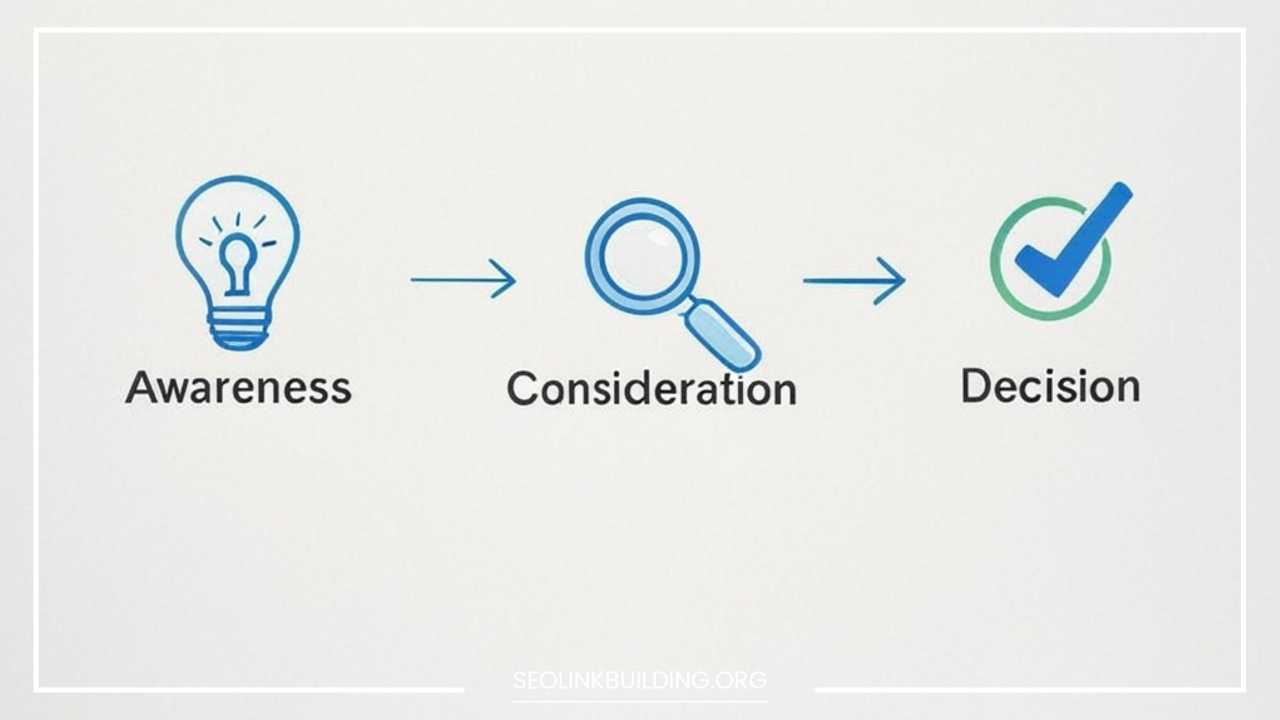
The buyer’s journey is the path a potential customer takes from being a stranger to your brand to a loyal advocate. It’s typically broken down into three main stages:
- Awareness Stage: The customer has a problem but doesn’t yet know the solution. They’re looking for information to better understand their problem.
- Consideration Stage: The customer has defined their problem and is now researching potential solutions. They are comparing different options and weighing their pros and cons.
- Decision Stage: The customer has narrowed down their options and is ready to make a purchase. They are looking for reasons to choose one solution over another.
A robust content map must account for the unique information needs of each of these stages.
Step 3: Create Relevant Content for Each Stage
Once you’ve identified your personas and the stages of their journey, you can begin to match content types to each stage.
- Awareness Stage: Content here should be educational and problem-focused, not sales-y. Examples include blog posts, social media content, infographics, and checklists.
- Consideration Stage: This content should offer solutions and build trust. Examples include e-books, white papers, webinars, comparison guides, and expert interviews.
- Decision Stage: This content is designed to close the deal. Examples include case studies, customer testimonials, product demos, free trials, and pricing pages.
Step 4: Align Content with Keywords and Topics
Keyword research is a critical component of content mapping, as it helps you understand the language your audience uses to search for information. By aligning your content with relevant keywords and topics, you improve your search engine optimization (SEO) and ensure your content is discoverable by the right people. This step is where you bridge the gap between your content map and your overall SEO strategy.
Step 5: Review and Optimize the Content Map
Content mapping is not a one-time activity. The digital landscape, your audience’s needs, and your business goals are constantly evolving. It’s essential to regularly review your content map, analyze performance metrics, and make adjustments as needed. This continuous optimization cycle ensures your content remains relevant and effective.
Tools and Resources for Content Mapping
Fortunately, you don’t have to start from scratch. There are many tools and resources available to help you streamline the content mapping process.
- Content Mapping Templates: Simple spreadsheets, diagrams, or visual templates (found on platforms like HubSpot or Lucidchart) can help you organize and visualize your content map. They provide a structured framework to get started.
- Content Planning Tools: Tools like Trello, Asana, and Airtable are excellent for managing content workflows. You can use them to create a content calendar, assign tasks to team members, track progress, and see the entire content pipeline at a glance.
- Content Mapping Software: Specialized platforms like CoSchedule, Contentful, and HubSpot offer integrated features for content planning, scheduling, and performance tracking. They often include built-in templates and analytics to simplify the mapping process.
- SEO Tools: Platforms like SEMrush and Ahrefs are indispensable for keyword research, topic ideation, and competitor analysis. They help you find the most impactful keywords to include in your content map, ensuring your content is optimized for search engines.
Common Mistakes in Content Mapping and How to Avoid Them
Even with the right tools, it’s easy to make mistakes. Awareness of these pitfalls can help you avoid them.
- Lack of Audience Understanding: The most common mistake is creating content based on what you think your audience wants, rather than what they actually need. Always start with in-depth buyer persona research and validation.
- Not Considering the Full Buyer’s Journey: Some marketers focus too heavily on the awareness stage, neglecting the crucial consideration and decision stages. A complete content map addresses all three stages to guide the customer all the way to conversion.
- Inconsistent Content Quality: A content map is only as effective as the content it points to. If your content quality is inconsistent, it will undermine all your strategic planning. Ensure every piece of content is well-researched, well-written, and valuable.
- Ignoring Analytics: A content map is a living document that needs to be updated based on performance. Ignoring analytics data—such as engagement rates, conversions, and traffic—will prevent you from optimizing your map and content strategy.
Real-World Examples of Content Mapping
Seeing how others have successfully used content mapping can provide valuable inspiration.
- Example 1 (SaaS Company): A B2B SaaS company selling project management software used content mapping to boost lead conversions. They created awareness-stage blog posts on topics like “best project management practices.” For the consideration stage, they offered a detailed e-book comparing their software to competitors. Finally, for the decision stage, they produced video case studies and a free trial to seal the deal. This mapped approach led to a 40% increase in qualified leads.
- Example 2 (E-commerce Brand): An e-commerce brand selling sustainable clothing mapped content to the consumer journey. For awareness, they used Instagram Reels and blog posts about “the impact of fast fashion.” In the consideration stage, they created product guides and a blog post titled “why we use recycled materials.” The decision stage was supported by customer photo galleries and testimonials on their product pages, which built social proof and drove sales.
- Example 3 (Lead Nurturing): A marketing agency used content mapping to nurture leads through email campaigns. A new lead who downloaded a guide on “SEO basics” was automatically enrolled in an email sequence. The first email provided a link to a blog post on “advanced keyword research.” The second email linked to a case study, and the final email offered a free consultation, a clear path from a top-of-funnel asset to a sales conversation.
Measuring the Success of Content Mapping
To know if your content map is working, you need to track the right key performance indicators (KPIs).
- Engagement Metrics: Track metrics like page views, time on page, and social shares to see if your awareness-stage content is resonating.
- Lead Generation: For consideration-stage content, measure lead magnet downloads, webinar sign-ups, and form submissions.
- Conversion Rates: The ultimate measure of success for decision-stage content is the conversion rate, such as sales, free trial sign-ups, or demo requests.
- Customer Retention: For post-purchase content, track metrics like customer satisfaction scores and repeat purchases.
Use tools like Google Analytics, HubSpot, or your CRM to analyze this data. Regularly review these metrics to identify which parts of your content map are working and which need to be adjusted.
Final Thoughts
Content mapping is far more than a simple organizational exercise. It is a strategic imperative for any business looking to thrive in the digital age. By meticulously aligning your content with your audience’s needs at every stage of their journey, you create a powerful, cohesive, and effective content strategy. This process ensures you’re not just publishing content, but building a purposeful narrative that nurtures relationships, drives conversions, and fosters long-term brand loyalty. Starting with detailed buyer personas and a clear understanding of the buyer’s journey is the first and most crucial step. From there, you can use the right tools and a continuous optimization mindset to create a content map that will become the backbone of your marketing success.
Bonus: FAQs
- How often should content maps be updated? Your content map should be a living document, updated at least quarterly or whenever there are significant changes in your audience, business goals, or market landscape.
- Can content mapping be automated? While the strategic thinking behind content mapping cannot be fully automated, tools can automate parts of the process, such as content scheduling and performance tracking.
- What is the difference between content mapping and content strategy? Content strategy is the high-level plan that defines your goals and audience. Content mapping is the tactical process of creating a blueprint to execute that strategy by linking specific content pieces to specific audience needs and journey stages.