
How to Improve Your Website Traffic

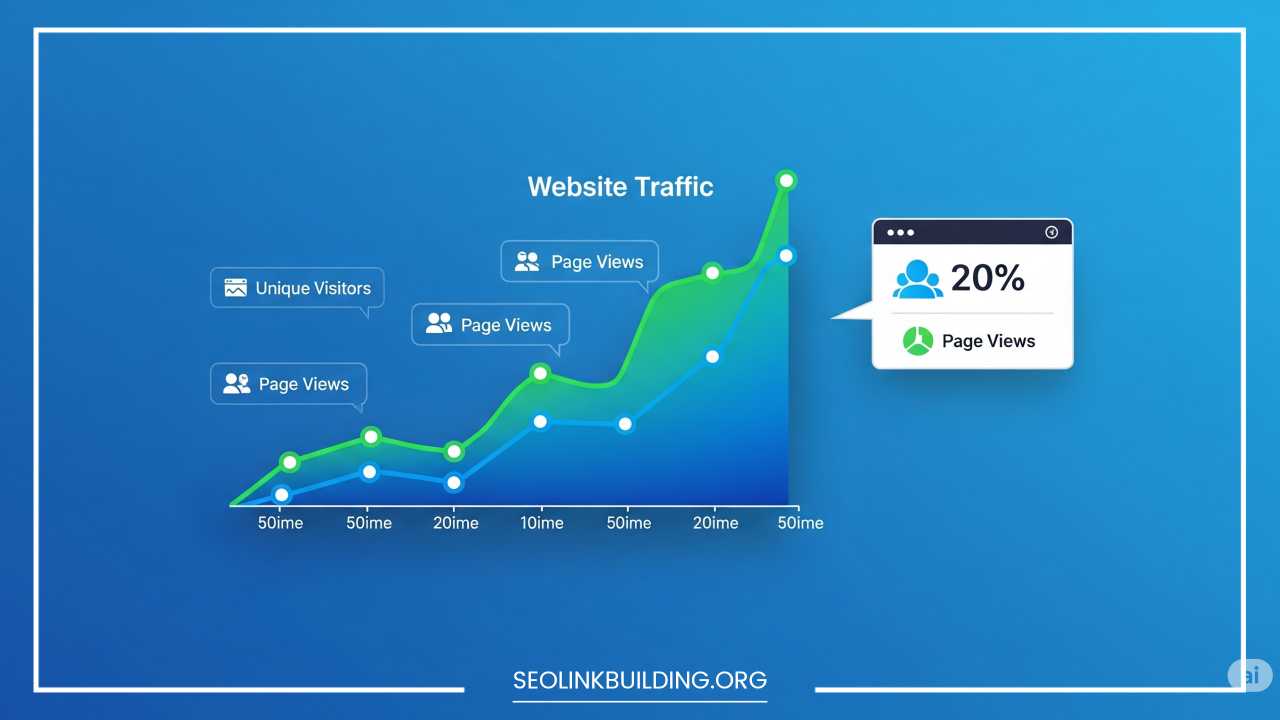
How to Improve Your Website Traffic | Proven Strategies for Growth
📌 1. Introduction
In today’s hyper-connected digital landscape, a website serves as the virtual storefront, information hub, or community platform for businesses, blogs, e-commerce stores, and personal brands alike. However, merely having a website isn’t enough; for it to be a truly effective asset, it needs traffic – a consistent flow of visitors. Website traffic is the lifeblood of online success, directly impacting brand visibility, lead generation, sales, and overall influence. Without sufficient traffic, even the most beautifully designed and feature-rich website remains an undiscovered gem.
Broadly, website traffic can be categorized into two main types: organic and paid. Organic traffic refers to visitors who arrive at your site naturally, typically through search engine results, direct navigation, or social media shares, without you directly paying for their visit. Paid traffic, on the other hand, involves using advertising platforms to drive visitors to your site, such as Google Ads or social media advertisements. While both have their merits, a balanced and strategic approach often yields the best long-term results. This comprehensive guide will equip you with actionable strategies and insights to significantly boost your website traffic, covering everything from fundamental analytics to advanced promotion techniques. By the end of this article, you will have a clear roadmap to attracting more visitors and achieving your online objectives.
🔍 2. Understand Your Current Traffic
Before embarking on any traffic-boosting initiatives, it’s crucial to understand your current website performance. This involves delving into your existing data to identify strengths, weaknesses, and opportunities. The two indispensable tools for this analysis are Google Analytics and Google Search Console.
Google Analytics provides a wealth of information about your website visitors’ behavior. It can tell you how many people visit your site, where they come from (traffic sources like organic search, social media, referral, direct), which pages they visit most frequently (top-performing pages), how long they stay, and their navigation paths. By analyzing these metrics, you can identify your most popular content, understand user engagement, and pinpoint pages with high exit rates that might need improvement. For instance, if you notice a particular blog post consistently drives significant traffic, you know that topic resonates with your audience, suggesting you create more similar content.
Google Search Console, while complementary to Analytics, offers a different perspective: how your site performs in Google Search. It shows you which queries bring users to your site, your average position in search results, click-through rates (CTR), and any indexing or crawling errors Google encounters. This tool is invaluable for identifying keywords you already rank for and discovering new keyword opportunities. By cross-referencing data from both platforms, you can gain a holistic view. For example, if Analytics shows a drop in organic traffic, Search Console might reveal a sudden decline in impressions for key terms, indicating a potential SEO issue. Regularly reviewing these tools will allow you to recognize traffic trends, identify any significant drop-offs promptly, and make data-driven decisions to rectify problems and capitalize on successes.
✍️ 3. Create High-Quality, SEO-Optimized Content
Content is king, but high-quality, SEO-optimized content is the monarch of online visibility. To attract organic traffic, your content must not only be valuable and engaging but also discoverable by search engines. This starts with thorough keyword research. Tools like Ahrefs, SEMrush, and Ubersuggest allow you to identify what your target audience is searching for, the volume of those searches, and the competition for those keywords. Focus on a mix of short-tail (broad) and long-tail (specific, multi-word) keywords, as long-tail keywords often indicate higher search intent and are less competitive.
Once you have your keywords, the goal is to write content that directly answers the search intent behind those queries. Are users looking for information, a solution, a product, or a guide? Your content should fulfill that need comprehensively. Consider the format: long-form content (1500+ words) often performs well for complex topics or guides, as it allows for in-depth exploration and naturally incorporates more relevant keywords. However, short-form content can be effective for quick answers, news updates, or highly specific questions.
Beyond the words themselves, on-page SEO best practices are crucial. Integrate your primary and secondary keywords naturally into your content, especially in headings (H1, H2, H3), which provide structure and signal topic hierarchy to search engines. Craft compelling meta titles and meta descriptions; these snippets appear in search results and directly influence click-through rates. Optimize images by using descriptive filenames and adding alt text that includes relevant keywords. This not only helps search engines understand the image content but also improves accessibility for visually impaired users. By creating content that is both valuable to humans and optimized for search engines, you lay a strong foundation for sustainable traffic growth.
🔗 4. Master On-Page and Technical SEO
While content quality is paramount, the technical foundation of your website plays an equally critical role in how search engines perceive and rank your site. Mastering on-page and technical SEO ensures your website is crawlable, indexable, and provides a seamless user experience, all of which contribute to higher search rankings and improved traffic.
Page speed optimization is no longer a luxury but a necessity. Users and search engines alike prefer fast-loading websites. Utilize tools like Google PageSpeed Insights to identify bottlenecks and implement fixes such as compressing images, minifying CSS and JavaScript, leveraging browser caching, and using a Content Delivery Network1 (CDN). A slow site leads to higher bounce rates and poorer search rankings.
In an increasingly mobile-first world, mobile responsiveness is non-negotiable. Your website must adapt flawlessly to various screen sizes, from desktops to tablets and smartphones. Google prioritizes mobile-friendly sites in its search results, so ensure your design is responsive, and all elements are easily navigable on smaller screens.
Internal linking strategies are powerful for both SEO and user experience. By linking relevant pages within your own website, you distribute “link equity” (PageRank) across your site, helping search engines discover new content and understand the relationship between different pages. It also guides users through your content, encouraging them to explore more and reducing bounce rates.
Finally, implement schema markup and ensure you have an updated XML sitemap. Schema markup (structured data) helps search engines understand the context of your content, leading to rich snippets in search results (e.g., star ratings, recipe information, event dates), which can significantly boost click-through rates. An XML sitemap acts as a map for search engine crawlers, listing all the important pages on your site, ensuring they are discovered and indexed efficiently. Addressing these technical aspects provides a robust framework for your SEO efforts.
📣 5. Promote Content Effectively
Creating outstanding content is only half the battle; the other half is ensuring it reaches your target audience. Effective content promotion is crucial for driving traffic, amplifying your message, and establishing your brand authority.
Social media marketing is a powerful avenue for content dissemination. Share your new blog posts, articles, and resources across relevant platforms like Facebook, LinkedIn, Twitter, and Pinterest. Don’t just post links; craft engaging captions, ask questions, use relevant hashtags, and encourage discussion. Tailor your content and posting schedule to each platform’s audience and best practices. For instance, LinkedIn is ideal for B2B content, while Pinterest is excellent for visually driven industries like fashion or home decor.
Email marketing campaigns are incredibly effective for nurturing leads and driving repeat traffic. Build an email list by offering valuable lead magnets (e.g., e-books, exclusive guides, checklists). Regularly send out newsletters featuring your latest content, special offers, or curated resources. Segment your audience to send highly relevant content, increasing open rates and click-through rates.
Content repurposing is a smart way to maximize the reach and lifespan of your existing content. Transform a comprehensive blog post into a series of short social media snippets, an infographic, a video tutorial, a podcast episode, or even a webinar. This allows you to cater to different learning preferences and distribute your message across multiple formats and platforms, reaching new audiences without creating entirely new content from scratch.
Finally, engage with online communities. Platforms like Reddit, Quora, and niche-specific forums are excellent places to share your expertise and subtly promote your content. Look for questions related to your area of expertise and provide genuinely helpful answers, linking to your relevant content only when it directly adds value. Avoid blatant self-promotion, as it can be perceived negatively. By actively participating and demonstrating your knowledge, you can build credibility and drive targeted traffic back to your site.
🌐 6. Leverage Backlink Building
Backlinks, also known as inbound links, are hyperlinks from one website to another. They are one of the most critical ranking factors for search engines like Google, acting as “votes of confidence” from other websites. The more high-quality, relevant backlinks your site acquires, the more authority and trustworthiness search engines perceive it to have, leading to higher rankings and increased organic traffic.
Guest blogging is a reciprocal strategy where you write an article for another website in your industry, including a link back to your own site. This not only provides a valuable backlink but also exposes your content to a new, relevant audience. Focus on high-authority websites with good domain ratings. Similarly, digital PR involves creating newsworthy content or conducting original research that attracts media attention and, consequently, backlinks from reputable news outlets or industry publications.
Broken link building is a clever tactic. You identify broken links on other websites in your niche using tools like Ahrefs or SEMrush. Then, you reach out to the website owner, inform them of the broken link, and suggest your own relevant content as a replacement. This offers them a solution to a problem and earns you a valuable backlink.
Building genuine relationships with influencers and bloggers in your industry is a long-term, highly effective strategy. Engage with their content, share their work, and offer to collaborate. When you have established a rapport, they are more likely to share your content, link to your resources, or even feature your business, leading to powerful editorial backlinks and significant referral traffic. Remember, the quality and relevance of backlinks far outweigh the quantity; aim for links from authoritative and trustworthy domains.
🧪 7. Experiment with Paid Traffic
While organic growth is the cornerstone of sustainable traffic, paid traffic offers an immediate and scalable solution to drive visitors to your website. It’s particularly useful for new websites, product launches, or for quickly testing the viability of specific offers or landing pages.
Google Ads (formerly Google AdWords) allows you to bid on keywords to show your ads in search results (Search campaigns) or on websites and apps across the Google Display Network (Display campaigns). Facebook Ads, and other social media advertising platforms, enable highly targeted campaigns based on demographics, interests, and behaviors, allowing you to reach specific audiences where they spend their time online. Retargeting campaigns, which show ads to users who have previously visited your website, are exceptionally effective for bringing back interested prospects and nudging them towards conversion.
Effective budgeting is crucial for paid campaigns. Start with a smaller budget to test different ad creatives, targeting parameters, and keywords. Continuously monitor your ad spend and performance. Key metrics to track include cost-per-click (CPC), click-through rate (CTR), and, most importantly, return on investment (ROI). Set up conversion tracking to accurately measure how many leads, sales, or other desired actions your ads generate. Paid traffic is not a set-it-and-forget-it strategy; it requires continuous monitoring, A/B testing of ad copy and visuals, and optimization to ensure you’re getting the best possible results for your investment. When managed strategically, paid traffic can provide a significant and immediate boost to your website visitor numbers.
🚀 8. Improve User Experience (UX)
User experience (UX) is the overall experience a person has when interacting with your website. A positive UX not only encourages visitors to stay longer and explore more but also signals to search engines that your site provides value, which can positively impact your rankings and, consequently, traffic.
Intuitive site navigation is paramount. Users should be able to easily find what they’re looking for without confusion or frustration. Implement clear menus, logical categories, a prominent search bar, and breadcrumbs to help users understand their location within your site. Ensure readability by using legible fonts, appropriate font sizes, sufficient line spacing, and good contrast between text and background. Break up large blocks of text with headings, subheadings, bullet points, and images to make content scanners friendly.
Visual design plays a significant role in UX. A clean, modern, and professional design builds trust and makes your site appealing. Avoid clutter, excessive pop-ups, or distracting animations that detract from the user’s primary goal.
Reducing bounce rate is a key UX improvement. Bounce rate is the percentage of visitors who leave your website after viewing only one page. High bounce rates can indicate that your content2 isn’t meeting user expectations, your site is slow, or navigation is confusing. By improving content quality, page speed, mobile responsiveness, and internal linking, you can encourage users to explore further.
Finally, optimize your Calls-to-Action (CTAs). These are prompts that encourage users to take a specific action, such as “Download Now,” “Learn More,” or “Shop Products.” Make CTAs clear, concise, and visually prominent. Place them strategically where users are most likely to convert. A well-optimized UX not only keeps existing visitors happy but also encourages them to return, share your content, and become loyal customers, all of which contribute to sustainable traffic growth.
📈 9. Monitor and Adjust Strategies
Improving website traffic is not a one-time task; it’s an ongoing process of monitoring, analyzing, and adapting. The digital landscape is constantly evolving, and what works today might not be as effective tomorrow. Continuous vigilance and a commitment to iterative improvements are essential for long-term success.
A/B testing is a powerful methodology for optimizing various elements of your website and campaigns. You can A/B test different headlines for your blog posts, variations of your landing pages, different call-to-action buttons, or even the layout of your product pages. By showing two versions (A and B) to different segments of your audience and measuring which performs better, you can make data-driven decisions that incrementally improve your conversion rates and user engagement, ultimately leading to more traffic and better results.
Measuring what works is critical. Establish Key Performance Indicators (KPIs) to track your progress. For traffic, important KPIs include:
- Click-Through Rate (CTR): The percentage of people who clicked on your link or ad after seeing it.
- Dwell Time: How long visitors spend on your page after clicking through from a search engine. A longer dwell time often indicates engaging content.
- Bounce Rate: As mentioned, the percentage of visitors who leave after viewing one page.
- Conversions: The ultimate goal – whether it’s a sale, a lead, a download, or a subscription.
Regularly review your Google Analytics and Search Console data. Identify traffic sources that are performing well and those that are underperforming. Pinpoint content that resonates and content that falls flat. By understanding these metrics, you can refine your keyword strategy, optimize your content, adjust your promotion tactics, and allocate your resources more effectively. The journey to increased website traffic is an iterative one, driven by continuous learning and adaptation.
✅ 10. Final Thoughts
Boosting your website traffic is a multifaceted endeavor that requires a strategic, holistic, and persistent approach. As we’ve explored, it begins with understanding your current audience and performance through tools like Google Analytics and Google Search Console. From there, the foundation is laid with high-quality, SEO-optimized content that genuinely addresses user intent, supported by robust on-page and technical SEO practices that ensure your site is discoverable and accessible to search engines and users alike.
Beyond the technicalities, effective promotion across social media, email campaigns, and community engagement is vital for extending your reach. Simultaneously, building a strong backlink profile through guest blogging, digital PR, and relationship-building amplifies your site’s authority. While organic growth is sustainable, experimenting with paid traffic offers immediate scalability and valuable insights. Crucially, a relentless focus on improving user experience ensures visitors stay longer and return, ultimately converting into loyal customers or followers.
The key takeaway is consistency and patience. Digital marketing is a marathon, not a sprint. Implement these strategies diligently, monitor your results, be prepared to A/B test and adjust based on data, and continually refine your approach. By committing to these principles, you will not only increase your website traffic but also build a stronger, more engaged online presence that drives meaningful results for your business or brand.
Ready to transform your online presence? Start implementing these strategies today and witness the power of increased website traffic. For more in-depth guides and exclusive tips, subscribe to our newsletter or explore our related articles on advanced SEO techniques and content marketing strategies!