How to Write SEO Optimized Content That Actually Ranks

How to Write SEO Optimized Content That Actually Ranks
The digital landscape of 2026 has moved far beyond the simplistic days of keyword stuffing and backlink counting. Today, search engine optimization (SEO) is less about tricking an algorithm and more about demonstrating a deep understanding of human psychology and information architecture. Most “SEO content” fails to rank not because it lacks keywords, but because it lacks purpose, depth, and a clear alignment with what the user is actually seeking.
In the past, writers could simply repeat a phrase like “best running shoes” ten times in a 500-word article and stand a good chance of appearing on page one. Those days are gone. Modern search engines are sophisticated enough to recognize the difference between a high-value resource and a hollow piece of marketing fluff. To rank today, you must master the intersection of technical optimization and high-quality journalism.
This guide will dismantle the myths of old-school SEO and provide you with a comprehensive framework for creating content that search engines love to crawl and humans love to read. We will explore how to satisfy user intent, build topical authority, and structure your pages for maximum visibility in an AI-driven search era.
Understand How Search Engines Actually Work
Before you type a single word, you must understand the machinery behind the screen. Search engines like Google function through a three-stage process: crawling, indexing, and ranking.
Crawling: The Discovery Phase
Crawling is the discovery stage where “spiders” or bots scour the internet to find new or updated content. They follow links from page to page. If your site structure is messy or your internal linking is non-existent, these bots may never find your best work. In 2026, “crawl budget” is a vital concept for large sites; Google won’t waste time on low-quality or duplicate pages.
Indexing: The Filing System
Indexing occurs after a page is discovered. The search engine parses the content, images, and videos on the page, trying to understand what the page is about. This information is then stored in a massive database (the Index). If your content is hidden behind complex JavaScript or non-text elements, it might not be indexed correctly, meaning it will never appear in search results.
Ranking: The Competition
Ranking is the final, most complex stage. When a user types a query into Google Search, the engine sifts through its index to find the most relevant, high-quality answers. This is where Google RankBrain—a machine-learning-based component of Google’s core algorithm—comes into play. RankBrain helps Google understand the “why” behind a search, not just the “what.”
The Evolution of Intent
The evolution of these algorithms has shifted from simple keyword matching to intent understanding. In the current era, search engines prioritize “Entities” and “Topics” over “Strings” (sequences of characters). They look at how different concepts relate to one another to determine if a piece of content is truly comprehensive.
Search engines rank pages that best satisfy user intent—not pages with the most keywords.
If you remember only one thing from this section, let it be this: Google’s goal is to provide the best possible experience for its users. If your content provides that experience, you have already won half the battle.
Start With Search Intent (Most Important Section)
Search intent, also known as user intent, is the “why” behind a search query. Why did the person type those specific words into the search bar? If your content does not align with this intent, it will never rank, regardless of how many backlinks you have or how fast your site loads.
The Four Pillars of Intent
-
Informational: The user is looking for an answer to a specific question or wants to learn about a topic (e.g., “how to bake sourdough”). These users want guides, tutorials, and data.
-
Navigational: The user wants to find a specific website or physical location (e.g., “Facebook login” or “Starbucks near me”). These users already know where they want to go.
-
Commercial: The user is researching products or services but hasn’t made a final decision yet (e.g., “best laptops for video editing”). They want reviews, comparisons, and top 10 lists.
-
Transactional: The user is ready to buy (e.g., “buy iPhone 15 Pro Max” or “discount code for Nike”). These users want product pages and checkout buttons.
How to Analyze the SERP for Intent
To understand the intent for your target keyword, look at the Search Engine Results Page (SERP). Google has already done the hard work of figuring out what users want by analyzing billions of clicks.
-
Analyze the Top 10 Results: Are they blog posts? Product pages? Videos? Case studies?
-
Reverse Engineer the Format: If the top results are all “How-to” guides, don’t try to rank a product sales page for that keyword. You will fail because Google has determined the user wants to learn, not buy.
-
Identify Intent Mismatch: If you see a listicle at #1, a deep-dive guide at #2, and a “Tips” article at #3, the intent is likely informational. If you see price comparison tables, it is commercial.
The Golden Rule: If the SERP shows listicles, write a listicle. If the SERP shows product pages, do not write a blog post. Intent is more valuable than keyword volume because high-volume keywords with the wrong intent will only lead to high bounce rates and zero conversions.
Smart Keyword Research (Without Overcomplicating It)
Keyword research is the process of finding the phrases people use to find information online. However, in 2026, we focus on Topical Clusters rather than isolated words.
The Keyword Hierarchy
To build a page that ranks, you need to map out a hierarchy of terms:
-
Primary Keyword: The main topic of your page (e.g., “SEO optimized content”). This should be the focus of your H1 and meta title.
-
Secondary Keywords: Related terms that support the main topic (e.g., “SEO writing tips,” “content optimization strategy”). These often become your H2 subheadings.
-
Semantic Keywords (LSI): Phrases that logically belong with your topic (e.g., “search engine rankings,” “meta descriptions,” “readability”). These help Google understand the context.
-
Long-tail Keywords: Specific, multi-word phrases that often have lower volume but higher conversion rates (e.g., “how to write SEO content for a law firm”).
Essential Tools for 2026
While AI has changed research, data remains king. Use tools like Ahrefs or SEMrush to find search volume and “Keyword Difficulty” (KD). Use Google Keyword Planner for commercial insights and Google Search Console to see what terms you are already appearing for.
The Modern Approach: Looking Beyond Volume
Don’t just chase high-volume numbers. A keyword with 10,000 monthly searches might be impossible to rank for if you are a new site. Instead, look for “low competition” keywords where the current results are thin or outdated.
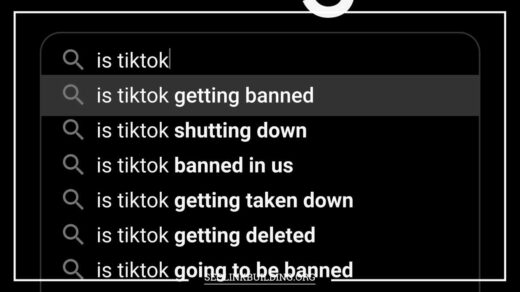
Utilize the “People Also Ask” boxes and Google Auto-suggest. These are real-time indicators of what users are curious about right now. If you answer the questions found in “People Also Ask” within your content, you increase your chances of winning a Featured Snippet, which places you above the #1 organic result.
Structure Your Content for Rankings
Structure is the “bones” of your SEO strategy. If your content is a wall of text, users will leave, and Google will notice. Proper formatting makes your content accessible to both humans and bots.
✔ Proper Heading Hierarchy
Use headings to create a logical flow. This is essentially an outline that tells Google what parts of your article are most important.
-
H1: Use only one H1 tag per page. It should contain your primary keyword and act as the title of your work.
-
H2 and H3: Use these to break down subtopics. For example, if your H1 is “How to Bake Bread,” your H2s might be “Ingredients Needed” and “Step-by-Step Instructions,” while an H3 under ingredients might be “Choosing the Right Yeast.”
✔ Introduction Optimization
The first 100 words are critical. You must include your primary keyword here to signal relevance to the search engine. More importantly, you must include a “hook”—a reason for the reader to keep going. Clearly state the benefit they will receive by reading the entire piece. If you don’t grab their attention immediately, your dwell time will suffer.
✔ Short Paragraphs and Readability
Mobile users dominate the web. Large blocks of text are intimidating on a small screen. To maximize engagement, aim for:
-
2–4 lines per paragraph max.
-
Bullet points to break up lists.
-
Bolding to highlight key takeaways so “skimmers” still get value.
-
Ample white space to reduce cognitive load.
✔ Featured Snippet Optimization
Google often displays a “Snippet” at the very top of the page. To win this spot, use what experts call “Snippet-bait”:
-
Definitions: Provide a clear, one-sentence explanation of a concept immediately following a heading.
-
Lists: Use numbered lists for chronological steps or bullet points for non-sequential items.
-
Tables: Use tables for data comparisons. Google loves structured data that it can easily extract for a user’s quick glance.
Write for Humans First, Algorithms Second
There is a common misconception that “writing for SEO” means writing in a robotic, repetitive way. In reality, the best SEO content is the most readable content.
Natural Keyword Integration
Integrate your keywords naturally into the prose. If a keyword feels forced, rephrase it. Google’s algorithm (via Latent Semantic Indexing and BERT) understands synonyms and context perfectly. If you are writing about “healthy diets,” Google knows that “nutritious eating” and “balanced meals” are related. You don’t need to say “healthy diets” 50 times.
Avoid Keyword Stuffing
Keyword stuffing is the practice of overusing keywords to the point that it ruins the reading experience. This is a “black hat” tactic that will get your site penalized. Instead, focus on Topical Depth. Cover the topic so thoroughly that the keywords appear naturally as a result of your expertise.
Engagement Signals and User Behavior
Search engines measure how users interact with your page. If users click your link and immediately hit the “back” button (known as “pogo-sticking”), Google receives a signal that your page didn’t satisfy the user.
-
Bounce Rate: Do they leave immediately?
-
Dwell Time: How long do they stay on the page reading?
-
Click Behavior: Do they click on internal links to explore more of your site?
To improve these signals, write conversationally. Use “you” and “I.” Tell stories. Be the authority the reader is looking for. Clarity and simplicity always beat jargon.
Add Topical Depth and Authority (E-E-A-T)
In 2026, Google emphasizes E-E-A-T: Experience, Expertise, Authoritativeness, and Trustworthiness. This is especially important for “Your Money or Your Life” (YMYL) topics like finance, legal advice, or health.
How to Demonstrate E-E-A-T
-
Experience: Share personal anecdotes, original photos, or “I tried this” scenarios. Google wants to see that a human with real experience wrote the content, not just an AI scraping other sites.
-
Expertise: Have content written or reviewed by someone with credentials. Include an Author Bio that links to their professional portfolio or social media.
-
Authoritativeness: Cite credible sources. Don’t just make claims; link to university studies, government data, or industry-leading reports.
-
Trustworthiness: Ensure your site has an “About Us” page, a “Contact” page, and a clear Privacy Policy. Use HTTPS to show the site is secure.
Topical Authority and Content Clusters
Instead of writing one-off articles, build a “Content Cluster.” Create one main Pillar Page (like this 2,600-word guide) and link it to several smaller, more specific articles (e.g., “How to write meta descriptions,” “How to do image SEO,” “The best SEO tools for 2026”). This internal linking structure tells Google that you are an authority on the entire topic, not just one keyword.
On-Page SEO Checklist (Practical Section)
Before you hit publish, run through this practical checklist to ensure every technical element is optimized for the bots.
The Metadata
-
Title Tag: Keep it under 60 characters. Place your keyword at the beginning. Ensure it is catchy enough to earn a click.
-
Meta Description: This is your “ad” in the search results. Keep it around 150-160 characters and include a clear Call to Action (CTA) like “Read our guide to learn more.”
-
URL Optimization: Use short, descriptive URLs (e.g.,
domain.com/seo-optimized-contentrather thandomain.com/p=12345).
The Technicals
-
Internal Linking: Link to at least 2–3 other relevant pages on your own site to keep users in your ecosystem.
-
External Linking: Link to 2–3 high-authority external sites. This shows Google you are part of a wider, trustworthy web.
-
Image Alt Text: Describe your images for accessibility and search bots. Don’t just put “image1,” put “graphic showing SEO heading hierarchy.”
-
Schema Markup: Use structured data to help Google understand your content. Use Article schema for blogs, FAQ schema for questions, or Review schema for products.
-
Mobile Optimization: Use Google PageSpeed Insights to ensure your site loads in under 2.5 seconds. Speed is a direct ranking factor.
Optimize for Click-Through Rate (CTR)
Ranking at the top of Google is only half the battle; you also need people to actually click on your link. If you are #1 but everyone clicks #2, you will soon lose your top spot.
The Art of the Headline
Titles with numbers (like “17 Proven Ways”) tend to get more clicks because they promise a specific, digestible amount of information. Use “Power Words” like Proven, Ultimate, Free, Secret, or Case Study to evoke emotion.
Curiosity Gaps and Emotional Triggers
Create a “Curiosity Gap” by hinting at something the reader doesn’t know.
-
Weak Title: How to write SEO content.
-
Strong Title: Why your SEO content isn’t ranking (and how to fix it).
The second title identifies a pain point (not ranking) and offers a solution (how to fix it), which is far more compelling than a generic “how-to.”
Brackets and Year Tags
Adding [2026 Guide] or (With Free Checklist) to the end of your title can significantly increase CTR. It signals that the content is current and provides extra value beyond just text.
Update and Refresh Content
Content is not a “set it and forget it” asset. The internet moves fast, and information becomes outdated. This leads to Content Decay, where a page that used to rank #1 slowly slides down to page three as fresher content emerges.
The Content Refresh Strategy
Refreshing old content is often faster and more effective than writing something entirely new.
-
Update Statistics: Replace 2023 data with 2026 data.
-
Expand Thin Sections: If a new subtopic has emerged since you first published, add 300 words about it.
-
Improve Internal Links: Link your old post to your newest relevant posts.
-
Check for Broken Links: Use a tool to find and fix “404 Not Found” links, which hurt your credibility.
-
Add an FAQ: Look at the current “People Also Ask” for your keyword and add a 3–5 question FAQ section at the bottom of your post to capture more long-tail traffic.
Common SEO Content Mistakes to Avoid
Even experienced writers fall into these traps. Avoid them to keep your rankings stable and your brand reputation high:
-
Writing Without Intent Research: Creating a beautiful 3,000-word essay for a keyword that users only want a quick 200-word definition for. You are fighting the user’s desire.
-
Copying Competitors: If you just summarize what the top three results say, you aren’t adding value. Google wants to see “Information Gain”—something new, a different perspective, or better data that isn’t already in the index.
-
Thin Content: Pages that are too short, lack original insight, or are purely generated by AI without human oversight.
-
Ignoring UX: Pop-ups that cover the whole screen, tiny fonts, or slow-loading images that frustrate the user. Google’s “Core Web Vitals” track these frustrations.
-
Over-optimizing: Using your keyword so many times that it becomes unreadable. This is a red flag for search engines and humans alike.
-
Ignoring the “Searcher’s Task”: If someone searches for “how to fix a sink,” they want a solution. If your article spends 1,000 words on the “history of sinks” before giving the solution, they will leave.
Final Thoughts
Writing SEO optimized content that actually ranks is a marathon, not a sprint. It requires a balance of technical precision and creative flair. By focusing on user intent, building topical authority, and adhering to E-E-A-T guidelines, you create an asset that will provide organic traffic for years to come.
Search engines are becoming more “human” in how they evaluate content. They want to see depth, clarity, and genuine helpfulness. If you treat your reader with respect and provide the best possible answer to their question, the algorithms will naturally follow.
Key Takeaways Summary:
-
Intent first: Never write a word until you know why the user is searching.
-
Depth over fluff: Don’t just meet a word count; meet the user’s needs.
-
Structure matters: Use H1-H3 tags and short paragraphs for readability.
-
Optimize for humans: Engagement signals like dwell time are the new “backlinks.”
-
Stay fresh: Audit and update your content at least once a year to prevent decay.
Now that you have the framework, it is time to put it into practice. Audit your existing content using these rules, or start your next piece with a fresh, intent-focused perspective. The results won’t appear overnight, but a consistent strategy built on these principles is the only way to win in the long term.