
What Is Pillar Content?

What Is Pillar Content? | Guide to Content Marketing
Content marketing is the strategic approach of creating and distributing valuable, relevant, and consistent content to attract and retain a clearly defined audience—and, ultimately, to drive profitable customer action. In the modern digital landscape, where the sheer volume of content can be overwhelming, a simple collection of blog posts and social updates is no longer enough to stand out. Businesses need a cohesive, deliberate structure to their content efforts.
This necessity gave rise to a powerful organizational framework: the pillar content strategy.
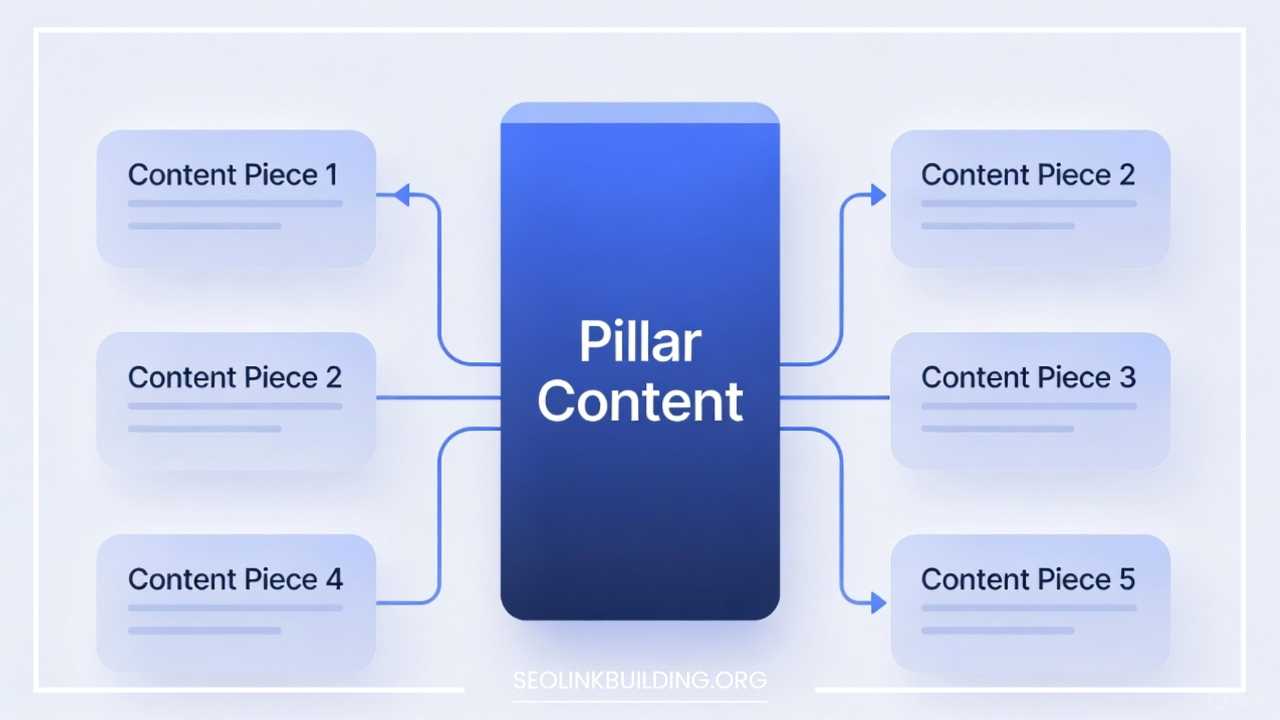
Pillar content is the fundamental anchor of this structure. It represents the core, most comprehensive piece of content on a broad topic within your industry. It serves as the definitive guide, the ultimate resource, or the go-to reference point for your audience on a particular subject. Think of it as the trunk of a tree, from which all other related content branches out.
Understanding and implementing pillar content is no longer a niche tactic—it’s a foundational requirement for marketers, bloggers, and businesses serious about achieving search engine optimization (SEO) success, establishing thought leadership, and providing genuinely valuable user experiences. A well-executed pillar strategy can transform a chaotic content calendar into an organized, high-performing ecosystem that consistently attracts organic traffic and converts visitors into leads. This guide will walk you through exactly what pillar content is, why it works, and how you can build a robust pillar strategy for your own brand.
What Is Pillar Content?
Pillar content is a substantial, comprehensive piece of content that addresses a broad subject area in its entirety. It is designed to be the single most authoritative source on that specific topic on your website. Often ranging from 2,000 to over 5,000 words, a pillar page aims to answer every possible question a user might have about the core topic, even if those answers are briefly summarized and then linked out to in-depth, smaller articles.
Role in Content Strategy
The primary role of pillar content is to establish a clear organizational structure for your website’s content library. Rather than having dozens of standalone, unrelated blog posts, the pillar page acts as a centralized hub. It tells both the user and search engines, like Google, that your website possesses a deep and structured expertise on that subject. This organization is key to implementing the topic cluster model, which we will discuss in detail later.
Differentiating Pillar Content
It’s crucial to understand what pillar content is not.
- It is not a standard blog post: While a blog post is typically focused on a long-tail, narrow keyword (e.g., “best practices for optimizing image size”), a pillar page targets a broad, high-volume, head-term keyword (e.g., “Image Optimization”).
- It is not a landing page: While it drives conversions, its primary goal is providing informational value, not just collecting an email or making a sale.
- It is not social media content: Social posts are ephemeral and short-form; pillar content is evergreen and long-form.
Pillar content serves as the foundational text. The shorter, more specific pieces of content that delve into sub-topics of the pillar are known as cluster content (or supporting articles).
Examples of Pillar Topics
Pillar content is often organized around subjects that are central to a business’s offering. Examples include:
- For a marketing agency: “The Ultimate Guide to Digital Marketing”
- For a finance company: “Understanding Investment Strategies for Beginners”
- For a software company: “A Complete Walkthrough of Modern Project Management Methodologies”
These broad topics allow for deep dives into many related sub-topics, which become the cluster content.
Types of Pillar Content
While the core function of a pillar page remains consistent—to serve as a comprehensive, authoritative resource—the way this content is presented can vary significantly. Understanding the different types allows you to choose the format best suited for your audience and topic complexity.
1. Topic Pillars (or Service Page Pillars)
This is perhaps the most common and structurally essential type. A topic pillar focuses on a broad, high-level subject or a major service your company offers.
- Format: These often resemble a very long-form, highly detailed service page or a comprehensive introductory article.
- Goal: To establish authority on the core subject and provide a high-level overview of all its facets.
- Real-life Example: A company selling email marketing software might create a pillar titled, “Everything You Need to Know About Email Marketing Automation.” This pillar would have sections on segmentation, trigger campaigns, A/B testing, and reporting, with each section linking out to an in-depth article (the cluster content).
2. How-to Guides (or Educational Pillars)
These pillars focus on teaching the audience how to achieve a major goal or master a specific skill. They are highly practical and structured in a step-by-step or phased manner.
- Format: A sequential, tutorial-based approach, often including checklists and actionable takeaways.
- Goal: To help the user move from a novice or beginner state to a more proficient one within the given subject.
- Real-life Example: “How to Build a High-Converting E-commerce Store from Scratch.” This pillar would cover steps like choosing a platform, product sourcing, store design, payment integration, and launch strategy.
3. Ultimate Guides (or Definitive Resources)
Ultimate guides are designed to be the single most comprehensive, non-biased, and definitive resource on a given topic, often aggregating information from various sources and synthesizing it into one cohesive document.
- Format: Incredibly in-depth, often using a table of contents, jump links, and complex visuals to aid navigation.
- Goal: To become the universally recognized, evergreen reference that industry professionals and beginners alike bookmark and share.
- Real-life Example: “The Ultimate Guide to Understanding Cryptocurrency and Blockchain Technology.” This would cover history, different coins, mining, security, and future trends.
4. Listicles and Resource Compilations
While “listicle” often implies light content, a pillar-style listicle is massive and acts as a curated directory or compilation of the best resources, tools, or examples in a specific field.
- Format: A numbered or bulleted list that is extremely long and well-researched, often acting as a “living document.”
- Goal: To save the user time by consolidating and vetting numerous resources, establishing the author as a trusted curator.
- Real-life Example: “The 101 Best Productivity Tools and Apps for Remote Workers (Reviewed and Ranked).”
Choosing the right type depends on the complexity of your topic and the primary intent of your audience. A technical subject may benefit from an Ultimate Guide, while a practical skill is better served by a How-to Guide.
Benefits of Pillar Content
Adopting a pillar content strategy is more than just organizing your blog; it’s a powerful move that fundamentally improves your marketing effectiveness across several critical areas.
SEO Benefits (Search Engine Optimization)
The most immediate and impactful benefit is the boost to your SEO performance.
- Improved Rankings for Head Terms: By creating comprehensive content, you signal to Google that your page is the best, most relevant result for a broad, high-volume keyword (the head term). This is difficult to achieve with short, fragmented blog posts.
- Strong Internal Linking Structure: The pillar-and-cluster model inherently creates a logical, powerful internal linking network. When all cluster pages link back to the central pillar, they pass link equity (or “link juice”) to the pillar, significantly increasing its authority in the eyes of search engines.
- Better Crawlability and Indexing: The clear structure helps search engine spiders navigate and understand the relationship between your content, ensuring that all related pages are properly discovered and indexed.
Authority Building and Thought Leadership
Pillar content is the definitive statement your brand makes on a topic.
- Establishes Credibility: Producing a 5,000-word, well-researched guide instantly positions your brand as an expert. This content is typically bookmarked, referenced, and shared by others in the industry, naturally earning valuable backlinks.
- Builds Trust: By genuinely aiming to educate and solve the user’s entire problem—without immediately pushing a sales pitch—you build trust and a stronger relationship with your audience.
Improved User Experience (UX)
A pillar structure fundamentally makes your website more intuitive for visitors.
- Easy Navigation and Content Discovery: Users arriving on the pillar page can easily scan the table of contents and jump to the specific sub-topic they are interested in, or follow the deep links to cluster content. This prevents the user from feeling lost or overwhelmed by a sea of disconnected blog posts.
- Increased Time on Site and Reduced Bounce Rate: Because the content is comprehensive and the internal links offer natural next steps, users spend more time consuming your content, which is a positive signal to search engines.
Driving Traffic and Generating Leads
Pillar pages are high-value traffic magnets.
- High Organic Visibility: They rank for broad, high-volume terms, pulling in a large volume of relevant organic search traffic.
- Effective Lead Generation: Because of their value, pillar pages are perfect places to embed content upgrades or lead magnets (e.g., a downloadable PDF of the guide, a checklist, or a free tool) in exchange for an email address, making them powerful lead generation tools.
How to Create Pillar Content
Creating effective pillar content is a significant undertaking that requires planning, research, and a commitment to quality. It is a strategic project, not a single article assignment.
Step 1: Identify Your Pillar Topics
Start by brainstorming the main, broad subjects your business is an expert in and that are essential to your product or service.
- Focus on Business Relevance: The topic must directly relate to the core problems your product or service solves. Don’t write about a tangential trend just because it’s popular.
- Determine Audience Relevance: What are the most common, high-level questions your audience asks? These “head terms” should be the basis of your pillar.
- Aim for 3–5 Pillars: Most businesses can structure their entire content strategy around three to five core pillar topics.
Step 2: Research Audience Intent and Keyword Research
Once you have a potential topic, you must validate it with data.
- Broad Keyword Research: Use SEO tools to find the highest-volume, broad keyword (the head term) that defines your pillar topic (e.g., “social media marketing,” “cloud computing,” “personal finance”).
- Analyze Search Intent: Look at the Search Engine Results Page (SERP) for your head term. What format is Google already rewarding? Is it a guide? A definition? A list? Your pillar must match this user intent.
- Identify Cluster Keywords: Research all the related, longer-tail keywords and sub-topics that naturally fall under the pillar. These will become your cluster articles and the key sub-headings within your pillar page.
Step 3: Creating a Comprehensive Content Outline
The outline is the backbone of the pillar content. It ensures the article is comprehensive and logically structured.
- Mimic the SERP Winners: Look at the top-ranking results for your head term and identify all the common sub-topics they cover. Your pillar should cover all of those and more.
- Structure for Flow: Organize your sub-topics logically, often moving from definition to application, or from beginner concepts to advanced strategies.
- Assign Links: In the outline, identify which sub-sections are comprehensive enough to remain on the pillar page and which will be summarized and linked out to a dedicated, existing or planned cluster article.
Step 4: Writing High-Quality, In-Depth Content
The content itself must be definitive and compelling.
- Go Deep, Not Just Long: Avoid fluff. Every section must provide genuine value and depth.
- Focus on the User Journey: Write with the goal of answering the reader’s every question about the broad topic.
- Be Scannable: Use active voice, short paragraphs, and clear, descriptive subheadings (H2, H3, H4) to make the vast amount of information manageable.
Step 5: Tips for Visuals, Media, and Formatting
A wall of text, even if well-written, can overwhelm the user.
- Break Up the Text: Use custom graphics, illustrative diagrams, short videos, infographics, and charts to explain complex concepts visually.
- Incorporate a Table of Contents: For a long pillar page, a sticky or easily accessible table of contents with jump links is non-negotiable for excellent UX.
- Utilize Formatting: Use bolding for emphasis, italics for clarity, and bulleted/numbered lists to break up density.
Pillar and Cluster Content Strategy
The power of pillar content is not in the page itself, but in how it is integrated into a complete content ecosystem known as the content cluster model. This model revolutionized content strategy by moving away from focusing solely on individual keywords and towards establishing expertise on broad topics.
Explaining the Content Cluster Model
The cluster model consists of two main components:
- The Pillar Page: The central, authoritative resource on the broad topic (e.g., “Video Marketing”). It targets the high-volume, head-term keyword.
- Cluster Content (Supporting Articles): A group of interconnected, deeper-dive articles that are topically related to the pillar (e.g., “How to Optimize YouTube Titles,” “Best Video Editing Software for Beginners,” “Video SEO Checklist”). Each cluster article targets a more specific, long-tail keyword related to the pillar.
The Power of Internal Linking
The relationship between the pillar and the cluster is defined by its internal linking structure, which is the most critical element of the strategy.
- Cluster Links to Pillar: Every single cluster article must link back to the central pillar page using the main target keyword of the pillar as the anchor text (e.g., in an article about YouTube titles, a sentence might read: “…for a complete strategy, see our ultimate guide to video marketing“). This consistent linking signals to search engines that the pillar page is the definitive authority on the topic.
- Pillar Links to Cluster: The pillar page must link out to all of its corresponding cluster articles. This serves two purposes: providing the user with more in-depth information, and helping search engines discover and crawl all related content.
Example Structure
Imagine the pillar topic is “Content Strategy.”
| Component | Target Keyword (Example) | Linking Direction |
| Pillar Page | Content Strategy (Broad, high volume) | Links out to all cluster articles |
| Cluster Article 1 | How to audit existing content (Specific) | Links back to the Pillar Page |
| Cluster Article 2 | Best content calendar templates (Specific) | Links back to the Pillar Page |
| Cluster Article 3 | Measuring content marketing ROI (Specific) | Links back to the Pillar Page |
| Cluster Article 4 | Blogging frequency for SEO (Specific) | Links back to the Pillar Page |
| Cluster Article 5 | Developing buyer personas (Specific) | Links back to the Pillar Page |
Benefits for SEO and Website Structure
This organized structure creates a topical map for search engines. Instead of trying to rank a dozen individual pages for a dozen slightly different keywords, you are teaching Google that your website, as a whole, owns the entire topic of “Content Strategy,” which significantly boosts your overall topical authority and rankability.
Pillar Content Best Practices
Successfully maintaining a pillar content strategy requires a commitment to quality, structure, and continuous improvement. Adhering to these best practices will maximize your long-term SEO and traffic results.
Keep it Comprehensive and Evergreen
- Address All Facets: Your pillar content must be a comprehensive resource that covers the topic from a beginner’s introduction to advanced concepts. If a user has to leave your page to find a key piece of information, the pillar has failed.
- Focus on Evergreen Topics: Choose topics that are fundamental and unlikely to become obsolete quickly. Content on “The Basics of Financial Accounting” is evergreen; content on “2023 Tax Law Changes” is not (it might be a cluster article, but not a pillar).
Use Clear Headings, Subheadings, and Structured Formatting
- H1 for the Pillar Title: Use a single H1 tag for the main pillar title, which should contain your main target keyword.
- Hierarchical Structure: Use H2, H3, and H4 tags logically to break down sections. H2s often represent the sub-topics that the cluster articles will cover in detail. This structure makes the content readable and assists search engine spiders in understanding the page’s hierarchy.
Update Regularly
Pillar content should be a “living document,” not a set-it-and-forget-it piece.
- Annual Review: Schedule a mandatory review and update of the content at least once a year, or whenever major industry changes occur.
- Audit Links: Check that all internal and external links are still working and relevant.
- Refresh Statistics: Replace outdated statistics, examples, and dates to maintain credibility and signal freshness to search engines.
Include Internal and External Links
- Internal Linking is King: As discussed in the cluster model, ensure every cluster article links back to the pillar, and the pillar links out to all relevant clusters. This is the mechanism that powers the strategy.
- Strategic External Linking: Link out to high-authority, non-competing sources (like academic research, official industry bodies, or major news outlets) to back up your claims and enhance your page’s overall perceived authority.
Common Mistakes to Avoid
Even with a solid plan, many businesses make crucial missteps when implementing the pillar content model. Being aware of these pitfalls can save you significant time and effort.
Creating Thin Content Instead of Comprehensive Pillars
A pillar page should not be a glorified introduction or a simple aggregation of short paragraphs. A common mistake is publishing a page that is too short, lacks depth, and fails to adequately summarize all the sub-topics. If the pillar content doesn’t truly cover the entire subject, it will fail to rank for the competitive head term and won’t establish the necessary authority. Quality and completeness are non-negotiable.
Neglecting Internal Linking to Cluster Content
The content cluster model fails entirely without a dedicated, comprehensive internal linking structure. If your cluster articles don’t consistently link back to the pillar page, you are not passing link equity and not communicating the topic’s authority to Google. Remember the rule: all cluster content must link to the pillar, and the pillar must link to the cluster content.
Focusing Only on Quantity, Not Quality
Some marketers believe that simply increasing the word count or the number of cluster articles is the goal. A high volume of mediocre, shallow content will not rank well. It’s far better to have one high-quality pillar supported by five exceptional cluster articles than three average pillars supported by twenty thin, poorly-researched blog posts.
Ignoring SEO and User Intent
A beautiful, well-written article that doesn’t align with what users are searching for or what Google expects for that keyword will not perform. Always begin with keyword research and a SERP analysis to understand the user intent for your chosen head term. If users are looking for a dictionary definition, your pillar should lead with a clear definition. If they are looking for a buying guide, your pillar needs a strong comparison section.
Examples of Successful Pillar Content
The effectiveness of pillar content is best demonstrated by real-world success stories from brands that have mastered the content cluster strategy.
HubSpot’s Inbound Marketing Pillar
HubSpot is often credited with popularizing the pillar and cluster model, and their “What Is Inbound Marketing?” pillar page is a classic example. This page serves as a massive, definitive guide that briefly touches on every facet of inbound marketing. From this central pillar, they link out to dozens of cluster articles on specific topics like “SEO Best Practices,” “Lead Nurturing Campaigns,” and “Social Media Monitoring.”
- Results: This structure has helped HubSpot to dominate search results for a vast number of marketing-related terms, establishing them as the indisputable authority on the subject. The pillar page acts as a permanent, high-traffic entry point for the majority of their leads.
NerdWallet’s Personal Finance Guides
NerdWallet, a major personal finance company, uses a highly effective pillar strategy, particularly for complex topics. Their guide on “Credit Cards” is a perfect example. The pillar page gives an overview of how credit cards work, different types, and how to choose one.
- Results: By creating a comprehensive pillar, they can rank for the highly competitive head term “credit cards.” They then link out to cluster content on specific card types (“Best Travel Rewards Cards”) or complex concepts (“Understanding APR”), ensuring they capture search traffic across the entire spectrum of financial literacy, driving millions of high-intent visitors.
Miro’s Collaboration Templates
The visual collaboration platform Miro has created a successful pillar around “Mind Mapping”. Their pillar page is a comprehensive guide to the concept, its benefits, and various techniques.
- Results: The page not only ranks well but is also perfectly positioned to convert visitors by naturally leading them to use their product, as the cluster content often revolves around templates and practical application that require the Miro platform. This demonstrates how pillar content drives both traffic and direct business value.
These examples prove that a well-executed pillar strategy provides long-term, compounding returns on content investment, dramatically improving organic visibility and business growth.
Final Thoughts
Pillar content is the organizational blueprint for a successful modern content marketing strategy. It moves you past the outdated, linear process of writing individual, disconnected blog posts and embraces a cohesive, interconnected, and holistic approach to establishing topical authority.
By focusing on creating a handful of comprehensive, authoritative pillar pages and supporting them with a network of deeply linked cluster articles, you are fundamentally restructuring your website to appeal to both the user and the search engine. This strategy dramatically improves your ability to rank for broad, high-volume keywords, significantly boosts your site’s internal link equity, and solidifies your brand’s position as a thought leader in your industry.
The investment of time and resources into a pillar strategy is substantial, but the payoff is a resilient, evergreen content ecosystem that delivers consistent organic traffic and qualified leads for years to come. Don’t let your valuable content remain a fragmented mess. Embrace the clarity and power of the pillar and cluster model.
Start your pillar content journey today, and begin building the foundation for your content marketing success.