Marketing Mix Examples: A Guide to the 4Ps & 7Ps in Practice

Marketing Mix Example: A Comprehensive Guide to the 4Ps and Beyond
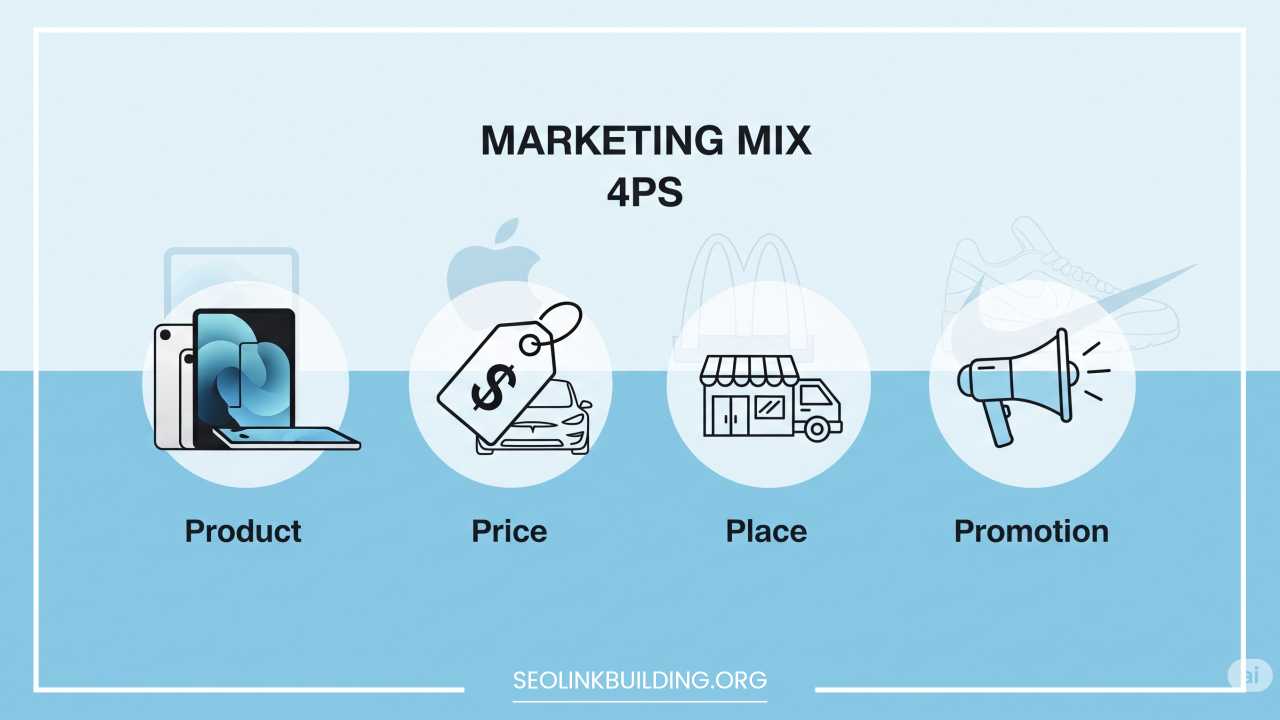
In the dynamic world of business, a well-defined marketing strategy is the cornerstone of success. At the heart of this strategy lies the marketing mix, a fundamental concept that empowers businesses to effectively position their products or services in the market. The marketing mix, often referred to as the 4Ps of Marketing, is a set of controllable, tactical marketing tools that a company uses to produce the response it wants in the target market. These four Ps—Product, Price, Place, and Promotion—provide a foundational framework for shaping a company’s marketing efforts.
Understanding and mastering the marketing mix is not merely an academic exercise; it is a critical skill for any business aiming to thrive. By strategically manipulating the 4Ps, companies can satisfy customer needs, differentiate themselves from competitors, and ultimately achieve their business objectives. In a crowded marketplace, a carefully crafted marketing mix is what allows a brand to stand out, create a unique value proposition, and build lasting relationships with its customers. This guide will explore each of the 4Ps in detail, examine their evolution into the 7Ps, and provide real-world examples to illustrate their application.
The 4Ps of Marketing
The traditional marketing mix is composed of four key elements that businesses must align to create a cohesive and compelling offer for their target audience.
Product
The Product is the core of the marketing mix. It refers to the goods or services a company offers to its customers to satisfy a need or a want. This includes not only the physical item but also its features, design, quality, branding, packaging, and the services that accompany it, such as warranties and customer support.
A crucial aspect of product strategy is understanding the product life cycle (PLC). The PLC consists of four stages: introduction, growth, maturity, and decline. In the introduction stage, the focus is on creating awareness and establishing a market presence. During the growth stage, the goal shifts to maximizing market share. In the maturity stage, competition intensifies, and the focus is on maintaining market share and extending the product’s life through innovation. Finally, in the decline stage, a company must decide whether to harvest, rejuvenate, or phase out the product.
Apple Inc. provides a classic example of a successful product strategy. The company’s evolution from the original Macintosh to the iPod, iPhone, and iPad showcases a continuous cycle of innovation and product refinement. Apple’s products are renowned for their sleek design, user-friendly interface, and high quality, which have fostered a loyal customer base and allowed the company to command a premium price. Starbucks also excels at product strategy by offering a high degree of customization, allowing customers to tailor their beverages to their exact preferences, creating a personalized and engaging experience that goes beyond just a cup of coffee.
Price
Price is the amount of money a customer is willing to pay for a product or service. It is a critical component of the marketing mix as it directly impacts revenue and profitability. Pricing decisions are influenced by a variety of factors, including production costs, the level of consumer demand, the pricing strategies of competitors, and the perceived value of the product.
Companies employ various pricing strategies to achieve their business goals. Penetration pricing involves setting a low initial price to quickly gain market share, while price skimming is the opposite, where a high initial price is set to target early adopters and recoup development costs before lowering the price over time. Psychological pricing, such as setting a price at $9.99 instead of $10.00, is a common tactic to make a product seem more affordable.
A great example of contrasting pricing strategies can be seen in the streaming industry. Netflix initially used a penetration pricing model to attract a large subscriber base with an affordable monthly fee. In contrast, Disney+ entered the market with a similar competitive price but leveraged its vast library of iconic content to build a strong foundation. Luxury brands like Rolex use high prices to signify exclusivity and prestige, a stark contrast to brands like Casio, which compete on affordability and accessibility.
Place
Place refers to the channels and methods a company uses to make its products and services available to customers. It is about getting the right product to the right customer at the right time and place. The decisions around “place” are crucial for ensuring a product is easily accessible to its target market.
Distribution channels can be categorized as direct or indirect. A direct channel involves a company selling its products directly to consumers (e.g., a company-owned retail store or an e-commerce website). An indirect channel involves intermediaries, such as wholesalers, distributors, or retailers. The digital age has profoundly transformed the concept of “place.” E-commerce and online marketplaces have created new avenues for businesses to reach a global audience without the need for a physical storefront.
Amazon is the quintessential example of how digital transformation has revolutionized “place.” By creating a massive online marketplace, Amazon has become the go-to platform for millions of products, offering unparalleled convenience and a vast selection. Nike also demonstrates a powerful dual strategy by using both its own physical retail stores (NikeTown) to create an immersive brand experience and a highly successful e-commerce platform that allows it to reach customers directly, bypassing traditional retailers.
Promotion
Promotion encompasses all the activities a company undertakes to communicate the value of its product to its target market and persuade customers to buy it. This element is the voice of the brand and includes a wide range of tools designed to create awareness, generate interest, and drive sales.
The various promotional tools include advertising (paid media like TV ads, billboards, and online banners), public relations (building a positive brand image through media coverage and events), sales promotions (short-term incentives like discounts and coupons), direct marketing (personalized communication to specific customers), and personal selling (face-to-face interaction between a salesperson and a customer).
Coca-Cola is famous for its iconic seasonal advertising campaigns, particularly its holiday-themed ads featuring polar bears and Santa Claus, which have become a cherished part of cultural tradition. Adidas has also mastered promotion through its use of influencer marketing, partnering with athletes and celebrities to promote its products and connect with its target audience in an authentic and engaging way.
Extended Marketing Mix: The 7Ps
While the 4Ps provide a strong foundation, the marketing mix for services and modern businesses has been expanded to include three additional elements, known as the 7Ps. These additions are crucial for creating a holistic customer experience and building a strong brand identity.
People
People refers to every person who interacts with a customer, from frontline employees to customer service representatives. These individuals are a direct representation of the brand, and their performance and attitude can significantly influence the customer experience. The training, motivation, and empowerment of employees are vital to ensuring a positive brand image and fostering customer loyalty. The Ritz-Carlton is a prime example of this, where every employee, from the bellhop to the concierge, is trained to deliver an exceptional level of personalized service, creating a luxury experience that goes far beyond the physical hotel itself.
Process
Process involves the systems and procedures that govern how a service or product is delivered. An efficient and seamless process, from the moment a customer places an order to the final delivery and after-sales support, can be a major competitive advantage. Conversely, a flawed process can lead to customer frustration and damage a brand’s reputation. Amazon uses seamless processes, from its one-click ordering system to its sophisticated logistics network, to deliver products quickly and efficiently. This focus on process has made online shopping effortless and has become a key part of its value proposition.
Physical Evidence
Physical Evidence refers to the tangible cues that customers use to evaluate a service or a product. For a service-based business, this could include the physical environment of a store, the decor, the employee uniforms, and the packaging. In the digital age, physical evidence also includes a company’s website design, online reviews, and social media presence. The Ritz-Carlton also leverages physical evidence by creating an elegant and luxurious atmosphere in its hotels, from the high-quality furnishings to the pristine public spaces, all of which contribute to the perception of a premium experience. Online reviews on platforms like Yelp or Google are also a form of physical evidence, as they provide tangible proof of a company’s quality and reputation.
Real-Life Marketing Mix Examples
To better understand how the marketing mix works in practice, let’s explore the strategies of four major companies.
Example 1: Apple Inc.
Apple’s marketing mix is a masterclass in brand building and premium positioning.
- Product: Apple focuses on a limited range of high-quality, beautifully designed, and intuitive products. Their ecosystem of hardware (iPhone, Mac), software (iOS, macOS), and services (Apple Music, iCloud) creates a lock-in effect, making it difficult for customers to switch to a competitor.
- Price: Apple uses a premium pricing strategy, positioning its products as a symbol of status and quality. The high price point is justified by the brand’s reputation, superior design, and seamless user experience.
- Place: Apple’s distribution strategy is two-fold. They have their own network of stunning retail stores that act as both sales channels and brand showcases. In addition, their products are sold through authorized resellers and online, ensuring a broad reach while maintaining strict control over the customer experience.
- Promotion: Apple’s promotional strategy is minimalist yet highly effective. They rely on “event marketing” for new product launches, a strong public relations machine, and simple, elegant advertising campaigns that focus on the emotional benefits of their products rather than just technical specifications.
Example 2: McDonald’s
McDonald’s has achieved global success by skillfully adapting its marketing mix to suit diverse cultures and economies.
- Product: While its core offerings like the Big Mac and French Fries are globally consistent, McDonald’s adapts its menu to local tastes. For example, in India, where a large portion of the population doesn’t eat beef, McDonald’s offers the Chicken Maharaja Mac. They also offer vegetarian options like the McSpicy Paneer burger.
- Price: McDonald’s employs a value-oriented pricing strategy, aiming for affordability and accessibility. They use combo meals and value menus to appeal to price-sensitive customers, especially in emerging markets.
- Place: McDonald’s has an extensive global network of physical restaurants. Their strategy is to locate restaurants in high-traffic areas, making them a convenient choice for customers on the go.
- Promotion: McDonald’s uses a combination of mass advertising, sales promotions (like the Monopoly game), and digital marketing to reach a wide audience. Their campaigns often focus on themes of family, fun, and convenience.
Example 3: Nike
Nike leverages its marketing mix to build a powerful brand image centered on performance, innovation, and inspiration.
- Product: Nike’s product strategy is built on a foundation of innovation and a wide range of athletic footwear, apparel, and equipment. They continuously invest in research and development to create products like the Air Jordan line and the Flyknit technology, which reinforce their brand image as a performance leader.
- Price: Nike uses a premium pricing strategy for its high-performance gear but also offers a range of products at different price points to cater to various market segments. The high price of flagship products reinforces the brand’s perception of quality and exclusivity.
- Place: Nike employs a multi-channel distribution strategy. They sell products through their own physical stores, online e-commerce platform, and through a network of major retailers like Foot Locker and Dick’s Sporting Goods. This allows them to control the brand experience while ensuring wide availability.
- Promotion: Nike’s promotional strategy is centered on creating powerful, aspirational campaigns. They partner with elite athletes like LeBron James and Cristiano Ronaldo, and their advertising often tells inspiring stories of achievement and overcoming challenges, embodied by their iconic “Just Do It” slogan.
Example 4: Tesla
Tesla’s approach to the marketing mix is a departure from the traditional automotive industry model.
- Product: Tesla’s product is not just an electric car; it is a technology-driven vehicle with a focus on sustainable energy. Their cars are defined by their software, over-the-air updates, and features like autopilot, which differentiate them from conventional cars.
- Price: Tesla’s pricing strategy is largely based on perceived value and a lack of traditional haggling. Their cars are priced at a premium, reflecting their technological sophistication and performance.
- Place: Tesla’s distribution is a direct-to-consumer model. They do not use a traditional dealership network. Instead, they sell cars directly to customers through their website and a limited number of company-owned stores.
- Promotion: Tesla’s promotion is almost entirely unconventional. They spend very little on traditional advertising. Their promotion is driven by the visionary leadership of Elon Musk, a strong social media presence, and a loyal community of early adopters who act as brand ambassadors.
Marketing Mix Adaptation in the Digital Age
The advent of digital technologies has profoundly reshaped the marketing mix, forcing businesses to adapt their strategies to a new landscape. The internet, social media, and e-commerce have created new opportunities and challenges for marketers.
Influence of Digital Transformation
The internet has blurred the lines between the traditional 4Ps. E-commerce has fundamentally altered the “place” aspect, allowing small businesses to compete globally and giving consumers access to a seemingly endless array of products. The “promotion” landscape has been transformed by social media marketing, where brands can engage in real-time conversations with customers and create highly targeted advertising campaigns.
Online Retailing
Online retailers like Amazon and platforms like Shopify have redefined the concept of “place.” They provide businesses with the infrastructure to create and manage their own online stores, enabling direct-to-consumer sales and bypassing traditional retail channels. This has empowered brands like Warby Parker to disrupt the eyewear industry by selling directly to consumers, cutting out the middleman and offering stylish, affordable glasses.
Social Media Marketing
Social media platforms like Instagram, TikTok, and Facebook have become powerful promotional tools. Brands can use these platforms to build a community, create engaging content, and launch viral marketing campaigns. Glossier, for example, built its entire brand on social media, using user-generated content and a community-centric approach to promote its minimalist beauty products.
Data-Driven Decisions
The digital age has made it possible for businesses to collect vast amounts of data about their customers. This data is used for targeted marketing strategies that are far more precise and effective than traditional methods. Netflix, for instance, uses its recommendation engine to analyze a user’s viewing history and suggest new content, creating a personalized experience that increases engagement and retention. Similarly, Google Ads uses a user’s search history to deliver highly relevant and personalized advertisements.
Challenges in Implementing the Marketing Mix
Despite the power of the marketing mix, businesses face several challenges in its implementation.
Globalization
Globalization has made the marketing mix more complex. Companies must maintain a consistent brand identity while adapting their 4Ps to diverse cultural, economic, and political conditions in different markets. A promotional campaign that works in one country may be offensive or irrelevant in another. Similarly, a pricing strategy that works in a developed market may be unsustainable in a developing one.
Competition and Saturation
In today’s highly competitive and saturated markets, it is increasingly difficult for businesses to stand out. The barrier to entry for many industries has lowered, leading to a proliferation of products and brands. This market saturation forces companies to constantly tweak their marketing mix, innovating on their product, finding new promotional channels, and optimizing their pricing to remain competitive.
Technological Disruption
Rapid technological changes, such as the rise of artificial intelligence, automation, and virtual reality, force companies to regularly rethink their strategies. A company’s “place” strategy, for example, might need to evolve to include a virtual reality store. Their “promotion” efforts might need to leverage AI for creating personalized content. Companies that fail to keep pace with these technological disruptions risk becoming obsolete.
Future of the Marketing Mix
The marketing mix is not a static concept; it is continually evolving in response to new trends and technologies.
Evolving Trends
The future of the marketing mix will likely be shaped by emerging trends like artificial intelligence, which will enable more sophisticated data analysis and personalized marketing. Sustainability will also play a larger role, with consumers increasingly favoring brands that demonstrate a commitment to ethical and environmentally friendly practices. Influencer marketing will continue to grow in importance, with micro-influencers and nano-influencers becoming key to building authentic connections with niche communities.
Customer-Centric Approach
The most significant shift will be an even greater focus on a customer-centric approach. The marketing mix will move beyond simply selling a product to creating a holistic, personalized experience that emphasizes value. The focus will be on building genuine relationships with customers, understanding their needs on a deeper level, and creating a marketing mix that is flexible, adaptable, and highly responsive to their evolving desires.
Final Thoughts
The marketing mix, with its foundational 4Ps and expanded 7Ps, remains an indispensable framework for developing and executing a successful marketing strategy. By thoughtfully considering and aligning their Product, Price, Place, and Promotion, businesses can create a compelling value proposition that resonates with their target audience.
In a world defined by globalization, intense competition, and rapid technological change, marketers must continuously adapt the marketing mix to stay relevant. The key to long-term success lies in a willingness to innovate, to embrace new technologies, and to always prioritize the needs and experiences of the customer. The marketing mix is not a one-time formula; it is a dynamic tool that must be constantly refined to navigate the complexities of the modern marketplace.