What is Marketing Mix?

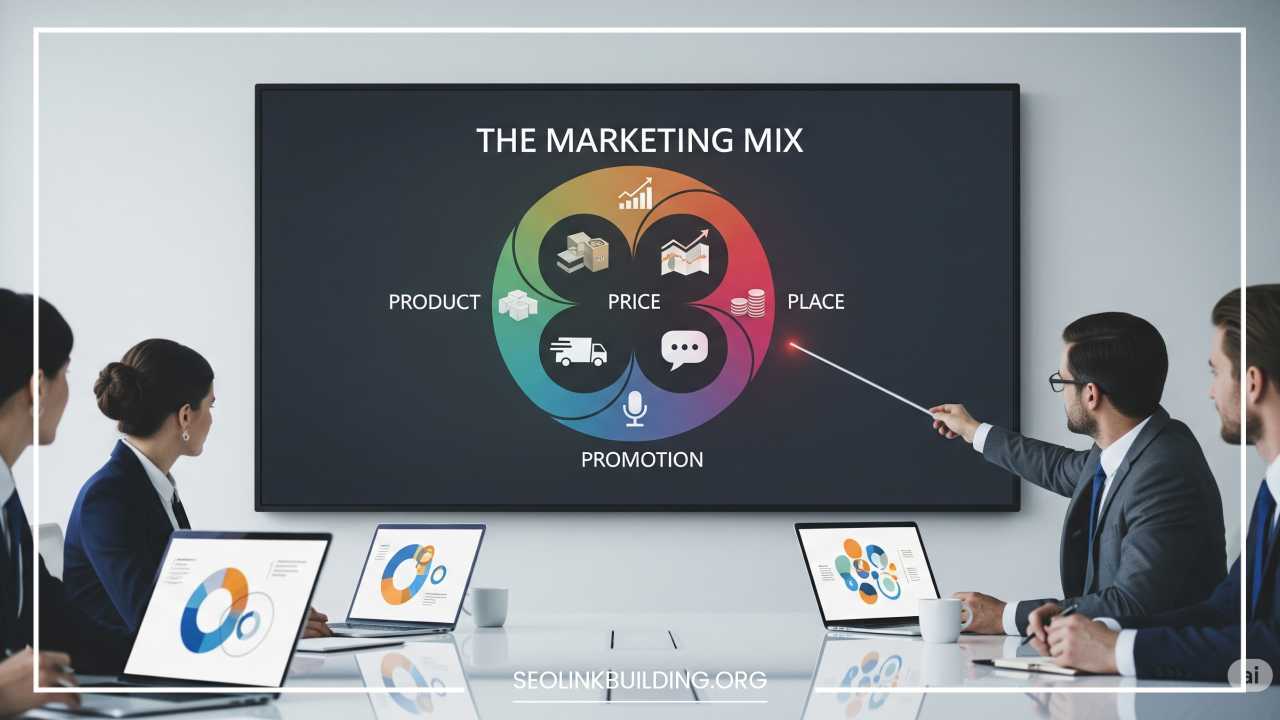
What is Marketing Mix? The Blueprint for Business Success
In the dynamic world of commerce, where businesses constantly vie for consumer attention and loyalty, a well-defined strategic approach is paramount. At the heart of this strategic framework lies the concept of the Marketing Mix – a fundamental tool that guides businesses in effectively bringing their products or services to the market. More than just a collection of tactics, the Marketing Mix provides a holistic view of how a company can integrate various elements to achieve its marketing objectives and, ultimately, its business goals. It’s the blueprint that ensures all efforts are aligned, creating a cohesive and compelling proposition for the target audience.
Origin and Evolution of the Marketing Mix
The genesis of the Marketing Mix can be traced back to the 1950s when Neil Borden, an advertising professor at Harvard Business School, first introduced the idea that a marketing manager is like a “mixer of ingredients.” He proposed that a marketer needed to consider a variety of elements when formulating a marketing program, much like a chef combines ingredients to create a dish. Borden’s initial concept encompassed a broad range of marketing activities.
However, it was E. Jerome McCarthy who, in his 1960 book Basic Marketing: A Managerial Approach, distilled Borden’s extensive list into the now-famous “4Ps” of Marketing: Product, Price, Place, and Promotion. This simplified, yet powerful, framework quickly gained widespread acceptance due to its clarity and practical applicability. The 4Ps became the bedrock of marketing education and practice for decades, providing a structured way to analyze and plan marketing efforts for tangible goods.
As the global economy shifted towards a more service-oriented model, it became evident that the 4Ps, while effective for physical products, didn’t fully capture the nuances of marketing services. Services are inherently intangible, perishable, inseparable from the provider, and variable in quality. To address these unique characteristics, Booms and Bitner expanded the original 4Ps to the “7Ps” of Marketing in the late 1970s, adding People, Process, and Physical Evidence. This expanded model provided a more comprehensive framework for service industries, acknowledging the crucial role of human interaction, delivery mechanisms, and tangible cues in the service experience.
Despite the continuous evolution of marketing, driven by technological advancements and changing consumer behaviors, the core concept of the Marketing Mix remains incredibly relevant today. It provides a foundational understanding that allows marketers to adapt their strategies to new challenges and opportunities, whether in traditional or digital realms. The enduring power of the Marketing Mix lies in its ability to serve as a strategic checklist, ensuring that all critical aspects of market engagement are considered and optimized.
The 4Ps of the Marketing Mix
The original 4Ps remain the cornerstone of marketing strategy, providing a fundamental framework for understanding how businesses bring their offerings to market. Each “P” represents a crucial area of decision-making that influences how a product or service is perceived and received by consumers.
a. Product
The “Product” element of the Marketing Mix refers to the good or service that a company offers to its target market. It’s not just about the physical item or the core service; it encompasses all aspects of what the customer receives, including features, quality, design, branding, packaging, warranties, and after-sales support.
Definition & types (goods vs services): A good is a tangible item that can be touched, seen, and stored, such as a smartphone, a car, or a book. A service, on the other hand, is an intangible act or performance, such as a haircut, a legal consultation, or a hotel stay. The distinct characteristics of goods and services (e.g., intangibility, inseparability, perishability, variability for services) necessitate different considerations in their product strategies.
Product life cycle: Products typically follow a Product Life Cycle (PLC), which consists of four main stages:
- Introduction: The product is new to the market, sales are low, and significant investment in promotion is needed.
- Growth: Sales and profits increase rapidly as the product gains acceptance. Competition may emerge.
- Maturity: Sales growth slows down or plateaus. The market is saturated, and competition is intense. Companies often focus on differentiation or cost reduction.
- Decline: Sales and profits fall as the product becomes obsolete or consumer preferences shift. Companies may discontinue the product or find niche markets.Understanding the PLC helps businesses make informed decisions about product development, pricing, promotion, and distribution at different stages.
Product differentiation and positioning: Product differentiation involves creating unique features or benefits that set a product apart from its competitors. This could be superior quality, innovative design, specialized functionality, or exceptional customer service. Effective differentiation helps a product stand out in a crowded market. Product positioning refers to how a product is perceived in the minds of target consumers relative to competing products. It’s about creating a distinct and desirable image or identity for the product. For example, Volvo is positioned as a safe car, while Porsche is positioned as a high-performance luxury car. Successful positioning requires understanding consumer needs and competitive offerings.
b. Price
“Price” is the amount of money customers have to pay to obtain the product or service. It’s a critical element because it directly impacts revenue, profitability, and consumer perception of value. Pricing decisions must align with the product’s value proposition, target market, and overall business objectives.
Importance of pricing strategy: Pricing is not merely about covering costs; it’s a strategic tool that influences demand, competitive positioning, and brand image. A well-executed pricing strategy can attract new customers, retain existing ones, maximize profits, and even deter competitors. Conversely, poor pricing can lead to lost sales, damaged brand reputation, or unsustainable profit margins.
Pricing models (penetration, skimming, cost-plus, value-based):
- Penetration Pricing: Setting a low initial price to quickly gain market share. This is often used for new products in highly competitive markets.
- Price Skimming: Setting a high initial price for a new, innovative product to “skim” maximum revenue from early adopters before lowering the price over time. This works best when there is little competition and high demand.
- Cost-Plus Pricing: Adding a standard markup percentage to the cost of producing the product. While simple, it doesn’t account for market demand or competitor pricing.
- Value-Based Pricing: Setting prices based on the perceived value of the product or service to the customer, rather than on the cost of production. This requires a deep understanding of customer needs and the benefits they derive.
Psychological pricing and discounts: Psychological pricing strategies leverage consumer psychology to influence purchasing decisions. Examples include “charm pricing” (e.g., $9.99 instead of $10.00), prestige pricing (setting high prices to imply luxury), and odd-even pricing. Discounts are reductions from the list price, used to stimulate sales, clear old inventory, reward loyal customers, or encourage bulk purchases. Common types include quantity discounts, seasonal discounts, trade discounts, and promotional allowances.
c. Place (Distribution)
“Place,” also known as distribution, refers to the activities involved in making the product or service available to target consumers. It’s about ensuring the right product is in the right place, at the right time, and in the right quantities.
Channels of distribution: These are the paths a product takes from the producer to the final consumer.
- Direct Channel: The producer sells directly to the consumer (e.g., a farmer selling produce at a market, an online store selling its own manufactured goods).
- Indirect Channel: Intermediaries are involved. These can include:
- Retailers: Sell directly to consumers (e.g., supermarkets, department stores).
- Wholesalers: Sell to retailers or other businesses.
- Agents/Brokers: Facilitate sales without taking ownership of the goods.Choosing the right channel depends on the product, target market, and desired level of control.
Online vs offline presence: The digital age has significantly impacted distribution.
- Offline Presence: Traditional brick-and-mortar stores, physical showrooms, and direct sales through a sales force. This allows for tangible interaction and immediate gratification.
- Online Presence: E-commerce websites, mobile apps, and online marketplaces. This offers global reach, convenience, and often lower overheads. Many businesses adopt an omnichannel strategy, seamlessly integrating online and offline channels to provide a consistent customer experience.
Logistics and supply chain basics: Logistics involves the planning, implementation, and control of the efficient, effective forward and reverse flow and storage of goods, services, and related information from point of origin to point of consumption. Key logistics activities include transportation, warehousing, inventory management, and order fulfillment. The supply chain is a broader concept, encompassing all the organizations, people, activities, information, and resources involved in moving a product or service from supplier to customer. An efficient supply chain is crucial for timely delivery, cost control, and customer satisfaction.
d. Promotion
“Promotion” encompasses all the activities that communicate the merits of the product or service and persuade target customers to buy it. It’s about building awareness, stimulating interest, creating desire, and prompting action.
Advertising, public relations, sales promotions, and direct marketing:
- Advertising: Paid, non-personal presentation and promotion of ideas, goods, or services by an identified sponsor (e.g., TV commercials, print ads, online display ads).
- Public Relations (PR): Building good relations with the company’s various publics by obtaining favorable publicity, building a good corporate image, and handling or heading off unfavorable rumors, stories, and events (e.g., press releases, sponsorships, events).
- Sales Promotions: Short-term incentives to encourage the purchase or sale of a product or service (e.g., discounts, coupons, contests, free samples).
- Direct Marketing: Communicating directly with carefully targeted individual customers to obtain an immediate response and cultivate lasting customer relationships (e.g., email marketing, telemarketing, direct mail).
Traditional vs digital marketing:
- Traditional Marketing: Channels that existed before the internet (e.g., television, radio, print media, billboards).
- Digital Marketing: Leveraging online channels and technologies (e.g., search engine optimization (SEO), social media marketing, content marketing, email marketing, pay-per-click (PPC) advertising). Digital marketing offers precise targeting, measurable results, and often lower costs.
Integrated marketing communications (IMC): IMC is the strategic approach of coordinating and integrating all communication channels to deliver a clear, consistent, and compelling message about the organization and its products. Instead of disparate campaigns, IMC ensures that advertising, PR, sales promotions, social media, and other communication tools work in harmony to reinforce the brand message and maximize impact.
The Extended 7Ps of the Marketing Mix
For service-based industries, the original 4Ps often fall short in capturing the full scope of factors influencing customer experience and satisfaction. The expanded 7Ps of Marketing address these specific challenges by adding “People, “Process, and “Physical Evidence,” providing a more holistic framework for services marketing.
a. People
In service industries, the “People” element is arguably the most crucial. It refers to all human actors who play a part in service delivery and thus influence the buyers’ perceptions. This includes not only the company’s employees but also the customer themselves and other customers in the service environment.
Staff, customer service, and employee training: The quality of service is intrinsically linked to the performance of the staff. Well-trained, motivated, and customer-focused employees are essential for delivering a positive service experience. This involves investing in comprehensive training programs, fostering a positive work environment, and empowering employees to resolve customer issues effectively. Excellent customer service, characterized by responsiveness, empathy, and problem-solving skills, builds trust and loyalty.
Internal marketing: This concept focuses on treating employees as internal customers and ensuring they are aligned with the company’s brand values and service promises. Effective internal marketing involves communicating the company’s vision, goals, and service standards to employees, providing them with the necessary tools and support, and recognizing their contributions. When employees understand and believe in the service they are providing, it translates into a better experience for the external customer.
b. Process
“Process” refers to the systems and procedures involved in delivering the service. Since services are often co-created with the customer, the efficiency, consistency, and user-friendliness of these processes significantly impact the customer experience.
Service delivery methods: This includes how the service is delivered, the steps involved, and the sequence of interactions. For example, a restaurant’s process includes seating customers, taking orders, food preparation, serving, and payment. A bank’s process might involve account opening, transaction processing, and loan applications. Optimizing these steps can reduce wait times, minimize errors, and enhance customer satisfaction.
Automation, customer experience, and consistency: Technology plays a crucial role in streamlining service processes through automation. Self-service kiosks, online booking systems, and AI-powered chatbots can improve efficiency and convenience. However, it’s vital to balance automation with human interaction, especially for complex or emotionally charged services. Consistency in service delivery is paramount; customers expect the same level of quality and efficiency every time they interact with the service provider. A well-defined and consistently executed process ensures a predictable and satisfying customer experience.
c. Physical Evidence
“Physical Evidence” refers to the tangible cues and surroundings in which the service is delivered, and where the company and customer interact. Since services are intangible, physical evidence provides tangible proof or clues about the quality and nature of the service.
Tangible cues in services (store ambiance, packaging, online presence):
- Store Ambiance: For a retail store, restaurant, or hotel, this includes the decor, lighting, cleanliness, music, and overall atmosphere. These elements contribute to the customer’s perception of quality and brand identity.
- Packaging: While services don’t have traditional “packaging,” the presentation of any accompanying physical elements (e.g., a welcome kit in a hotel, a report from a consultant) serves a similar purpose.
- Online Presence: For online services, the website design, user interface (UI), user experience (UX), and overall visual appeal of digital platforms serve as physical evidence. A professional, intuitive, and aesthetically pleasing website instills trust and confidence.
Branding and design: The overall branding, including logos, colors, typography, and signage, also contributes to physical evidence. These elements consistently reinforce the brand identity and promise. Thoughtful design, whether of a physical space or a digital interface, can significantly enhance the customer’s perception of the service’s quality and professionalism.
Importance of the Marketing Mix in Strategy
The Marketing Mix is not merely a checklist of activities; it’s a dynamic and interconnected framework that forms the bedrock of a company’s overall marketing strategy. Its importance cannot be overstated for several key reasons:
How it aligns with business objectives: A well-defined Marketing Mix ensures that all marketing efforts are aligned with the overarching business objectives, whether it’s increasing market share, boosting profitability, enhancing brand awareness, or launching a new product. Each “P” must contribute to these larger goals. For instance, if the objective is to position a brand as premium, the product must be high quality, the price set accordingly, the distribution exclusive, and the promotion sophisticated.
Helps in market segmentation, targeting, and positioning (STP): The Marketing Mix is intrinsically linked to the STP process:
- Segmentation: Dividing the market into distinct groups of customers with similar needs.
- Targeting: Selecting the specific segment(s) the company will serve.
- Positioning: Creating a clear, distinct, and desirable place for the product in the minds of the target consumers.Once a target segment is identified and a desired position is established, the Marketing Mix elements are then tailored to effectively reach and appeal to that specific group. For example, a luxury car manufacturer will target high-income individuals and position their product on prestige and performance, which then dictates product features, premium pricing, exclusive dealerships, and aspirational advertising.
Role in competitive advantage: A well-optimized Marketing Mix can be a significant source of competitive advantage. By skillfully combining the elements, a company can differentiate itself from competitors, create unique value for customers, and build strong brand loyalty. This could involve offering a superior product, a more competitive price, a more convenient distribution channel, or more compelling promotional messages. Analyzing competitors’ Marketing Mix strategies also helps identify gaps and opportunities for differentiation.
Real-Life Examples of Marketing Mix
To truly grasp the power of the Marketing Mix, let’s examine how successful companies leverage its elements in their strategies.
Example of a Product-Based Company: Apple Inc.
Apple is a quintessential example of a company that masterfully orchestrates its Marketing Mix to create a powerful brand and devoted customer base.
- Product: Apple’s products (e.g., iPhone, MacBook, iPad) are renowned for their sleek design, intuitive user interface (iOS/macOS), high quality, and seamless ecosystem integration. They consistently introduce innovative features and maintain a premium image, focusing on user experience and aesthetic appeal. Their product differentiation lies in simplicity, elegance, and powerful performance.
- Price: Apple employs a premium pricing strategy (price skimming). Their products are generally more expensive than competitors, reinforcing their high-quality, innovative, and aspirational brand image. They rarely offer deep discounts, maintaining perceived value.
- Place (Distribution): Apple utilizes both direct and indirect channels. They have their own iconic Apple Stores, which offer a unique retail experience, excellent customer service, and technical support (Genius Bar). They also distribute through authorized resellers, telecommunication carriers, and their robust online store, ensuring wide but controlled availability.
- Promotion: Apple’s promotion is characterized by minimalist, evocative advertising that focuses on benefits and experiences rather than just features. Their product launches are highly anticipated events (keynotes). They rely heavily on public relations, word-of-mouth marketing, and user-generated content, building a strong community around their brand. Their “Think Different” campaign perfectly encapsulated their brand philosophy.
Example of a Service-Based Company: Starbucks
Starbucks is a prime example of a service company that effectively utilizes the 7Ps to create a unique and highly successful customer experience.
- Product: While coffee is their core product, Starbucks offers a wide range of beverages (tea, refreshers), food items (pastries, sandwiches), and merchandise. Their “product” also includes the “Starbucks Experience” – the ritual of visiting a comfortable, inviting third place between home and work. They constantly innovate with seasonal drinks and new menu items.
- Price: Starbucks’ pricing is typically higher than most local coffee shops or fast-food chains. This premium pricing aligns with their brand image of offering high-quality, handcrafted beverages and a unique ambiance.
- Place (Distribution): Starbucks strategically locates its stores in high-traffic areas – urban centers, shopping malls, airports, and even drive-thrus. They ensure broad accessibility while maintaining the “third place” concept. Their mobile order and pay app also significantly enhances convenience.
- Promotion: Starbucks uses a mix of traditional and digital promotion. They heavily leverage social media, loyalty programs (Starbucks Rewards), and in-store promotions. Their marketing often focuses on the emotional connection and community aspect of coffee consumption.
- People: Starbucks places immense emphasis on its “baristas” – the front-line staff who are the face of the brand. They are extensively trained in coffee preparation, customer service, and creating a welcoming atmosphere. Employee engagement and retention are key, fostering a culture that prioritizes customer experience.
- Process: Starbucks has a highly efficient and standardized process for order taking, beverage preparation, and serving, ensuring consistency across its thousands of global outlets. The mobile order and pay system streamlines the customer journey, reducing wait times and enhancing convenience.
- Physical Evidence: The physical evidence at Starbucks is meticulously crafted. This includes the distinctive store design, comfortable seating, ambient lighting, music, and the aroma of coffee. The iconic green siren logo, branded cups, and merchandise also contribute to the tangible cues that reinforce the Starbucks brand identity and premium experience.
These examples illustrate how companies, whether product- or service-oriented, strategically align the elements of the Marketing Mix to create a compelling and successful market offering.
Common Mistakes and Misconceptions
While the Marketing Mix provides a robust framework, marketers often fall into common traps that can hinder its effectiveness. Avoiding these pitfalls is crucial for successful implementation.
Overlooking customer needs: One of the most significant mistakes is developing a Marketing Mix based solely on internal capabilities or assumptions, without a deep understanding of the target customer’s needs, wants, and pain points. A product might have innovative features, but if they don’t solve a real customer problem, it will struggle. Similarly, pricing too high or too low, distributing through inconvenient channels, or promoting in irrelevant ways all stem from a lack of customer insight. The Marketing Mix should always be customer-centric, starting with who the customer is and what they value.
Not updating the mix with market changes: Markets are dynamic, influenced by technological advancements, shifts in consumer behavior, new competitors, and economic conditions. A Marketing Mix that was effective five years ago might be obsolete today. Failing to continuously monitor market trends and adapt the Ps accordingly can lead to declining relevance and competitive disadvantage. For example, ignoring the shift to online shopping for “Place” or sticking to traditional advertising when the audience has moved to social media for “Promotion” are common errors.
Focusing only on promotion: Many businesses, especially new ones, mistakenly equate marketing solely with promotion. They might invest heavily in advertising or social media campaigns, but neglect critical aspects like product quality, competitive pricing, or efficient distribution. While promotion is vital for creating awareness and desire, it cannot compensate for a poorly designed product, an uncompetitive price, or an inaccessible distribution channel. A truly effective Marketing Mix requires a balanced and integrated approach across all elements. An outstanding promotion for a bad product will only accelerate its failure.
Final Thoughts
The Marketing Mix, whether in its foundational 4Ps or expanded 7Ps form, remains an indispensable tool for businesses aiming to thrive in competitive markets. It serves as a comprehensive strategic framework, enabling marketers to systematically plan, implement, and control their efforts to deliver value to customers and achieve organizational objectives.
At its core, the Marketing Mix compels businesses to think holistically about their market offering. It underscores the vital interconnectedness of Product, Price, Place, and Promotion, ensuring that each element supports and reinforces the others to create a compelling proposition. For service industries, the inclusion of People, Process, and Physical Evidence further refines this understanding, recognizing the human element, operational efficiency, and tangible cues as critical drivers of customer experience and satisfaction.
The true power of the Marketing Mix lies in its ability to facilitate strategic alignment. By consciously crafting each “P,” businesses can effectively segment their markets, target specific customer groups, and position their offerings distinctly. This strategic clarity, in turn, fuels competitive advantage, allowing companies to differentiate themselves, build strong brand identities, and cultivate lasting customer relationships.
In today’s rapidly evolving digital and global marketplace, the Marketing Mix demonstrates remarkable adaptability. While the channels and tactics may change, the fundamental principles of understanding what to offer (Product), how to value it (Price), where to make it available (Place), and how to communicate its value (Promotion, and for services, People, Process, Physical Evidence) remain constant. Successful businesses are those that continually refine and adjust their Marketing Mix, ensuring it remains agile, customer-centric, and strategically aligned with both internal capabilities and external market realities. Ultimately, the Marketing Mix is not just a theoretical concept; it is the practical blueprint for sustained business success.