What Is Link Bait?

What Is Link Bait? Definition, Examples & SEO Benefits
In the highly competitive digital landscape, Search Engine Optimization (SEO) is the lifeblood of online visibility. Central to any successful SEO strategy is the concept of link building—the process of acquiring hyperlinks from other websites to your own. These backlinks act as votes of confidence in the eyes of search engines like Google, signaling that your content is valuable, trustworthy, and authoritative.
While many traditional link-building methods exist—such as guest posting, broken link building, and directory submissions—the most powerful and enduring links are those that are pan>earned naturally. This is where the concept of “link bait” emerges.
Link bait is a strategic, content-focused approach designed explicitly to attract and accrue these valuable, high-quality inbound links organically. It moves the focus from asking for a link to deserving one. Throughout this comprehensive article, we will define link bait, explore its critical role in modern SEO, detail the most effective types and examples, outline a successful creation and outreach strategy, and discuss both the powerful benefits and the ethical considerations involved in its use.
What Is Link Bait? (Definition)
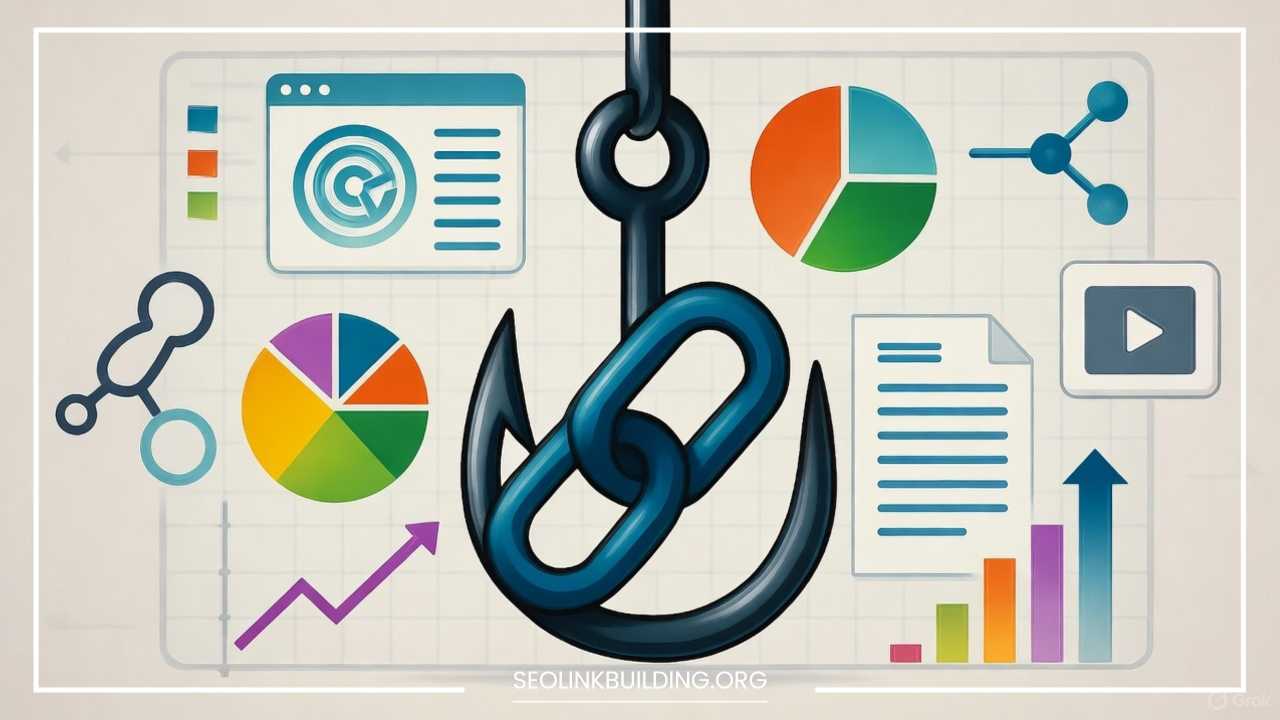
Link bait is content strategically created with the primary goal of being so valuable, unique, engaging, or controversial that other websites, bloggers, and journalists will naturally want to cite it and link back to it.
The term itself is a portmanteau: “link” (the desired outcome, a hyperlink) and “bait” (the content used to attract the link). Unlike standard content, which aims to inform or convert, link bait’s chief metric of success is the number and quality of inbound links it generates.
Origin and Concept
While “bait” might suggest a nefarious or manipulative tactic, in the context of SEO, link bait is strictly considered an “earned media” technique. It contrasts sharply with “bought media” (like paid advertising) or “owned media” (your website content). Earning media—in this case, earned links—means the content’s value speaks for itself, persuading an independent third party to share it without financial incentive or direct request.
Link Bait vs. Regular Content
The key differentiator between link bait and regular content lies in the intent and scope.
Link bait is typically a heavy investment—in time, research, design, or data aggregation—because it must stand out from the noise and offer something truly unique that others cannot easily replicate.
Why Link Bait Matters in SEO
The importance of link bait is inextricably linked to the functioning of Google’s ranking algorithm. For decades, backlinks have been, and continue to be, one of the most significant factors in determining where a website ranks in the Search Engine Results Pages (SERPs).
Google’s Algorithm and the Value of Backlinks
Google’s foundational algorithm, PageRank, treats a backlink as an endorsement. A link from a highly trusted and authoritative website (like a major news source or a leading industry publication) passes on significantly more “link equity” or “authority” than a link from a low-quality or unknown site. The more high-quality, relevant links a page or domain accrues, the stronger its overall perceived authority.
White-Hat Strategy for Natural Link Building
Link bait is inherently a white-hat SEO strategy because it focuses on creating exceptional value. Google explicitly favors natural link building, which refers to links acquired without artificial manipulation or payment.
- Manipulative Tactics (black hat) include buying links, engaging in massive link schemes, or using automated tools to generate low-quality links. These tactics risk severe Google penalties.
- Link Bait is designed to attract links organically based on merit, aligning perfectly with Google’s desire to rank the most valuable and trustworthy content.
Impact on Domain Authority and Trust Signals
A well-executed link bait strategy has a powerful, compounding impact on a website’s core SEO metrics:
- Domain Authority (DA) / Domain Rating (DR): The quantity and quality of links directly boost a website’s domain-level metrics (measured by third-party tools like Moz and Ahrefs). A higher DA/DR means the entire website is more trusted and its pages find it easier to rank for competitive keywords.
- Trust Signals: When reputable sources link to your site, it validates your brand’s expertise and reliability in the eyes of search engines.
- Keyword Rankings: The link equity flows from the linked page to the entire site. As authority increases, targeted pages become more competitive, leading to improved rankings and higher organic traffic.
Link Earning vs. Link Building
While the terms are often used interchangeably, there is a subtle but important distinction:
- Link Building
- Link Earning is passive—the link is given freely by the third party because the content is simply too good not to share. Link bait is the quintessential link-earning strategy.
Common Types of Link Bait Content
Successful link bait comes in many formats, but all share the common thread of being either unique, utility-driven, visually engaging, or provocative. A single link bait piece often requires a heavier investment than a typical blog post because it must transcend the ordinary to compel a link.
Data-Driven Content (Research, Statistics, Original Studies)
Infographics and Interactive Visualizations
How-To Guides & Tutorials (The Definitive Guide)
Controversial Opinions or Contrarian Takes
Ultimate Lists / Resource Hubs
Tools & Calculators
Viral Videos, Quizzes, or Trending Topic Analysis
Other forms that leverage timeliness or pure engagement:
- Breaking News/Trending Topic Analysis: Being the first or the most comprehensive to analyze a major breaking event in your niche.
- Quizzes/Games: Highly shareable, quick-engagement content that people link to simply for entertainment value.
- Viral Content: Videos or short, image-heavy pieces designed for maximum social media shareability, which often leads to press pickups and links.
Examples of Effective Link Bait
To truly understand the power of link bait, it helps to see it in action across different niches. The common denominator among these successful examples is originality and immense utility.
Example from Ahrefs: The Content Study
Ahrefs, a leading SEO tool provider, frequently executes data-driven link bait.
- The Content: A comprehensive study titled, for instance, “We Analyzed 2 Million Blog Posts. Here’s What We Learned About Content Marketing.” The study uses their proprietary index of data to analyze real-world performance metrics, not assumptions.
- What Made it Successful:
- Proprietary Data: They leverage data that only they possess and analyze it on a scale few others can match.
- Actionable Insights: The article doesn’t just present data; it pulls out clear, data-backed takeaways (e.g., “The average top-ranking page has X word count”).
- Link Magnet: Every SEO blogger, content marketer, and agency writer who cites a statistic about content performance is forced to link to Ahrefs’ original study as the source, generating hundreds of high-authority links.
Example of Viral Infographic: Visual Capitalist
Visual Capitalist is a master of the visually stunning, data-heavy infographic, often focusing on finance and global economics.
- The Content: An infographic titled “The World’s Economy: $100 Trillion in One Graphic.” This piece condenses a monumental amount of global economic data into a single, breathtaking visual.
- What Made it Successful:
- Visual Complexity Made Simple: It tackles a huge, complex topic and makes it digestible and visually appealing.
- Easy to Embed: The design is optimized for embedding, ensuring every website that shares the graphic includes a source link.
- Global Relevance: Its broad topic appeal ensured pickup from diverse sources, from finance blogs to international news sites, generating high-authority links globally.
Example of Controversial/Opinionated Article: Seth Godin
Many thought leaders, like marketer Seth Godin, use strong, sometimes controversial, opinions to generate discussion and links.
- The Content: A short, punchy blog post, such as “The End of the Middle Class Marketer.” This type of piece is not data-heavy but is rich in strong, contrarian opinion that challenges the status quo.
- What Made it Successful:
- Thought Leadership: It provokes an immediate, emotional response—agreement or passionate disagreement.
- High-Value Discussion: The article becomes a reference point for subsequent discussions. Competitors, analysts, and followers link to it to either build upon the point or tear it down. The link is generated from the debate the content incites.
How to Create Link Bait Content That Works
Creating effective link bait is a structured process that moves beyond merely writing a good blog post. It requires strategic thinking, significant resource allocation, and a robust promotion plan.
1. Know Your Audience and What They Link To
Before you even draft a headline, you must understand the “linkers” in your niche.
- Identify Influencers: Who are the high-authority publishers, journalists, and bloggers in your industry?
- Analyze Their Linking Behavior: Use tools like Ahrefs or Moz to see what kind of content they link out to. Do they prefer data, controversial opinion, unique tools, or resource lists? Reverse-engineer success by analyzing the content that has already attracted links from your target sources.
2. Research Link-Worthy Topics in Your Niche
Effective link bait solves a problem or fills an information gap that no one else has addressed.
- Find Gaps: Look for industry questions that are asked frequently but have no definitive, data-backed answer.
- Go Deeper, Not Wider: Instead of covering a common topic, choose a narrow sub-topic and cover it with unmatched depth.
- Leverage Timeliness: Capitalize on a new piece of legislation, a major market shift, or a viral trend to provide immediate, relevant analysis.
3. Add Original Value (Data, Opinion, Depth)
This is the core of link bait—the element that makes it irreplaceable.
- Proprietary Data: The gold standard. Invest in a survey, a study, or analysis of your own customer/user data.
- Unique Perspective: Offer a radically different, well-justified viewpoint that goes against the grain.
- Unmatched Utility: Create a free tool, checklist, or calculator that saves users time or money. If the value is scarce, the links will be plentiful.
4. Design for Shareability (Visuals, Structure, CTA)
A link-bait piece must be visually and structurally compelling to maximize its reach.
- Invest in Design: Hire a professional designer. Data-driven content often performs best as a sleek, well-branded report or infographic.
- Structure: Use clear headings, bullet points, and high-quality charts. Make the key takeaways immediately apparent.
- Embed Code: For infographics or tools, provide an easy-to-use embed code that automatically includes a source backlink to your site. This simplifies linking for the linker.
5. Promote the Content (Outreach, Social Media, PR)
Creating the content is only half the battle; promotion is necessary to get it in front of the right eyes.
- Initial Outreach: Email the specific influencers identified in Step 1 who link to similar content.
- Social Amplification: Push the content heavily on all relevant channels.
- Public Relations: If the content is newsworthy (e.g., a major study), consider a press release or direct outreach to news outlets and industry journalists.
6. Monitor Performance and Build Relationships
Track which websites link to your content and which links drive the most traffic and authority. Use this data to identify core partners and build long-term relationships for future link bait projects.
Link Bait Outreach Strategy
Even the most incredible piece of link bait can fail if the right people don’t know it exists. The outreach phase is crucial for converting a high-value asset into tangible backlinks.
1. Email Outreach to Bloggers or Journalists
The outreach email must be highly personalized and non-demanding. The goal is to alert them to a valuable resource, not to beg for a link.
- Find Relevant Targets: Use tools like Ahrefs Content Explorer or BuzzSumo to find people who have recently written about the exact topic of your link bait or who have linked to a competitor’s similar content in the past.
- The Pitch:
- Subject Line: Focused on value (e.g., “Exclusive Data for Your ‘X’ Article”).
- Body: Keep it brief. Explain why your content is relevant to their recent work. State that your new [Original Study/Infographic/Tool] offers a key piece of information they might be missing or that could strengthen their argument.
- No Obligation: End with a simple, non-pushy conclusion: “If you find it useful, feel free to reference it.“
2. Sharing in Communities
Engaging directly in relevant, high-traffic communities can generate immediate visibility and links.
- Reddit & Forums: Share the content (respecting community rules) on niche subreddits or industry-specific forums where professionals are actively looking for resources.
- Quora/Slack Groups: Answer relevant questions on platforms like Quora or within industry Slack groups, using your link bait as the definitive resource to back up your answer.
3. Tagging Relevant Influencers
If your link bait references data, quotes, or ideas from specific individuals or organizations, tag them directly in social media posts or email them upon launch.
- Benefit: This appeals to their ego and increases the chances of them sharing the content with their audience, further multiplying the exposure and leading to more links.
4. Press Release (For Data/Studies)
For link bait based on proprietary research, a well-written, newsworthy press release can trigger significant media attention.
- Focus on the Headline: The press release should lead with the most surprising or impactful finding (e.g., “New Study Reveals [X] Industry is Set to Crash by 40%”).
- Journalist Pitch: Target journalists who cover the specific beat related to your study.
Benefits of Link Bait for SEO
When executed correctly, the benefits of a successful link bait campaign extend far beyond a single page’s ranking. They contribute to the overall health and authority of the entire domain.
Natural Backlink Acquisition
The most direct benefit is the acquisition of natural, high-quality backlinks. Links generated through link bait are generally considered the safest and most powerful by Google, as they represent genuine editorial endorsement, minimizing the risk of penalties.
Improved Keyword Rankings
As the authority (PageRank) flows to your site from the new backlinks, the linked page, and by extension, all pages on your domain, experience a lift. This often results in:
- Higher rankings for the keywords targeted by the link bait piece itself.
- Improved rankings for other competitive, high-value keywords across the entire website.
Higher Organic Traffic
The ranking improvement leads directly to significantly higher organic search traffic. Furthermore, a successful link bait piece often ranks for thousands of long-tail keywords due to its sheer depth and breadth of coverage.
Increased Brand Visibility and Authority
When major publications and industry leaders link to your content, it exponentially increases your brand’s visibility. It positions your organization as the definitive authority or subject matter expert in your niche, making it easier to earn links and media mentions in the future.
Better Engagement and Referral Traffic
Link bait that offers genuine utility (like tools or interactive content) leads to excellent on-page engagement metrics (low bounce rate, high time-on-page), which are positive secondary signals for Google. Additionally, links from high-traffic sources provide referral traffic—direct visitors from other websites, which are valuable for conversions and brand exposure.
Potential Drawbacks or Ethical Considerations
While link bait is fundamentally a white-hat strategy, its misuse can lead to negative consequences. It is essential to approach it with a focus on quality and ethics.
Risk of Clickbait-Style Content
The pursuit of links can tempt creators to cross the line into clickbait, where the title or premise is misleading, sensationalized, or fails to deliver on its promise. This damages brand trust and can result in a high bounce rate.
Backlash from Controversial Takes
While controversial content can generate links, it also carries the risk of a strong negative reaction or backlash. If the opinion is perceived as poorly researched, inflammatory, or insulting, it can severely damage brand reputation.
Quality vs. Link-Chasing Dilemma
A potential trap is creating content only for links, neglecting its actual usefulness or relevance to the core business goals. Link bait must still serve the user and the brand’s long-term content strategy, not just the short-term goal of acquiring links.
Google’s Stance on Manipulative Tactics
Google’s algorithms are constantly evolving to detect manipulation. While quality link bait is safe, if the strategy veers into low-quality, shallow content with exaggerated claims, Google may see it as an attempt to artificially inflate PageRank, potentially leading to a devaluation of those links or even a penalty.
Link Bait vs Clickbait: What’s the Difference?
The similarity in the terms often causes confusion, but the distinction is clear and fundamentally rests on the content’s value and honesty.
Defining Clickbait
Clickbait is defined as content, usually characterized by a sensationalized and misleading headline, that exists solely to attract a click without providing commensurate value.
- Goal: To maximize the Click-Through Rate (CTR), often at the expense of user experience.
- Mechanism: The headline creates a “curiosity gap”—telling the user just enough to click but not enough to be satisfied.
- Result: High bounce rate, poor time on page, and damaged brand trust because the user feels cheated.
How to Avoid Turning Link Bait Into Clickbait
The difference is intent and execution:
To ensure ethical link bait, your content must always over-deliver on the promise made in the title and promotion. If the headline says you have exclusive data, the data must be genuinely exclusive and robust.
Final Thoughts
Link bait is not a temporary tactic; it is a long-term investment in digital authority. At its heart, it is a content strategy focused on creating the highest quality, most indispensable resources in your industry.
By prioritizing originality, depth, and utility, you shift the SEO dynamic from link hunting to link earning. A successful link bait piece generates a virtuous cycle: it attracts high-authority links, which boosts your domain authority, which in turn makes all your content easier to rank, ultimately driving sustained organic traffic and positioning your brand as the industry standard.
Focus on genuine value, execute a precise outreach plan, and you will find link bait to be one of the most powerful, white-hat strategies for achieving enduring SEO success.