
Why Your Business Needs SEO?

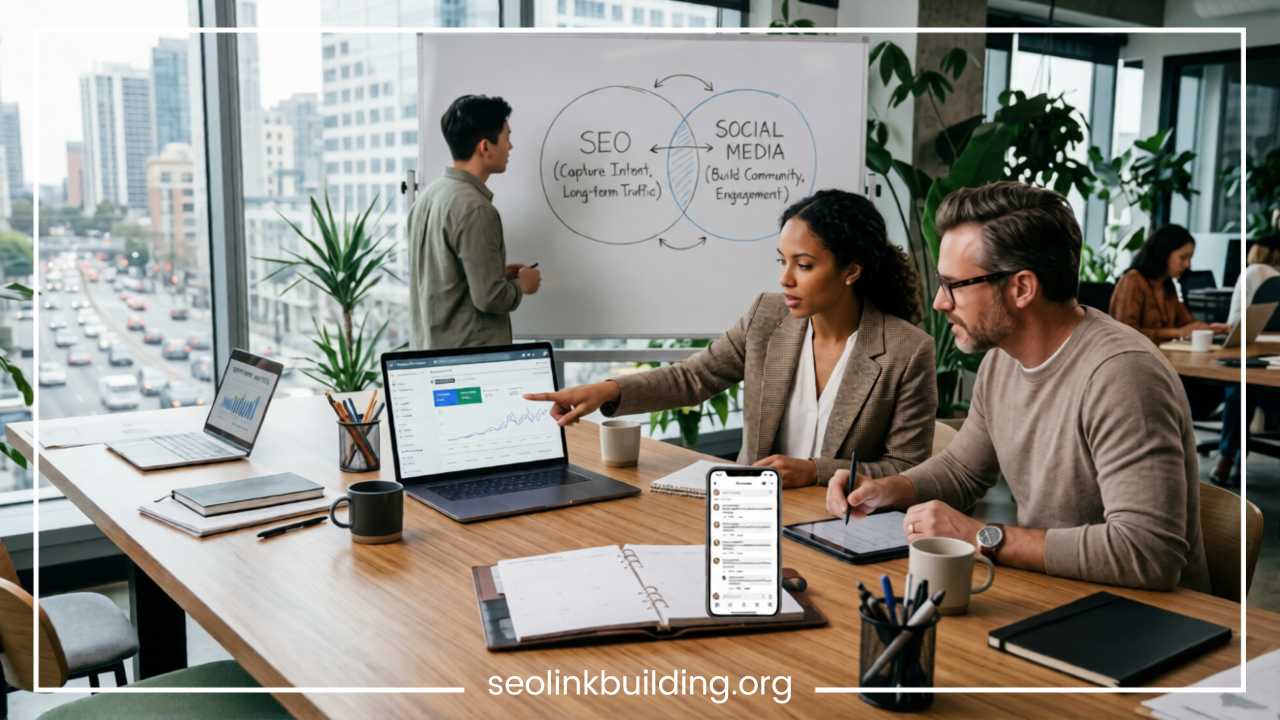
Why Your Business Needs SEO (Even With Social Media)
Why SEO Still Matters in the Social Media Era
In today’s fast-paced digital marketplace, it is easy to assume that social media has completely overtaken the internet. Modern businesses spend significant time, energy, and resources crafting short-form videos, designing carousel posts, and engaging with followers on social platforms. With billions of active users scrolling through feeds every day, many business owners wonder if traditional search engines are becoming obsolete. There is a common belief that maintaining a vibrant social media presence is all a company needs to survive and thrive online.
However, relying entirely on social platforms ignores a fundamental aspect of human behavior online: how people actually make decisions when they need a solution. While social feeds are fantastic for passive scrolling and unexpected discovery, search engines remain the primary destination when individuals actively look for answers. Consumers continuously rely on platforms like Google to:
-
Find trusted local and global businesses
-
Research complex products and services before purchasing
-
Compare features, pricing, and customer reviews
-
Solve immediate, pressingly urgent problems
-
Make final purchasing decisions
This brings us to a fundamental question: Why Your Business Needs SEO? Even if your brand already enjoys strong engagement and thousands of followers on social channels, search engine optimization plays an entirely different and equally critical role in your overall growth.
Understanding the distinction between these two marketing pillars is essential. Social media excels at audience engagement, community building, and creative brand discovery. Search Engine Optimization (SEO), on the other hand, guarantees visibility at the exact moment potential customers are actively searching for what you sell. By combining both strategies, you create a balanced digital ecosystem that captures potential buyers at every stage of their journey.
What Is SEO and Why Does It Matter for Businesses?
Search Engine Optimization (SEO) is the strategic practice of optimizing a website’s technical infrastructure, user experience, and content to rank higher in organic search engine results. When a user types a query into a search engine like Google, sophisticated algorithms analyze billions of web pages to deliver the most relevant, reliable, and authoritative answers.
To understand the core value of SEO, it is vital to differentiate organic search results from paid search advertising:
-
Paid Search Advertising (PPC): Businesses pay a fee every time a user clicks on their search ad. While this model offers immediate visibility, traffic drops to zero the moment ad budgets are exhausted or turned off.
-
Organic Search (SEO): Web pages earn top positions naturally based on their relevance, quality, structure, and authority. Clicking on an organic search result incurs no direct cost to the business.
SEO enables your business to become easily discoverable without paying a recurring toll for every single visitor who enters your website. Rather than viewing optimization as a one-time campaign expense, successful organizations recognize SEO as a long-term digital marketing asset that grows in value over time.
Furthermore, effective SEO is not merely about ranking for broad, high-volume terms like “shoes” or “software.” It focuses heavily on understanding specific customer needs, addressing pain points, and matching search intent. Whether a user is looking for a comprehensive guide on a topic or searching for a specialized service provider nearby, SEO ensures your business is present to answer that specific call.
SEO vs. Social Media: What’s the Difference?
To build a resilient digital strategy, you must understand that SEO and social media fulfill entirely different functions. One channel cannot simply replace the other because they cater to distinct user mindsets and behaviors.
The following comparison illustrates how these two channels differ in their approach, reach, and overall business function:
| SEO | Social Media |
| Captures existing search demand | Creates and distributes initial attention |
| Targets users actively looking for solutions | Targets users while they browse through feeds |
| Drives direct, highly qualified organic website traffic | Drives engagement, brand interaction, and referral traffic |
| Content can generate traffic for months or years | Content typically has a short visibility cycle |
| Ideal for high-intent, transactional searches | Ideal for community building and storytelling |
| Establishes long-term search visibility | Displays and reinforces brand personality |
Viewing SEO and social media as an “either/or” decision is a strategic mistake. Social media excels at sparking interest, humanizing your brand, and building a loyal follower base. SEO captures that interest when potential buyers move from passive observation to active research and intent. By leveraging both, businesses capture immediate attention while building sustainable long-term online equity.
SEO Helps Customers Find Your Business When They Need It
The primary power of SEO lies in its ability to target search intent. Search intent represents the underlying reason why someone enters a query into a search engine. Unlike social media users who are primarily browsing for entertainment or social updates, search engine users are actively looking for a specific answer, product, or service.
Consider the following high-intent search queries:
-
“best accounting firm near me”
-
“emergency plumber”
-
“digital marketing agency”
-
“how to choose business insurance”
-
“running shoes for beginners”
There is a major cognitive difference between someone casually seeing a sponsored post on their social feed and someone typing “emergency plumber” into Google at two o’clock in the morning. The social media user may find the post interesting, but they do not currently need a plumbing service. The search engine user, however, has an immediate, high-priority problem that requires a fast solution.
SEO places your business directly in front of potential customers at the exact moment of existing interest or urgent need. Instead of trying to interrupt someone’s entertainment feed, search optimization aligns your brand with active demand, significantly increasing the likelihood of converting a website visitor into a paying customer.
SEO Builds a Sustainable Source of Organic Traffic
One of the biggest operational challenges with social media is the temporary nature of its content. A post published on social networks usually experiences a rapid spike in engagement over a few hours or days before being pushed down by platform algorithms and fresh updates. To maintain traffic from social channels, businesses must continuously produce new content without stopping.
SEO operates on a completely different timeframe:
-
Short-term decay vs. Long-term shelf life: While social posts fade quickly, search-optimized web pages and articles can continue attracting qualified visitors long after publication.
-
Evergreen value: High-quality, well-optimized content that answers core industry questions can generate steady organic traffic for months or even years with periodic updates.
-
Compounding returns: As you build more quality content, earn authoritative backlinks, and improve your technical site architecture, your domain authority expands. This compounding effect makes it easier for new pages to rank higher faster.
-
Reduced channel dependency: A strong organic search foundation protects your business from sudden paid ad cost increases or dramatic social media algorithm changes that can restrict organic social reach overnight.
Investing in SEO does not mean website traffic is entirely free, as it requires ongoing strategy, content creation, technical improvements, and optimization. However, unlike paid advertising channels that stop working the moment you stop paying, SEO builds a lasting digital infrastructure that yields ongoing returns on your initial investment.
SEO Builds Brand Visibility and Awareness
While direct conversions are the ultimate goal of any marketing effort, SEO also plays a massive role in building general brand visibility and trust across your industry.
When your business consistently appears on the first page of search results for a wide range of industry-related queries, potential customers naturally begin to recognize your brand as a trusted authority. This organic repetition builds subconscious trust long before a prospect is officially ready to make a purchase decision.
SEO enables you to capture users early in their discovery journey through informational content. By answering educational questions and offering helpful solutions early on, you establish your brand as a helpful expert in the field.
Consider a typical customer journey enabled by search engines:
-
Problem Search: A business owner searches, “Why is my website loading slowly?”
-
Educational Content: They discover and read a clear, detailed guide on your blog explaining page speed optimization.
-
Brand Awareness: The reader recognizes your agency as an expert in web performance.
-
Comparison: Weeks later, when looking to redesign their website, they search for specialized agencies and see your site again in the search results.
-
Decision & Conversion: Having encountered your brand multiple times during their research, they navigate to your service page and submit an inquiry.
By optimizing content across various search queries, you establish topical authority and associate your brand name with real solutions, making your business the natural choice when customers are finally ready to buy.
SEO Can Bring High-Intent Customers to Your Website
To maximize conversions, an effective search strategy targets different types of search queries, ensuring that your website attracts users at every stage of their buyer journey.
Search engine queries generally fall into four main intent categories:
-
Informational Intent: Users are seeking knowledge, guides, or answers to general questions.
-
Navigational Intent: Users are trying to locate a specific website or brand page.
-
Commercial Investigation: Users are comparing different products, services, or brands before making a final decision.
-
Transactional Intent: Users are fully prepared to make a purchase, request a quote, or sign up for a service.
A mature SEO strategy maps content directly to these specific search categories, creating dedicated pages designed to answer exact user needs.
Here is how search intent maps to practical business content across different stages:
| Search Intent Type | Example Query | Target Content Strategy |
| Informational | “How does solar financing work?” | Comprehensive blog guide or educational article |
| Commercial | “Best solar companies in [City]” | Comparison page, review highlight, or service breakdown |
| Navigational | “[Company Name] solar installation” | Homepage, brand overview, or main landing page |
| Transactional | “Solar panel installation quote” | Service page with a clear quote calculator or inquiry form |
By addressing all four intent types, you avoid attracting useless website traffic. Instead, you guide users logically from initial research straight through to commercial inquiry, driving revenue directly from search engines.
SEO Gives You a Digital Asset You Control
One of the greatest strategic arguments for SEO over social media is ownership. Your business website is an owned digital asset—a platform where you control the design, messaging, user experience, and conversion pathways entirely.
Social media accounts, by contrast, are hosted on third-party platforms. When you build your entire online presence exclusively on social media, you operate on rented land. Consider the risks of relying entirely on third-party channels:
-
Platform algorithms change frequently, often drastically reducing organic reach for business pages without warning.
-
Account terms, features, and layout formats can change overnight, affecting how your content is displayed.
-
Technical outages, policy updates, or account security issues can temporarily or permanently cut off access to your audience.
While social media platforms remain essential communication tools, relying on them as your sole web presence leaves your business vulnerable to external platform decisions. SEO strengthens your website—the core digital property that actually houses your service descriptions, lead forms, e-commerce stores, and customer contact information. Strengthening your owned website ensures long-term business stability regardless of how social media platforms evolve.
SEO Supports Every Stage of the Customer Journey
A complete marketing strategy must support prospects at every point of their interaction with your brand. SEO is not a single tool for attracting quick clicks; it is a versatile framework that supports all four main stages of the customer journey.
| Stage | Focus Area | Search Intent & Content Type |
| Awareness | Educational & Problem-Based | Informational articles answering broad questions and user pain points |
| Consideration | Comparisons & Solution Guides | Product/service comparisons, buyer guides, and case studies |
| Decision | Product Pages & Quote Forms | Transactional landing pages, pricing details, and contact forms |
| Retention | Help Center & Support Guides | Documentation, FAQs, and product usage troubleshooting resources |
Awareness
At the top of the funnel, prospective buyers realize they have a problem or need, but may not know the exact solution. SEO targets educational searches, problem-focused queries, and broad industry questions. Offering valuable solutions at this early stage builds immediate goodwill and introduces your brand to potential leads before competitors are even on their radar.
Consideration
Once prospects understand their problem, they begin evaluating various solutions. During this stage, searchers use queries focused on comparisons, solution guides, product breakdowns, and reviews. Optimizing content for these searches allows you to highlight your advantages, address common objections, and demonstrate why your offering stands out.
Decision
When customers reach the bottom of the funnel, they are ready to select a provider and complete a transaction. SEO optimizes critical landing pages, service descriptions, location-specific pages, and pricing guides for transactional keywords. Ensuring these pages rank high and offer an effortless user experience turns high-intent visitors into paying clients.
Retention
The customer journey does not end with a completed purchase. SEO also aids in customer retention by building resource centers, FAQs, user manuals, and troubleshooting guides. When existing clients search for help using your products or services, easily accessible support content improves customer satisfaction, reduces support team workload, and increases client lifetime value.
How Local SEO Helps Customers Find Nearby Businesses
For physical brick-and-mortar stores, local service providers, and regional companies, Local SEO is often the single most effective channel for acquiring new clients. When users search for services in their immediate area, search engines prioritize location-relevant results.
Local SEO focuses on optimizing your digital presence so your business appears prominently in map packs and localized search results. Key elements of a local strategy include:
-
Google Business Profile Optimization: Maintaining an accurate, fully completed profile with updated business hours, precise categories, and photos.
-
“Near Me” Optimization: Structuring site content to answer location-specific queries such as “dentist near me” or “plumber in [City].”
-
Local Citation Management: Ensuring your business name, address, and phone number (NAP) are listed consistently across directories.
-
Customer Reviews: Encouraging satisfied clients to leave authentic reviews, which directly influence local map rankings and consumer trust.
-
Geotargeted Content: Creating location-specific landing pages tailored to distinct service areas.
Local SEO directly connects nearby consumers to businesses across numerous industries, including:
-
Restaurants and cafes
-
Dental clinics and medical practices
-
Home service providers (plumbers, electricians, HVAC technicians)
-
Law firms and financial advisors
-
Local retail shops and boutiques
-
Marketing and professional agencies
When a local customer experiences an immediate need, they turn to search engines to find a nearby provider. Without local search optimization, your business remains invisible to active, nearby buyers ready to visit or call.
SEO Strengthens Your Content Marketing Strategy
Content marketing without search engine optimization often leads to wasted resources. A company might spend significant time writing articulate blog posts or industry articles, only for those pieces to disappear into digital obscurity after an initial share on social media.
SEO gives your content marketing strategy structured direction and long-term purpose. Instead of randomly guessing what to write about, search optimization relies on data-driven research to guide your editorial calendar:
-
Keyword Research: Identifying the exact words, phrases, and questions your audience uses when searching for solutions.
-
Search Intent Analysis: Structuring your content to match what searchers expect to find, whether that is a quick answer or a deep guide.
-
Topic Clusters & Pillar Pages: Organizing website content into logical, interconnected topic groups that demonstrate deep subject expertise to search engines.
-
Internal Linking Strategy: Connecting related articles and landing pages strategically to guide visitors naturally through your site while distributing search authority.
-
Content Audits & Updates: Periodically reviewing, refining, and refreshing older articles to maintain top search rankings over time.
Additionally, search-optimized content feeds directly into your social media efforts. A single, deeply researched blog article created for SEO can easily be repurposed into:
-
Multiple short-form text posts for networking platforms like LinkedIn
-
Engaging video scripts for short-form social video channels
-
Informative carousel graphics for image-based platforms
-
Highlight summaries for email newsletters
Starting with a search-optimized master asset ensures your content serves a strategic, evergreen purpose on your website while providing continuous material for your social media channels.
How SEO Can Support Better Marketing Decisions
Beyond driving website visitors and leads, search engine optimization yields valuable market intelligence that can refine your overall business strategy. Search queries offer an unfiltered look into customer needs, preferences, concerns, and buying habits.
Analyzing search data using tools like Google Analytics and Google Search Console helps businesses uncover actionable insights, including:
-
Customer Demand & Interest: Discovering exact topics, products, or service features that generate growing search volume.
-
Emerging Content Gaps: Identifying common questions or problems that competitors have failed to address clearly.
-
High-Converting Queries: Pinpointing specific search phrases that consistently bring in your most profitable clients.
-
Geographic Demand: Uncovering specific regions, cities, or markets where interest in your products is rising.
-
User Behavior & Engagement: Understanding which pages hold visitor attention and which topics fail to resonate.
Instead of relying on guesswork or assumptions, search engine data allows management teams to make clear, evidence-based marketing decisions. From developing new products to refining brand messaging, search insights provide a direct window into customer demand.
Why Social Media Alone Isn’t Enough
Highlighting the necessity of SEO is not an argument against social media. Social channels are extraordinarily effective for brand engagement, real-time community communication, visual storytelling, and influencer collaborations. However, relying exclusively on social media leaves significant blind spots in your customer acquisition strategy.
Key limitations of relying solely on social media include:
-
Differs from Intentional Search: Social algorithms present content based on predicted engagement while users browse feeds. This differs fundamentally from search engine users actively seeking an immediate solution to a specific problem.
-
Algorithm Volatility: Social platforms frequently adjust their feed distribution rules, which can drastically lower organic reach overnight and force businesses to spend more on paid social ads.
-
Platform Fragmentation: Consumers use different social platforms based on demographics and personal preferences. Expecting every prospective buyer to follow your specific social channels is unrealistic.
-
Short Content Lifespan: The window of opportunity for engagement on a social post is short. Older social posts quickly become difficult to locate, whereas search-optimized pages gain value and authority over time.
-
Lower Direct Purchase Intent: While social media excels at generating interest, users spending time on social platforms are rarely in an active buying mindset compared to search engine users entering commercial queries.
The most effective digital marketing strategy avoids choosing between channels. The goal is not to replace social media with SEO, but to integrate both into a cohesive system where each channel handles what it does best.
How SEO and Social Media Work Together
When combined strategically, SEO and social media amplify each other’s strengths, building an efficient marketing ecosystem that drives consistent growth.
The table below outlines a practical multi-step workflow for combining search and social channels:
| Step Number | Workflow Phase | Tactical Action |
| 1 | Research | Perform keyword research and analyze intent |
| 2 | Creation | Write and optimize a comprehensive website resource |
| 3 | Publishing | Publish content on your owned website asset |
| 4 | Promotion | Extract key insights and promote across social channels |
| 5 | Amplification | Gain social engagement, shares, and external backlinks |
| 6 | Refinement | Analyze organic metrics and periodically refresh content |
Here are specific ways SEO and social media strengthen each other in practice:
-
Promoting Search-Optimized Assets: Publish long-form, search-optimized guides on your website, then share key takeaways across social channels to drive immediate referral traffic.
-
Social Repurposing: Convert high-ranking blog content into short videos, carousel posts, or text threads to engage audience segments on their preferred platforms.
-
Mining Community Insights: Pay attention to questions, comments, and discussions across your social channels, then turn those topics into comprehensive SEO articles that capture search traffic.
-
Earning Backlinks & Visibility: Broad social distribution increases content reach, making industry journalists, bloggers, and creators more likely to reference and link to your website assets—directly boosting search rankings.
-
Driving Paid Campaigns to Owned Assets: Use high-converting SEO landing pages as target destinations for social media ad campaigns, ensuring consistent branding and user experience across paid and organic touchpoints.
By making search optimization and social media work together, you build a multi-channel growth system that drives both immediate engagement and long-term search authority.
Common SEO Misconceptions Businesses Should Avoid
Despite the clear benefits of search optimization, several persistent myths prevent business leaders from committing to a proper SEO strategy. Misunderstandings often lead companies to abandon search efforts prematurely or implement outdated tactics.
Here are major SEO misconceptions every business should avoid:
“SEO is dead because of social media.”
Social media has expanded the digital landscape, but search engine usage continues to grow worldwide every year. People still rely on search engines for active research, technical problem-solving, and localized business inquiries.
“SEO is only about adding keywords.”
While strategic keyword placement remains important, modern SEO prioritizes search intent, technical page speed, mobile usability, informative depth, user experience, and overall domain trust. Merely repeating keywords without providing genuine value will harm rankings rather than help them.
“You must rank #1 for every single industry keyword.”
Reaching the top position for competitive, broad terms is beneficial, but long-tail keywords—specific, multi-word phrases—often carry much higher commercial intent and convert visitors into clients far more effectively.
“SEO yields immediate results overnight.”
SEO is a long-term investment, not a quick-fix tactic. Building search authority, optimizing site architecture, and creating competitive content takes time—typically several months of consistent work before significant organic growth appears.
“SEO is only necessary for large corporations.”
Small and medium-sized businesses often benefit even more from search optimization, particularly through localized SEO strategies. Optimization allows smaller firms to compete directly with national brands in localized service areas without massive advertising budgets.
“Publishing more blog posts automatically improves search rankings.”
Search engines prioritize quality and user satisfaction over sheer content volume. A site featuring ten deeply thoroughly researched, highly helpful guides will consistently outperform a site filled with dozens of brief, low-quality articles.
“Once a website is optimized, the work is complete.”
Search engine algorithms evolve, search trends shift, and competitors regularly update their content. SEO requires ongoing maintenance, regular audits, performance monitoring, and content updates to preserve and grow top rankings over time.
How to Start Investing in SEO
Launching a structured search engine optimization effort does not require redoing your entire marketing approach overnight. Following a clear, systematic implementation plan allows your team to lay a strong foundation and build organic momentum step by step.
Use this simple, actionable eleven-step roadmap to start optimizing your business online:
-
Define Your Target Audience: Identify your ideal client profiles, their major pain points, and how they describe their problems online.
-
Discover Key Customer Searches: Use keyword research tools to discover the exact terms and phrases your target audience uses when searching for solutions.
-
Analyze Search Intent: Study current top-ranking pages for your target keywords to understand what content formats and answers users expect.
-
Audit Your Existing Website: Evaluate your current site performance, identifying outdated content, broken links, slow pages, or structural issues.
-
Fix Technical SEO Issues: Ensure your website loads quickly, displays seamlessly on mobile devices, uses secure connections, and allows search engines to index your pages easily.
-
Optimize Core Business Pages: Align your primary landing pages, service descriptions, and contact sections with commercial search intent.
-
Develop High-Value Content: Write comprehensive guides, articles, and resource pages that answer common customer questions thoroughly.
-
Improve Internal Linking: Create clear, logical pathways between related website pages to help users navigate easily and pass search authority throughout your site.
-
Strengthen Local Search Signals: Claim and optimize your Google Business Profile, align local business citations, and encourage client reviews if you serve a specific geographic region.
-
Track Metrics and Conversions: Monitor organic traffic trends, keyword positions, user engagement, and form submissions to measure your progress accurately.
-
Update and Refine Content Continuously: Periodically review performing pages, update statistics, add fresh insights, and improve content to maintain your search rankings over time.
Why Your Business Needs SEO: Final Thoughts
Social media platforms offer unmatched speed for building brand personality, sharing quick updates, and connecting directly with followers. However, relying on social media alone leaves your business vulnerable to platform algorithm shifts while missing out on customers who actively use search engines to find solutions every day.
This reality highlights the strategic answer to Why Your Business Needs SEO?
Search engine optimization provides a reliable, sustainable way to put your brand in front of high-intent buyers at the precise moment they are looking for your products or services. SEO transforms your website into an owned digital asset that generates long-term organic traffic, supports every stage of the buyer journey, builds industry authority, and maximizes your content marketing return on investment.
A complete digital strategy does not force a choice between SEO and social media. Instead, it leverages social media to spark immediate interest while using search engine optimization to capture, educate, and convert that interest into long-term business growth. By committing to a structured SEO strategy today, you secure a competitive advantage online and build an organic acquisition engine that drives consistent value for years to come.
Frequently Asked Questions (FAQ)
Why is SEO better than social media marketing for local businesses?
SEO targets customers with immediate buying intent who are actively searching for local services, whereas social media focuses primarily on brand discovery and community engagement. When someone searches for an emergency service or local provider on Google, they are usually ready to make a purchase or booking immediately.
Can a business survive without search engine optimization?
While a business can generate leads through social media, referral word-of-mouth, or paid ads, relying on these methods alone leaves you vulnerable to platform algorithm shifts and rising ad costs. Without SEO, your business misses out on thousands of high-intent potential customers searching for your products or services daily on search engines.
How long does it take for SEO to start working compared to social ads?
Social media ads can drive website traffic instantly, but that traffic stops as soon as you stop paying for ads. SEO typically takes 3 to 6 months to demonstrate significant organic rankings and traffic growth; however, search-optimized pages build compounding authority that generates long-term organic traffic without continuous ad spend.
How do SEO and social media work together to improve marketing ROI?
SEO and social media complement each other by capturing customers at different stages of the buyer journey. You can use keyword research to create high-ranking blog articles on your website, then break down those articles into short videos, LinkedIn posts, or carousel graphics for social media to drive traffic back to your owned asset.
Does posting on social media improve Google search rankings directly?
Social media shares and likes are not direct Google ranking factors. However, active social distribution increases visibility, drives brand search volume, and earns external backlinks from bloggers or journalists who discover your content—all of which indirectly improve your domain authority and organic search positions.
What is the difference between search intent and social media engagement?
Search intent reflects a user actively looking for a solution, product, or answer to a problem on a search engine. Social media engagement measures how users interact with content while passively scrolling through feeds, making search engine traffic much higher in commercial and transactional intent.